.png)
Google Search Ads for Small Business 10 Tactics That Deliver Real Leads
This article gives small and mid-sized businesses a practical, ten-step playbook for getting more value from Google Search Ads without wasting budget. It explai...

Introduction
You run a small business. You know you need more customers. But every dollar you spend on marketing has to count.

The pressure to generate leads online keeps growing. And with limited time and budget, it’s easy to waste money on ads that don’t work.
That’s where Google Search Ads come in. For nearly half of small businesses, digital advertising is a top source for new customers source. When done right, Google Search Ads give you one of the most controllable and high-ROI channels available.
In 2026, the average cost per click across industries sits around $2.96, and search campaigns often achieve a return on ad spend of 6x to 8x source. The average conversion rate for search campaigns now ranges from 4.40% to 7.04% source. These benchmarks show the potential for small businesses that execute well.
But execution is the hard part. Many SMBs jump into Google Ads without a clear strategy. They bid on the wrong keywords, forget conversion tracking, or ignore negative keywords. The result? Lost budget and few leads.
This article delivers 10 actionable, evidence-backed tactics specifically for small and mid-sized businesses. Each tactic fits your constraints and helps you get more from every click.
If managing ads yourself feels overwhelming, Weblish offers a done-for-you service that handles everything including setup, optimization, and reporting. You can start for free and see the difference.
Now let’s dive into the tactics.
1. Set Clear Goals and KPIs for Google Search Ads
It happens all the time. A small business owner sets up a Google Search Ads campaign with no real target in mind. They just want "more leads." But without a clear goal, every dollar is a guess. And guesswork burns budget fast.
Here’s the thing. You need to know exactly what success looks like before you spend a cent. Are you focused on lead volume? Maybe cost per acquisition (CPA) matters more? Or is return on ad spend (ROAS) your north star? Pick one or two and stick with them.
Your business stage also matters. A brand new business might chase quantity to build a customer base. A mature service company might prioritize lead quality over sheer numbers. And if you are testing brand awareness, you track different signals entirely.
In 2026, the numbers back this up. Search campaigns on Google often hit a ROAS of 6x to 8x, and the average conversion rate sits between 4.40% and 7.04% source. But you only reach those benchmarks if you know what you are measuring.
To get real data, set up Google Ads conversion tracking. Better yet, connect your CRM. That way every lead from your google search ads ties back to actual revenue. No more guessing.
If all this setup feels like a chore, you are not alone. Many SMBs skip these steps because they are too busy running the business. That is why a done-for-you service like Weblish can handle the entire process from goal setting to reporting. They build your strategy so you can focus on serving clients.
Ready to stop guessing and start measuring? Start your FREE Trial and let the experts run your campaigns while you watch the leads roll in.
For more on choosing the right channel, check out our comparison of the best search engine for small business lead generation in 2026.
2. Master Keyword Research for High-Intent Traffic
Once your goals are locked in, you need to find the right people to show your ads to. And the secret is not the most popular keywords. It is the ones with real buying intent.
Here is what most small businesses get wrong. They bid on broad terms like "plumber" or "marketing agency." Those words get tons of searches but almost zero results. The people clicking them are just browsing, not buying.
The winning move is long-tail keywords with commercial intent. Think "emergency plumber in Austin Texas" or "affordable marketing agency for real estate agents." These phrases have lower search volume but much higher conversion rates. And because fewer advertisers bid on them, your cost per click stays low.
So how do you find these goldmines? Start with a few smart tools.
Use Google’s free Keyword Planner to see search volume, competition, and bid estimates. Then dive into your own Search terms report in Google Ads. That report shows you exactly what people typed before they clicked your ad. You will often find hidden gems you never thought of source.
Do not stop there. Look at what keywords your competitors rank for. If a rival keeps showing up for a phrase and you do not, that is an opportunity. Tools like Ahrefs or SEMrush can help you spot these gaps
One more pro tip from the experts. Group your keywords by theme. Do not throw two thousand loosely related keywords into one ad group. Keep your themes tight, like "buy plumbing supplies" separate from "emergency plumbing repair" source. That way your ads stay relevant and your quality score stays high.
Now for the budget protectors. Negative keyword lists.
Negative keywords are words you tell Google to never show your ad for. If you are a premium law firm, you do not want clicks from people searching "cheap lawyer" or "free consultation." Add those as negatives and save your budget for real prospects. Review your search terms report every week and add new negatives regularly source.
Mastering keyword research takes time and constant tweaking. If that sounds overwhelming, you are not alone. Many SMBs prefer to focus on their core business while an expert handles the research and setup.
That is exactly why Weblish exists. Their team digs into your market, finds high-intent keywords, builds your campaigns, and monitors performance so you never waste a dollar.
Ready to stop guessing which keywords work? Start your FREE Trial and let the research do the heavy lifting for you.
Want a bigger picture view? Check out how different platforms compare in our analysis of the best search engine for small business lead generation in 2026.
3. Craft Compelling Ad Copy That Converts
You found the perfect keywords. Great. But here is the truth. Bad ad copy still wastes your budget.
If you want your google search ads to actually bring in leads, they must speak directly to your customer’s pain points. Do they struggle with inconsistent leads? Say it. Are they worried about budget waste? Address it in your headlines.
Here is the best way to structure your ads in 2026. Use Responsive Search Ads (RSAs). Write up to 15 headlines and 4 descriptions. Google’s AI mixes these together to match the exact search query someone typed. This is a core best practice for high-performance campaigns source.
Do not stop there. Add trust signals to your copy. Small phrases like "5-Star Rated," "30-Day Guarantee," or "Serving Locals Since 2010" can double your click-through rate. People need to know you are real before they click.
You can use advanced google search operators to check what promises your competitors are making. Then, do it better in your own ads.
And always include a clear Call to Action (CTA). Tell them exactly what to do next. "Get a Free Quote" works much better than "Learn More."
Writing copy that converts takes testing and skill. If you would rather focus on your business while an expert handles your ads, consider a done-for-you service like Weblish. Their team writes high-converting copy and optimizes your campaigns so you never waste a dollar.
Want a bigger picture view? Compare how different platforms handle ad copy in our analysis of the best search engine for small business lead generation in 2026.
Ready to turn your ad budget into real leads? Start your FREE Trial and let the experts build ads that actually convert.
4. Optimize Landing Pages for Lead Generation
Your ads got the click. Now the real work begins. If your landing page doesn’t match the promise you made in your google search ads, visitors will bounce in seconds. This is a common mistake small businesses make. They spend money on clicks but send people to a generic homepage or a slow, cluttered page.
To turn clicks into leads, your landing page must be fast, mobile-friendly, and focused on one single goal. Here are the must-have elements:
- A clear headline that restates the ad offer. If your ad says "Free Website Audit," the headline should say the same thing.
- Benefit-driven copy that explains what the visitor gets and why it matters.
- Social proof like testimonials, star ratings, or logos of companies you have worked with.
- A simple form with only the fields you really need. Name and email is often enough.
Many small business owners neglect the landing page experience, which leads to high bounce rates and wasted ad spend source. Following these best practices helps you keep visitors engaged. Check your google search settings to ensure your site is properly indexed. Use advanced google search operators and tools like Bing Webmaster Tools to research competitor pages and fine-tune your own.
Need more guidance on designing pages that convert? Read our guide on how to make your small business website convert visitors to customers.
If managing landing pages feels overwhelming, you do not have to do it alone. Weblish offers done-for-you growth services that include landing page design and conversion optimization. Their team builds fast, professional pages that turn ad traffic into paying customers. Get started with Weblish and claim your free trial today.
Ready to stop wasting clicks and start generating real leads? Start your FREE Trial and let Weblish build landing pages that actually work.
5. Use Audience Targeting to Beat Larger Competitors
It feels unfair. A big brand with a massive budget can outbid you on almost every keyword. But you have a secret weapon: precision. With google search ads, you can target specific groups of people that big brands often miss.
Instead of trying to reach everyone, focus on people who already know you. Remarketing to your website visitors and email lists using first-party data costs less and converts much better. You can also use in-market audiences to find people actively searching for solutions you offer. Nearly half of all small businesses (46%) say digital marketing is a top source for new customers source. You can capture that traffic without a huge budget.
Another smart move is competitor conquesting. Target the branded keywords of larger competitors. When someone searches for them, your ad appears instead. Just check your google search settings and ad policies before you start.
Want to find more gaps in their strategy? Use bing webmaster tools alongside advanced google search to see what keywords they rank for that you can target with better offers.
Need a hand building these advanced audience lists? Weblish creates tailored audience strategies that help you compete without wasting a single dollar. Get started with Weblish and claim your free trial today.
For more on turning traffic into leads, read our guide on how to make your small business website convert visitors to customers.
Ready to turn your small budget into a big advantage? Start your FREE Trial and let Weblish help you target the right people.
6. Implement Smart Bidding and Budget Management
Now you know exactly who to target. The next step is making sure your budget works as hard as you do. You don’t want to waste a single dollar on the wrong clicks or slow times.
Let automation do the work for you.
Manually changing bids for every single keyword takes forever. It also leaves money on the table. Automated bidding strategies, like Target CPA or Maximize Conversions, use Google’s AI to adjust your bids in real time. This is huge for small teams. In 2026, cross-industry conversion rates for Search average between 4.40% and 7.04% source. Smart bidding helps you reach more people who are ready to buy without needing a data analyst on staff. You can turn this on right in your google search ads campaign settings.
Watch your daily spend closely.
Even the best AI needs some rules. Check your google search settings often to catch spikes early. A sudden jump in clicks can drain your monthly budget in hours. Using shared budgets across your campaigns stops one bad day from ruining your whole month. It automatically shifts your budget to the campaigns that are performing best.
Use time and season to your advantage.
Your customers do not search for you 24 hours a day. Why run ads all the time? Dayparting lets you show ads only during business hours or peak shopping times. This simple move saves a lot of cash. Seasonality adjustments are just as powerful. If you know a big holiday is coming, you can tell Google’s system to expect more sales and bid higher. You want to be aggressive when demand is high.
Campaigns that follow these steps often see a return on ad spend (ROAS) of 6.0x to 8.0x on Search source. Smart bidding and good budget habits are the keys to hitting those numbers.
Once you start driving the right traffic, your website needs to turn those visitors into customers. Learn how in our guide on how to make your small business website convert visitors to customers.
If managing bids and budgets feels overwhelming, let a team of experts handle it for you. Get started with Weblish and claim your free trial today.
Stop guessing and start growing. Start your FREE Trial and let Weblish optimize your google search ads for real results.
7. Leverage Ad Extensions to Improve CTR and Quality Score
Your budget is working hard. Now make your ads work harder with extensions. They give your text ads more space, extra links, and more reasons to click.
Three types matter most. Sitelink extensions add extra page links. Callout extensions highlight offers like "Free Shipping." Structured snippets show specific services. All of these make your ad bigger and more relevant.
Higher CTR tells Google your ad is useful. That boosts your Quality Score. A better Quality Score lowers your cost per click. According to Google Ads best practices in 2026 from Twominute Reports, extensions are a core strategy.
For local service businesses, call extensions are critical. When someone searches on their phone, a call button in the ad gets immediate action. You can set up all extensions in your google search settings inside your campaign dashboard. It takes minutes.
Want to see your ads convert better? Combine strong ads with a website that converts. Read our guide on what is ui design the simple definition that boosts your bottom line.
If managing ads feels like a chore, let Weblish handle it. Get started with Weblish and claim your free trial.
Stop guessing. Start your FREE Trial and let Weblish optimize your google search ads with extensions that drive real results.
8. Monitor and Analyze Search Term Reports to Refine Targeting
You pick keywords. You set bids. You think your targeting is tight. Then you open the search terms report and see people landed on your ad by searching for "free stuff."
That hurts your wallet. Here is how to fix it.
The search terms report shows the exact words people typed before they clicked your ad. It tells you if your ad triggers really match user intent. Google might match your broad keyword to a weird search that wastes your budget. You need to check this report often.

Start looking at this report every week. According to a 2026 tutorial from Stape, the search terms report is the best place to find long-tail keywords you can target directly. You will spot two things: waste and opportunity.
For waste, add irrelevant queries as negative keywords. Someone searches "cheap" and you sell premium services. Block it. This stops wasted spend in its tracks. Americaneagle.com recommends monitoring keyword performance and pausing underperformers to direct budget where it works.
For opportunity, you will find new high performing keywords hiding in the data. Maybe people search for "affordable design services" instead of "cheap design." Add that winner to your campaign. The Leadsbridge guide to Google Ads best practices suggests digging into analytics to find real search behavior.
Automate this process if you can. Set up a Google Ads dashboard or use scripts to flag new terms. This keeps your campaigns clean without manual work every day.
A cleaner campaign means better data. Better data helps you refine your overall strategy, whether you run ads for a local bakery or a national service provider. If you want to learn how to turn those clicks into real leads, check out our guide on how to turn your website into a lead machine.
Feeling stuck managing all this data alone? Let Weblish handle your optimization. Get started with Weblish and claim your free trial to see the difference.
Stop guessing what your audience is looking for. Start your FREE Trial and let Weblish connect your ads to a website that actually converts.
9. A/B Test Ad Variations Continuously
You write an ad. You think it looks good. But does it actually work?
That is where A/B testing comes in. Instead of guessing which headline or call-to-action performs best, you let the data decide. Running simple tests on your google search ads helps you cut down wasted spend and lower your cost per acquisition.
Google Ads Experiments makes this easy for small businesses. You can test two versions of the same ad with different headlines, descriptions, or CTAs. The tool splits your traffic and shows you which version gets more clicks or conversions. According to the 2026 Google Ads best practices guide from Leadsbridge, digging into your analytics and testing variations is one of the fastest ways to improve performance.
Here is the catch. You need to let the test run long enough. One day of data is not enough. Aim for at least one to two weeks. That gives you statistically significant results you can trust. Otherwise you might make changes based on luck, not real patterns.
Testing removes the guesswork. Maybe your current headline draws attention but your CTA falls flat. A simple test could show that "Get Your Free Quote" beats "Contact Us Today" by a wide margin. Small changes like that add up over time.
Once you find a winning ad, update your campaign. Then test something new. Keep iterating. The best advertisers never stop testing.
If managing all these tests feels overwhelming, you don’t have to do it alone. Weblish offers a done-for-you growth service that handles ad testing and optimization as part of your plan. Get started with Weblish and claim your free trial to see how much easier your marketing can be.
Ready to stop guessing and start growing? Start your FREE Trial and let Weblish turn your ads into a lead machine.
10. Integrate Google Ads with Your Full Digital Strategy
Running google search ads in isolation is like planting seeds in different fields and hoping they all grow. Your ads will work much better when they team up with SEO, content marketing, and email nurture sequences. In fact, a unified approach is one of the most powerful ways to boost your ROI in 2026,
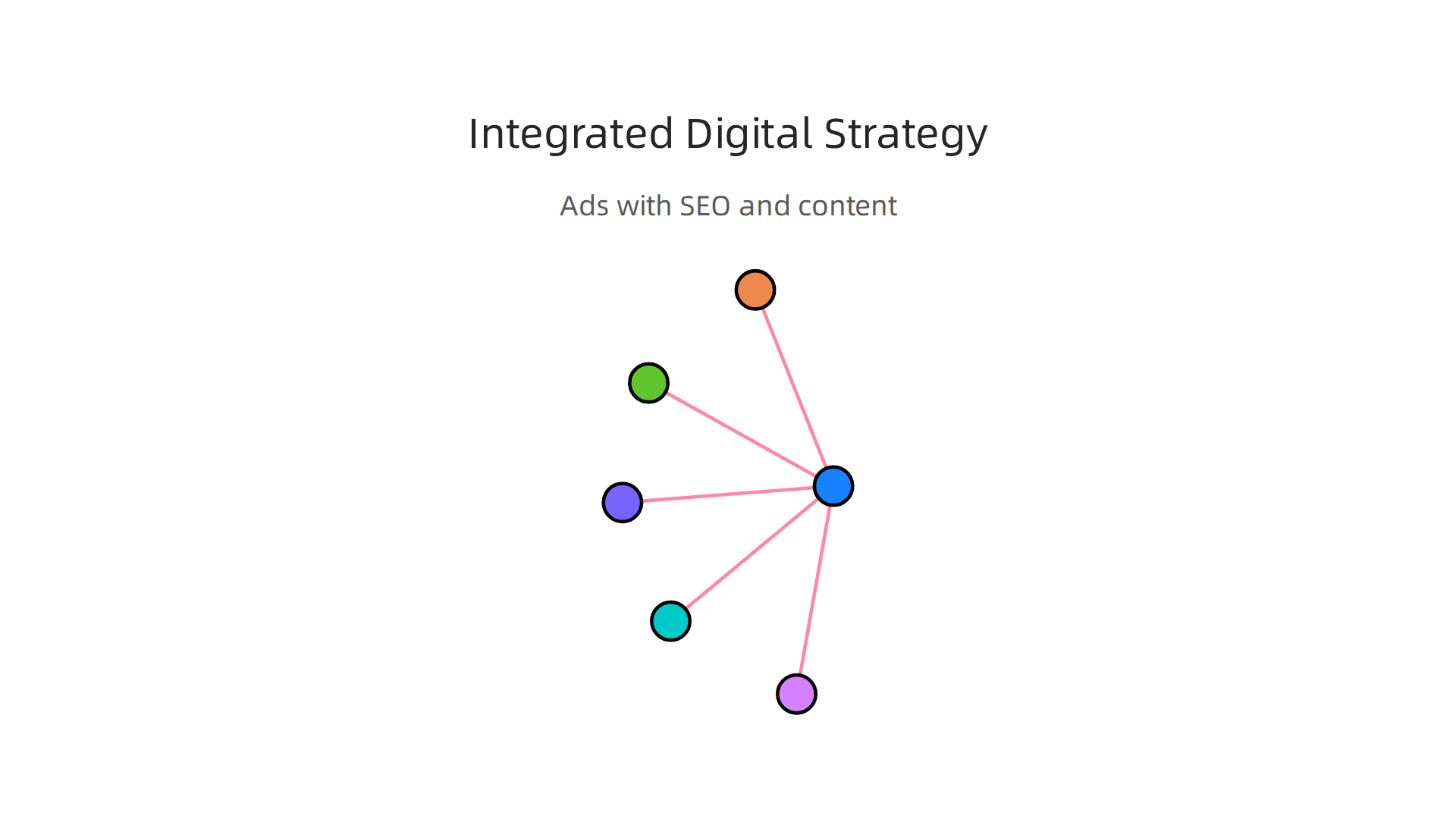
as explained in this guide to an integrated digital marketing strategy.
Here is how to make the connection. Use the keyword data from your Google Ads campaigns to shape your SEO and content plan. If certain search terms drive lots of conversions through ads, optimize your website and blog posts around those same topics. You can even use advanced google search techniques to see how competitors rank for those keywords. This way, your organic traffic picks up where your ads leave off.
The same data should feed into your email marketing. Set up retargeting from your ads straight into email lists. Someone who clicks your ad but does not buy can get a follow up email with a special offer or helpful content. That creates a smooth funnel that turns clicks into customers.
If you already run email nurture campaigns, you can plug your ad leads right into them. This saves time and keeps your message consistent across channels. Learn more about setting up an automated email sequence for your small business.
Bringing it all together might sound like a lot of work. But you do not need to do it alone. Weblish offers a done for you growth service that connects your ads, SEO, content, and email into one seamless system. It takes the guesswork out of integration.
Ready to make every channel work together? Get Started for FREE and let Weblish build a digital strategy that actually grows your business.
Summary
This article gives small and mid-sized businesses a practical, ten-step playbook for getting more value from Google Search Ads without wasting budget. It explains why clear goals and conversion tracking matter, how to find high-intent long‑tail keywords, and how to write responsive ad copy that matches user intent. You’ll learn landing page best practices, audience targeting tactics (including remarketing and competitor conquesting), and how to use automated bidding, ad extensions, and search term reports to cut waste. The guide also covers A/B testing and tying ads into SEO and email nurture so clicks turn into customers, and it points to a done‑for‑you option if you prefer hands‑off management.