
Why Your Small Business Needs a Design Team and How to Build One
This article explains why small and mid-sized businesses should invest in a dedicated design team instead of one-off agency projects, showing how continuous, hu…


Why Your SMB Needs a Design Team (and How to Build One)
Does your website bring in new customers every day? Or does it just sit there looking nice? For many small and mid-sized businesses, their website is a pretty brochure.

It looks great but does not generate leads. That is a big problem.
If this sounds familiar, read our guide on how to make your small business website convert visitors to customers. Traditional agencies promise a fix, but they come with high upfront costs and no pricing transparency. According to the 2026 SMB adoption report by inTandem, small businesses are now demanding real results, not just flashy designs.
The better answer is to build your own design team. A lean team focused on human centered design can turn your design space into a lead engine. This guide gives you a clear framework for building a design team that drives real business results. And if you want a fast start, a service like Weblish offers done-for-you web design and marketing at a predictable monthly price.
Ready to stop wasting money on pretty brochures? Start your FREE Trial and grow your traffic on autopilot.
Why SMBs Need a Dedicated Design Team
Hiring an agency for a one-time website build feels easy. But here is the problem. Once the project ends, your site stays frozen. Your competitors keep improving theirs every month.
A dedicated design team changes that. Instead of a single project, you get continuous optimization. They use human centered design to turn your design space into a lead engine, not just a pretty page.
Interesting shift happening right now. According to the 2026 State of Small Business report by Autodesk, nearly 1 in 5 design professionals are thinking about leaving corporate jobs to start their own businesses. That means more talent is available to help SMBs like yours.
A team focused on your design works keeps your site improving week after week. See how graphic design principles turn your website into a lead generator for a taste of what ongoing attention can do.
Want a dedicated design team without the headache of hiring? Weblish gives you experienced designers at a predictable monthly price. No agency chaos. Just results.
Ready to level the playing field? Get Started for FREE and let your website start working harder.
The Failure of ‘Pretty Brochure’ Websites
You spent a lot of money on a beautiful website. It looks great. But nobody clicks, nobody calls, and nobody buys. That is the "pretty brochure" trap. Your site is just a digital poster with no real purpose.
What is missing? Clear calls-to-action, fast load times, and mobile optimization. According to the 2026 SMB adoption report by inTandem, small businesses are finally leaving vanity metrics behind. They want real results, not just a nice look.
A dedicated design team changes the game. Instead of guessing what looks good, they use human centered design and conversion research. They turn your static design space into an interactive sales tool. Every button, color, and text block is placed to drive action.
Real-world examples show that redesigning for lead generation can double conversion rates. Your design works harder when it is built for results, not just for beauty. For more on this, see how graphic design ideas for small business websites generate leads.
Stop settling for a pretty brochure. Get a website that actually sells. Weblish gives you a dedicated design team that focuses on conversion, not just looks. Get Started for FREE and turn your site into a lead machine.
Cost vs. Value: In-House vs. Agency
So you understand the pretty brochure trap. Now comes the practical question: who should build your new lead-generating site?
Traditional agencies often look like the easy answer. But here is the reality. Many charge unpredictable retainer fees that change month to month. And once the project wraps up, accountability disappears.
You are left waiting, wondering, and writing another check.
This is a big reason why small businesses are shifting their expectations. According to the 2026 SMB adoption report by inTandem, business owners are moving away from vanity metrics and demanding real, measurable results from every dollar they spend.
A dedicated design team flips that model. Whether you call it fractional or in-house, the key difference is predictable pricing and deep business understanding. That design space becomes a partnership, not a transaction. Your design works harder because the team already knows your customers, your products, and your goals.
Here is the math that matters. When you look at total cost of ownership over 12 months, a dedicated team often wins. You pay for continuous optimization, not just a one-time launch. No surprise fees. No starting over with a new agency that has to learn your business from scratch.
This is where human centered design really pays off. A team that sticks with you can test, tweak, and improve your site month after month. That is how you turn a static page into a lead machine.
If you want a model that combines affordable pricing with ongoing accountability, check out Weblish. It is a subscription-based service that gives you a senior design team without the agency chaos.
Ready to compare costs and start building? Get Started for FREE and see how predictable pricing can change your bottom line.
Competitive Advantage Through Design
When you have a dedicated design team working on your site month after month, something powerful happens. Your website stops being a static brochure. It becomes a living tool that builds trust with every visitor.
A well-designed site makes you look credible, even if you are a small business competing with big brands. And when you keep the same look and feel across your website, emails, and social media, customers recognize you faster. That consistency is how you build loyalty. According to MARCOM, consistent branding is a foundation for trust and performance.
Here is the real edge. With a team that knows your business, you can make updates in days, not weeks. You respond to market changes or customer feedback fast. Your competition cannot move that quickly.
Want to see how human centered design gives you this speed? Check out Weblish for a subscription model that keeps your design space agile and results-driven.
Ready to turn your site into a competitive weapon? Get Started for FREE and start building trust that converts.
You do not need a giant design team. For small businesses, focus on just three to four key roles: a strategist, a visual designer, and a developer.

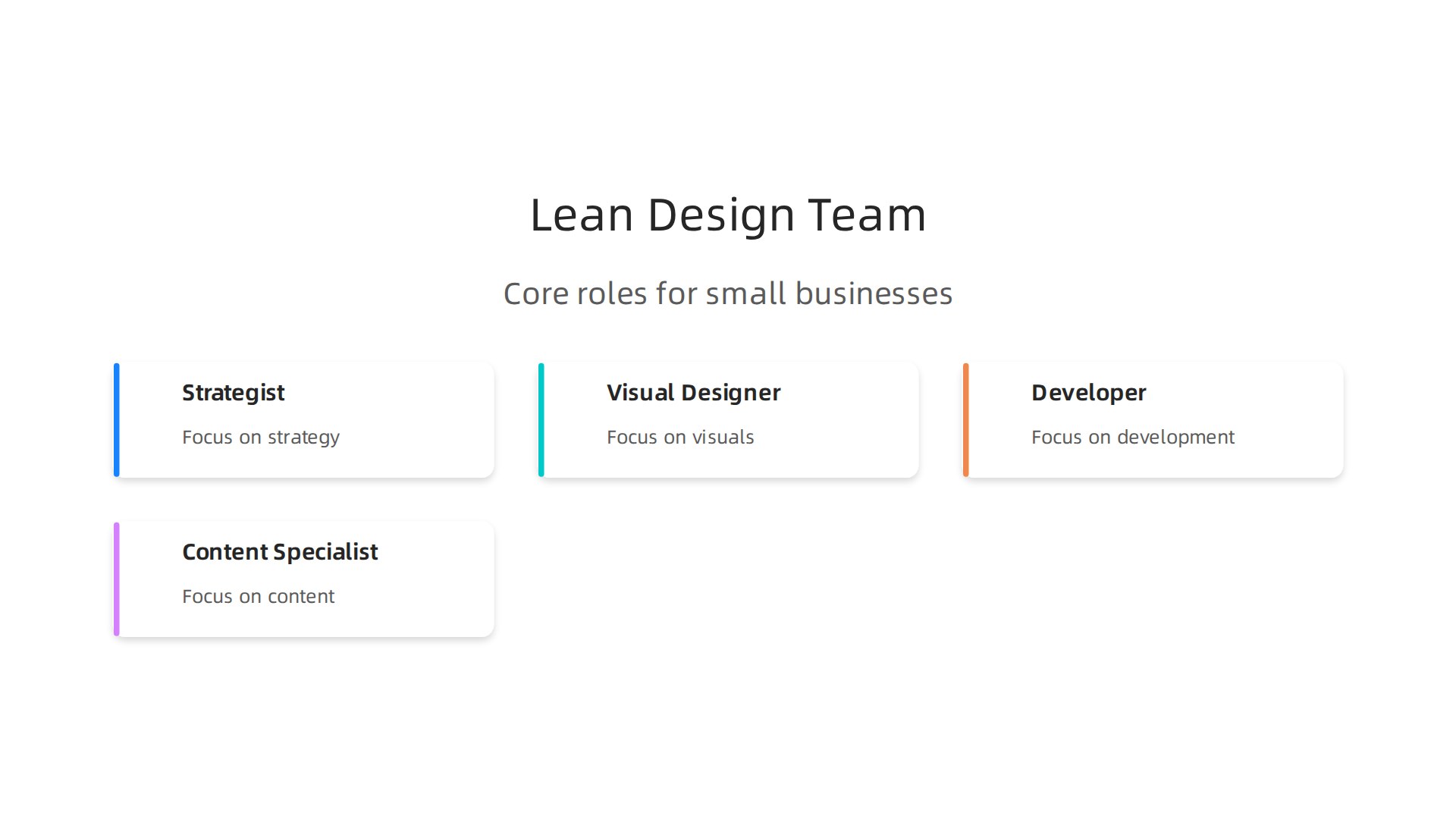
Fractional or part-time hires can fill these gaps without the high cost of a full-time team. According to Empirika, fractional design leaders cost 25–35% of a full-time VP salary. Cross-training your team in adjacent skills makes them more flexible and resilient. For more insights, check out our guide on hiring UI/UX designers. If you want a complete design team without the hassle, consider Weblish. Get Started for FREE and let experts handle your design space.
The Design Strategist (Marketing Lead)
Think of this person as the bridge between your business goals and the visual output. They oversee user research, content strategy, and conversion optimization. The design strategist makes sure every decision leads back to one question: does this help us get more customers?
For most small businesses, this role doesn’t need to be full time. A fractional design strategist who works two to three days a week can give you the same strategic direction as a high paid VP of Design. According to Empirika, these fractional leaders cost around 25–35 percent of a full time VP salary. That’s a huge savings for a small design team.
Many SMBs already have a marketing manager with a good eye for design. With some cross training, that person can handle the strategist role. They keep the design space aligned with your overall digital strategy and ensure every piece of human centered design actually serves your audience.
The key is to set clear direction early. If you want to learn more about building this role, check out our guide on hiring UI/UX designers. And if you don’t have the time to find the right person, Weblish can provide a design strategist as part of your monthly subscription. Get Started for FREE and let experts manage the strategy while you focus on growth.
The Visual/UI Designer
Once your design strategist has a plan, you need someone to bring it to life. That is the job of the Visual/UI Designer.
This person creates the actual look and feel of your website. They pick the colors, choose the fonts, and design every button and menu. Their goal is to make sure your brand stays consistent across the entire design space. Great visual design is not just about making things pretty. It is about human centered design that guides visitors where you want them to go.
Because most small businesses cannot afford a full time specialist (a UX Designer salary in 2026 can range from $77,000 to $175,000 according to KORE1), hiring a freelancer or part time pro is a smart move. Look for someone skilled in modern tools like Figma or Adobe XD. They must also understand responsive design so your site works well on phones and tablets.
The single most important step is to review their portfolio. Look at their past design works. Does the design team produce clean, user friendly layouts? If their style matches what you need, they are a great fit.
If you want expert visual design without the stress of finding and managing a freelancer, Weblish can build and manage your entire site for you. Start your FREE Trial and let our team handle the visuals while you focus on your business.
The Front-End Developer
So your visual designer has handed over a beautiful mockup. Now you need someone to turn it into a real website. That is the job of the front-end developer.
This person takes all those colors, fonts, and button designs and writes the code that makes them work. They use languages like HTML, CSS, and JavaScript to build pages that load fast and look right on every device.
A great front-end developer is essential for three things. First, they make sure your site is SEO friendly. Clean code helps search engines understand your pages. Second, they optimize page speed. Slow sites lose visitors fast. Third, they handle mobile responsiveness so your site works perfectly on phones.
Hiring a full-time front-end developer can be expensive. That is why many SMBs now hire fractional developers. A fractional pro works part time for your business. This model costs much less than a full salary but still gives you expert help. The typical fractional design leader engagement runs $10,000 to $15,000 per month for a few days a week, which is roughly 25 to 35 percent of a full-time VP of Design salary without the overhead, according to Empirika.
Look for a developer who knows popular CMS platforms like WordPress or Webflow. This makes updates easier for you later. A strong design team includes both a designer and a developer who work together in the same design space.
If hiring and managing a developer sounds like a headache, you do not have to do it alone. Weblish builds and manages fast, SEO-optimized websites for small businesses. Start your FREE Trial and let our team handle the full build for you.
The Content/Copy Specialist (Optional)
Your website design might look beautiful, but the words on it matter just as much. A content or copy specialist writes text that connects with your audience and convinces them to act. This person understands SEO and buyer psychology. They write headings, product descriptions, and calls to action that get results.
In the beginning, your design team strategist might handle the writing themselves. That is a common way to save money. But as your business grows, a separate content specialist becomes a smart investment. They make sure every word on your site aligns with your design and marketing goals. Good copy that converts visitors into customers can turn a design that simply looks nice into a design that works.
If you need help with content but want to keep costs low, consider hiring a fractional writer. You can find pre-vetted talent on platforms like GoFractional. Or let Weblish handle your entire website build, including content strategy and copywriting. Start your FREE Trial and see how a complete design team can transform your site.
Designing for Conversions: A Step-by-Step Approach
So your design team has the right people. Now it is time to talk about process.
A high-converting website is not built on guesswork. A structured process helps you research your audience, build wireframes, design the visuals, and test the results.
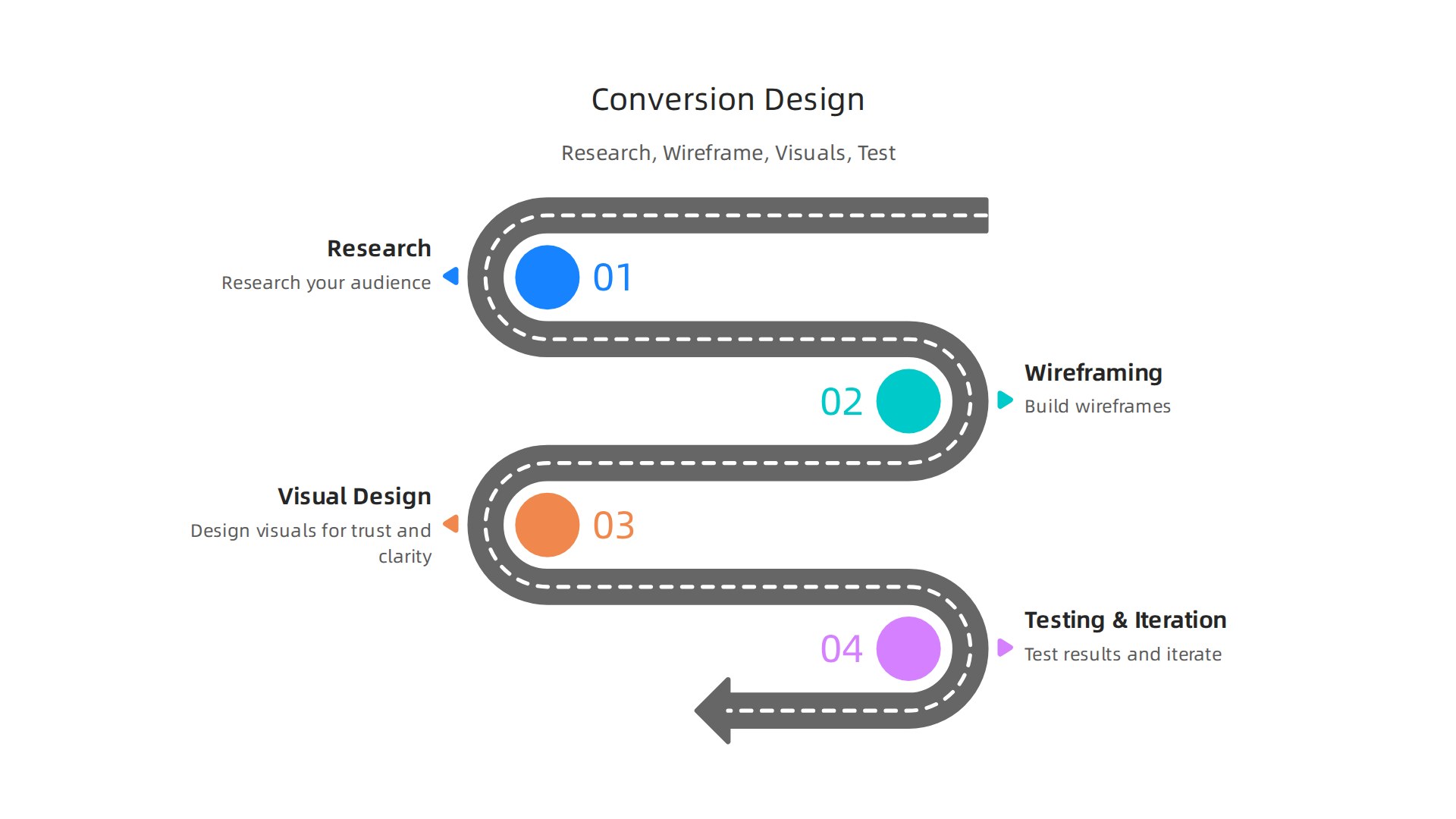
This step-by-step approach turns a beautiful design space into one that actually generates leads.
In 2026, conversion rate optimization (CRO) is a must for every business. Every design decision should aim to turn visitors into customers. When the whole team stays focused on that goal, your results improve. Learn more about building a site that converts well. Let Weblish build a complete strategy for your business. Start your FREE trial.
Research and Wireframing
Before your design team writes a single line of code, you need to understand who you are designing for. That is where research comes in.
Start by building user personas. These are fictional profiles of your ideal customers. What do they want? What frustrates them? Add competitor analysis to see what works for others in your space. Then map out the customer journey. Where do people land on your site? Where do they get stuck? This kind of human centered design research makes sure every choice serves a real need. In 2026, the best design works come from knowing your audience first.
Once your research is solid, move to wireframes. Think of a wireframe as a blueprint for your page. It focuses on layout and content hierarchy without colors or fancy fonts getting in the way. This keeps your design team focused on what matters: guiding visitors toward a conversion goal. Wireframes are fast to create and easy to change. That saves time and money.
Here is the real secret. Test those wireframes with actual users before you build anything. Early feedback helps you catch problems when they are cheap to fix. It also keeps your design space clean and intentional.
Ready to turn research into a real, working website? Start your FREE Trial with Weblish and let a dedicated design team bring your wireframes to life.
Visual Design for Trust and Clarity
Your wireframe is tested and ready. But now comes the part that makes or breaks trust: the visual design. If your fonts are inconsistent or your colors clash, visitors will feel confused and leave. That is why your design team must focus on visual hierarchy, trust signals, and mobile-first layouts.
Visual hierarchy is the art of guiding the eye. The most important element on the page, usually your call-to-action button, should be the first thing people see. Use size, color, and spacing to create a clear path. For example, a big headline followed by a bold button that says "Get Started" works much better than a page where everything fights for attention. According to conversion rate optimization best practices for 2026, simplifying your layout and removing distractions can dramatically improve click rates. Every landing page should have one clear goal and one call-to-action.
Trust signals are non-negotiable in 2026. Add customer testimonials, industry certifications, or security badges right near your conversion buttons. A high-converting web design in 2026 includes these trust builders front and center. People need to feel safe before they buy or sign up.
Do not forget mobile. Most of your traffic will come from phones. If your design does not work perfectly on a small screen, you will lose those visitors. A mobile-first approach means you design for the smallest screen first, then scale up. That guarantees a seamless experience everywhere.
Consistent typography is another secret weapon. Pick two fonts at most: one for headlines and one for body text. Use the same sizes and weights throughout. This creates a clean, professional look that feels familiar and trustworthy. Learn more about graphic design principles that turn your website into a lead generator to see how small changes make a big impact.
Ready to let a professional design team handle all this for you? Get started with Weblish and get a site that builds trust and drives conversions. Start your FREE Trial today.
Testing and Iteration
Your beautiful design is live. But the work is not done. The best design teams know that a website is never finished. It needs constant testing and small improvements. This is where human centered design really shines. You watch how real people use your site, then make changes based on what you see.
Start with A/B testing. Test one headline against another. Try two different images. Compare button colors or button text. Even a small change can lift your conversion rate by a lot. According to conversion rate optimization best practices for 2026, testing is one of the fastest ways to improve results without a full redesign.
Use tools like heatmaps and session recordings. They show you where visitors click, where they pause, and where they get stuck.

If people keep leaving a page without scrolling, something is wrong. Change the layout or the message. CRO web design focuses on fixing these friction points to make the experience smoother.
Never guess what works. Look at the data first. Schedule a regular optimization sprint every month. Spend one day testing a small change, measuring the impact, and deciding the next move. This keeps your site fresh and improving all the time.
Want to learn more about finding hidden friction? Read our guide on what nobody tells you about your website experience in 2026.
If you do not have time to run tests yourself, a design team like Weblish can handle it for you. They use data to optimize your site every month. Get started with Weblish and let them turn your site into a conversion machine. Start your FREE Trial today.
Budgeting and Scaling Your Design Team
You have been testing and learning. Now you need the right partners to keep that momentum going. But you do not need a giant in house team right away.
Here is the smart move for 2026. Start with a fractional or freelance design team. This keeps your design space flexible while you prove what works. A premium fractional marketing package can give you an entire team for a predictable monthly cost, as seen in this marketing agency pricing guide. Compare that to hiring full time staff using these UI UX designer salary benchmarks.
Always look for transparent pricing. A monthly retainer gives you full control over your budget. Project based pricing works for specific launches or campaigns.
And track everything. Your design works should directly connect to lead generation revenue. When you can show the numbers, growing your investment is a simple choice.
If managing all this feels like too much, let a dedicated design team handle it for you. Weblish offers a transparent, subscription first model that scales with your success. Get started with Weblish to claim your free trial. Start your FREE Trial today.
Fractional Hiring Strategies
Here is the smartest way to grow your design team in 2026. Hire senior talent on a part-time basis. You bring in an expert for 10 to 20 hours per week and get high level work without the full time salary. Fractional roles can save businesses 50 to 85% on talent costs while delivering strong strategy and execution, according to marketing industry data.
Where do you find these fractional designers? Platforms like Toptal and Upwork are good options. Local agencies also offer fractional arrangements. Compare these options against full time hiring using UI UX designer salary benchmarks.
The key is structure. Define your deliverables clearly. Set a weekly or biweekly check in schedule. When you treat those hours with care, you get focused, high impact work in return.
If you want a full design team without the hiring hassle, Weblish offers a subscription model that gives you senior talent for a predictable monthly cost. Get started with Weblish and claim your free trial. Start your FREE Trial today.
After you decide on the right talent mix for your design space, lock in a pricing model that protects your budget.
Predictable Pricing Models
A monthly retainer with a fixed scope of work is the best choice. You pay the same amount each month for a set number of design tickets. This makes budgeting simple. In 2026, retainers for senior talent can range from $3,000 to $10,000 per month and deliver strong cost savings while keeping your design team focused, according to marketing industry data.
Project-based pricing works well for one-time redesigns. But it does not support ongoing human centered design improvements.
A hybrid model gives you the best of both worlds. You keep a base retainer for steady work and add project fees for big launches.
No matter which model you choose, clear design principles make your retainer work harder. Check out these graphic design principles that turn your website into a lead generator.
If you want predictable pricing without managing vendors, Weblish offers a flat monthly subscription for your design team needs. Get started with Weblish today. Start your FREE Trial now.
Measuring ROI
Once your pricing model is set, the next step is proving your design team pays off. Without measurement, you cannot tell if your design space is working or just costing money. The goal is to connect design changes directly to revenue.
Track three numbers: cost per lead, conversion rate, and lead quality.

In 2026, companies using a fractional leadership model expect ROI within 6–12 months, according to fractional CMO ROI benchmarks. To see that return, you need proper attribution. Put UTM parameters on every link from your design works and set up lead source tracking in your CRM. This tells you which redesign or landing page actually drove a sale.
Review your metrics quarterly. If your human centered design improvements are working, you should see conversion rates climb and cost per lead drop over time. If not, adjust your approach quickly.
Want to make sure your website turns visitors into customers? Read our guide on building a site that converts.
If you want a design team that focuses on measurable results without the headache of managing multiple vendors, Weblish offers flat-rate subscriptions that include tracking and optimization. Get started with Weblish today. Start your FREE Trial now.
Integrating Design with Your Digital Marketing Strategy
Here is the thing: your customers do not see your website, social media, and emails as separate things. They see your brand. If your design team works in a silo while another team runs your marketing, the messaging and look often clash. That confuses people and hurts trust.
Winning at brand consistency requires planning and execution across every channel. Your design space and marketing space need to share the same visual identity and tone so customers recognize you everywhere. That is how you build trust.
Your design team should also understand basic SEO principles. They need to know how layout and code affect search rankings. When they build a landing page, it should load fast and use proper heading tags. That is part of human centered design too.
Here is a smart shortcut: the visual assets you create for your website can be repurposed for social media posts and email campaigns. That saves your design team time and keeps your look consistent. For example, a hero image from a new landing page can become a Facebook ad graphic or an email header.
Need more ideas on making your entire site work harder? Read our guide on building a site that converts.
When your design works and your marketing work together, you create a seamless experience. That is what turns visitors into repeat customers.
Ready to make your brand consistent across every channel without managing everything yourself? Get Started for FREE with Weblish and let the team handle integration for you.
SEO-Friendly Design
So your design team is working closely with marketing now. That is a big win. But they still need one more partner: your SEO specialist. Without search friendly foundations, even the most beautiful site stays hidden from customers.
SEO friendly design starts with clean code. Search engines need to read your content easily, and they hate slow pages.
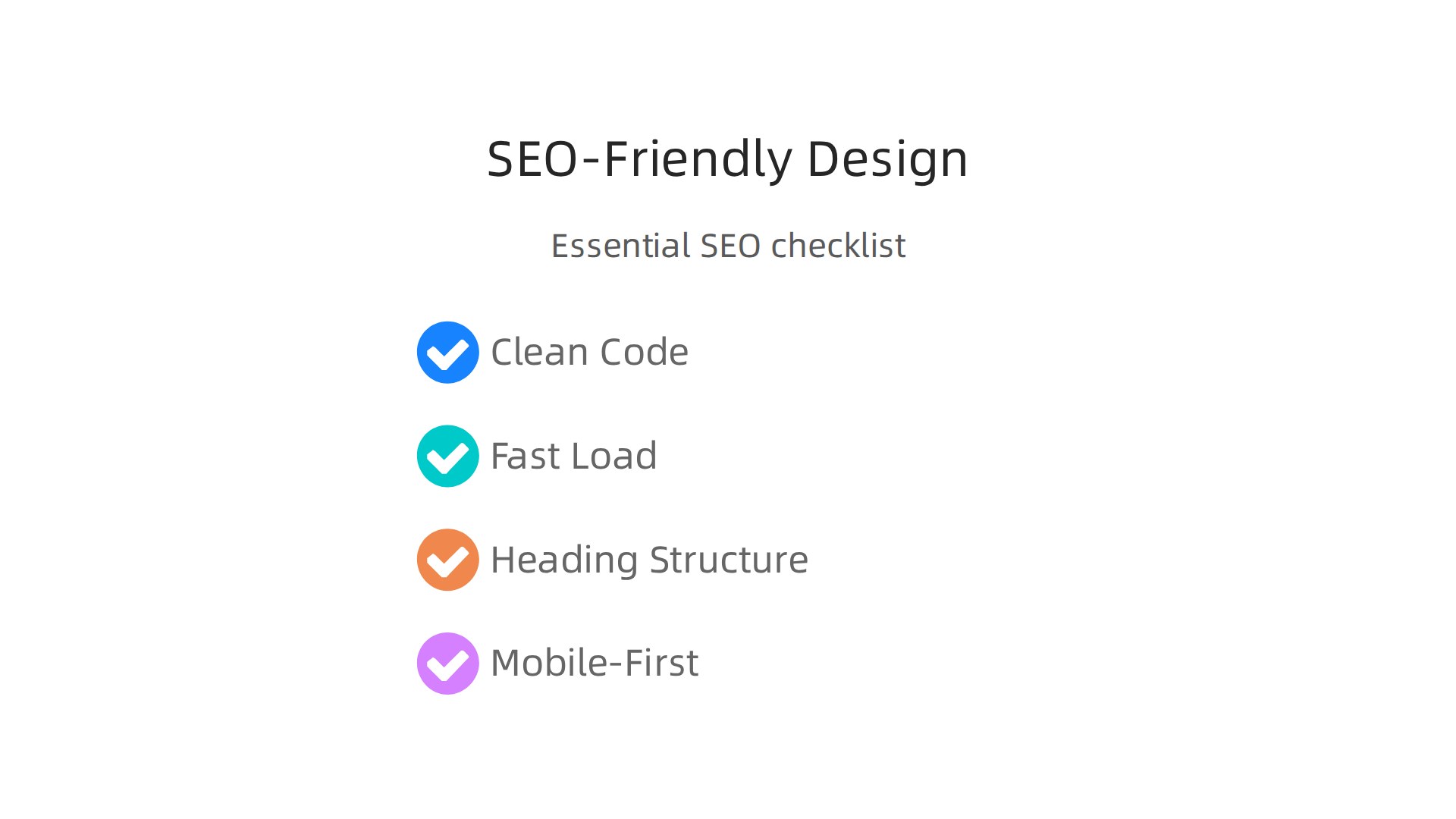
If your layout is beautiful but takes five seconds to load, visitors leave. Your design space needs to prioritize fast load speeds and proper heading structures. This is a core part of human centered design because real people dislike slow sites too. Keeping your technical foundation consistent across pages builds trust and helps search rankings. That kind of unified performance makes brand consistency actually work for you behind the scenes.
Here is a common trap. Your design team might love complex JavaScript animations. But heavy JavaScript can block Google from seeing your content. Designers and SEO specialists must collaborate to find animations that look good without breaking search access. Learn how the right visual hierarchy can boost both user experience and rankings in our guide on graphic design principles that turn your website into a lead generator.
Finally, think mobile first. Google now ranks sites based on their mobile version. If your design works only on a desktop screen, you are losing rankings. A truly human centered design works perfectly on every device. A service like Weblish builds every site mobile first so you never have to worry about technical SEO.
Stop guessing what helps your site rank. Start your FREE Trial with Weblish and get a team that integrates SEO into every single design decision.
Social Media and Email Visual Consistency
So your site loads fast and search engines love it. But what happens when visitors see your brand on social media or in their inbox? If the look and feel are different, they get confused. That is where your design team steps in again.
Brand consistency across channels builds recognition and trust. When your colors, fonts, and tone match everywhere, people remember you faster. According to Bazaarvoice, consistent use of your color palette, messaging, and personality across all channels helps customers quickly identify and trust your brand. Your design team should create a style guide to make this easy. Learn more about how visual hierarchy impacts trust in our guide on graphic design principles that turn your website into a lead generator.
Email templates designed by your team perform better than generic ones. Social media graphics must align with your website’s visual identity too. This is true human centered design because it respects your audience’s experience everywhere they find you. A service like Weblish can help you maintain that consistency without extra stress.
Ready to make your brand look professional across every channel? Start your FREE Trial with Weblish and get a team that unifies your design everywhere.
Summary
This article explains why small and mid-sized businesses should invest in a dedicated design team instead of one-off agency projects, showing how continuous, human-centered design turns a static