.png)
Marketing vs Advertising: The Simple Framework SMBs Are Missing
This article explains why confusing marketing and advertising undermines small and mid-sized business growth and wasted budget. It defines marketing as the broa...


Why Understanding the Difference Between Marketing and Advertising is Critical for SMB Growth
Think about the last time you planned your business’s budget. You likely set aside money for "marketing." But did you mean paying for social media ads, or did you mean researching your customers, building your email list, and improving your website’s content?
Here is the thing. Many small and mid-sized business owners use the terms "marketing" and "advertising" interchangeably. This mix-up is more than just wordplay.

It leads to a disjointed strategy where money gets spent on ads that don’t resonate, while the foundational work of building a brand is ignored. The result is often a confused message and a wasted budget.
The stakes are high in 2026. Data shows that nearly half of small businesses plan to increase their marketing budgets. Furthermore, over half plan to invest more in video marketing and advertising. But there is a clear gap in strategy. For instance, while 65% of SMBs run some form of pay-per-click, only 40% effectively use search ads. This indicates money is being spent, but not always in the most strategic way.
When you confuse marketing with advertising, you put the cart before the horse. You might buy ads (advertising) before you truly understand who you are talking to or what they need (marketing). This is why clarity is the absolute first step to building a cohesive digital presence that actually generates leads month after month.
This article will cut through the noise. We will give you a clear, practical framework for understanding the core marketing vs advertising definitions. You will learn how to see marketing as the big-picture strategy and advertising as one powerful tactic within it. This knowledge lets you allocate your finite resources wisely, connect with your ideal customers, and drive consistent growth.
If managing this balance feels overwhelming, you are not alone. Many successful SMBs partner with a done-for-you growth service like Weblish to handle the complex integration of strategy, design, and promotion, transforming their website into a reliable lead generation engine.
We will also explore how modern tools, like building a private search engine, fit into a broader marketing strategy. Let us build a plan that works.
What is Marketing? A Holistic View
So, if advertising is just one piece of the puzzle, what is the whole picture? Let us clear up the marketing definition once and for all.
Think of marketing as the entire blueprint for your business’s relationship with the world. It is not just about shouting your message. It is about understanding who needs to hear it, what they truly want, and how to deliver it in a way that builds lasting value. The American Marketing Association defines it as "the activity, set of institutions, and processes for creating, communicating, delivering, and exchanging offerings that have value for customers." In simpler terms, marketing is everything you do to get, keep, and grow a customer.
This holistic view means marketing touches every part of your business. It includes:
- Research: Who are your ideal customers? What problems keep them up at night?
- Product Development: How can you build a service or product that perfectly solves that problem?
- Pricing: What is the value of your solution, and what will customers happily pay?
- Promotion: This is where advertising lives. It is how you communicate your value.
- Distribution: How do customers get your product? In a store, on your website, via an app?
The ultimate goal is not a single sale. It is building long-term brand value and relationships that turn customers into advocates. As experts note, marketing is fundamentally about "acquiring, satisfying and retaining customers."
In 2026, modern marketing for small businesses is deeply connected to digital channels and data. It is about using insights from your website, social media, and customer interactions to make smarter decisions. Leading firms like McKinsey emphasize that to drive growth today, marketing must modernize with specific capabilities and mindsets, moving beyond old, siloed approaches. This means integrating activities and using data to understand the full customer journey, from the first Google search to a repeat purchase.
This might sound like a lot to manage on top of running your daily operations. If orchestrating this comprehensive strategy feels overwhelming, partnering with a done-for-you growth service can provide the expert blueprint and execution you need. For example, tools like building a private search engine are part of this modern, data-driven marketing approach, helping you own customer insights directly.
When you see marketing as this big-picture strategy, every dollar you spend on advertising has a stronger foundation and a clearer purpose.
What is Advertising? The Paid Promotional Engine
If marketing is the entire blueprint for your business, advertising is one of the most powerful tools you use to build it. Think of it this way. Marketing decides what house to build, for whom, and why. Advertising is putting up the "For Sale" sign and running ads to get people to come see it.
So, what is advertising? Simply put, it is a paid, persuasive message. It is a subset of marketing focused entirely on promotion. The goal is to create awareness, generate interest, and drive a specific action, like a website visit or a sale, by placing your message in front of a chosen audience. Where marketing is the big-picture strategy of acquiring, satisfying and retaining customers, advertising is the tactical engine you rev up to make that first acquisition happen.
Here is the key difference in the "marketing vs advertising" discussion. Marketing encompasses everything from product development to customer service. Advertising lives squarely in the "communication" part of that process. As the American Marketing Association notes, marketing involves creating, communicating, delivering, and exchanging value. Advertising is a primary method for that "communicating" piece.
In 2026, this is most visible in digital advertising. This includes the social media ads you scroll past, the search results marked "Ad," and the display banners on websites. For small businesses, this digital shift is crucial. It turns advertising from a blunt tool into a precision instrument. You can target people based on their interests, search history, location, and even life events. This means you can measure your return on every dollar spent, which is vital when your budget is limited.
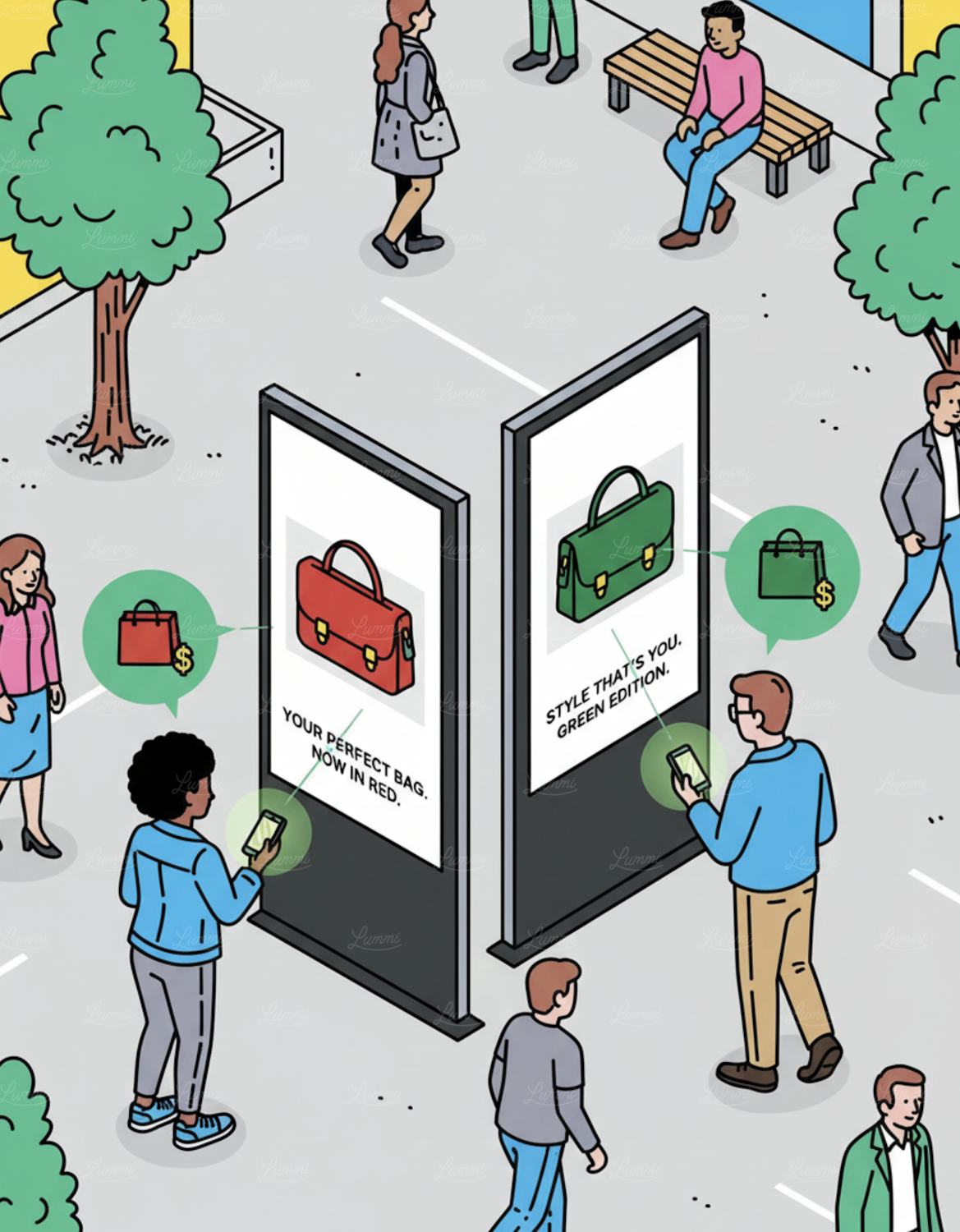
But running effective paid campaigns requires know-how. You need to craft the right message, choose the correct platforms, and constantly analyze what’s working. If managing this tactical engine feels like a full-time job you don’t have, a service that handles it for you can be a game-changer. Partnering with a done-for-you growth service like Weblish provides the expert execution of these paid promotional strategies, ensuring your advertising budget works as hard as possible. This allows you to focus on the bigger marketing picture, like using insights from tools for building a private search engine to understand your customers better.
Marketing vs. Advertising: The Core Differences
Many people use the terms "marketing" and "advertising" like they are the same thing. This mix-up can lead to big mistakes in how you spend your budget and plan your growth. Understanding the core differences is not just academic; it is essential for making smart business decisions.
Think of it as a big picture versus a single tool. Marketing is the entire strategy. It is the big-picture plan that covers everything from figuring out what your customers want (product development) to how much to charge (pricing) to how you keep them happy (customer service). Building a successful marketing strategy in 2026 requires aligning all these moving parts toward clear goals.
Advertising is one specific tool within that plan. It is the paid, promotional piece focused solely on getting your message in front of people. As experts note, advertising is the act of paying to display a message, while marketing is the broader strategy that includes much more.
Here is a simple way to see the core differences:
- Scope: Marketing is wide (the whole business journey). Advertising is narrow (just the promotion).
- Goal: Marketing aims to build a lasting relationship with a customer. Advertising aims to create awareness and prompt an immediate action, like a click or a sale.
- Investment: Marketing is an ongoing, long-term investment in your brand’s health. Advertising is often a shorter-term, tactical spend to boost specific campaigns.
Confusing the two is a common error. You might pour money into ads (advertising) without having a clear plan for what happens when a customer arrives on your site (marketing). Or, you might focus only on marketing strategy without ever using ads to drive new people to your business. The most effective approach uses both in harmony: a strong marketing plan guides where and how you use your advertising budget for maximum impact.
If orchestrating this balance feels overwhelming, a service that handles the execution can be a huge help. Partnering with a done-for-you growth service like Weblish provides the expertise to align your advertising tactics with your broader marketing strategy, ensuring every dollar works toward your long-term goals.
1. Scope and Philosophy
The biggest difference between marketing and advertising is in their scope and underlying philosophy. Marketing is the master plan. It is the all-encompassing strategy that considers the entire journey a person takes with your brand. Advertising is just one part of that plan, focused on delivering specific promotional messages.
Think of a road trip. Marketing is the whole trip. It involves planning the route (your strategy), choosing the right car (your product), deciding when to go (timing), and making sure everyone has a good time (customer experience). Advertising is just the billboard you see along the highway. Its job is to grab your attention at that one moment and suggest a direction.
As experts clarify, advertising is the paid act of displaying a message, while marketing is the much broader strategy. Marketing’s scope covers everything from product creation and pricing to sales and post-purchase service. It’s about building a lasting relationship over the entire customer journey. Elements like your website’s user experience, which you can learn more about in our guide on why a UX designer’s skills are crucial, are fundamental marketing concerns.
Advertising’s scope is narrow. It focuses solely on promotion and communication at specific touchpoints. Its philosophy is about interruption and persuasion to generate immediate awareness or action. This is why in 2026, the top marketing trends emphasize holistic strategy over individual tactics.
Managing this wide marketing scope can be complex. For a strategic, done-for-you approach that handles everything from planning to execution, consider a service like Weblish. They help build the complete marketing journey so your advertising has a solid foundation to work from.
2. Goals and Objectives
While both are important, the goals of marketing and advertising are different. You can think of it as a marathon versus a sprint.
Marketing aims for the long run. Its main objective is to build a strong brand and create loyal customers over time. Success is measured by the overall health of your business, like your brand reputation, market share, and customer satisfaction. This aligns with the 2026 marketing trends that emphasize long-term strategy over quick, flashy tactics.
Advertising, on the other hand, often has shorter-term goals. It’s focused on getting a specific, immediate result. Think of goals like boosting awareness for a new product this month or driving sales during a holiday campaign. Its success is measured by campaign-specific numbers like click-through rates or cost per acquisition.
As experts note, a key difference in the marketing vs advertising debate is their core objectives. Marketing encompasses the full strategy to create value, while advertising is specifically about promoting that value at a given moment.
For your marketing goals to succeed, every part of the customer experience needs to work together, which is why understanding UX design is so critical. If managing this complete, goal-oriented strategy feels overwhelming, a service like Weblish can handle the marathon for you, ensuring your advertising sprints are part of a winning long-term plan.
3. Time Horizon and Patience
This is where patience truly comes into play. The difference in time horizon is one of the clearest separators in the marketing vs advertising debate.
Marketing is a continuous, never-ending process. It’s the steady work of building your brand, nurturing customer relationships, and improving your product. Think of strategies like content marketing or search engine optimization (SEO). You publish blog posts and optimize your site, and the benefits build up slowly, month after month. Success compounds over years. According to experts, marketing encompasses the full, ongoing strategy to create value for customers.
Advertising, in contrast, is all about campaigns. You run a set of ads for a few weeks to promote a sale, then the campaign ends. The results are more immediate. You get clicks, views, and sales quickly. But here’s the catch. When you stop paying for the ads, the traffic usually stops too. The results don’t accumulate in the same way.
In 2026, winning brands understand this balance. They use advertising for quick wins and immediate visibility, but they invest in long-term marketing to build lasting value. If you want the compounding results of SEO without the years of wait, a service like Weblish can implement a complete strategy for you, accelerating your path to growth.
4. Cost Structure and Investment
How you budget your money shows another big difference in the marketing vs advertising debate.
A marketing budget is broad. It covers a wide range of activities that help your whole business. This includes things like market research, creating website content, doing search engine optimization (SEO), and improving your website’s user experience. Experts note that these responsibilities and costs differ significantly from pure advertising. Think of marketing as the essential, ongoing cost of doing business in the modern world, much like rent or salaries.
An advertising budget is specific. It’s the money you spend to buy space or time to show your ads. You pay for clicks on Google, video views on YouTube, or an ad in a magazine. When the campaign is over, the spending stops. This makes advertising a variable promotional cost you can turn on and off.
In 2026, smart businesses fund both. They see marketing as a necessary operational investment to build their foundation. As one analysis explains, marketing is the broader strategy that creates lasting value. They use advertising as a flexible tool for immediate promotions. If managing the ongoing cost and complexity of a full marketing strategy feels overwhelming, a service like Weblish can handle it for you with a predictable subscription, turning those foundational activities into a steady stream of leads.
How Marketing and Advertising Work in Tandem
You don’t have to pick a side. Actually, the most successful businesses in 2026 don’t see it as marketing vs advertising. They see them as two parts of a single powerful engine. The best strategy integrates advertising seamlessly into a much bigger marketing plan.
Here’s how they work together.
First, marketing builds the foundation. It does the deep work of defining your brand, understanding your audience, and crafting your core message. This foundation is what makes your advertising effective. A clear, strong brand makes every ad dollar work harder because people recognize and trust you faster. This foundational work, like improving your site’s user experience, is a core part of a complete marketing strategy. When your base is solid, your ads have a much better place to send people.
Then, advertising turns up the volume. It takes that strong message and broadcasts it to the right people at the right time. As noted in advertising best practices, keeping your message clear and simple is key for good ads. But that message comes from your marketing work. Advertising acts like a megaphone for the story marketing has written.
There’s a powerful feedback loop, too. Every ad campaign generates data. You see what messages get clicks, what offers convert, and what audiences respond. This isn’t just advertising data. It’s precious marketing intelligence. You can feed this information right back into your broader marketing strategy to make it smarter. Modern guides on integrated marketing show that when public relations and paid media work together, they can achieve significantly higher engagement because each part supports the other.
Think of it this way. Marketing is the strategy, the preparation, and the long term relationship building. Advertising is the tactical strike, the immediate promotion, and the conversation starter. One sets the stage. The other brings in the crowd.
Putting this all together can be complex. It requires aligning strategy, creativity, and resources across many channels. If managing this integrated approach feels beyond your team’s bandwidth, a service like Weblish can manage it for you. They build the marketing foundation and run the amplifying campaigns, turning your website into a consistent lead generator so you can focus on your business.
Common Misconceptions That Hurt SMBs
It’s easy to get confused. The terms "marketing" and "advertising" are used together so often that their meanings can blur, especially when you’re busy running a business. This confusion leads to costly mistakes. Here are three common misconceptions in the marketing vs advertising debate that hold small and mid-sized businesses back.
"Marketing is just advertising."
This is the biggest one. If you think marketing is only about running ads, you’ll miss everything that happens before the "buy now" button. This view leads to underinvesting in foundational work. Marketing includes building your brand story, researching your audience, creating helpful content, and improving your site so people can find you for free through search engines (SEO). As experts note, integrated marketing requires aligning strategy and creativity across many areas for powerful messaging. Advertising is just one tool in that much bigger toolbox. When you skip the foundational marketing, your ads have to work much harder, and often cost you more for worse results.
"If we run ads, we’re doing marketing."
Running ads without a marketing foundation is like hanging a sign on an empty building. You might get people to look, but they have nothing to trust and nowhere to go. This mistake ignores the need for a website that actually converts visitors into leads and a clear brand strategy that makes your ads meaningful. Think of your website’s user experience (UX). If your ad brings someone to a slow, confusing site, you’ve wasted that click and your money. The ad is the invitation, but the marketing is the entire experience you deliver. True marketing and advertising work in a cycle. The marketing sets the stage, and the advertising fills it with an audience.
"We can’t afford marketing."
This usually comes from thinking marketing equals big, expensive ad campaigns. In reality, marketing has many scalable, organic components that build value over time without a huge weekly budget. Creating a blog, optimizing your Google Business Profile, posting consistently on social media, and sending a newsletter are all powerful marketing activities. They build recognition and trust, which makes any paid advertising you do run later on much more effective and affordable. The key is starting with a clear strategy. As highlighted in guides on integrated practices, a unified approach across earned, owned, and paid channels drives better results.
Letting go of these myths is the first step. Marketing is the complete strategy for building relationships and value. Advertising is a powerful tactic to promote an offer within that strategy.
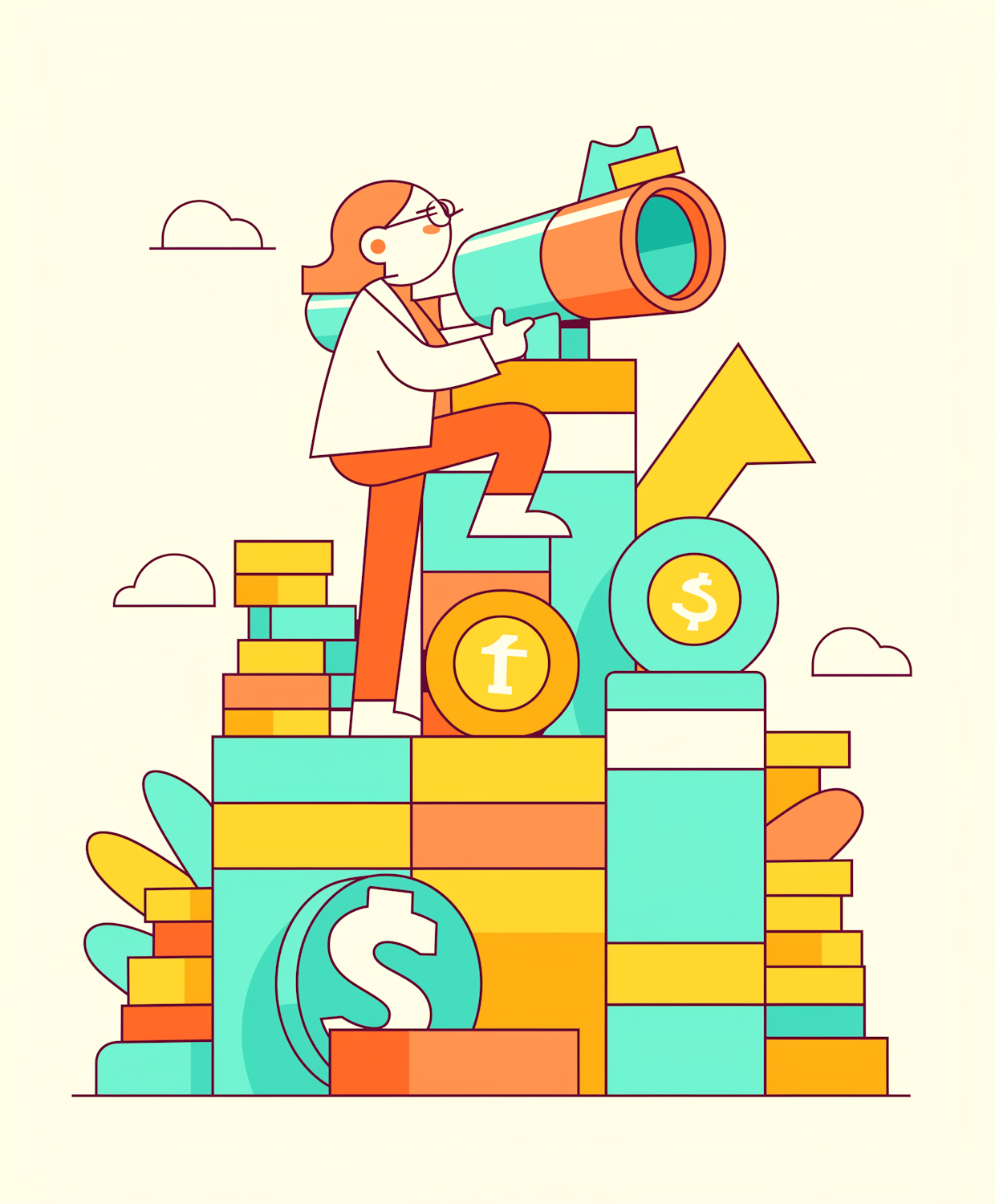
When you see them as partners, you can build a stronger, more affordable plan for growth.
If building that complete marketing foundation feels out of reach for your team’s time or expertise, a service like Weblish can manage it for you. They handle the strategic marketing setup and amplifying campaigns together, turning your website into a consistent lead generator so you can focus on your business.
Building a Cohesive Strategy: Your Website as the Hub
Now that we’ve cleared up the myths, let’s talk about building a strategy that works. For a small business, your website isn’t just a digital business card. It’s the central hub where all your efforts meet. Think of it as your home base.
Marketing builds up this hub. It creates helpful blog posts that answer customer questions, which helps your site rank higher in Google. It shapes your brand story and engages people on social media. All of this work builds your website’s authority and trust. People start to see you as a helpful expert.
Advertising, on the other hand, acts like a megaphone. It drives targeted traffic straight to your hub. You can run Google Ads for people searching for your services or social media ads to a specific audience. As noted in the 2026 small business marketing trends, driving and converting that website traffic is the entire point of using online ads.
This is the perfect partnership in the marketing vs advertising debate. Your marketing makes the website welcoming and trustworthy. Your advertising invites the right people to visit. When they arrive, they find exactly what they were promised, which makes them more likely to become a customer.
What Happens When the Hub Is Broken?
A website that looks pretty but doesn’t convert visitors is a major problem. It breaks the chain. Imagine spending time and money on marketing to build interest, and then spending more money on ads to get clicks. If your website is slow, confusing, or doesn’t have a clear next step, you lose that visitor forever. You’ve wasted both investments.
A high-performing website in 2026 needs to be fast, especially on mobile phones. It should load quickly, be easy to navigate, and guide visitors to take action, like filling out a contact form or making a purchase. Optimizing these elements is a core part of a modern marketing strategy. Your site’s user experience (UX) is crucial. If you need a deep dive on why this matters, our guide on whether a UX designer degree is worth it breaks it down.
Furthermore, your website is your greatest source of owned data. Understanding what visitors do on your site helps you refine both your marketing content and your ad targeting. This is where tools for deeper analysis become valuable. For more on leveraging your own data, explore our article on why your business needs a private search engine.
The bottom line is simple. Your website is the foundation. Without a strong, conversion-focused hub, the separate efforts of marketing and advertising don’t connect. They just become separate expenses with disappointing results. But when your website is optimized to welcome and convert visitors, every piece of your strategy works together to grow your business.
Building and maintaining this kind of strategic hub requires consistent effort. If managing the design, SEO, content, and technical performance feels beyond your team’s capacity, a service like Weblish can handle it. They focus on creating and managing high-converting websites as part of a complete growth service, turning your site into the reliable lead generator it should be.
Measuring Success: Metrics That Matter for Each
You’ve built a strong hub and are using marketing and advertising together. Great. But how do you know it’s working? How do you measure the return on your time and money?
Here’s the thing. Marketing and advertising succeed in different ways and on different timelines. So, you can’t measure them with the same ruler. Looking at the wrong numbers will give you the wrong picture.
The Marketing Scorecard: Leading Indicators
Marketing builds long-term value. Its success shows up in leading indicators, or early signals of future growth. You track these to know if your foundation is getting stronger.
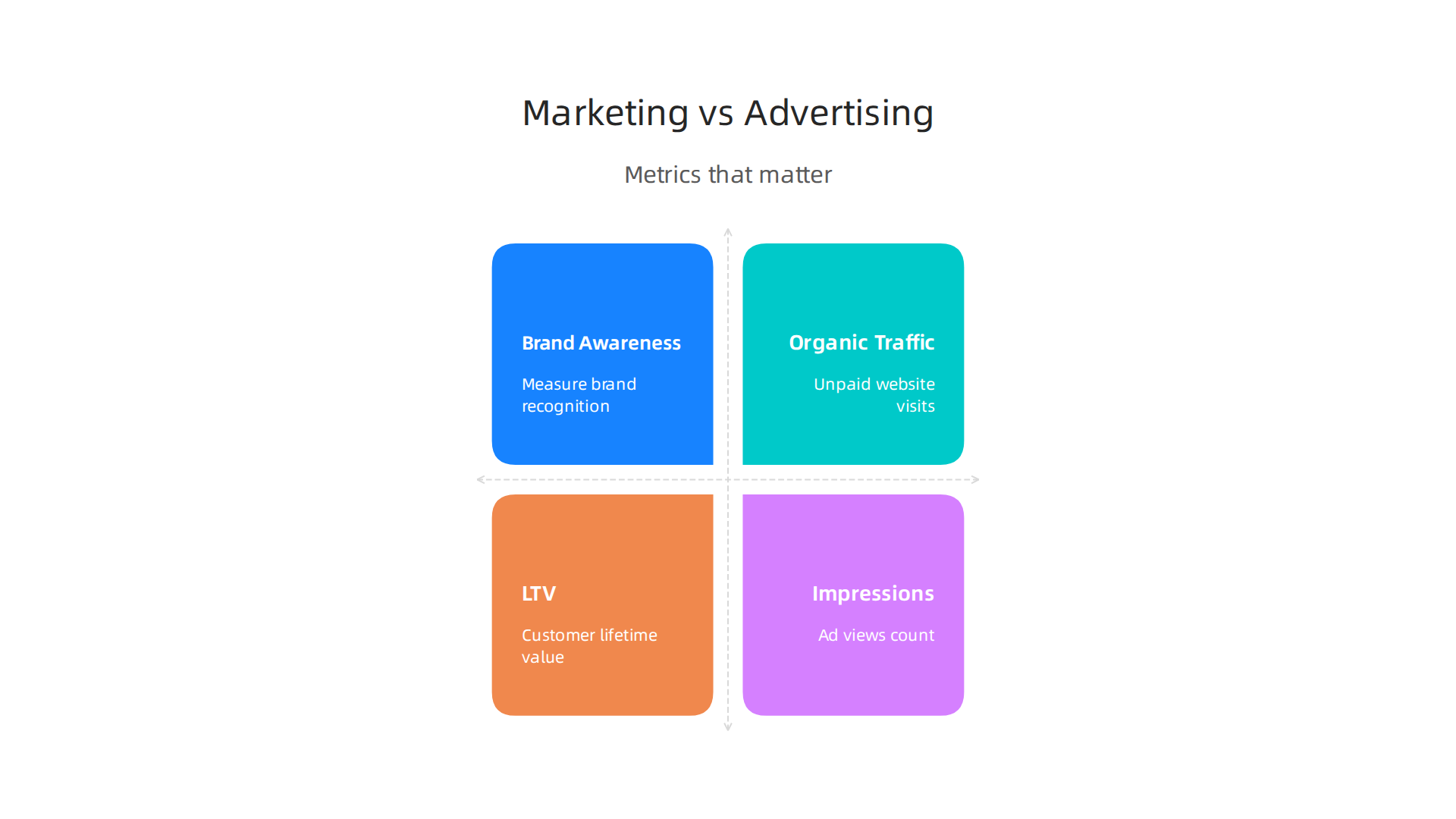
- Brand Awareness & Reputation: Are more people searching for your business name? Is your social media following growing with engaged followers? Are you being mentioned in industry conversations?
- Organic Traffic & Engagement: How many visitors come to your website from Google searches without you paying for ads? How long do they stay, and what pages do they read? High-quality content attracts the right people.
- Lead Quality: Are the contact form submissions and email sign-ups you get genuinely interested in what you offer? Marketing aims to attract people who are a good fit, not just any click.
- Customer Lifetime Value (LTV): This is a key marketing metric. How much does a customer spend with you over their entire relationship? Effective marketing builds loyalty that pays off again and again.
A strong content and SEO strategy directly fuels these metrics. For example, a recent trend report notes that over half of small businesses plan to invest more in video marketing and advertising in 2026, as it’s a powerful tool for building brand awareness and engagement.
The Advertising Dashboard: Campaign Performance
Advertising is about direct, measurable action. Its metrics tell you the immediate efficiency of your spending. You optimize these daily or weekly.
- Impressions & Reach: How many people saw your ad? This measures visibility.
- Click-Through Rate (CTR): Of the people who saw it, what percentage clicked? This tests your ad’s appeal.
- Cost Per Lead (CPL) or Cost Per Acquisition (CPA): How much did you pay for each new lead or customer from the ad? This is your efficiency gauge.
- Return on Ad Spend (ROAS): For every dollar you put into the ad campaign, how many dollars in revenue did you get back? This is the ultimate bottom-line number for performance.
Statistics show that while 65% of small businesses run some form of pay-per-click (PPC) advertising, there’s often a gap in using more advanced tactics like search ads effectively. Tracking the metrics above is how you close that gap and ensure your ad budget is working hard.
Why You Need to Track Both
As a small business, you need both dashboards. If you only look at advertising metrics, you might cut a brand-building content campaign because it didn’t generate immediate sales, missing its long-term value. If you only look at marketing metrics, you might keep funding an ad campaign that gets lots of clicks but never converts, burning cash.
The full picture comes from connecting the dots. For instance, marketing efforts that build your reputation can lower your advertising costs over time, as people are more likely to trust and click on your ads. Understanding this interplay is where smart strategy lives. To leverage the data from both sides effectively, understanding your own analytics is key, which is why tools for deeper, private analysis are becoming more relevant. You can learn more about this in our article on why your business needs a private search engine.
The key takeaway? Marketing metrics tell you if you’re building a beloved, authoritative brand. Advertising metrics tell you if your targeted promotions are efficient. Track them separately, but review them together to guide your overall strategy and budget, especially as nearly half of small businesses plan to increase their marketing budgets in the current year.
Summary
This article explains why confusing marketing and advertising undermines small and mid-sized business growth and wasted budget. It defines marketing as the broad, long-term strategy that includes research, product, pricing, distribution, and customer experience, and advertising as the paid, tactical promotion that drives immediate attention. You’ll learn how the two work together — marketing builds the foundation and brand trust, while advertising amplifies targeted messages and generates quick results — and why both require different time horizons, metrics, and budgets. The piece covers common SMB mistakes, shows how your website should act as the central hub that converts ad traffic, and highlights the metrics to track for each discipline. It also points to modern tools like private search engines and recommends considering done-for-you services such as Weblish when teams lack capacity. After reading, you’ll be able to separate strategy from tactics, prioritize investments, and set up measurement that shows both short- and long-term returns.