Digital Marketing Strategies for Businesses Proven Tactics for SMB Growth
This article is a practical guide to digital marketing strategies SMBs can use in 2026 to attract, engage, and convert customers without a huge budget. It expla…


Introduction: The Digital Marketing Landscape for SMBs
If you run a small or mid-sized business in 2026, you already know the struggle. Big brands pour thousands into ads, SEO teams, and polished websites while you try to do more with less. The gap feels huge. But here’s the thing: you don’t need a giant budget to compete. What you need is a smart, affordable plan built on tactics that actually work.

Modern digital marketing strategies for businesses aren’t just for the big players. With the right approach, you can attract the right visitors, turn them into leads, and keep them coming back. Whether you are investing in digital advertising marketing, building a social media marketing strategy, or learning what is content marketing, success comes from understanding your audience first.
Data shows that businesses who take the time to create buyer personas see better results. When you know exactly who you’re talking to, every piece of digital marketing online becomes more effective. That’s why this guide focuses on practical, research-backed steps you can start using today.
We’ll walk through the core tactics that help SMBs attract, engage, and convert their ideal customers. From targeting the right channels to measuring what matters, each section gives you clear actions to take. If you want to skip the guesswork and create an internet marketing strategy that generates leads, you are in the right place.
Ready to build a plan that works for your business? Grow Your Traffic on Autopilot and let the systems do the heavy lifting.
Understand Your Ideal Customer
Before you invest a single dollar in digital advertising marketing or craft a social media marketing strategy, you need to know exactly who you are talking to.

Throwing money at broad campaigns without a clear picture of your audience is like trying to hit a target in the dark.
A buyer persona is a research-based profile of your ideal customer. It goes beyond basic details like age and location. The best personas capture goals, challenges, motivations, and what actually drives a buying decision. When you build these profiles, every piece of digital marketing online becomes sharper and more effective.
Here is a simple truth: buyer personas help you stop wasting ad spend. Instead of showing your offer to everyone, you target people who are most likely to buy. One study found that sales teams using detailed personas see up to a 31 percent improvement in proposal relevance. That is a massive gain for a small business.
To get started, you do not need fancy software. Follow a straightforward buyer persona template that includes demographics, pain points, and goals. Start by looking at your existing customer data. Pull info from your CRM, sales notes, and analytics. Then talk to a handful of real customers. Ask them what problems they needed solved and why they chose you.
Here is the part many business owners miss: psychographic data often matters more than demographic data. Knowing someone’s values, fears, and lifestyle preferences helps you connect on a deeper level. A B2B buyer may care about efficiency and ROI, while a B2C buyer might prioritize trust and convenience. Understanding these emotional drivers makes your messaging resonate.
Once you have your persona, use it everywhere. Before writing any content, launching an ad, or designing a landing page, ask yourself: "Would this speak directly to my persona?" If not, adjust.
For a deeper look at how audience understanding fuels consistent lead generation, check out our guide on B2B marketing for small business.
When you know your customer inside and out, every other digital marketing strategy you run will perform better. You will attract the right people, waste less money, and convert more leads.
Create Detailed Buyer Personas
Now it is time to build your personas with real detail. A strong profile includes four key areas: demographics (age, job title, income), goals (what do they want to achieve?), pain points (what problems keep them up at night?), and preferred channels (where do they hang out online?).
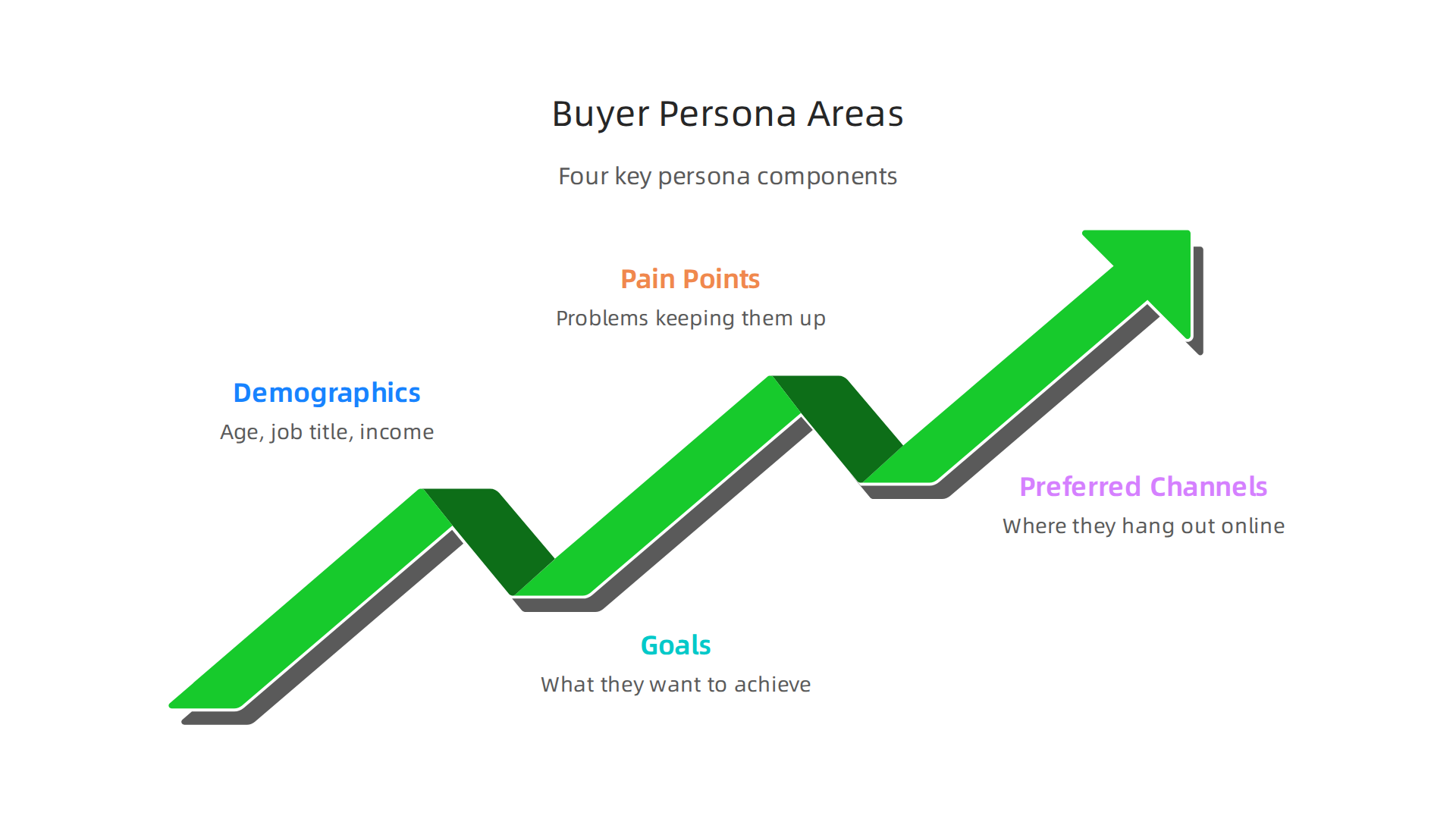
When you map out these elements, your digital marketing strategies for businesses will hit the mark every time.
Do not guess here. Gather your data from actual customer interviews and survey responses. According to a helpful buyer persona template guide, the best profiles come from talking directly to customers, not just reading spreadsheets. Aim for 8 to 15 conversations per persona to spot reliable patterns.
Also think about where your customer is in their buying journey. A person just researching has different needs than someone ready to buy. Segment your personas by stage so your messaging fits perfectly. For example, an early-stage persona might care about educational content, while a late-stage buyer needs pricing and proof.
Once your personas are ready, use them to guide every campaign. They will help you pick the right channels, write better copy, and waste less money. If you want to put this into action, create an internet marketing strategy built around your new personas.
And if you are looking for a simpler way to keep growing, connect your website with Weblish and Grow Your Traffic on Autopilot with AI. Your personas will thank you.
Leverage Analytics for Audience Segmentation
Creating buyer personas is a great start, but now you need to put them to work. The next step is audience segmentation using real data. Google Analytics 4 is a free tool that gives you behavioral insights about your visitors. You can see what pages they visit, how long they stay, and where they come from. This helps you group people by their actions, not just guesses.
For even better results, combine your analytics data with first-party data from your CRM. When you merge website behavior with purchase history, you get a much richer profile. This lets you create segments that are truly accurate. According to a helpful buyer persona template guide, digging into analytics tools for demographics like age and location is key to building reliable profiles.
Segmentation allows you to send the right message to the right person at the right time. Personalized campaigns always get better engagement. To make this easier, review your marketing technology stack for lead generation and choose tools that connect your data sources seamlessly.
These digital marketing strategies for businesses turn raw data into campaigns that actually convert.
Master Search Engine Optimization (SEO)
SEO is one of the most powerful digital marketing strategies for businesses that want steady traffic without paying for every click. Unlike ads, SEO keeps working for you long after you set it up. In 2026, the rules have shifted toward building local trust and relevance over chasing big keywords.
Start with on-page basics. This means optimizing your title tags, meta descriptions, headings, and content so search engines understand what each page is about. Use clear, descriptive labels and structure your pages with short paragraphs and bullet points. Every page should have a main keyword in its URL and first paragraph.
Off-page SEO matters just as much. Getting backlinks from reputable sites signals to Google that your content is valuable. Reviews, social signals, and consistent business listings also play a role. For a full breakdown of what works now, check out these top SEO strategies for small businesses that cover everything from Google Business Profile optimization to mobile site speed.
If you run a local business, local SEO is your highest return on investment. Optimize your Google Business Profile with accurate hours, photos, and service descriptions. Create location-specific service pages and encourage real customer reviews. This helps you show up when someone searches for your type of business nearby.
The goal is simple: make your website easy for both people and search engines to trust. Done right, SEO can become your most consistent lead source.
And if you want to accelerate that growth without doing all the work yourself, you can Grow Your Traffic on Autopilot by connecting your site with Weblish’s ongoing SEO and content management service.
On-Page Optimization Essentials
On-page optimization is where you make every page on your site easy for search engines to read. In 2026, this starts with three simple things: title tags, meta descriptions, and heading structure.
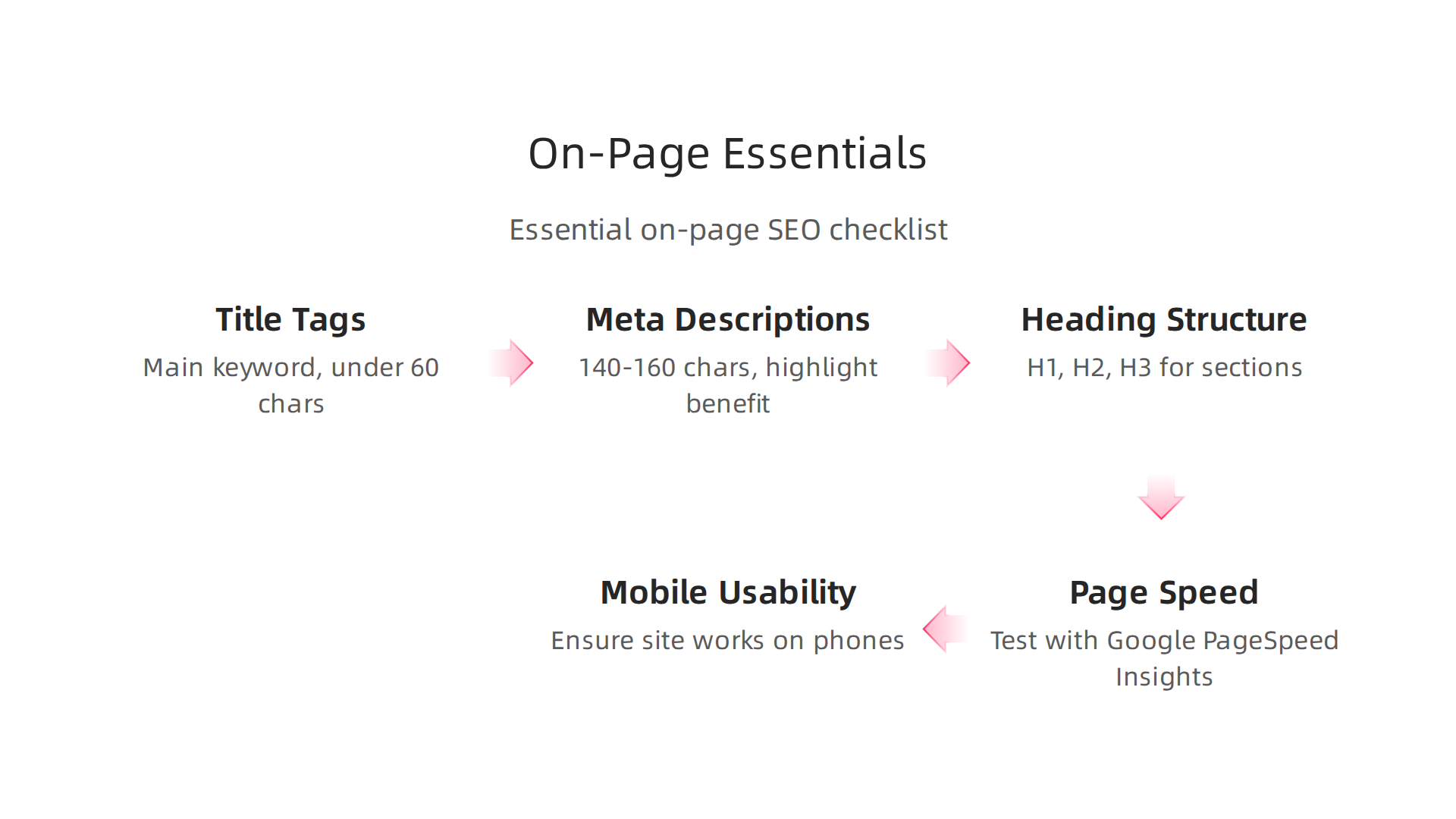
Your title tag should include your main keyword and stay under 60 characters. Think of it as the headline that shows up in search results. Your meta description is the short blurb below it. Keep it between 140 and 160 characters, highlight a benefit, and include a small call to action. Your H1 heading should match the page topic, while H2 and H3 headings break the content into clear sections.
Page speed and mobile usability are now must-haves, not nice-to-haves. Search engines check how fast your site loads and how well it works on phones. Test your site with Google PageSpeed Insights and fix slow images or bulky code. For a full list of what works, check out these actionable SEO tips for small businesses.
Use keyword research to find high-intent terms that are easier to rank for. Look for questions people ask when they are close to buying. Then build each page around just one topic. Keep paragraphs short and use bullet points where they make sense.
These small changes add up. They help search engines trust your pages and get your content in front of the right people. For more detail on tuning your pages, explore these SEO content optimization strategies that fit small business budgets.
Local SEO Tactics for Community Reach
Local SEO helps you show up when people near you search for what you offer. First, claim and fully optimize your Google Business Profile. Fill every field: name, address, phone, hours, and services. Upload fresh photos regularly. This is one of the top SEO strategies for small businesses in 2026 because Google prioritizes complete profiles.
Next, encourage happy customers to leave reviews. Reply to every single review, both good and bad. This builds trust and signals to Google that you care about your community.
Finally, build local citations by listing your business on directories like Yelp and Bing Places. Keep your NAP (name, address, phone) the same everywhere. Z Consistency here is a core digital marketing strategy for businesses that want local visibility. To go deeper on this, check out why your business needs a local SEO company in 2026 for expert help managing your presence.
Once your local foundation is solid, you can focus on getting more traffic. Grow Your Traffic on Autopilot by connecting your site with Weblish, so AI helps attract the right local customers.
Create High-Converting Content
Content marketing is one of the most effective digital marketing strategies for businesses in 2026. Instead of shouting “buy now,” you give away useful information for free.

This builds trust and positions you as an authority in your field. And the numbers back it up: companies that blog regularly get 55% more website traffic and 67% more leads than those that don’t, according to the latest content marketing statistics for 2026.
The trick is to focus on educational content first and sales copy second. Answer the questions your customers are typing into Google. Solve their problems with how-to guides, tutorials, and checklists. When people find real value in your content, they naturally trust you enough to buy later. That is the core of what is content marketing and why it works so well.
You don’t have to reinvent the wheel every week, either. One long-form article can become a video, an infographic, three social media posts, and an email newsletter. Content repurposing like this improves ROI by up to 32%. To make sure your content actually ranks, follow SEO content optimization strategies that work for small businesses.
The key is consistency. Create helpful content weekly, distribute it across multiple channels, and watch your organic reach grow. If you want to scale this effort without spending all your time on it, you can Grow Your Traffic on Autopilot by connecting your website with Weblish. Their AI-powered system helps you attract the right customers while you focus on running your business.
Blogging to Build Authority
A smart way to put those digital marketing strategies for businesses into action is through consistent blogging. Every new post adds another page to your site, which search engines love. In fact, companies that blog regularly see a 434% increase in indexed pages according to recent content marketing data points for 2026. That means more chances to rank for long-tail keywords your customers actually search for.
The real secret is to solve specific problems. Write posts that answer your customer’s biggest questions or walk them through a tough task step by step. When your content delivers real help, readers stick around and trust you more.
And don’t forget internal links. Link from your blog posts to your service pages or related guides. It helps visitors find what they need and gives your SEO a nice boost. To see how all these pieces fit together, learn how to create an internet marketing strategy that turns your blog into a lead generator.
Video Content for Engagement
You have probably watched more videos today than you realize. That is because video is the dominant way people consume content in 2026. And it is not just for fun. Video is a powerful digital marketing strategy for businesses of all sizes. In fact, 45% of marketers now say video is their top-performing content format according to recent content marketing statistics.
Short form videos on TikTok, Instagram Reels, and YouTube Shorts drive massive organic reach. They grab attention fast and keep people on your page longer. More time on page signals value to search engines, which helps your rankings.
Product demos and explainer videos are even better for conversion. They show exactly how your solution works, removing doubt. Viewers who watch a demo are far more likely to buy.
If you want to add video to your social media marketing strategy but do not know where to start, working with a proven TikTok marketing agency can save you time and money.
Ready to make video work for your business? Grow Your Traffic on Autopilot with Weblish and let AI handle the heavy lifting.
Harness Social Media for Lead Generation
Social media is where your customers spend their time. In 2026, it is not optional for your digital marketing strategies for businesses. It is where brand awareness happens and where direct engagement turns followers into buyers. The key is knowing how to balance organic and paid efforts.
Organic social builds community. Posting helpful content, responding to comments, and sharing behind the scenes scenes creates trust over time. It is the slow, steady work that makes people remember your name. But for faster results, you need paid social. Platforms like Facebook, Instagram, and LinkedIn let you target the exact people who need what you offer. Companies using active blogs already see 67% more leads per month, and social media is a top distribution channel according to a 2026 content marketing study. A smart social media marketing strategy combines both organic and paid to fill your pipeline.
Here is the thing: each platform works differently. A funny TikTok video will flop on LinkedIn. A detailed case study on LinkedIn might feel out of place on Instagram. The most effective digital advertising marketing strategies tailor the message, format, and tone to each platform. That is what separates wasted effort from real leads.
If you want to dive deeper into one specific channel, check out this guide to Instagram marketing strategy for small businesses. It shows exactly how to turn likes into leads.
Remember, the goal is not just to be everywhere. It is to be where your people are, with a message that fits. That is the heart of digital marketing online. And when you get it right, social media becomes one of your most reliable lead generation engines.
Choose the Right Platforms
Not every social platform is right for your business. Trying to be everywhere spreads you thin. Instead, match the platform to your audience. LinkedIn works best for B2B. Instagram and Facebook work better for B2C. And TikTok is great for reaching younger customers.
In fact, LinkedIn is the top organic platform for B2B marketers, with 84% of them relying on it according to a 2026 B2B content marketing study. Use that data to guide your choices.
Focus on just two or three platforms where your customers are most active. If you are not sure where to start, an internet marketing strategy guide can help you map out the best fit. Then check your analytics each month. If one platform is not driving results, adjust. That is how you make your social media marketing strategy efficient.
Once you select your platforms, you need consistent traffic. Let Weblish help you Grow Your Traffic on Autopilot with AI driven content and SEO.
Run Effective Paid Social Campaigns
Once you have chosen your platforms, it is time to run paid social campaigns that drive real results. Start with a small budget and test different audience segments and ad creatives. Small tests help you learn what works before you spend more. In fact, Content Marketing Statistics 2026 show that marketers who A/B test headlines and CTAs see a 22% improvement in lead quality. The same logic applies to your ad images and copy.
Retargeting is another must. Many visitors come to your site and leave without converting. A retargeting ad reminds them to come back and take action. This tactic often delivers the best return on ad spend.
Track your key numbers. Cost per lead (CPL) and return on ad spend (ROAS) tell you if your campaigns are working. If CPL is too high, adjust your targeting or creative. If ROAS is strong, scale up slowly.
To go deeper on paid social, check out this Instagram marketing strategy for small businesses. It gives you step-by-step tactics to turn clicks into customers.
Automate Email Marketing
Manually sending every email to your entire list is a waste of time. Your subscribers have different interests and behaviors. A single generic message will not connect with everyone. That is where automation changes the game.
Email marketing still delivers the strongest return of any digital channel. In 2026, businesses see an average of $36 to $45 for every $1 spent on email. That is a huge win compared to most other channels.

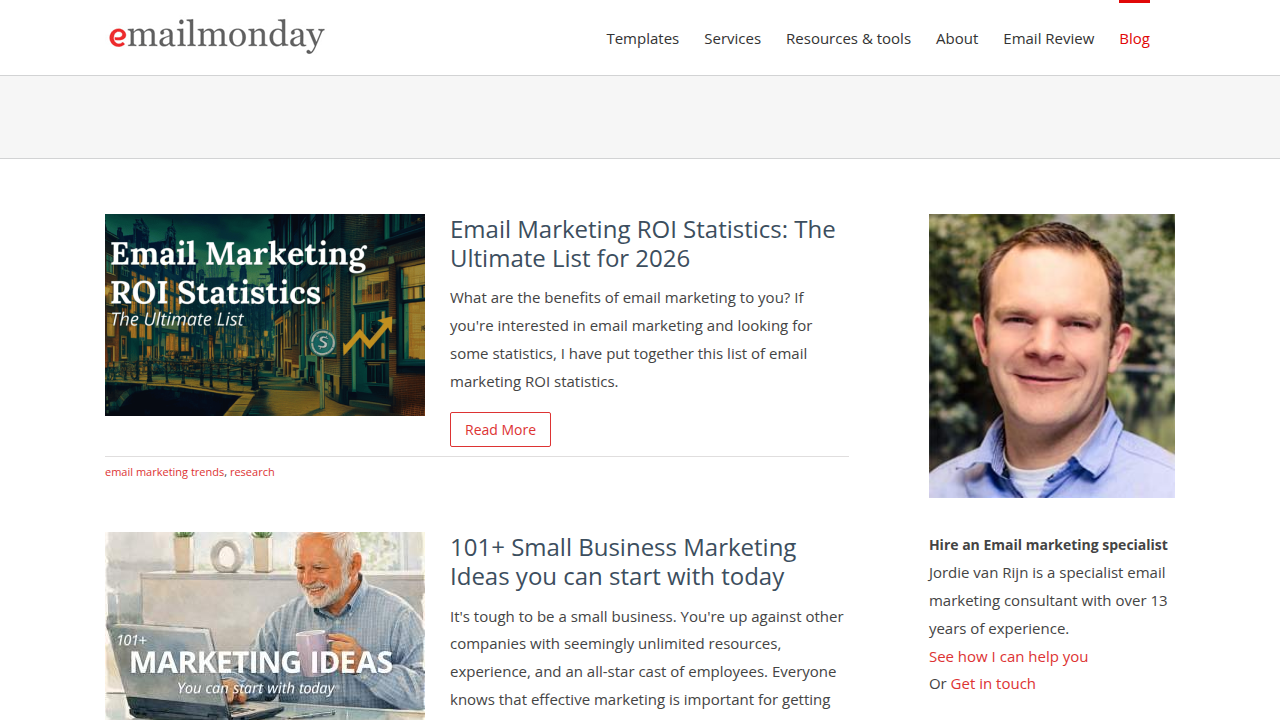
But that return only comes when you send the right message to the right person at the right time.
Automation lets you set up email sequences that run on their own. Welcome new subscribers, recover abandoned carts, and re-engage inactive customers without lifting a finger. These triggered flows earn much more than one-off blasts. In fact, automated workflows generate 30 times higher returns than standard campaigns, according to email marketing ROI statistics for 2026. Abandoned cart emails alone can bring in over $3 per recipient.
Segmentation makes your automation even stronger. Group your list by purchase history, browsing behavior, or engagement level. When you send tailored offers, your revenue climbs. Some businesses see up to 760% more revenue from segmented campaigns.
To set up a smart automation flow that nurtures leads and drives sales, learn how to build a drip marketing campaign. It walks you through the exact steps to turn casual visitors into loyal customers.
Ready to put your email on autopilot and start growing? Connect your website with Weblish and grow your traffic on autopilot with AI.
Build and Segment Your Email List
Your automated sequences are only as good as the people on your list. Start by offering a lead magnet like a free checklist or ebook. This gives visitors a reason to share their email and helps you attract people who actually want to hear from you.
Once you have subscribers, group them by behavior. Look at purchase history, what pages they visited, or how often they open your emails. When you send tailored messages to each segment, your engagement and sales go up. In fact, businesses that use smart segmentation see much stronger results from their email marketing campaigns.
Do not forget list hygiene. Remove inactive subscribers every few months. A clean list protects your sender reputation and keeps your open rates high. Sending to people who never engage hurts your deliverability and wastes money. These digital marketing strategies for businesses work best when your list is healthy and segmented.
For more help on building a complete growth system, check out our guide to create an internet marketing strategy.
Set Up Drip Campaigns and Personalization
Now that your list is clean and segmented, set up automated drips. A welcome sequence is a great starting point.
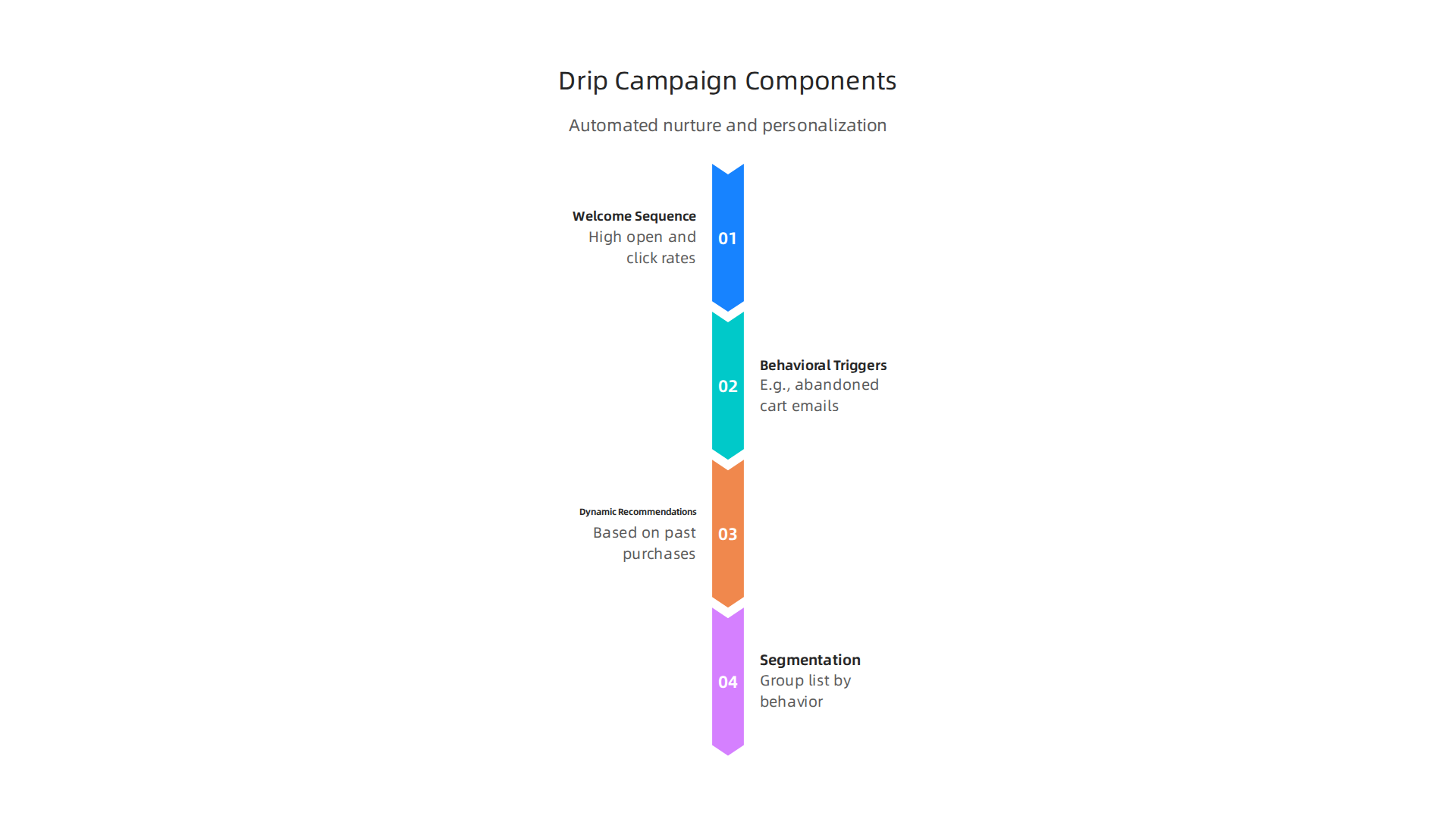
These emails get 4x higher open rates and 5x higher click rates. They build trust from the first interaction.
Behavioral triggers like abandoned cart emails recover sales you would have lost. Automated flows earn much more per recipient than standard campaigns, according to the latest email ROI statistics for 2026.
Personalization goes beyond using a first name. Add dynamic product recommendations based on past purchases. This kind of smart targeting can boost conversions by a wide margin. For a full walkthrough, see how to build a drip marketing campaign that converts.
These digital marketing strategies for businesses work because they send the right message at the right time. When you are ready to scale your efforts further, Grow Your Traffic on Autopilot by connecting your website with Weblish.
Invest in Paid Search (PPC)
While email drips keep your warm leads engaged, paid search (PPC) grabs attention from people who are already hunting for what you sell. That makes it one of the most effective digital marketing strategies for businesses that need fast, measurable results.
Google Ads still leads the pack. The average cost per click across all industries sits around $5.26 in 2026, according to the latest Google Ads Benchmarks 2026. But costs jump around a lot by industry. Legal firms often pay over $8 per click, while ecommerce stays under $2. That is exactly why narrowing your keywords matters so much. If you bid on broad terms, you will burn through budget fast.
For B2B companies, Microsoft Advertising (Bing Ads) is a smart alternative. It reaches a similar audience but usually costs 30 to 60 percent less. The best PPC platforms comparison for 2026 shows that Bing Ads can deliver strong returns for business-to-business campaigns.
No matter which platform you choose, tight bidding keeps your costs under control. Set a daily budget that matches your goals. Use exact match keywords and add negative keywords to filter out bad traffic. Review your search query reports each week and pause anything that is not driving results. That hands-on approach turns PPC into a reliable lead generator.
For a plain-English guide on running search ads without wasting money, check out these Google Search Ads tactics for small business. They cover bids, ad copy, and targeting step by step.
Set Up and Optimize Google Ads
Now let us zoom in on the platform that drives most PPC traffic. Google Ads is where your digital marketing strategies for businesses either take off or burn cash. The difference comes down to setup.
Start with keyword research that targets high-intent, low-competition terms. A term like "best running shoes for flat feet" will convert better than just "running shoes" because the searcher already knows what they want. Use Google’s Keyword Planner to find these gems.
Next, build tightly themed ad groups. Each group should contain keywords that share the same meaning. That boosts your Quality Score, which lowers your cost per click. The latest Google Ads Benchmarks 2026 show that accounts with Quality Scores above 7 pay nearly half the CPC of those below 5. That is real money back in your pocket.
Finally, test everything. Run two ad variations in each group and let the data pick a winner. Then test your landing page against a second version. Small tweaks to headlines or button colors often lift conversion rates by 20 percent or more.
If you want a guide that walks through the full setup without the fluff, check out this tutorial on search engine marketing for small business success. It covers the same ground from a practical angle.
The whole point of digital advertising marketing is to spend less and earn more. Tight keywords, tight ad groups, and regular testing make that happen.
And if managing all this feels overwhelming, Grow Your Traffic on Autopilot. Weblish handles the strategy, setup, and ongoing optimization so you can focus on running your business.
Implement Retargeting and Remarketing
You have your Google Ads running. But what about people who visited your site and left without buying? That is where retargeting comes in. Retargeting ads show your message to people who already know your brand. They perform much better than standard display ads.
Set up a tracking pixel on your site. That little piece of code lets you show ads on the Google Display Network and social platforms to past visitors. The best part is you can segment these audiences. Someone who viewed a product page needs a different ad than someone who read a blog post. Tailor your message to where they are in their journey.
For more context on how this fits into a bigger plan, check out these real marketing examples for small businesses. They show retargeting in action.
A strong retargeting strategy can lift your conversion rates significantly. As part of your broader digital marketing strategies for businesses, this is a low-cost way to bring people back and close more sales.
Summary
This article is a practical guide to digital marketing strategies SMBs can use in 2026 to attract, engage, and convert customers without a huge budget. It explains why starting with buyer personas and audience segmentation leads to smarter targeting, and it walks through core tactics—SEO (including local), content and blogging, video, social media, paid search and social ads, retargeting, and automated email flows. The guide shows how to apply each tactic with concrete steps (on-page SEO, analytics-driven segments, tight PPC groups, and drip campaigns) and highlights tools and measurement priorities so you spend less and earn more. By following the advice here you’ll be able to pick the right channels, create more relevant content, set up efficient ad campaigns, and build automated systems that steadily generate leads and sales for your small business.