
How to Choose a Marketing Firm That Generates Leads for Your Small Business
Finding customers is harder than ever, and the right marketing firm can be the difference between a decorative website and a reliable lead engine. This article…


If you run a small or mid-sized business, you know the feeling. You work hard, but finding new customers can feel like an uphill battle.

You are not alone in this struggle.
In fact, recent data shows that 61% of marketers say generating quality leads is their top challenge. This is according to the latest lead generation statistics for 2026.

Turning strangers into paying customers is harder than ever, especially with rising costs and shrinking attention spans.
This is where the right marketing firm can change everything. A skilled partner brings fresh eyes, proven systems, and real expertise. They can help you cut through the noise and reach the people who actually need what you offer.
But here is the tricky part. Choosing the wrong agency wastes time and money. You might end up with a pretty website that brings in zero leads. Or a team that talks a big game but delivers little.
So how do you find the right fit?
In this guide, we break down an evidence-based framework for selecting and working with marketing firms. This framework helps you evaluate pricing, culture, and past results so you can choose with confidence. We will cover what to look for on marketing agency websites, when to hire a full service marketing agency versus a specialist, and how to avoid common pitfalls. Whether you need a digital marketing agency nyc or a local partner, this guide will help you make a smart choice.
We will also share a practical B2B marketing playbook to generate consistent leads that you can put to use right away.

Ready to stop struggling and start growing? Discover how Weblish helps SMBs build a website and strategy that attracts customers day after day. Grow Your Traffic on Autopilot.
What Marketing Firms Actually Do for SMBs: Core Services Demystified
Many small business owners think marketing firms only run Facebook ads or post on social media. That is only a small piece of the picture. A good marketing firm acts as an extension of your team. They handle the full set of tasks needed to attract, engage, and convert your ideal customers.
Here is a breakdown of the core services most full service marketing agencies offer.
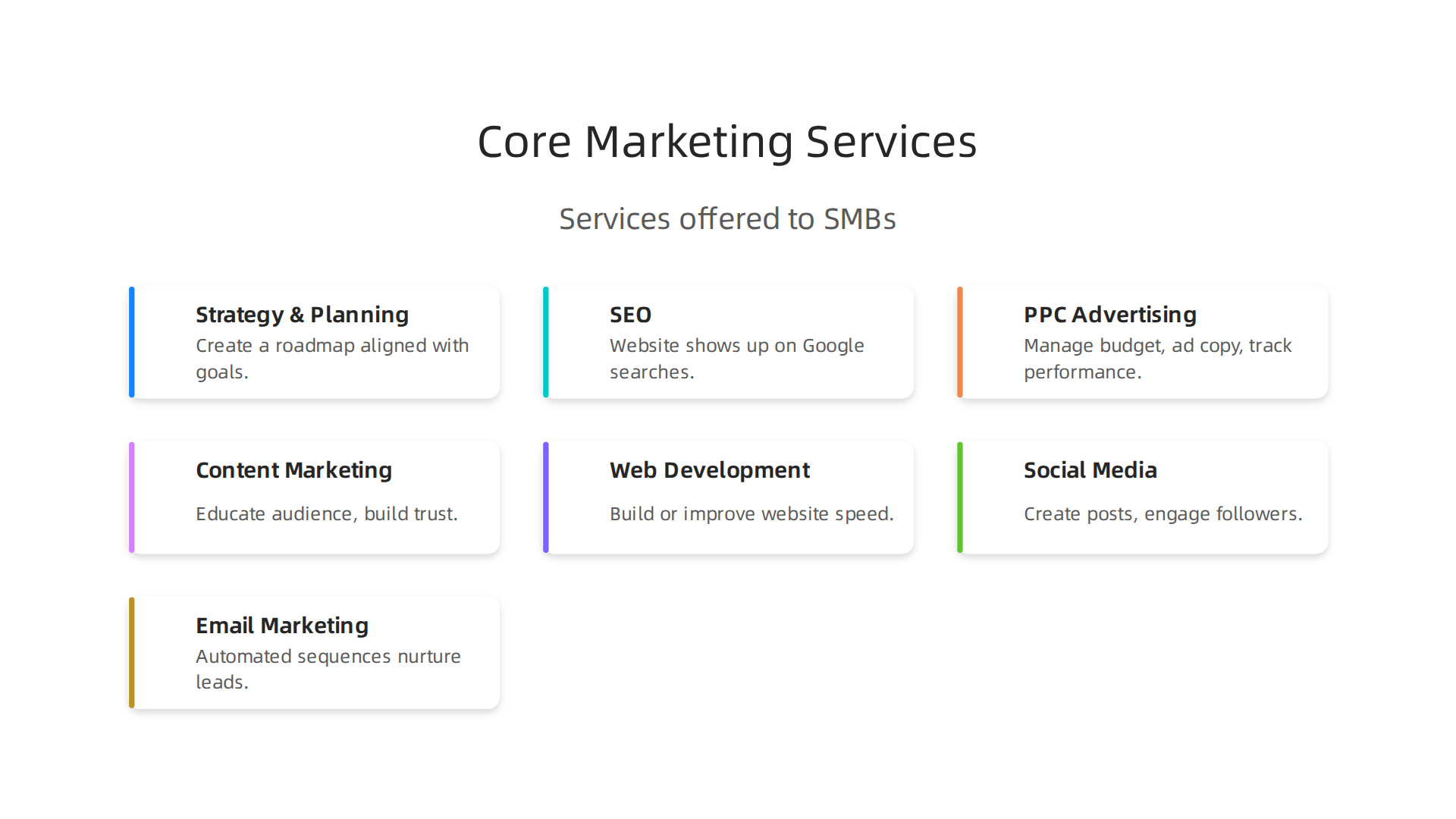
Strategy and planning. Before any work starts, a firm studies your business, your competition, and your target audience. They create a roadmap that aligns with your goals. This step alone can save you months of wasted effort.
Search engine optimization, or SEO. This is how your website shows up on Google when people search for what you sell. It includes keyword research, technical fixes, and content creation. Without SEO, even a beautiful site stays invisible.
Pay-per-click advertising, or PPC. This covers Google Ads and social media ads. The firm manages your budget, writes ad copy, and tracks performance so you are not throwing money at clicks that do not convert.
Content marketing. This includes blog posts, videos, email newsletters, and more. The goal is to educate your audience and build trust over time. Many B2B companies rely on content marketing to generate leads.
Web development and design. A marketing firm often builds or improves your website. They focus on speed, mobile friendliness, and clear calls to action. A site that guides visitors toward a purchase or booking is a lead generation machine.
Social media management. This involves creating posts, engaging with followers, and running campaigns on platforms like Instagram, LinkedIn, or TikTok.
Email marketing. Automated email sequences nurture leads who are not ready to buy yet. This is where the long-term relationship begins.
Most firms bundle these services into a monthly retainer. According to the latest data, marketing agency pricing in 2026 shows that retainers are the most common model.

They cover ongoing work like SEO, social media, and PPC. Understanding this broad scope helps you know what to ask for and what to expect.
When you understand the full service menu, you can pick a partner who fills your exact gaps. That is how you get real value for your budget.
Now that you know what services are available, the next step is learning how to spot the right firm. Check out our guide on SEO packages for small businesses to see what transparent pricing actually looks like.
Why Your Current Website Isn’t Generating Leads (and How Marketing Firms Fix It)
You spent good money on your website. It looks clean. It shows your services. So why are visitors leaving without contacting you?
Here is the hard truth. Most small business websites act like pretty brochures. They look nice but do nothing to guide visitors toward a decision. There is no clear next step. No reason to stay. No reason to act.
This is exactly where marketing firms step in.
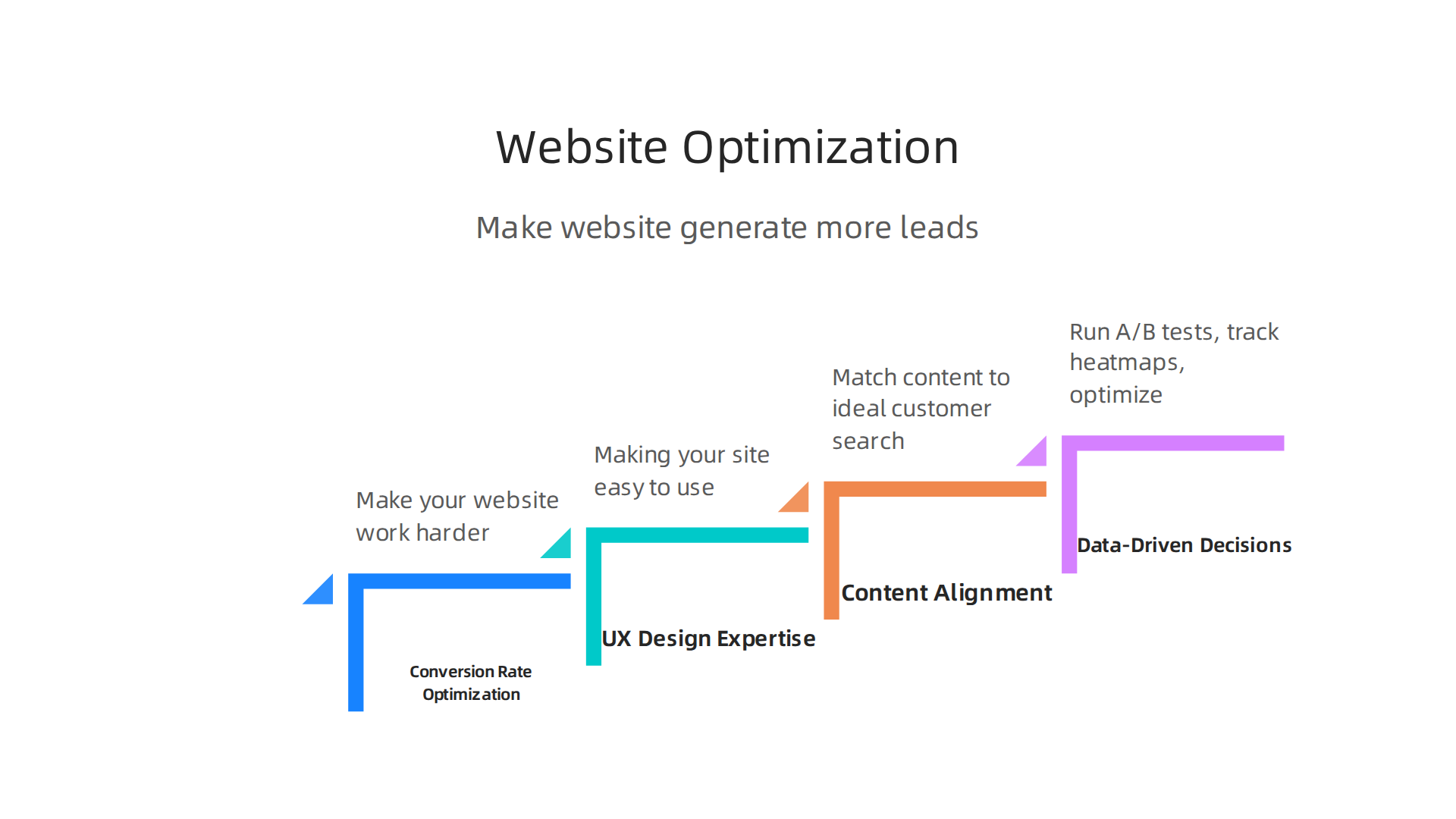
They focus on conversion rate optimization, or CRO. That is a fancy way of saying they make your website work harder. They study how people move through your pages. Where do they stop? Where do they get confused? Where do they leave? Then they fix those points.
A marketing firm rewrites your headlines to speak directly to customer pain. They simplify your forms. They add trust signals like reviews and case studies. They move your call to action from the bottom of the page to where people actually see it. Small changes that add up to big gains.
They also bring UX design expertise. User experience design is about making your site easy and even enjoyable to use. If a visitor cannot find what they need in three seconds, they leave. Marketing firms clean up navigation, speed up load times, and make sure your site works perfectly on a phone. These are the details you might overlook but customers notice instantly.
Content alignment is another fix. Your website might have great information, but is it the right information? Marketing firms match your content to what your ideal customer is actually searching for. They rewrite your About page, your service descriptions, and your blog posts to answer real questions and build trust.
Here is a number that shows why this matters. Enterprise B2B websites often convert at only 0.5 to 1.5 percent according to B2B conversion rate benchmarks for 2026.

That means 98 or 99 out of every 100 visitors leave without taking action. Even a small improvement can double your leads.
Marketing firms do not guess. They use data. They run A/B tests to see which headline, button color, or layout actually gets more clicks. They track heatmaps to see where people click and where they ignore. Then they optimize based on real behavior, not opinions.
A good marketing firm treats your website like a living machine. It is never finished. They keep testing, tweaking, and improving. That is how a site goes from a static brochure to a lead generation engine.
If you want to see a specific framework that turns visitors into leads for small businesses, that resource breaks down the exact steps.
The bottom line is simple. Your website has potential. You just need someone who knows how to unlock it. Marketing firms bring the tools and the process to make that happen.
So if you are tired of paying for a site that does not perform, consider bringing in experts who can turn every visitor into a real opportunity.
The True Cost of Hiring a Marketing Firm: Pricing Models and Transparency
So you are ready to hire a marketing firm. Then you see the price tag and freeze. Is it really worth thousands each month? How do you even know what is fair?
Here is the truth. Most small business owners get scared off because they do not understand how marketing firms charge. The good news is that the pricing follows a few clear models. Once you know them, you can compare options and pick what fits your budget.
Marketing firms in 2026 use four main pricing models.
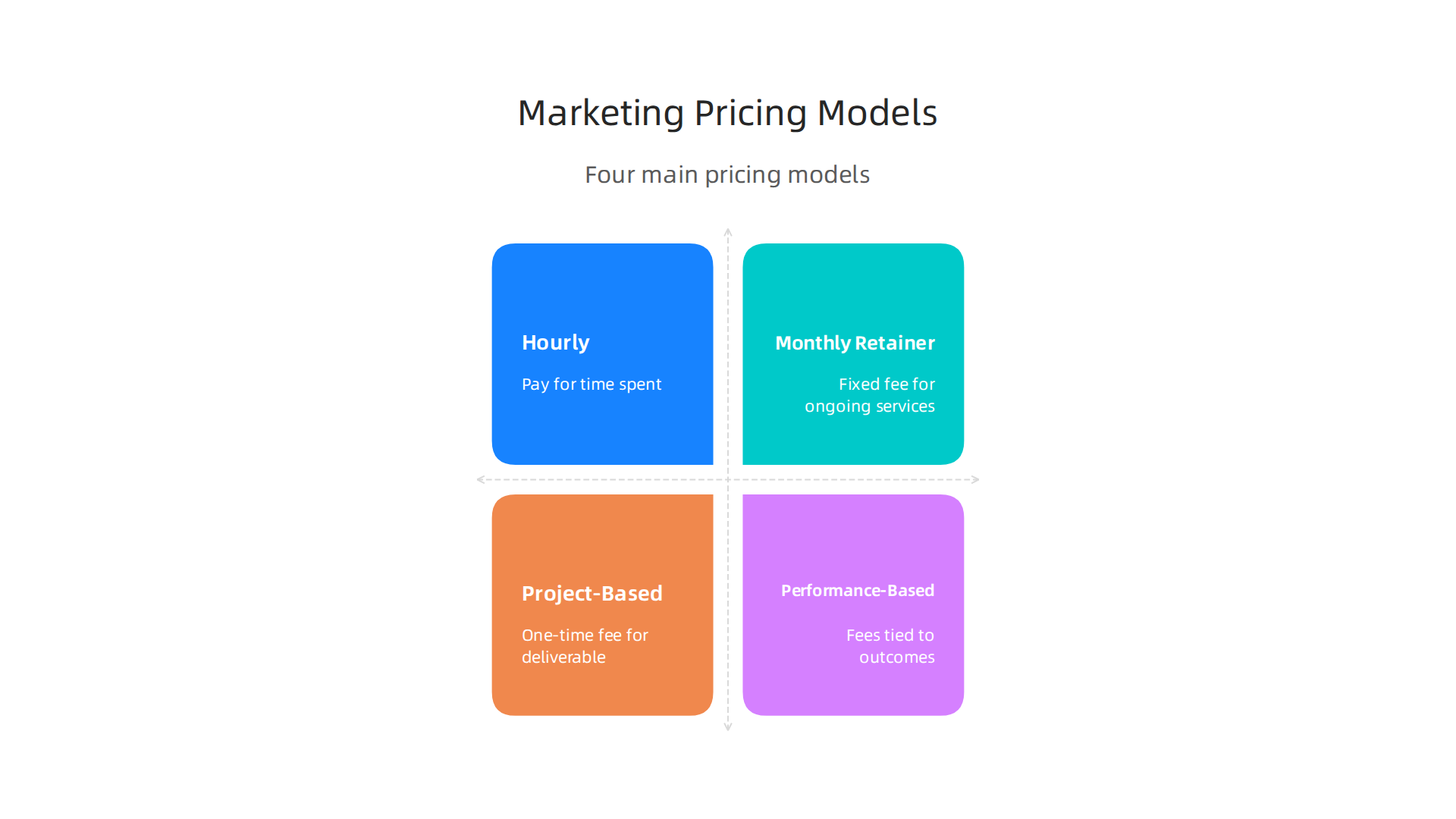
Each one has pros and cons depending on your goals.
| Pricing Model | How It Works | Best For | Watch Out For |
|---|---|---|---|
| Hourly | You pay for time spent, typically $100 to $250 per hour | Small projects, audits, or consultations | Costs can add up fast with no cap |
| Monthly Retainer | Fixed fee each month for ongoing services | Consistent SEO, content, or social media | Can feel expensive in slow months |
| Project-Based | One-time fee for a defined deliverable | Website redesign, campaign launch | Scope creep if you need extra work |
| Performance-Based | Fees tied to outcomes like leads or revenue | Lead gen, eCommerce, PPC | Rare and contracts can be complex |
A 2026 survey of agency pricing shows that monthly retainers for small businesses typically run between $1,500 and $5,000, while mid-market full service retainers can reach $10,000 or more. Performance-based models are growing, but they remain tricky to set up fairly.
The real issue is not the price itself. It is the lack of transparency. Many marketing firms bury details in long contracts. You sign up expecting one thing and later discover extra charges for reporting, meetings, or software.
That is why an open pricing discussion upfront prevents headaches down the road. Ask a potential marketing firm directly: "What is included in this fee? What is extra? How often do you report results?" A good firm will answer clearly. A bad one will dodge.
If you want to see what transparent SEO pricing looks like for small businesses, check out this guide on SEO packages for small businesses. It breaks down common red flags and fair market rates.
Understanding the cost of hiring a marketing firm is the first step. The next step is finding a partner who lays everything out on the table. When that happens, you can focus on growth instead of worrying about hidden fees.
Ready to stop guessing and start growing? Grow Your Traffic on Autopilot by connecting your website with Weblish’s done-for-you service. Transparent pricing, clear strategy, and a team that actually delivers results.
How to Evaluate a Marketing Firm’s Expertise and Track Record
So you know what the marketing firm charges. But how do you know if they can actually deliver results? A pretty website and a smooth sales pitch are not enough. You need to dig deeper.
Most business owners start by looking at case studies and client testimonials. That is a good first step. But case studies can be cherry-picked. Testimonials can be edited. They tell you what the firm wants you to see, not the full picture.
To really evaluate a marketing firm’s expertise, you need to look at data. Real, measurable results.

The best firms track specific KPIs like customer acquisition cost, lifetime value, conversion rates, and return on ad spend. They do not just talk about impressions or likes. They talk about revenue.
When you interview a potential partner, ask them how they measure success. Do they use multi-touch attribution? Can they show you data on how their campaigns moved the needle for past clients? Look for a firm that follows solid evaluation criteria for B2B performance marketing agencies, including pipeline alignment and data integration. The right partner will have clear answers and actual numbers to back them up.
Another key factor is industry experience. A firm that works with restaurants may not understand the sales cycle of a B2B software company. Ask if they have worked with businesses like yours before. If they have, ask for specific examples. If they have not, ask how they plan to get up to speed. Experience in your niche matters a lot.
Cultural fit is just as important. You will work with this team for months or years. Do they communicate the way you prefer? Do they respond quickly? Do they give you honest feedback, or do they just say what you want to hear? A great firm pushes back when needed. A mediocre one nods along.
Watch out for red flags. Vague promises like "we will get you to the top of Google" without a timeline or strategy are bad signs. No transparent reporting? Run. High-pressure sales tactics with "sign today or lose this price" are also a huge warning. Trustworthy marketing firms let you take your time.
To see what effective marketing looks like in practice, check out these real marketing examples for small business lead generation. They show how the right strategies can drive consistent revenue.
When you evaluate a marketing firm, you are choosing a long-term partner. Take the time to check their data, their experience, and their fit with your team. The right firm will feel like an extension of your business, not just another vendor.
The Step‑by‑Step Process of Partnering with a Marketing Firm
You have done the hard work of evaluating firms and picked one that feels like a natural extension of your team. Now what? A smooth partnership does not happen by accident. It follows a clear process, from onboarding to ongoing optimization.
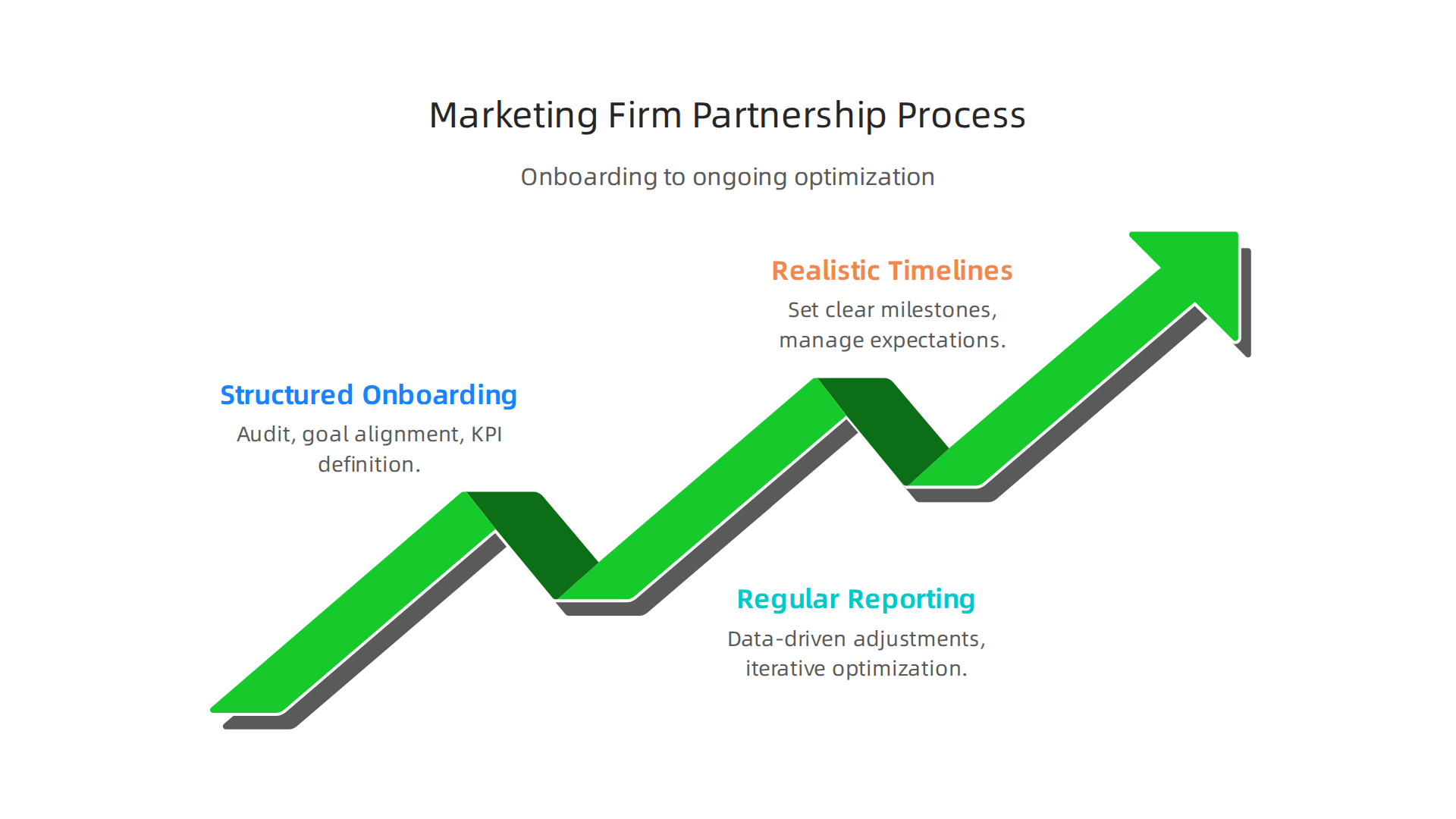
Step 1: Structured Onboarding
The first few weeks are critical. A good marketing firm will not jump straight into campaigns. They will start with a deep onboarding process. This includes:
- A full audit of your current marketing channels and data
- Alignment on business goals and revenue targets
- Defining the specific KPIs you will track together
- Setting a communication cadence (weekly check‑ins, monthly reviews, quarterly strategy sessions)
During onboarding, both sides agree on what success looks like. You should walk away with a shared document that lists every goal, the metrics used to measure it, and who is responsible for each task. This removes guesswork later.
Step 2: Regular Reporting and Iterative Optimization
Once campaigns are live, the real value comes from data‑driven adjustments. The best firms do not “set and forget.” They monitor performance weekly and optimize based on what the numbers say.
For example, they track which channels drive the highest return on ad spend and shift budget accordingly. They test different headlines, images, and offers to improve conversion rates. They also watch for changes in customer acquisition cost and lifetime value.
Set up a regular reporting rhythm. The firm should send you a dashboard or report that connects marketing activities to revenue. Use these reports to ask questions and suggest ideas. According to experts at Monday.com, you should establish regular review rhythms that turn metrics into decisions, not just reports. Weekly operational reviews keep tactics sharp, while quarterly business reviews assess strategic progress.
Step 3: Realistic Timelines and Milestones
Marketing results take time. SEO improvements often need three to six months to show. Paid ads can generate leads faster, but finding the right audience and message still requires testing.
A trustworthy firm will set clear milestones: “By month two, we will have the tracking set up and baseline data. By month three, we will launch the first optimized campaigns. By month six, we expect a 20% increase in qualified leads.” Milestones keep everyone accountable and prevent disappointment.
If the firm promises huge results in weeks without explaining how, that is a red flag. Real growth happens through consistent, measured effort.
How Weblish Fits Into This Process
If you are looking for a partner that follows this exact playbook, consider Weblish. They offer a done‑for‑you growth service that includes web design, SEO, social media marketing, and ongoing management. Their onboarding includes a free AI Efficiency Audit to identify tools that save you time. You get a dedicated senior team, predictable monthly pricing, and clear reporting.
Get started with Weblish by signing up and claiming your free trial to see how a structured partnership can turn your website into a lead‑generating machine.
To learn more about building a strategy around consistent lead generation, check out this guide on B2B marketing for small business that describes the precise playbook used by top firms.
By following these three steps, you can turn a marketing firm relationship into a long‑term revenue driver. The right process makes all the difference.
Common Mistakes to Avoid When Hiring Marketing Firms
You know the process now. But even with the best intentions, many business owners trip over the same pitfalls when hiring marketing firms. Here are the three most common mistakes and how to steer clear of them.

Mistake 1: Picking Based on Price or a Big Name
It is tempting to go with the cheapest option or the agency everyone talks about. But price alone rarely predicts results. A low bid often means shallow service or hidden fees. A big name might charge premium rates for junior staff.
According to a detailed guide to SMB marketing mistakes from Media Place Partners, nine out of ten small businesses make the wrong hire because they focus on cheap upfront costs instead of real expertise. The same guide warns against rushing into a decision just because you saw a competitor using that agency. Do not copy someone else’s playbook.
Instead, look for a firm that shows clear case studies, transparent pricing, and a process that matches your goals. A full service marketing agency that offers predictable monthly costs and a dedicated team is often a smarter bet than a flashy name with unpredictable results.
Mistake 2: Failing to Define Clear KPIs and Scope
Many business owners skip the hard work of setting measurable goals before signing a contract. Without clear key performance indicators, the agency works in the dark and you end up disappointed.
Vague job descriptions and uncommunicated expectations are among the common mistakes when hiring marketing professionals highlighted by Alluvit Media. When you do not define what success looks like, scope creeps in. You pay for extra tasks that should have been included from the start.
Avoid this by writing a detailed scope of work upfront. List the channels, the reporting cadence, and the exact metrics that matter to your revenue. Both sides sign off before any work begins.
Mistake 3: Not Checking References or Performing Due Diligence
A great sales pitch does not guarantee great work. Too many business owners skip the reference check because they trust the agency’s website or a friend’s recommendation.
Take thirty minutes to call past clients. Ask about communication, results, and what went wrong. Also review the agency’s own SEO packages for small businesses to see if they practice what they preach.

If their own site lacks clear pricing or case studies, that is a red flag.
Real growth comes from a partner who walks the talk. Do your homework before you sign.
Summary
Finding customers is harder than ever, and the right marketing firm can be the difference between a decorative website and a reliable lead engine. This article explains what full‑service agencies actually do—strategy, SEO, PPC, content, web design, social, and email—and why those services matter for small and mid‑sized businesses. It shows why most sites act like brochures rather than conversion tools, and how CRO, UX fixes, and aligned content turn visitors into leads. You’ll also get a clear breakdown of agency pricing models (hourly, retainers, project, performance) and tips for spotting transparent fees. The guide describes how to evaluate track records with real KPIs, how to run a structured onboarding and reporting process, and the realistic timelines to expect. Finally, it warns about common hiring mistakes and red flags so you can choose a partner who becomes an extension of your team.