.png)
Best Search Engine for Small Business Lead Generation in 2026 A Data Driven Comparison
This article compares the top search engines in 2026 to help small and mid-sized businesses choose where to invest for lead generation. It reviews market share...

Best Search Engine Comparisons 2026: Which One Drives More Leads for Your SMB?
Do you ever wonder where your next customer will actually come from? If you run a small or mid sized business, that question keeps you up at night. And most of the time, the answer starts with a search box.
But here is the problem. Picking the right search engine for lead generation is not as simple as it used to be.

For years, Google was the only real choice. And sure, it still owns most of the market. In 2026, Google holds somewhere between 84% and 91% of global search, depending on which report you check. But that number is finally starting to slip.
Bing now captures over 10% of U.S. search traffic. Privacy focused options like the DuckDuckGo search engine keep growing as more users demand protection from tracking. And AI tools like ChatGPT are pulling queries away from traditional search entirely. AI search referrals hit nearly 1% of all web visits in early 2026, up five times from the year before. The market is worth over 280 billion dollars and still climbing fast.
What does this mean for you? Your potential customers are spreading out. They are not all using the same default search engine anymore. If you dump your whole budget into one platform without comparing cost per lead, audience demographics, and privacy features, you are probably wasting money.
This article compares the top search engines head to head using real data. We look at market share, user behavior, and conversion potential so you can choose the best search engine for consistent customer acquisition. And once you pick the right traffic source, you need a website that actually turns those visitors into leads. That is where a service like Weblish comes in.

They build and manage high converting sites on platforms like Shopify, WordPress, and Webflow with no upfront fees, so your business gets a steady flow of new customers without the usual agency headaches.
Let us start with the numbers that matter most.
Why Google Still Reigns for SMB Lead Gen (And Where It Falls Short)
Here is the truth. Google is still the biggest player by a wide margin. In 2026, the platform holds somewhere between 84% and 91% of global search, depending on which report you check. For a small business, that volume is hard to ignore. If you want the largest pool of potential customers, Google is where you start.
But volume alone does not guarantee leads. The biggest challenge for SMBs is cost. Ad prices for competitive terms keep climbing, and larger brands with bigger budgets can outbid you easily. Even with Google’s advanced targeting options, you might pay a premium just to show up alongside a national competitor. That can drain your budget fast.
Here is the bright spot. Google has tools that level the playing field for local businesses. Things like Google Business Profile and Local Service Ads help you reach customers in your area without competing against every big box store in the country. If you are a plumber, dentist, or landscaper, these features can drive real leads at a reasonable cost.
The real trick is making sure your website actually converts the traffic Google sends you. Without a clean, fast, and user-focused site, those expensive clicks turn into dead ends. That is where a service like Weblish comes in. They build and manage high-converting websites so your Google traffic turns into actual customers instead of just visits.
Want to see how other search engines stack up for your audience? Check out our guide on the DuckDuckGo search engine and other privacy-focused options.
Bing: The Overlooked Goldmine for Professional Services
You might not think of Bing as the best search engine for lawyers or consultants. But in 2026, Microsoft Advertising is one of the smartest moves an SMB can make. Why? Everyone fights over Google. Bing still has lower costs and less competition.
Here are the numbers. Bing Ads average a $1.45 cost per click. Google averages $2.85. That is almost half the price. Many advertisers also see 10% to 20% higher conversion rates on Bing Ads. For professional services with tight budgets, this changes everything.
The audience on Bing also tends to be older and more affluent. This makes it a perfect fit for legal, financial, and consulting services.

Research shows Microsoft Ads delivers 20% to 189% lower costs than Google Ads for B2B services. If you need a base search engine for professional leads, Bing is it.
And here is a secret weapon. Bing integrates directly with LinkedIn. This allows you to target by job title, industry, or company size. It is a powerful B2B tool that Google cannot offer.
But targeted traffic is useless if your website does not convert. You need a fast, clean site that turns visitors into clients. Learn how to make your small business website convert visitors to customers.
Or let a team handle it for you. Weblish builds high-performance websites designed for lead generation. Get started with Weblish by signing up and claiming your free trial today.
DuckDuckGo: Privacy-First Searching but Limited Ad Reach
Here is a different kind of search engine. DuckDuckGo does not track you. It does not build a profile of your searches. For users who care about privacy, that is a big deal. In fact, 62% of DuckDuckGo users choose it mainly for privacy.
Another 28% say they like the “no tracking ads” approach. That trust can make your brand look good if you advertise there.
But here is the reality check. DuckDuckGo is still a very small player. As of April 2026, it holds just 0.71% of the global search engine market.

That is tiny compared to Google at 90% or even Bing at 5%. Even on desktop, its share dropped from 0.99% in March 2025 to 0.76% in March 2026. For a small business trying to generate leads at scale, the audience size might not deliver enough volume.
The tradeoff is lower competition. Because few advertisers fight for space on DuckDuckGo, cost per clicks can be reasonable. If your ideal customer is very niche and privacy minded, you might find cheap clicks here. Think of it as a base search engine for a small, loyal audience rather than a main channel.
Still, the smaller user base and limited ad targeting options make it hard to grow fast. For most SMBs, DuckDuckGo works best as a supplemental play, not the main game.
Curious about other privacy focused engines? Check out our guide on DuckDuckGo alternatives that give you real privacy in 2026.
And if you need a website that actually turns every visitor into a lead, no matter where they come from, Weblish can help. Start your free trial today and see the difference.
YouTube Search: A Visual Search Engine for B2B Lead Generation
Now let us talk about a search engine you might not think of right away. YouTube. It is actually the second largest search engine in the world. People use it every day to find answers, learn new skills, and solve problems. That makes it a powerful tool for small businesses trying to generate leads.
Here is the thing. Video content gets people to stop and pay attention. A how-to video, a product demo, or a customer testimonial can build trust faster than a block of text ever could. And when you pair that with YouTube’s own search features, you have a way to reach people who are actively looking for what you offer.
You do not need a big budget either. Organic YouTube SEO can bring in leads for free. Just create helpful videos that answer your customers’ biggest questions. Then optimize your titles, descriptions, and tags so people find you. It works so well that some businesses now rely on organic YouTube as their main lead source in 2026.
If you want to go further, YouTube ads let you target custom audiences and specific search keywords. That complements your normal search campaigns nicely. You can show a demo to someone who searched for a problem, then send them to a page that converts them into a lead.
But here is the catch. Once a visitor lands on your site, your website has to do the heavy lifting. If your site does not turn that interest into an actual lead, all that video effort goes to waste. That is why you need a site built for conversion. Check out this guide on how to make your small business website convert visitors to customers.
And if you want a done-for-you system that handles all of this, Weblish can help. With professional web design, SEO, and ongoing management, your site becomes a lead machine that works with every visitor. Start your free trial today and see the difference.
Amazon Search: Not Just for E-Commerce – Can It Work for Services?
You already know YouTube can bring in leads. But what about Amazon? When most people think of Amazon, they think of buying products. And honestly, that is what the platform is built for. Amazon’s product search is the go‑to for people looking for physical items. But as a search engine for service‑based small businesses, it has limits.
Here is the thing. If you run a home repair, coaching, or consulting business, people do not usually head to Amazon to find you. They type into Google or Bing instead. That is because Amazon is designed for product transactions. Still, some service‑based businesses have found a niche there. Bookkeepers offer digital templates. Resume writers sell completed packages. Tutors list online courses or one‑on‑one sessions as products. If you can package your service as a digital product, Amazon might work.
But for most service SMBs, Amazon is not the best search engine for lead generation. Your time and money are better spent on platforms where people search for services, like Google or YouTube. That said, you should still evaluate your options. Can your coaching be offered as a downloadable guide? Can your bookkeeping be turned into a monthly subscription product on Amazon? If yes, it is worth a test.
The real trick is making sure that wherever people find you, your website turns that interest into a real lead. Your site has to do the work. If you want a site that actually converts visitors into paying clients, why your business website is useless and how to fix it is a good place to start.
And if you want a done‑for‑you system that handles everything from design to SEO, Weblish can help. With professional web development and ongoing support, your site becomes a lead machine. Start your free trial today and see the difference.
Comparing Ad Costs: Google Ads vs. Microsoft Advertising vs. Others
So you have chosen a platform. Now, what does it cost to actually show up there?
If you run a service based small business, every dollar you spend on ads needs to work hard. The cost per click, or CPC, changes a lot depending on which search engine you use.
Google Ads vs. Microsoft Advertising: The 2026 numbers
Google is the biggest default search engine for most people. But it is also the most expensive. In 2026, the average cost per click on Google Ads is around $2.85. On Microsoft Advertising (the base search engine behind Bing, Yahoo, and AOL), the average CPC is much lower at about $1.45. That is almost half the cost. source: BrightBid
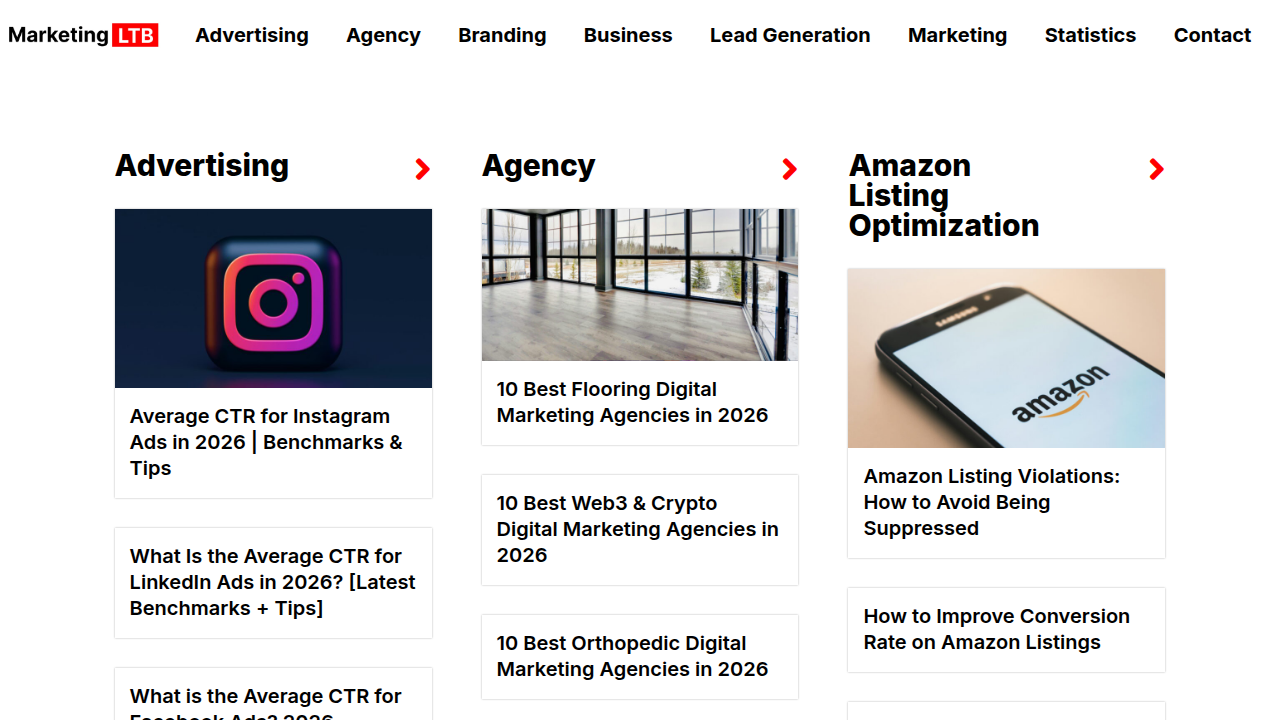
Here is the thing. Microsoft Advertising often gives you similar or even higher conversion rates in some industries. Many advertisers see 30% lower costs with 10 to 20% higher conversion rates on Bing compared to Google. source: MarketingLTB
Why? Because fewer businesses advertise there. You face less competition. For a service based SMB, this is a smart way to stretch your budget. source: Percengage
A budget friendly mix
Do not pick just one. Use Google for its massive reach. Use Microsoft Advertising for its lower costs and solid returns. Together, they make a strong team.
Do not forget other options
If you offer an app based service, Apple Search Ads is worth a look. Privacy focused alternatives like DuckDuckGo are also becoming more popular. But for most local service businesses, Google and Microsoft are the places to focus.
Make your ad spend count
Here is the hard truth. Even the best search engine ad campaign fails if your website does not convert visitors. A fast, clear website turns clicks into clients. If you want a site that actually pays for itself, you need a solid foundation.
Check out how to turn a useless website into a real lead generator. And if you prefer a done for you approach, Weblish handles the design, SEO, and ongoing management so you can focus on your clients.
Organic Search ROI: Which Search Engine Delivers the Best Free Traffic?
Paid ads get fast results, but organic traffic is the long game. The question is: which best search engine gives you the most free, sustainable traffic without burning your budget?
Google: big reach, big risks
Google is the default search engine for most people. That is why it drives the most traffic. But Google updates its algorithm constantly. In 2026, these changes often hurt small businesses. One update can drop your ranking overnight. If you rely only on Google, your traffic is never safe.
Microsoft Advertising (Bing/Yahoo): quiet and steady
Behind Google, Microsoft Advertising operates its own base search engine. Bing’s algorithm changes far less often. That means if you rank well today, you will likely stay there for months. Your SEO work keeps paying off. For service based SMBs, this stability is gold. Fewer competitors also means it is easier to get to the top.
YouTube: the hidden organic powerhouse
Do not overlook video search. YouTube is the second largest best search engine in the world. It drives highly engaged traffic, especially for how to and educational content. If you create short videos that solve your client’s problems, you can capture leads directly from search results. YouTube even offers a full organic lead generation course to help you get started.
What about DuckDuckGo?
Some users choose the duckduckgo search engine for privacy. It pulls results from Bing, so your Bing SEO helps there too. It is a small but growing slice of organic traffic.
Which search engine wins for organic?
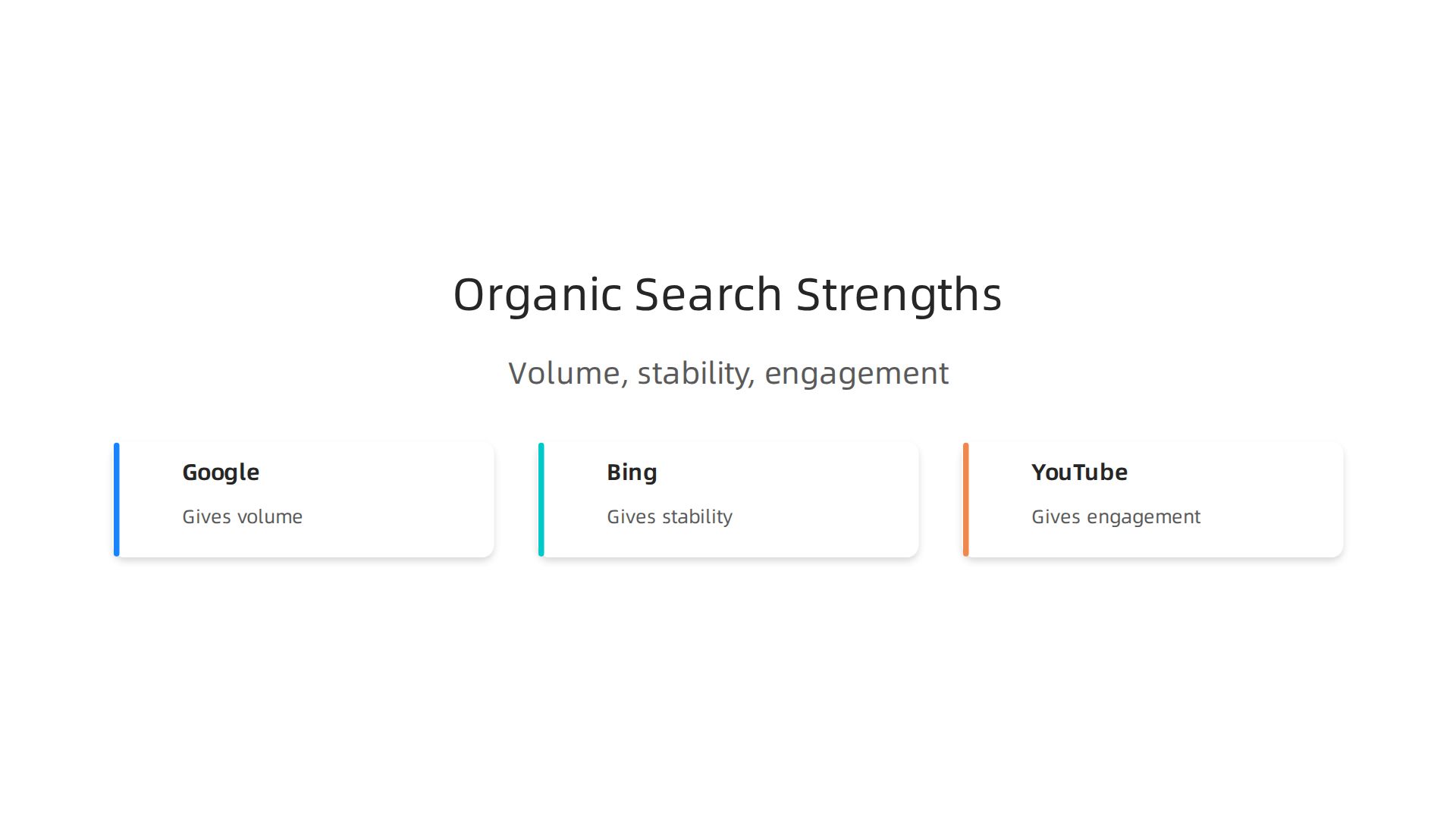
Google gives volume. Bing gives stability. YouTube gives engagement. The smart move is to chase all three.
Focus on creating high quality content that ranks across platforms.
But remember: organic traffic still needs a website that converts. A fast, clear site turns visitors into paying clients. If you want a done for you solution, Weblish builds and manages your website so you capture every lead that comes through the door.
Search Engine Features That Matter for SMBs: Local Search, Maps, Reviews
So you know which best search engine drives the most organic traffic. But for SMBs with a physical location, something else matters more: local search.
Let’s talk about what each search engine does for local businesses.
Google Maps and the Local Pack
Google is still king here. When someone searches for "plumber near me" or "best coffee shop," Google shows a local pack with three businesses and a map. If you are not in that local pack, you are invisible. For brick and mortar service businesses, this is everything. Google Maps drives foot traffic and phone calls like nothing else.
Bing Places for Business
Bing has its own platform called Bing Places. It is free and easy to set up. While fewer people use Bing (about 5% globally according to Statcounter in 2026), the local search results are clean. Competition is lower too. If you claim your Bing Places listing, you can show up quickly for local searches that your competitors ignore.
DuckDuckGo and the Apple Maps Problem
Here is where the duckduckgo search engine falls short for local SMBs. DuckDuckGo pulls its local results from Apple Maps. Apple Maps works well in big cities, but it often lacks detail for smaller towns or niche service areas. If your business is in a rural area, you might not show up at all on DuckDuckGo. And with DuckDuckGo holding only 0.71% market share globally, the traffic is tiny anyway.
Review Integration Differences
Google makes it easy for customers to leave reviews, and those reviews show up right in search results. Bing pulls reviews from other platforms. DuckDuckGo does not integrate reviews well at all. For an SMB, Google reviews are your best bet for building trust fast.
The Bottom Line
Google wins for local search. But do not ignore Bing Places, especially if your competitors are not there yet. And if you want a website that actually converts those local visitors into leads, you need a site built for speed and clarity. Weblish handles your web design, SEO, and local listing management so you can focus on serving your customers. Check out our guide on how to make your small business website convert visitors to customers to get started.
The Future of Search: AI-Powered Engines and Voice Search in 2026
Imagine asking your phone for a "plumber near me" and getting a spoken answer. No list of links. No scrolling. Just one answer picked by AI. That’s already happening.
Generative AI search tools like Google SGE, Bing Chat, and Perplexity are changing how people find information. In 2023, 13 million people used generative AI as their primary search tool. That number is expected to hit 90 million by 2027. And here is the big shift: visitors coming from AI results actually stay on websites about 8% longer, view 12% more pages, and are 23% less likely to bounce right away. These users are more engaged.
For SMBs, this means your content needs to earn a spot in AI summaries. AI engines pull answers from websites that clearly answer questions. If your site lacks clear, concise answers about your services, you get left out.
Voice search is growing fast too. Amazon Alexa, Apple Siri, and Google Assistant now handle millions of local queries every day. Voice searches tend to be conversational ("Where’s the best pizza place open now?"). They also favor local results. So if your business is not optimized for voice, you are missing real customers.
How do you prepare? Start by writing content that directly answers common customer questions. Use natural language. Structure your pages with clear headings and bullet points. Make sure your Google Business Profile is complete and accurate because voice assistants pull from that data.
And if all this feels overwhelming, you can get a partner who handles the technical side. Weblish offers web design, SEO, and ongoing management to help your site show up in every kind of search, including AI and voice. Want to understand more about what makes a website work for today’s search behavior? Read our guide on what nobody tells you about your website experience in 2026.
Summary
This article compares the top search engines in 2026 to help small and mid-sized businesses choose where to invest for lead generation. It reviews market share shifts—Google still dominates (roughly 84–91% globally) while Bing, privacy engines like DuckDuckGo, YouTube search, Amazon, and AI tools are gaining attention—and explains what those shifts mean for ad costs, audience fit, and conversion potential. You’ll learn concrete cost comparisons (Google CPC vs. Bing CPC), which engines work best for professional services, when privacy-focused or niche platforms make sense, and how YouTube and Amazon can serve specialized needs. The piece also covers organic ROI differences, local search mechanics (Maps, local packs, reviews), and the rising impact of AI and voice search. Throughout, it emphasizes the single most important point: whichever traffic source you pick, your website must convert those visitors into leads, and it points to practical fixes and services that can help you do that consistently.