
How to Use the National History Day Website for Your Next Project
This article is a practical guide to using the official National History Day (NHD) website as the central hub for student research, teacher planning, and commun…


Introduction
Have you ever sat down to research a history project only to get lost in a sea of confusing websites? You click one link, then another, and suddenly you are nowhere near where you started. It is frustrating.

And it wastes time you could spend actually learning.
The truth is, finding good historical resources can feel like a chore. But it does not have to be that way. National History Day (NHD) is a major educational program that helps students in grades 6 through 12 dive deep into history. The official National History Day website makes the whole process much simpler.
Here is the thing. The NHD website is a powerful tool. It has everything from contest rules to theme explanations. For example, the 2026 NHD theme is "Revolution, Reaction, Reform in History." You can find specific resources to match that theme right on the site. The problem is that many people do not know how to use it well. They skip straight to a general search engine and miss what is already waiting for them.
This guide will show you exactly how to make the most of the NHD website. You will learn where to find the NHD Contest Rule Book, how to check the official theme page, and how to access the complete resources archive. We will also look at how to build your own website links list for project research, whether you are using a simple document or a more detailed notion website to organize your work.
Think of this as your roadmap. Instead of bouncing between a dozen r websites, you will learn to navigate the one that matters most. And if your goal is to turn your research into a project that stands out, you might also want to check out how to make your small business website convert visitors to customers. The same principles apply whether you are building a history exhibit or a professional online presence.
Ready to stop guessing and start finding what you need? Let us walk through the NHD website together.
What Is National History Day?
So what exactly is National History Day? You might think it is just one day of the year. Actually, it is much bigger than that.
National History Day (NHD) is a yearlong educational program for students in grades 6 through 12. The non-profit organization behind it offers students the chance to explore significant topics of history through hands-on research and creative projects.

Here is how it works. You pick a topic that connects to the annual theme. For the 2025-2026 school year, the theme is "Revolution, Reaction, Reform in History." You can find specific guidance on the official theme page. Source. Then you dig into primary and secondary sources. You do the real work of a historian. After your research, you create a project. You can choose from five formats: a paper, an exhibit, a performance, a documentary, or a website.
The contest is a key part of the program. It starts at the local level. Source. Students compete in regional events. Winners move on to state contests. Finally, the top entries head to the national competition in Washington, D.C. Along the way, you learn skills like critical thinking, writing, and public speaking.
Many students use a website links list to keep track of all their online sources. Some even create a notion website to organize their notes, outlines, and drafts in one place. Others turn to r websites (like Reddit communities) for peer advice and feedback. These tools help you stay on top of your research without getting lost.
If you decide to build a website for your NHD project, you can apply the same principles that make business websites effective. For example, learning how to turn your website into a lead generator can help you design a project site that grabs judges’ attention.
For teachers or students who want professional support for their digital projects, there are affordable options available. You can get started with Weblish to create a polished online presence for your history club or classroom resources.
National History Day is not just a contest. It is a chance to become a real historian. And the NHD website is your best starting point.
Key Features of the Official NHD Website
The official NHD website is your one-stop hub for everything you need to succeed. Whether you are a student, teacher, or parent, this site has the rules, resources, and updates you need. Let’s break down the best features.
Rules and Guidelines Made Clear
The most important part of any contest is knowing the rules. The NHD Contest Rule Book lives right on the website. This rule book covers everything from project formats to citation rules. You also get a theme guide each year. For 2026, the theme "Revolution, Reaction, Reform in History" is explained in detail on the theme page. You can even download the full theme book as a PDF.
Resources for Every Step
The Resources Archive is packed with guides. You will find help for writing a thesis statement and creating an annotated bibliography. In 2026, NHD is adding a new webinar series to celebrate the 250th anniversary of the Declaration of Independence. These resources make it easier to build a strong project. And if you want to organize your research, you can keep a website links list to track all your online sources.
News, Updates, and Results
The website posts the latest contest news, deadlines, and national results. You can see which students advanced to the national competition in Washington, D.C. GovInfo also features NHD updates each year.
Stay Organized with Digital Tools
Many students use tools to manage their research. You might create a notion website to keep notes and outlines in one place. Some students visit r websites like Reddit communities to get advice from past winners. Others use a t13 website builder to design their project site. The NHD site does not replace these tools. It gives you the official content you need to fill them.
Build Your Own Project Website
If you decide to create a website for your NHD entry, you can learn from design tips used by professionals. For example, checking out graphic design principles that turn your website into a lead generator can help your project stand out to judges. And if you want affordable, expert help building a polished digital project, you can get started with Weblish to design and manage your site.
The NHD website keeps everything simple. Rules, resources, and news are all in one place. Start there, and your project will be on the right track.
Educational Resources Available on the NHD Site
Beyond the core rules and updates, the nhd website offers a treasure trove of educational tools designed specifically for teachers.

Whether you are planning a full unit or just guiding one student, these resources save you time and make the research process clearer for everyone.
Curriculum Guides and Lesson Plans
The NHD site provides ready-to-use curriculum guides that align with the annual theme. For 2026, the theme “Revolution, Reaction, Reform in History” comes with a full theme book that includes classroom activities, discussion prompts, and sample project ideas. You can download the 2026 Theme Book right from the site. These lesson plans are built for different grade levels, so whether you teach middle school or high school, you will find materials that fit your classroom. Many teachers use these guides as the backbone of their history unit, then add their own primary sources on top.
Topic Selection Tools and Primary Source Databases
Finding a good topic is often the hardest part. The nhd website helps by linking directly to trusted source collections. You will find recommendations for digital archives from the Library of Congress, National Archives, and state historical societies. These databases make it easy for students to dig into real documents, photos, and letters. A smart way to stay organized is to create a website links list of all the archives you plan to use. Some students prefer to manage their notes in a notion website where they can tag sources and save drafts. Others use a t13 website builder to create a simple research dashboard. And if you ever get stuck, r websites like Reddit’s history communities are full of teachers and past winners who share topic ideas and source tips.
Webinars and Professional Development for Teachers
In 2026, NHD is rolling out a special webinar series tied to the 250th anniversary of the Declaration of Independence. These live sessions cover everything from helping students narrow down a topic to teaching them how to analyze a primary source. Past webinars are recorded and stored in the NHD Resource Archive, so you can watch them anytime. The site also offers professional development credits for teachers who complete certain courses. This is a huge help if you need continuing education hours and want to learn something practical at the same time.
All of these educational resources are free and easy to find on the nhd website. Once your students have a solid topic and source list, the next step is building their project. If they choose a website entry, learning basic design skills can make a big difference. Check out this web development tutorial to help them structure a clean, judge-friendly site. And if you want more hands-on support turning their research into a polished digital project, get started with Weblish for affordable design and management help.
How to Navigate the NHD Website Efficiently
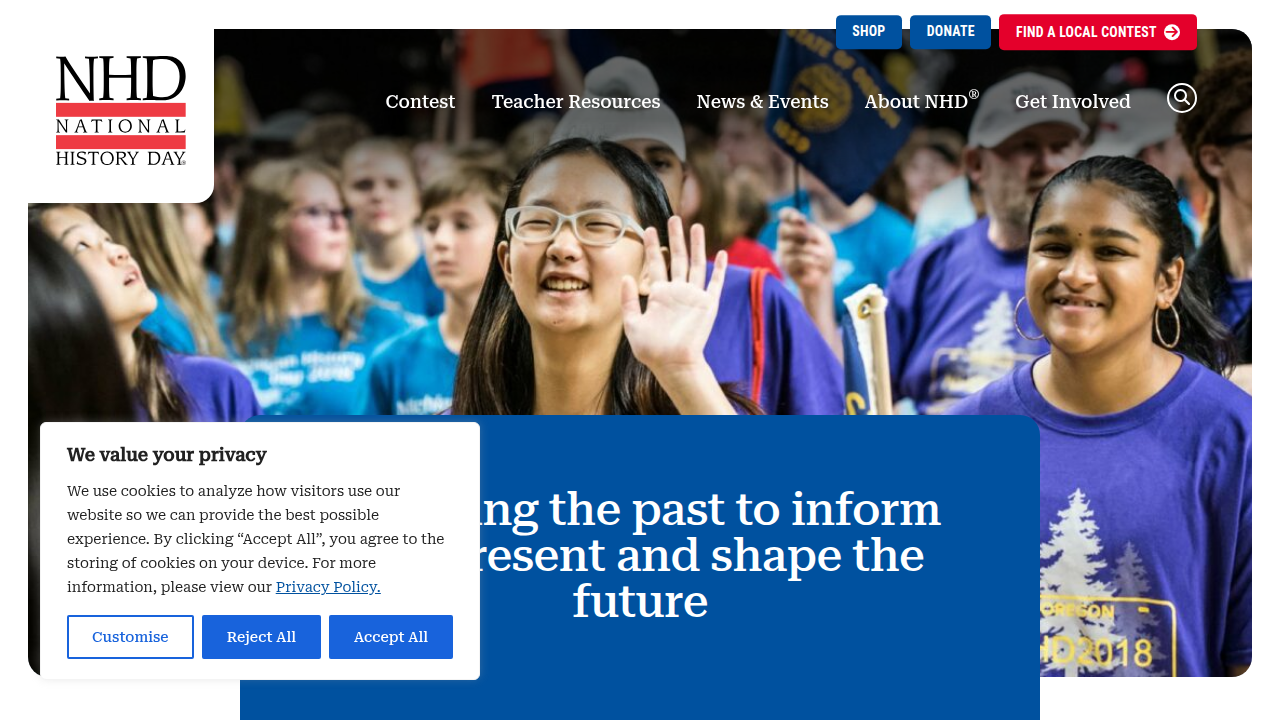
The nhd website is built to be straightforward, but knowing where to click first saves you time. The main menu at the top gives you direct access to the most important sections: Contest, Resources, Get Started, and Theme. Each category is neatly labeled, so you can jump straight to the rules, downloads, or project guides without digging through clutter. There is also a search bar in the upper right corner. Use it to find specific topics, rule books, or PDFs fast.
For teachers, students, and parents, the site offers quick links tailored to each group. The Get Started page walks students through the first steps of choosing a topic and planning research. The Resources Archive is a goldmine of webinars, lesson plans, and the latest rule book. Parents can find overviews of the competition timeline and judging criteria. You do not need to guess where things are. The site clearly labels sections like “For Teachers” and “For Students.”
In 2026, web accessibility is a major priority for schools and educational sites. The NHD website follows modern standards to make sure everyone can use it. It works well on mobile phones, tablets, and laptops. That means your students can browse resources in class, at home, or on the go. The site also meets Web Content Accessibility Guidelines (WCAG) 2.1 AA, which is the same standard mandated by the ADA for 2026. So if you have students who rely on screen readers or keyboard navigation, they will have a smooth experience.
Here is a quick tip to save even more time. As you explore, create your own website links list of the archives and databases you use most. That way you do not have to search again later. You can also follow r websites like Reddit’s history communities where teachers share new NHD resources. Some students keep all their notes in a notion website where they tag sources and draft outlines. Others use a t13 website builder to make a simple dashboard for their project. These little tricks help you stay organized from day one.
Once you are comfortable navigating the NHD site, the next step is building a winning project. If you choose a website entry, you will need some basic design skills. Check out this web development tutorial to learn how to structure a clean, judge-friendly site. And if you want affordable, professional help turning your research into a polished digital project, get started with Weblish. Their team handles the design and management so you can focus on content.
Tips for Using NHD Resources in the Classroom
You already know the nhd website is full of useful materials. But maybe you are thinking, "How do I fit all this into my already packed lesson plans?" It is a common worry. The good news is that NHD is built to work with what you already teach, not against it.
1. Integrate NHD into your existing curriculum.
You do not need to start from scratch. NHD’s inquiry-based program naturally supports project based learning in your history or social studies classroom. The Nevada Center for Civic Engagement offers ready-to-use resources that tie directly to civics and history standards. National History Day California explains how the program fosters critical thinking without requiring extra prep time. You can use NHD as your main research unit or as an enrichment project for advanced students.
2. Use NHD’s project example library.
Students learn best when they see what a strong project looks like. The Library of Congress has a rich collection of primary sources and sample projects that show different formats. The National Archives also provides example entries and research guides. Have your class study past winners to understand what judges look for. Then ask them to create their own website links list of the sources they find most helpful.
3. Leverage judging rubrics for skill building.
The NHD judging rubric is more than a grading tool. It is a roadmap for teaching historical thinking. Use the rubric from the NHD Classroom Tools page as a checklist. Walk students through each criterion: thesis development, argument, evidence, and analysis. This helps them build skills they will use in college and beyond. The NHD Teacher Resources page has full lesson plans and professional development workshops to support you.
Here is one more practical idea. As you organize your NHD unit, create a shared notion website where students track their progress and store research notes. Some teachers use r websites like Reddit’s r/historyteachers to swap tips and fresh resources. Another option is to build a simple t13 website dashboard that shows each student’s milestone status. These digital tools keep everyone on the same page.
If your students choose a website entry for their project, they will need to understand basic design principles. Check out these graphic design principles to help them create a clean, judge-friendly layout. And if you want professional support to build a polished digital project site, get started with Weblish. Their team handles the design and hosting so your students can focus on their research and storytelling.
Best Practices for Student Research and Project Creation
So your students have chosen their topic. Now what? The real work begins. Helping them move from a broad idea to a finished project can feel overwhelming. But with a clear process, you can guide them step by step.
Start with a strong thesis.
A good thesis is the backbone of any NHD project. It is not just a fact. It is an argument. The NHD 2026 Theme Book gives you a great starting point. It explains how the theme "Revolution, Reaction, Reform in History" should shape your students’ research. Ask them to find a specific angle. For example, instead of "The American Revolution was a turning point," they could argue "The American Revolution changed how women saw their role in politics." That is a thesis they can prove with evidence.
The NHD Classroom Tools page has rubrics and checklists that help students test their thesis against the criteria. Use it early in the process.
Understand primary vs. secondary sources.
Many students struggle here. Make it simple.
Primary sources come from the time period. Letters, photographs, government documents, newspaper articles. The Library of Congress has a huge collection of these. The National Archives also provides primary sources and research guides. Tell your students to start with at least three primary sources before they read any secondary works.
Secondary sources are books and articles written later by historians. They give context and analysis. Students need both. But the best projects lean heavily on primary sources.
Pick the right project format.
NHD offers five formats: paper, exhibit, performance, documentary, and website. Each has strengths.
A paper lets students show deep analysis. An exhibit uses visual storytelling. A performance builds public speaking skills. A documentary teaches video editing and narration. And a website combines text, images, and multimedia.
If your students choose a website, they will need to think about design. The site must be clean and easy to navigate. Check out this web development tutorial for basic tips on structure and layout. For a complete solution that handles design and hosting, you can use Weblish to create a polished project site that judges will enjoy.
No matter the format, students should build a website links list of all their sources. It keeps them organized and makes citations easy. Some teachers use a notion website to track sources as a class. Others share ideas on r websites like Reddit’s history teacher forums. Even a simple t13 website dashboard can show student progress at a glance.
The key is to start research early and keep the thesis in focus. With the right sources and a clear format, your students can create projects that stand out.
How Businesses Can Support NHD and Benefit
You care about your community. You also want your brand to grow. National History Day gives you a way to do both at the same time.
Sponsorship opportunities.
Businesses can sponsor NHD at many levels. In Missouri, for example, a $10,000 Partner sponsorship includes featured recognition at the state contest and an invitation to speak at the awards ceremony. Other states offer even more affordable entry points. The Achieve Foundation sponsorship sheet shows levels starting as low as $150. Your logo appears on lawn signs, programs, and the official NHD website.
You can also sponsor special awards. The NHD Coordinator Guide for Special Awards explains how businesses can create a prize for a specific category. Maybe you want to sponsor the best nhd website project. Or the most creative use of primary sources. You decide the focus.
Volunteer judging and mentoring.
Not every business can write a check. But almost every business has employees with valuable skills. Lawyers can judge historical papers. Designers can mentor students creating exhibits. Tech companies can help teams build their nhd website with better structure and faster load times.
Volunteering puts your people directly in front of young researchers. It builds goodwill that lasts. And it costs nothing except a few hours of time.
Enhanced brand visibility.
When you sponsor NHD, your name appears at regional and national contests. Your logo shows up on the National Contest materials seen by thousands of students, teachers, and parents. The Key Evaluation Findings show that NHD students outperform their peers in research and critical thinking. That is exactly the kind of educational impact customers want to support.
You also get to highlight your support on your own site. If your business website is not pulling its weight yet, take a moment to learn why your business website is useless and how to fix it. A strong site makes your sponsorship more visible.
A practical next step.
Want to stand out even more? Offer a tool that helps students build better projects. For example, you can provide a free subscription to Weblish for the top NHD website entries in your region. That gives students a professional platform to showcase their work and gives your brand a lasting connection to their success.
Supporting NHD is a win for students, a win for educators, and a win for your business. Start small. Sponsor a prize. Volunteer a mentor. See how it grows from there.
Summary
This article is a practical guide to using the official National History Day (NHD) website as the central hub for student research, teacher planning, and community support. It explains what NHD is, why the NHD site matters, and where to find essentials like the Contest Rule Book, annual theme pages, the Resources Archive, and recorded webinars. The piece shows teachers how to use ready-made lesson plans, topic-selection tools, and judging rubrics, and it gives students clear steps for strong research: form a focused thesis, use primary sources, and pick the right project format. The guide also covers efficient site navigation, digital organization techniques (website links lists, Notion), and practical tips for building a judge-friendly website entry. Finally, it outlines ways businesses can support NHD through sponsorships, mentoring, and in-kind help to boost both student outcomes and community visibility.