
DuckDuckGo Alternatives That Give You Real Privacy in 2026
This article explains why businesses and privacy-conscious users should look beyond DuckDuckGo in 2026, because DuckDuckGo still relies heavily on Bing for many…


Why Look Beyond DuckDuckGo in 2026?
If you care about online privacy, you have probably used the duckduckgo search engine at some point.

It promised no tracking, no filter bubbles, and a clean experience. By 2026, DuckDuckGo has grown into a respected name.
But here is the thing: DuckDuckGo still depends on the Bing index for most of its results. That means it is not as independent as many people think.
According to recent search engine market share data, Google dominates with around 90% of searches worldwide, while Bing holds about 5%. DuckDuckGo’s share is far smaller, and its reliance on another big tech company raises a fair question: is it truly a private alternative, or just a privacy layer on top of the same infrastructure?
Privacy concerns do not stop with DuckDuckGo. Every base search engine collects some data, even if they say otherwise. The good news is that new alternatives are stepping up. Platforms like bunkr search offer different approaches to indexing, data handling, and user control. This means you can find the best search engine for your specific needs, whether that is full anonymity, no ads, or a custom index.
For businesses, choosing the right search engine is more than a privacy decision. It affects how you understand your audience, run marketing campaigns, and compete online. A search engine that aligns with your values and goals can help you attract the right customers and build trust. That is why many small and mid sized businesses are rethinking which search tools they use.
If you are ready to take control of your digital presence and align your search strategy with your business goals, services like Weblish can help you build a site that ranks, converts, and respects user privacy. Their team offers affordable web design and ongoing SEO support tailored to small businesses.
Want to go deeper? Read our guide on why your business needs a private search engine in 2026 to see how choosing the right search tool can protect your brand and customers.
1. Brave Search: The Independent Index
So if the duckduckgo search engine still leans on Bing for results, what is the real alternative? That is where Brave Search comes in. Brave Search runs on its own fully independent index. It does not borrow results from Google or Microsoft.
This is a big deal if you want a truly private search experience.
Unlike a typical base search engine, Brave Search does not track you or build a profile based on your clicks. It also blocks ads and trackers by default. In fact, Brave Search is B Corp certified, which means an independent organization regularly checks that they actually follow through on their privacy promises. This kind of real transparency is hard to find in the search world.
Brave Search works perfectly inside the Brave browser. But you can also use it in Chrome, Firefox, or any other browser. For businesses, pairing a privacy-first search tool with a privacy-focused brand message builds trust with your customers. Other options like bunkr search are innovating too, but Brave Search leads the pack for those who want a fully independent index.
If you are thinking about making a switch, Brave Search deserves a serious look. Many people now call it the best search engine for 2026 because it balances speed, privacy, and independence without relying on big tech.
Once you choose tools that respect your audience, the next step is making sure your website does the same. That is where Weblish comes in. They help small businesses build fast, secure, and conversion-focused websites that match the values you promote. Want to go deeper? Read our full guide on why your business needs a private search engine in 2026 to learn how these choices protect your brand and your customers.
2. Startpage: Google Results Without the Tracking
Here is a tough spot many business owners face. You want the accurate, local search results that Google is famous for. But you do not want Google tracking every search you make.

According to recent data, Google still holds over 89% of the global search market share. That makes it the most powerful base search engine by far. The problem is that using it comes with a privacy cost.
Startpage solves this. Think of Startpage as a middleman. It takes your search query, forwards it to Google anonymously, and then sends the results back to you.
Google never sees your IP address or personal data. Startpage has a strict no-logging policy, which means they do not store what you search for. They also offer an "anonymous view" feature. That lets you click on any result and open the page without the website knowing where you came from.
For businesses that rely on accurate local results, this is a game changer. Whether you need to find a plumber near you or research a competitor, you get the same high quality results you expect from Google. But your data stays private.
So how does Startpage compare to other options? The duckduckgo search engine is easier to use out of the box, but it relies on Bing for many results. Startpage gives you Google results directly. If you want the best of both worlds, you might also check out bunkr search for creative alternatives. But for pure Google quality with total privacy, Startpage is hard to beat.
Choosing a private search engine is a smart first step. But your whole website should reflect that same respect for privacy and user experience. That is where Weblish can help. They build fast, secure websites designed to turn visitors into customers. Want to learn more about optimizing your site for trust? Read our guide on internal site search for SMBs to see how small changes can boost conversions.
3. SearXNG: Self-Hosted Meta-Search Control
Startpage gives you Google results without tracking. But what if you want to pull from multiple sources at once? That is where SearXNG shines.
SearXNG is an open-source meta-search engine you can run on your own server. That means you have total control over your data. Nobody else sees your search history. According to experts who tested the best private search engines in 2026, self-hosted options are the gold standard for privacy.
Here is how it works. SearXNG grabs results from many sources at once. That includes Google, Bing, and the duckduckgo search engine. It also pulls from other indexes. Then it strips all tracking from those results before showing them to you.
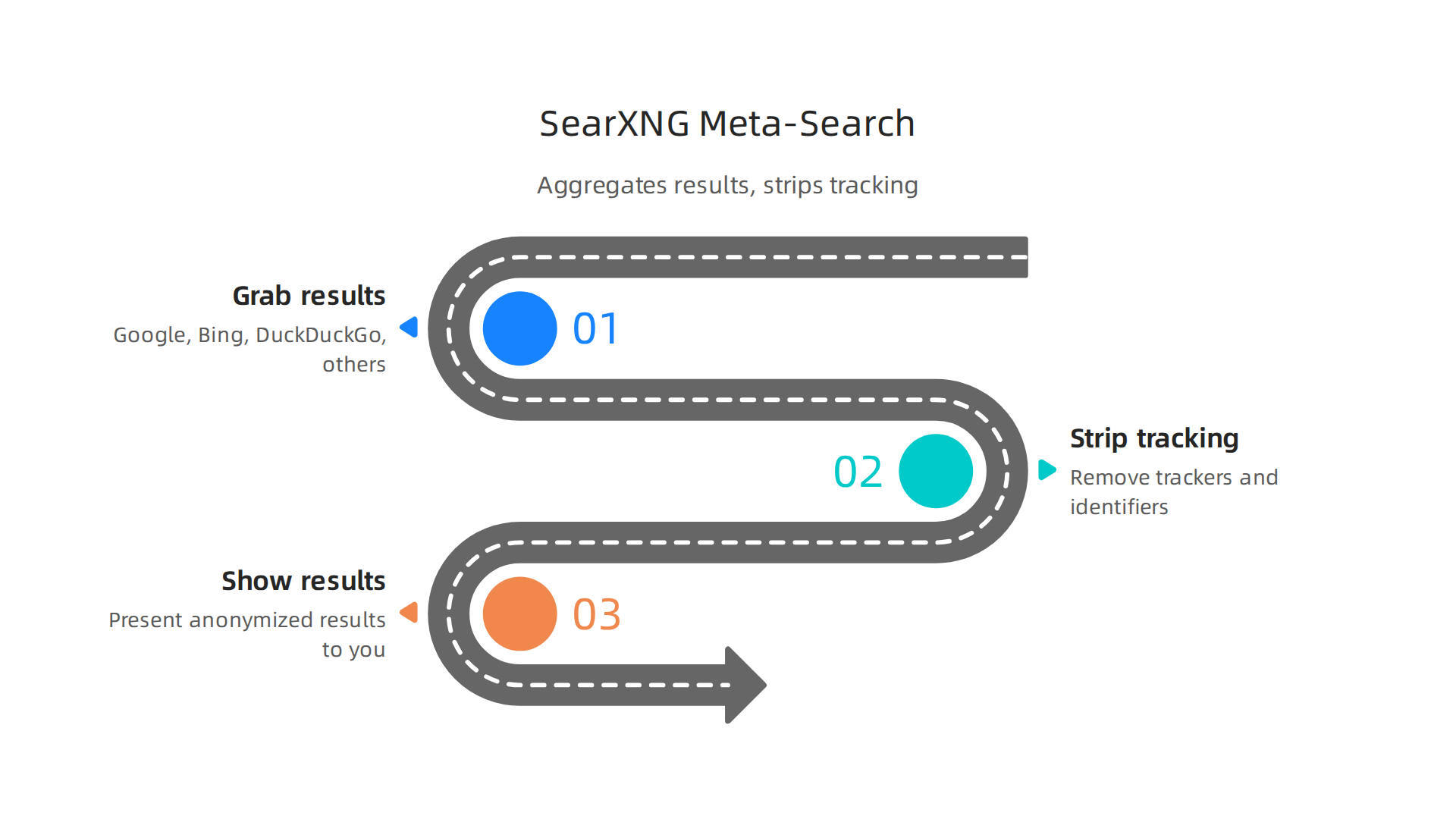
You get the best of many base search engine tools in one clean page.
The big feature is custom control. You can decide which engines to search. You can change how results are ranked. You can even set it to use a different bunkr search or privacy-focused source for certain types of queries. That makes it a strong candidate for the best search engine if you are technical.
There is one catch. Setting up SearXNG requires some technical skill. You need to install it on a server or use Docker. But once it is running, you own everything. If you want a hands-off option, Startpage or DuckDuckGo may be easier. But if you want total independence, SearXNG is hard to beat.
The same thinking applies to your website. You want full control over how visitors experience your brand. That is why many businesses turn to Weblish for a managed website that respects user privacy while driving leads. Want to learn more about building trust online? Read our guide on why your business needs a private search engine in 2026.
4. Mojeek: The Fully Independent Crawler
SearXNG gives you control by self-hosting. But what if you want a search engine that does not rely on Google or Bing at all? That is where Mojeek comes in.
Mojeek is one of the very few search engines that runs its own web crawler, called MojeekBot. It has been building its own index since 2004,
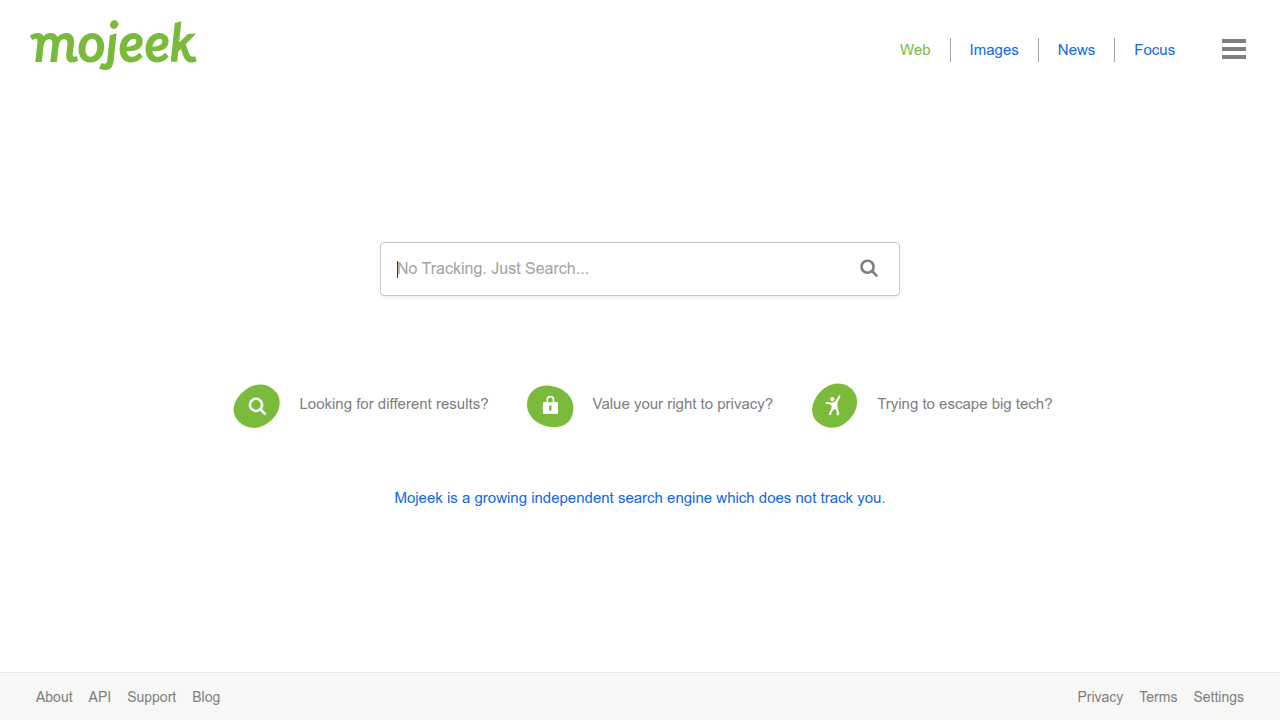
according to keytomic.com. That means it does not borrow results from anyone else. It is a true base search engine that maps the web on its own.
Here is why that matters. Most private search engines like the duckduckgo search engine get their results from Bing or Google. They remove tracking, but the results still come from Big Tech. Mojeek does not. It crawls pages itself and ranks them with its own algorithm. Experts at SafetyDetectives call Mojeek a favorite for its independent index and strong privacy policies.
The trade-off is size. Mojeek’s index is smaller than Google’s or Bing’s. So for very broad queries, you might get fewer results. But for niche searches, it often finds hidden gems that bigger engines miss. If you have tried bunkr search for specialized topics, Mojeek offers another path with real independence.
Many people consider Mojeek the best search engine for true autonomy. It does not track you, log your IP, or build a profile. Your searches stay private from the start.
Just like Mojeek gives you independence from Big Tech, your business deserves independence from expensive, unclear agencies. Weblish offers a done-for-you growth service that builds your website and manages your digital presence without the high upfront costs. Want to go deeper on privacy? Read our guide on why your business needs a private search engine in 2026.
5. Qwant: European Privacy Champion
You already know that data privacy matters more in 2026 than ever. But did you know that a search engine can also be a statement about where you stand on digital rights? Qwant, based in France, is that statement. It operates under some of the strictest data laws in the world, GDPR, and it takes them seriously.

Qwant does not track your searches. It does not build a profile of your interests. And it does not trap you in a filter bubble that shows you only what you already agree with. That means you get more diverse results, not just the ones an algorithm thinks you want.
If you already use the duckduckgo search engine, you are used to privacy. But DuckDuckGo is based in the United States. Qwant is built in Europe, which gives it an extra layer of legal protection under GDPR. For business owners or individuals in the EU, that difference matters.
Qwant pulls together results from the web, news, and social media all on one clean page. The trade-off? Quality can sometimes be uneven. For very specific or niche searches, you might get fewer useful results than from a base search engine with a bigger index. But for everyday private browsing, it is a solid choice.
Experts at AlmCorp rank Qwant among the best search engine alternatives for privacy in 2026. Whether you use bunkr search for specialized tasks or just want a trustworthy daily tool, Qwant is worth a try.
Building a business that values privacy starts with the right tools. Weblish can help you create a website that earns that same trust. Get started with Weblish by signing up and claiming your free trial. And for more on turning that trust into real leads, read our guide on how to make your small business website convert visitors to customers.
7. Gibiru: Uncensored Private Search
Have you ever searched for something and noticed certain results just didn’t show up? That happens more than you might think. Most search engines filter content based on their own rules. But what if you want to see everything for yourself?
That is exactly what Gibiru promises. It is a private search engine that claims to deliver uncensored results. If you feel like mainstream options are hiding information from you, Gibiru tries to give you the full picture.
Here is how it works. Gibiru routes your search through private servers. It keeps no logs of what you look up. That means your history stays yours. Unlike some big search engines that track your every click, Gibiru does not build a profile on you.
For people looking for alternative viewpoints, this is a big deal. It bypasses many content filters other search engines use. You get to see results that might otherwise be hidden.
Of course, this also means Gibiru has a special appeal. It is not for everyone. But if you care about seeing all sides of an issue, it can be a useful tool.
Gibiru is different from other private search options like Swisscows, which some reviews say "piggyback off Bing" and still offer excellent results. Gibiru builds its own approach.
Want to learn more about why protecting your online privacy matters for your business? Check out our guide on why your business needs a private search engine in 2026.
And if you are ready to make your entire website work harder for you, Weblish can help you build a fast, private, high converting site without the usual headaches.
8. Ecosia: Eco-Conscious Search with Privacy
So Gibiru focuses on uncensored results. But what if you want a search engine that helps the planet too? That is where Ecosia comes in. It is a base search engine that uses the Bing index for its results. But here is the twist. Ecosia uses its ad revenue to plant trees around the world.
Every time you search with Ecosia, you help fund reforestation projects.

The company says it has planted millions of trees so far. For business owners who care about their carbon footprint, this is a simple way to make a difference.
But what about privacy? Ecosia takes that seriously too. Their privacy policy states they do not store your search data permanently. They also do not sell your data to advertisers. The ads you see help plant trees, not track your habits.
This makes Ecosia a strong option for environmentally conscious businesses. In 2026, customers are paying more attention to the values of the companies they support. Aligning your business with a best search engine that gives back can be a smart move. It shows your audience that you care about more than just profit.
Studies show that SEO for small business in 2026 has gotten harder, not easier. Standing out matters more than ever. Choosing a search engine that matches your brand values can help. It is a small choice that sends a big message.
If you want to learn how your website itself can better align with your values and convert visitors into customers, check out our guide on making your small business website convert visitors to customers.
And if you are tired of websites that look good but do not work, Weblish can help you build a site that earns trust and drives real results.
9. Comparison of Top DuckDuckGo Alternatives: A Quick Reference
By now you have seen that the duckduckgo search engine has many worthy alternatives. Each one brings something different to the table. But how do they stack up against each other for business use? Let us break it down in a simple comparison.
The table below compares the top alternatives we covered: DuckDuckGo itself, Startpage, Brave Search, Gibiru, and Ecosia. I have focused on what matters most for a small business in 2026: speed, index independence, cost, and overall business suitability.
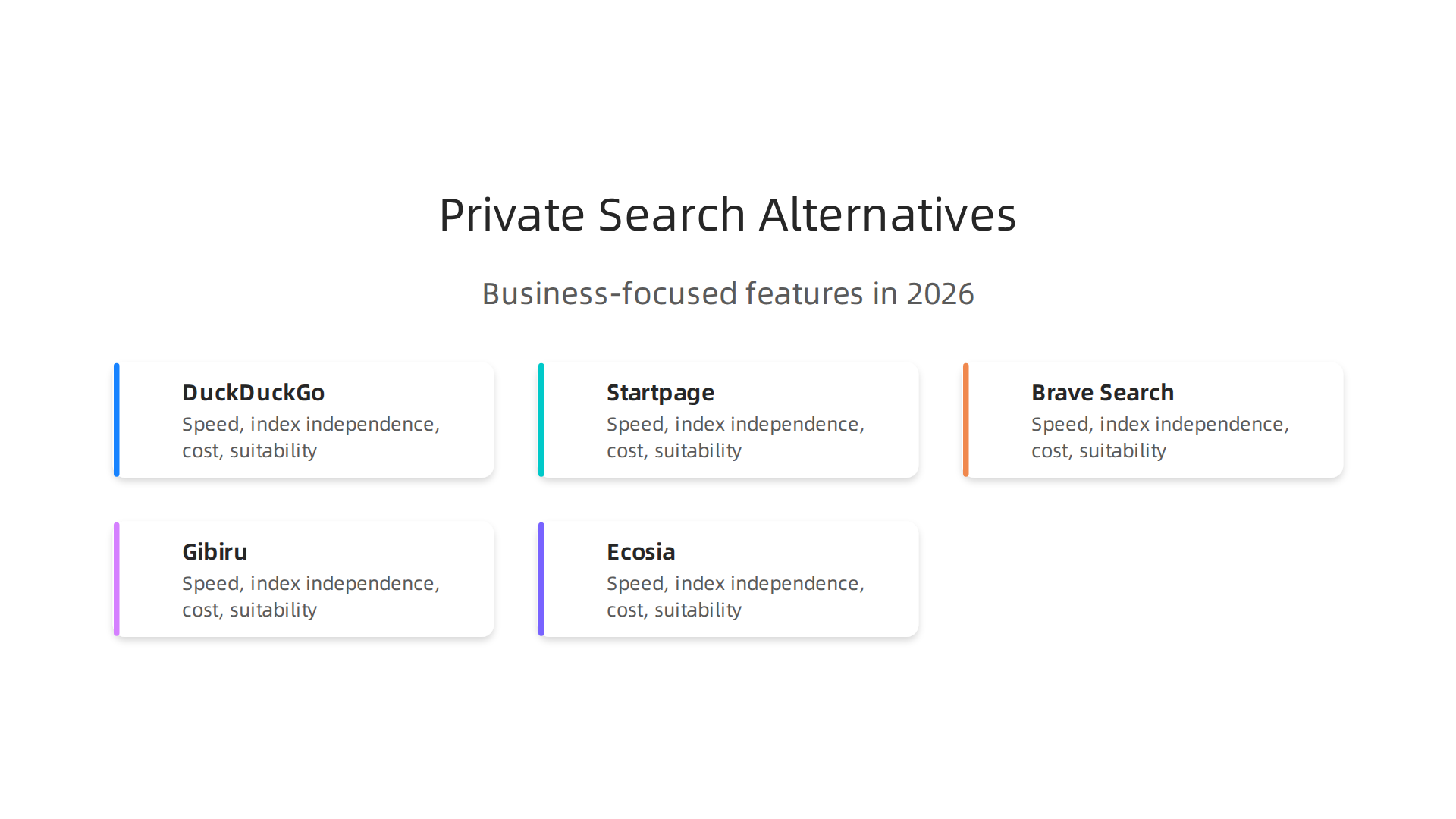
| Search Engine | Speed | Index Independence | Cost | Business Suitability |
|---|---|---|---|---|
| DuckDuckGo | Fast | Uses Bing index | Free | Best for team privacy and ad-free results |
| Startpage | Fast | Uses Google index (anonymized) | Free with paid option for businesses | Great for unbiased, high-quality results |
| Brave Search | Fast | Own independent index (with Bing fallback) | Free (premium optional) | Strong for security and ad-free browsing |
| Gibiru | Moderate | Uses own filtered index | Free | Niche choice for users wanting uncensored results |
| Ecosia | Fast | Uses Bing index | Free | Excellent for eco-conscious brands |
Pros and Cons for Business Use
DuckDuckGo is the most balanced choice. It gives you strong privacy without sacrificing search quality. But it does rely on Bing, so you are not fully independent.
Startpage delivers Google-quality results without tracking. That is a big win if your team needs accurate answers quickly. The downside? You still depend on Google’s index.
Brave Search is the most independent. It builds its own index. In 2026, more businesses are moving toward independence because AI changes in search make reliance on one index risky. Brave also comes with a built-in ad blocker, which speeds up browsing.
Gibiru is for very specific needs. If you want uncensored results and do not mind slower load times, it works. But for most businesses, the slower speed is a dealbreaker.
Ecosia is a feel-good choice. Your searches plant trees. It is fast and uses Bing results. Just remember that if Bing goes down, so does Ecosia.
What Matters Most in 2026
For a small business, speed and reliability should come first. A slow search engine wastes time across your whole team. Studies show that SMBs are struggling with traffic and SEO in 2026, so every second counts.
If you want a best search engine that balances privacy, speed, and independence, Brave Search is the frontrunner. If your brand values align with sustainability, Ecosia is a strong second.
Choosing the right search engine is just one small step. The bigger question is whether your website itself is ready to capture and convert visitors. If you need help turning your site into a lead machine, Weblish can build and manage it for you at a predictable monthly price.
And if you want to dig deeper into why search independence matters, read our guide on why your business needs a private search engine in 2026.
Quick Tips to Pick Yours
- For team privacy: Start with DuckDuckGo or Startpage.
- For index independence: Brave Search is your winner.
- For uncensored results: Gibiru fills that gap.
- For environmental impact: Ecosia is unmatched.
- For all-around value: Brave Search offers the best mix of speed, privacy, and independence.
The right choice depends on your business values and daily needs. Test a few and see which one feels natural to your team. In 2026, every advantage matters.
Summary
This article explains why businesses and privacy-conscious users should look beyond DuckDuckGo in 2026, because DuckDuckGo still relies heavily on Bing for many results. It compares prominent alternatives — Brave Search, Startpage, SearXNG, Mojeek, Qwant, Gibiru, and Ecosia — highlighting differences in index independence, tracking policies, speed, and business suitability. You’ll learn what independent indexes mean, when anonymized Google results (via Startpage) are preferable, and why self-hosting (SearXNG) or true crawlers (Mojeek) matter for full control. The piece outlines trade-offs such as smaller indexes vs. stronger privacy, practical use-cases for each engine, and quick recommendations for teams and brands. It also covers how choosing a search engine ties into marketing, trust, and site conversion, and points to specific Weblish resources and guides for aligning your website with privacy-focused tools. After reading, you’ll know which engines to test first, how to evaluate them for your business needs, and next steps to make your website reflect those privacy values.