
How to Build a UI UX Designer Portfolio That Wins Clients in 2026
This article explains how to build a high-converting UI/UX designer portfolio that actually attracts clients and hiring managers in 2026. It walks through the e…


Your portfolio is the most powerful tool you have. Whether you want to land a full time role or attract new clients, your ui ux designer portfolios is what makes the first impression.

And in 2026, that first impression matters more than ever.
The design field is stabilizing after a period of change, but competition is still tough. Hiring managers look closely at how you show your work. Many designers send out dozens of applications and hear nothing back. Why? Because their portfolios all start to look the same. Recruiters get overloaded, and they need a reason to keep looking at yours. As the UX Portfolio Playbook points out, portfolios that include real numbers and clear results stand out from the crowd.
The good news is that you do not need a perfect resume or years of experience to build a strong portfolio ui/ux designer that gets results. You just need to know what hiring managers actually want to see. This guide covers everything, from the core sections every ui ux designer portfolio must include to the advanced strategies that help you win more clients and projects.
Building a smart portfolio is a lot like building a smart website for your business. It needs a clear structure, a focus on the user, and a way to turn visitors into action. If you want to learn how a professional design approach can help your whole business grow, take a look at what a design team can do for your small business.
Ready to turn your design work into a lead generating machine? Grow your traffic on autopilot and let your portfolio work for you around the clock.
Why a Strong UI/UX Portfolio Matters for Client Acquisition
Imagine you put weeks into your ui ux designer portfolio. You upload your best screenshots. You write a short bio. Then you send it out to 100 potential clients or agencies. And you hear nothing.
You are not alone. Recruiters and hiring managers in 2026 are flooded with similar looking portfolios. Many applicants send 100 to 200 applications and get almost no response. According to a popular UX career video, the main reason is that portfolios start to blur together. Yours needs to stand out in seconds.
So what makes the difference? It is not just good visuals anymore. Data shows that portfolios with clear case studies and real results get noticed far more than simple galleries. According to the UX Portfolio Playbook, adding numbers and metrics to your work is one of the simplest ways to validate your design decisions. It shows you think about business impact, not just aesthetics. The NNGroup State of UX 2026 report confirms that differentiation is now the key to winning projects in a stabilizing market.
For small and mid-sized business owners looking to hire a designer, a strong portfolio ui/ux designer can replace a long sales pitch.

When you show a clear case study that explains how you solved a real problem, you build trust fast. You do not need a fancy pitch deck. You need proof that you can deliver. That is exactly what a well built case study does.
But here is the thing. Even a great portfolio needs people to see it. If you are ready to turn your design work into a consistent lead generator, you need a way to bring visitors to your site. Grow your traffic on autopilot with a system that keeps your portfolio working for you around the clock.
Next, we will walk through the exact sections every ui ux designer portfolio needs to include so you can build one that actually gets results.
Essential Elements of a High-Converting Portfolio
So what actually makes a ui ux designer portfolio convert visitors into clients? After studying dozens of portfolios that get results in 2026, a clear pattern emerges. The best ones all share the same core building blocks.
Start with a Clear Structure
First, your portfolio needs a simple, obvious structure. Hiring managers do not have time to hunt for information. They want to know who you are, what you can do, and how to reach you.
A high-converting portfolio ui/ux designer always includes three essential pages:
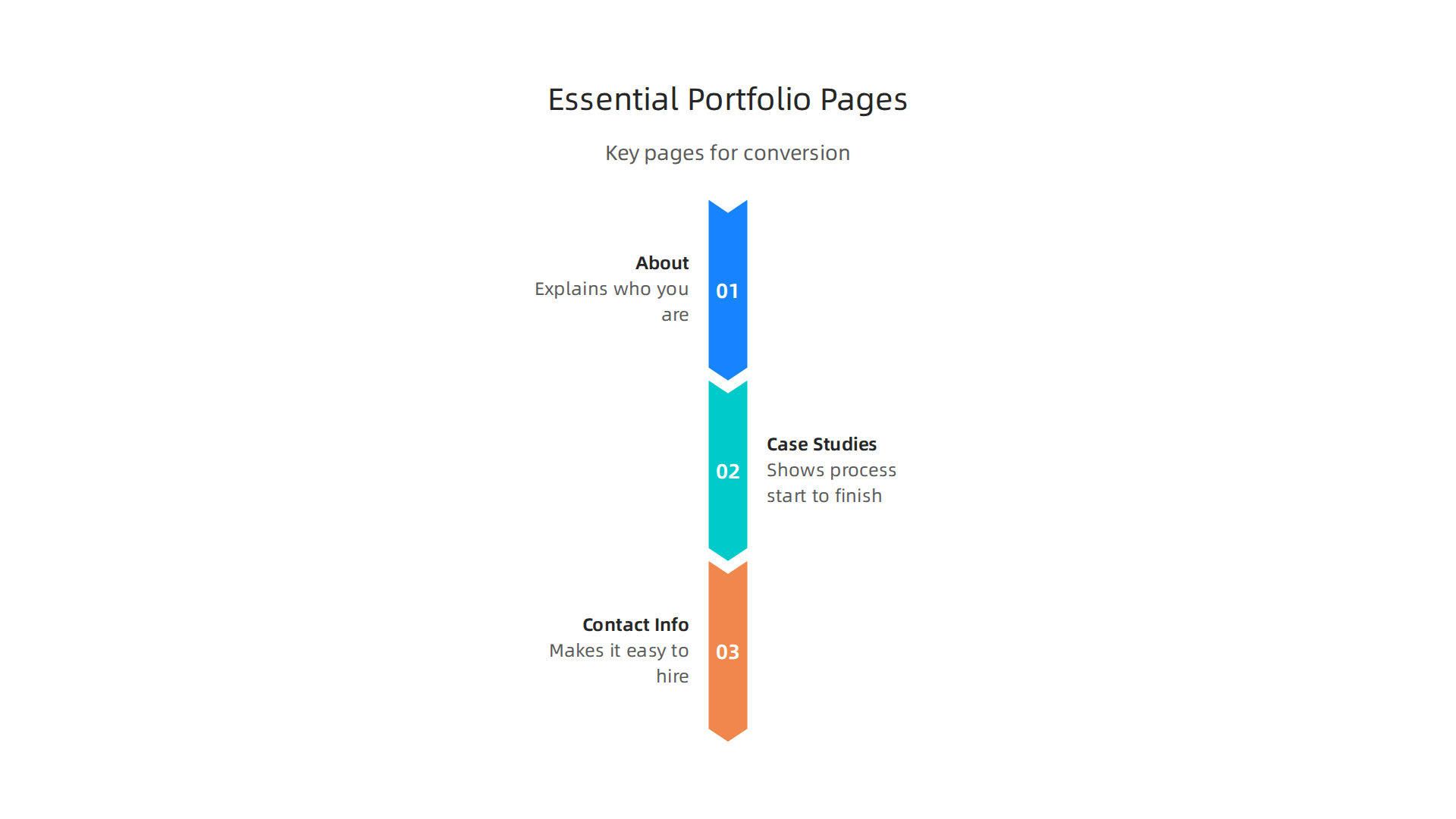
- An About section that explains who you are and what kind of problems you solve
- Case studies that show your process from start to finish
- Contact information that makes it easy for someone to hire you
According to experts at Slickplan, most portfolios perform best with three to five detailed case studies. A few highly impactful examples are far more effective than many shallow ones. Focus on quality, not quantity.
Show Your Process Through Visual Storytelling
Here is the part most designers skip. They only show the final screens. But clients want to see how you got there.
You need to include annotated wireframes, concept sketches, and interactive prototypes. The Designlab team explains that your portfolio should include a mix of work samples from each part of the UX design process. Show your research. Show your early sketches. Show how your thinking evolved.
This approach does two things. First, it proves you have real expertise. Second, it builds trust because clients can see you follow a thoughtful process. If you want to understand the fundamentals behind this thinking, check out our simple guide to what is UI design and why it matters for your business growth.
Add Measurable Results
This is the secret weapon of high-performing ui ux designer portfolios. Every case study should include numbers.
Did your redesign improve conversion rates by 25 percent? Say that. Did user testing show a 40 percent drop in errors? Include it. The UX Playbook recommends using a proven framework to showcase your impact in the first 60 seconds. That is how you grab attention fast.
Results validate your decisions. They show you care about business outcomes, not just making things look pretty.
Make It Easy to Take the Next Step
Finally, never leave a visitor wondering what to do next. Your contact information should appear clearly on every page. A call to action like "Let’s work together" or "Book a free call" works well.
Once your portfolio has all these elements, the next challenge is getting people to see it. That is where consistent traffic makes the difference. Grow your traffic on autopilot with a system that keeps your design work in front of the right audience without extra effort from you.
Now you know exactly what to build. Next, let us walk through the exact steps to create a compelling case study that shows off your best work.
Showcasing Your Design Process: From Wireframes to Prototypes
You already know that a strong case study shows your best work. But here is what really seals the deal: showing how you got there. In 2026, hiring managers and clients don’t just want to see the final screens. They want to understand your thinking, your methods, and how you solve real problems. That is what separates memorable ui ux designer portfolios from the ones that get ignored.
The best portfolio ui/ux designer teaches the viewer through every step. It starts with rough concept sketches, moves to wireframes, then to high-fidelity designs, and finally to working prototypes.
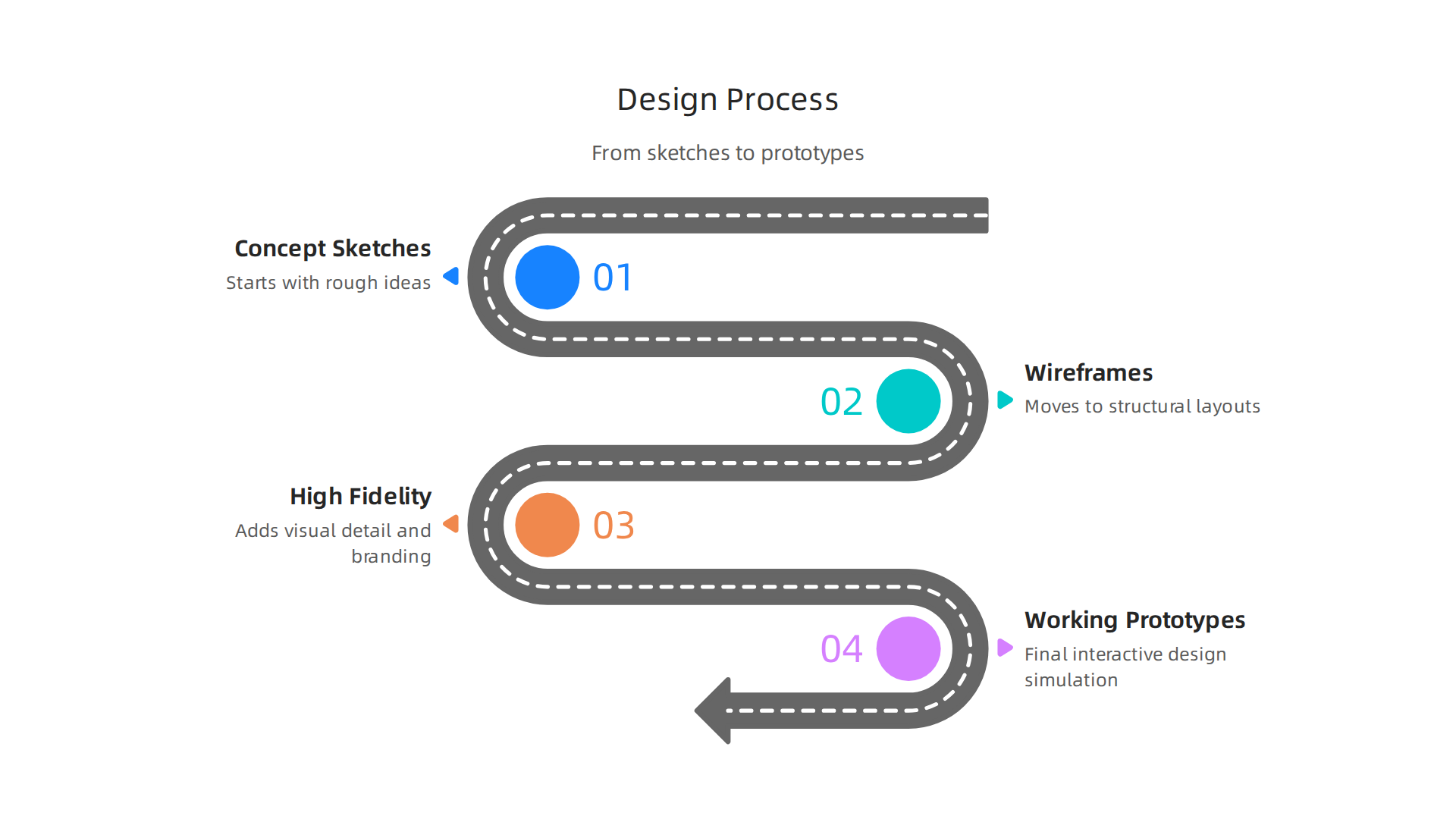
This layered approach builds confidence. It proves you have a repeatable process. According to the 2026 portfolio guide by UDIT, a defensible portfolio case study includes evidence of your design decisions at each stage. Never skip the early sketches.
Don’t Forget the Research
A picture of a polished mockup tells a story. But a user persona or a journey map tells the real story. Including research artifacts like interview quotes, empathy maps, and user flows shows that you design with the user in mind. This is the core of user-centric thinking. The Designlab team highlights that the strongest portfolios include work samples from every part of the UX process, including research and concept development. When you show that you explored user needs before jumping to visuals, you build deeper trust.
Make It Interactive
Here is the secret weapon: embed interactive prototypes right inside your portfolio. Instead of static screenshots, let viewers click through your design. This gives them a real feel for the experience. Platforms like Figma or Adobe XD allow you to link to live prototypes. As noted in the UX Case Study Template from UXFol, interactive elements keep the viewer engaged and prove your design works in action.
When you pair clear process steps with research and interactivity, your portfolio tells a complete story. That story is what lands you the next project or job. If you want to learn more about using design principles to grab attention, check out our guide on graphic design principles that turn your website into a lead generator.
Now that your portfolio shows every step of your process, the final piece is getting people to see it. Grow your traffic on autopilot with a system that puts your work in front of the right audience, day after day.
Top UI/UX Courses to Level Up Your Skills
You have built a portfolio that shows your process, your research, and your finished work. That is a huge step. But what happens when you run into a skill gap? Maybe you want to learn motion design, or you need to get better at usability testing. That is where the right course makes all the difference.
Investing in a structured program does more than teach you new tricks. It adds credibility to your ui ux designer portfolios. A certificate from a recognized platform tells employers and clients that you took the time to learn from experts. In 2026, certifications from places like Coursera and the Interaction Design Foundation carry real weight in hiring decisions.
Which Courses Actually Deliver?
Here is the honest answer: it depends on your goal. But a few names come up over and over in the industry.
The Interaction Design Foundation is one of the most affordable options worldwide for UX education, according to a survey by UXtweak. They offer a wide range of courses that cover everything from user research to interaction design. If you want a well-rounded foundation without spending a fortune, this is a strong pick.
Coursera hosts the Google UX Design certificate, which is popular for a reason. The program covers the full UX process and includes hands-on projects. You can also find other UI-specific courses on Coursera’s UI catalog that go deeper into visual design and interface patterns.
For a more guided, mentor-led experience, Designlab’s UX Academy is worth a look. It pairs you with a mentor who gives real feedback on your work. Designlab also keeps an updated list of the best UX design courses for 2026 that breaks down options for beginners and experienced designers alike.
Udemy offers on-demand classes that are budget-friendly. You can find courses on specific tools like Figma or Adobe XD, which is great if you just need to fill one small skill gap.
Don’t Forget Portfolio-Focused Courses
Some courses specifically teach you how to build a better portfolio ui/ux designer presentation. These programs help you structure your case studies, write clearer problem statements, and pick the right screenshots. If your portfolio still feels flat, a course like that can be the quickest fix.
Before you sign up for anything, take a moment to think about what you actually need. Do you lack research skills? Go with IDF. Do you need a full career change? Try Designlab or CareerFoundry. Do you just want to tighten up your visual design? A focused Udemy class might be enough.
As you level up your skills, your portfolio will get stronger. And a stronger portfolio means more opportunities. If you are curious about whether a full degree is worth it, check out our guide on whether a UX designer degree is worth it in 2026.
Once you have the skills and the portfolio, the next step is getting in front of the right people. Grow your traffic on autopilot and let your work speak for itself.
Building a Portfolio that Attracts the Right Clients
You have taken the courses and built your ui ux designer portfolios. Now comes the hard part: making sure the right people actually see them. A generic portfolio that tries to please everyone often ends up pleasing no one. The trick is to tailor your work to the specific kind of client you want.

Know your niche. Do you want to work with fast-growing startups that need quick iterations? Or do you prefer enterprise clients who value deep research and polished documentation? Maybe you are aiming for agencies that hire freelancers for specific project types. Each of these audiences looks for different signals in your work.
If you are targeting startups, show case studies with tight timelines and scrappy user testing. For enterprise, highlight your ability to navigate complex systems and cross-team collaboration. The Interaction Design Foundation features some of the most inspirational UX design portfolio examples in 2026 that show how designers match their presentation to their target audience.
Three to five detailed case studies are often enough, according to advice from Slickplan. A few powerful, focused examples beat a dozen shallow ones every time.
Make your portfolio findable. Your portfolio is a website. It can rank in Google. Use SEO to help clients discover your portfolio ui/ux designer skills. Include relevant keywords in page titles, headings, and image alt text. If you specialize in SaaS dashboards, make sure the words "SaaS UI UX designer portfolio" appear naturally. You can apply the same graphic design principles that turn your website into a lead generator to your portfolio site itself.
Add social proof. Client logos and short testimonials instantly build trust. When a prospect sees that real companies have paid for your work and liked it, they feel safer taking the next step. A simple "This designer doubled our user engagement" quote next to the client’s logo can be more persuasive than a whole case study.
Once your portfolio is polished and optimized, you need to get it in front of the right eyes. That is where a reliable growth system comes in. Get started with Weblish and let AI help you attract qualified traffic on autopilot, so your ui ux designer portfolio works for you around the clock.
Grow your traffic on autopilot and turn your portfolio into a lead generation machine.
Common Portfolio Mistakes and How to Avoid Them
You have worked hard on your ui ux designer portfolios. But even a strong portfolio can fall flat because of a few simple but serious mistakes. Here are the top three to watch for and how to fix them.
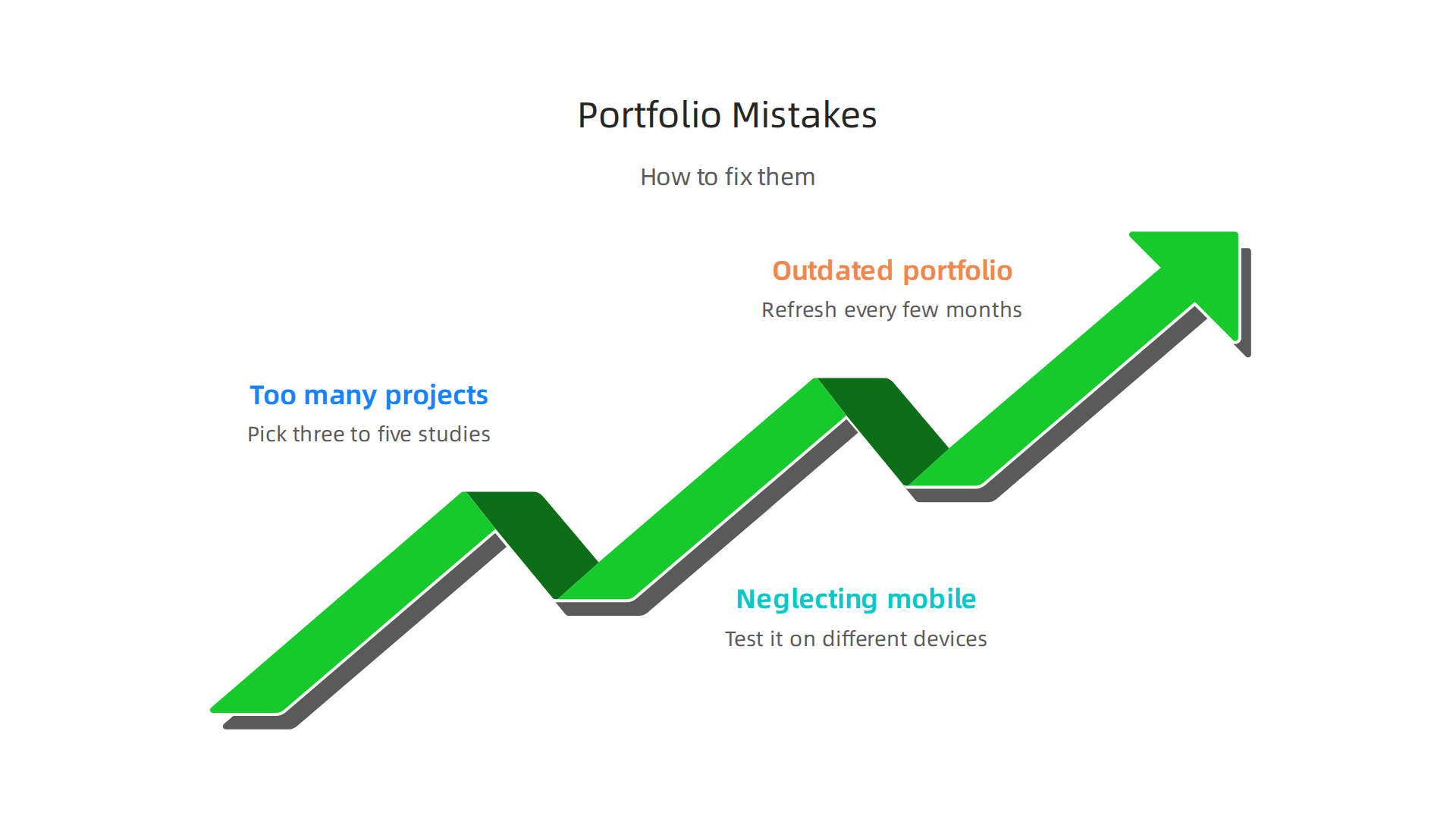
Mistake 1: Overloading with too many projects
It is tempting to show everything you have ever made. But a crowded portfolio makes it hard for clients to see your best work. Too much noise dilutes your impact.
According to UXM, one of the most common design portfolio mistakes is including too many projects. The fix is simple. Pick three to five focused case studies that tell a clear story about your skills. Your ui ux designer portfolio should be more like a greatest hits album, not a full discography. Think of your portfolio ui/ux designer as a highlight reel. Choose the projects that best match the clients you want to attract.
Mistake 2: Neglecting mobile optimization
Many hiring managers and clients browse portfolios on their phones. If your site looks broken or loads slowly on a small screen, they will leave fast.
DesignLab points out that forgetting the user of your portfolio site is a critical error. Your portfolio is a UX project of its own. Test it on different devices. Make sure buttons are easy to tap and text does not get cut off. A bad mobile experience can cost you a great opportunity.
Mistake 3: Failing to update your portfolio regularly
An outdated portfolio signals that you have stopped growing. If your most recent project is from two years ago, clients may wonder if you are still active in the field or if your skills are current.
The same UXM article also lists a lack of recent work as a top mistake. Set a reminder to refresh your portfolio every few months. Add new case studies. Remove older work that no longer represents your best. Even small updates show you are engaged and improving. Your ui ux designer portfolio is a living document. Treat it that way.
Avoid these mistakes and your portfolio will do a much better job of attracting the right clients. But the work does not end there. You still need a steady stream of visitors to see your polished site. That is where a smart growth system comes in.
Grow your traffic on autopilot and turn your portfolio into a lead generation machine that works for you every day.
Measuring Portfolio Performance: Analytics and Feedback
You have cleaned up your ui ux designer portfolios and avoided the big mistakes. But how do you know if your changes actually work? The answer is simple: measure your results and listen to feedback. Without data, you are just guessing.
Track with analytics tools
The first step is to set up Google Analytics on your portfolio site. This free tool shows you how many people visit, what pages they look at, and how long they stay. Most importantly, it can track conversion events like clicking a contact button or downloading your resume.
According to the UX Portfolio Playbook, one of the simplest ways to validate your design choices is through numbers. When you see that visitors spend more time on a certain case study, you know that project is resonating. Use that insight to highlight similar work. Your portfolio ui/ux designer should be built on real data, not just what you think looks good.
Try A/B testing
You can also run A/B tests on your site. Show one version of your homepage to half your visitors and a slightly different version to the other half. Then see which one gets more clicks. For example, test the order of your case studies, the color of your call to action button, or the image on your hero section. Small changes can lead to big improvements in engagement.
Ask for direct feedback
Numbers tell you what is happening, but feedback tells you why. Share your ui ux designer portfolio with peers, mentors, or past clients. Ask them specific questions: Is the navigation clear? Do you understand my process? Would you hire me based on this?
This kind of direct input helps you fix problems before a hiring manager spots them. You can also join a design community or take a ui ux designing course that includes portfolio reviews. The faster you get feedback, the faster you improve.
Keep iterating
Measuring performance is not a one time task. Check your analytics monthly. Test new ideas. Ask for fresh feedback. Over time, your portfolio will become a powerful tool that attracts the right clients. If you want help with ongoing optimization and growth, consider a service like Weblish that handles the technical side for you.
Ready to turn your portfolio into a consistent lead generator? Grow Your Traffic on Autopilot and let data guide your next step.
Summary
This article explains how to build a high-converting UI/UX designer portfolio that actually attracts clients and hiring managers in 2026. It walks through the essential pages (About, case studies, contact), shows why three to five deep case studies outperform long galleries, and explains how to present process work—wireframes, research, and interactive prototypes—to build credibility. The guide stresses adding concrete results and metrics to prove business impact, optimizing for mobile and SEO so the right people find you, and using analytics and A/B tests to measure improvement. It also recommends targeted courses to close skill gaps and offers tips on niching, social proof, and ongoing updates so your portfolio keeps working as a lead generator. Read it to learn exactly what to include, how to present your work, and how to keep improving so your portfolio turns visitors into clients.