.png)
2026 UI and UX Designer Salary Benchmarks for Small Business Owners
This guide explains what SMBs should expect to pay UI/UX designers in 2026, breaking down clear salary benchmarks by experience level and highlighting the big f...
Introduction
If you run a small or mid-sized business in 2026, you already know great design matters. But when it comes time to hire a UI/UX designer, one question stops you cold: What should you actually pay them?

Salary data for design roles has been frustratingly hard to pin down. Job boards show wide ranges. Friends in other industries give guesses. And if you budget too low, you scare off top talent. Budget too high, and your margins take a hit. The same challenge shows up across the market: according to Glassdoor, the average ui and ux designer salary in the United States lands around $103,691 per year. But that number alone doesn’t tell you what a junior designer costs versus a senior pro, or how location changes the picture.
Here is the thing. UI/UX designer jobs keep growing because every business now needs smooth, user-friendly websites and apps. The 2026 UX Salary Report from User Interviews analyzed over 20,000 real salaries and confirms the demand is real. Small business owners like you are stuck trying to plan a budget without a reliable map.
This guide changes that. We pulled together data-driven salary benchmarks for 2026, broke down career levels, and created actionable hiring strategies made for SMBs. You will know exactly what a fair salary of ui ux designer looks like, whether you are hiring your first designer or expanding a small team. And if you want to understand the full landscape of available roles and hiring expectations, we cover that too.
Let us start with the numbers that matter most to your bottom line.
The 2026 UI/UX Designer Salary Landscape: Benchmarks by Experience and Location
The $103,000 average we covered in the introduction is a helpful starting point. But the real story of what you will pay comes down to two big factors: how much experience the designer has and where they work. The good news? The data in 2026 is finally clear enough to help you build a budget with confidence.
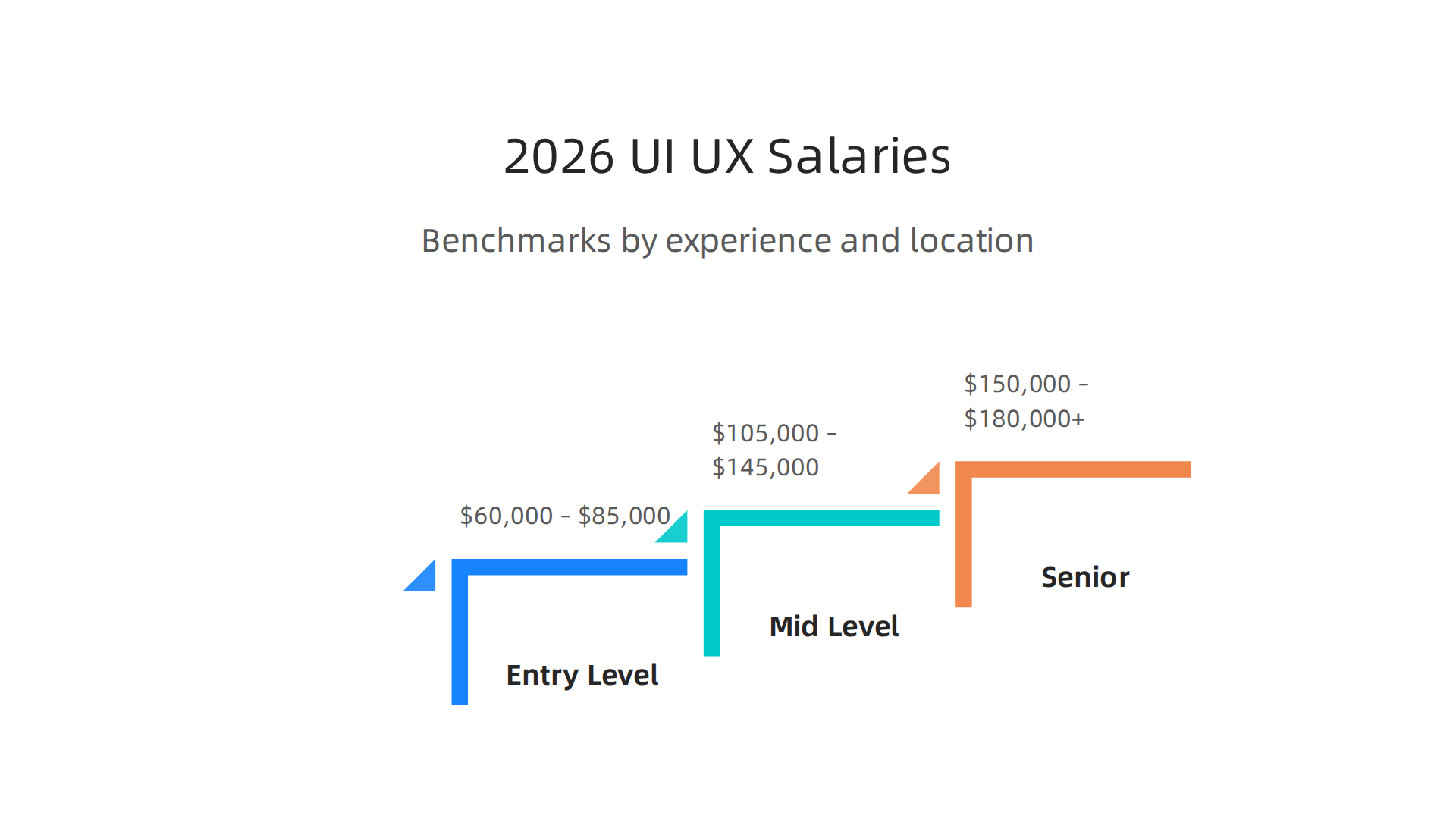
Here is a simple breakdown of what you can expect to pay for a ui and ux designer salary based on their career level in the United States.
| Experience Level | 2026 Salary Range (U.S.) |
|---|---|
| Entry-Level (0–2 years) | $60,000 – $85,000 |
| Mid-Level (3–5 years) | $105,000 – $145,000 |
| Senior (5+ years) | $150,000 – $180,000+ |
The experience gap is shrinking. Demand for entry-level talent has pushed starting pay higher. According to Skillcrush, designers fresh out of school or bootcamps now start closer to $70,000. That is a big jump from just a few years ago. Meanwhile, the Untitled UI salary guide shows that senior designers in high-demand markets like Austin can command well over $160,000.
Mid-level is the sweet spot for most SMBs. If you need someone who can run a project without constant hand-holding but is not asking for a VP-level title, the mid-level range is your target. The median total compensation for a mid-level UI/UX designer in 2026 lands close to $115,000 per year. Data from the User Interviews salary report and OneHour Digital confirms this is the most common hiring band for growing businesses.
Location is losing its grip on pay. This is a huge win for small business owners. Remote work has flattened salary differences between cities. You no longer have to pay San Francisco or New York premiums unless you are requiring in-office work. The average remote UI/UX designer salary on Glassdoor is around $86,250. That means you can hire excellent talent from lower cost-of-living areas and keep your budget under control.
Knowing the right salary range is a smart first step. The next step is actually finding a team or a service that can deliver great design at a price that makes sense for your business. Instead of paying a full-time senior salary and dealing with the hiring headaches, you could partner with a service like Weblish. We match you with senior-level web design and growth experts for one flat monthly fee.
Get started with weblish by signing up and claiming your free trial
Key Factors That Influence UI/UX Designer Salaries – What SMBs Should Know
The salary ranges you just saw are a solid starting point. But you may have noticed that two designers with the same experience level can earn very different pay. Why? A few hidden factors drive those gaps. If you understand them, you can make smarter hiring decisions and get more value for your budget.
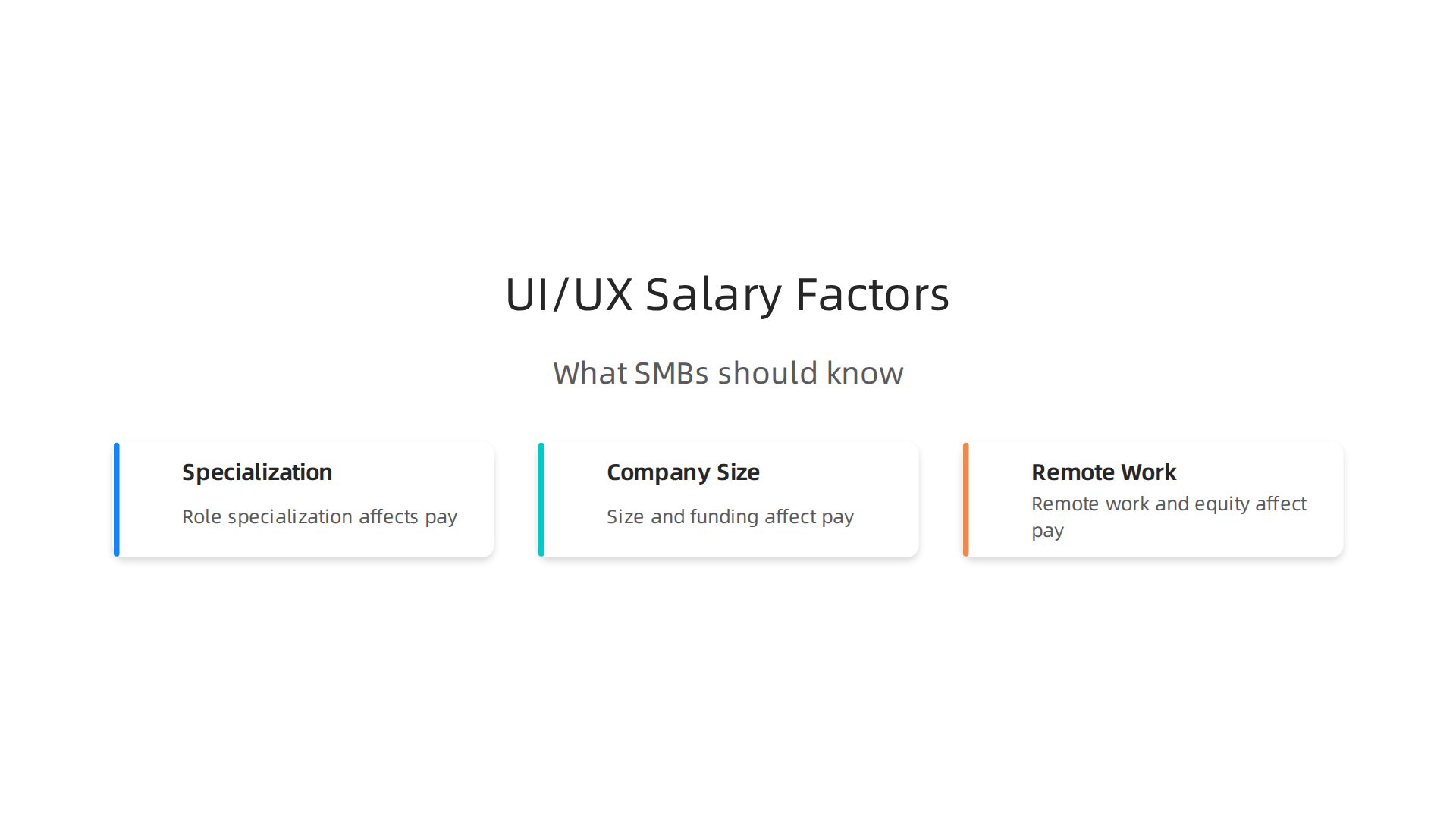
Specialization matters more than you think. Not all UI/UX designers do the same work. Some focus on user research, some on interaction design, and others on visual design. Those with a deep specialty often demand a 10 to 20 percent premium. According to the KORE1 salary guide, UX researchers and interaction designers in particular command higher pay because their skills are harder to find. If you need someone who can run usability tests and turn data into wireframes, expect to pay at the top of the range.
Company size and funding stage change the numbers fast. A startup that just raised a Series A round can offer salaries that compete with big tech. A bootstrapped small business cannot. The User Interviews salary report shows that designers at funded companies earn 15 to 30 percent more than those at smaller, self-funded businesses. That means if you are an SMB competing for talent against a well-funded startup, you need to think differently about your offer. You can learn more about navigating this landscape in our guide to UX design jobs and hiring strategies in 2026.
**Remote work and equity can close the gap.
** You do not always need to match the biggest base salary. Many designers value flexibility. The average remote UI/UX designer salary on Glassdoor is about $86,250, which is lower than in-office roles in expensive cities. Offering a remote-first policy can help you attract great talent without paying a location premium. Equity or profit-sharing also sweetens the deal without hitting your cash flow.
So what does this mean for your business? You do not have to outbid the giants. You just need to be smart about which factors matter most to the designers you want.
If paying a full-time senior salary feels out of reach, there is another way. Services like Weblish give you access to senior-level design and growth experts for one flat monthly fee. No hiring headaches, no equity negotiations. Just results.
Career Path & Salary Progression: From Junior to UI/UX Director
Now you know what affects the numbers. But what does the full career ladder actually look like? Understanding this helps you plan your hires for the long term.
Most designers move through five clear stages. Each one brings a big jump in pay and responsibility.
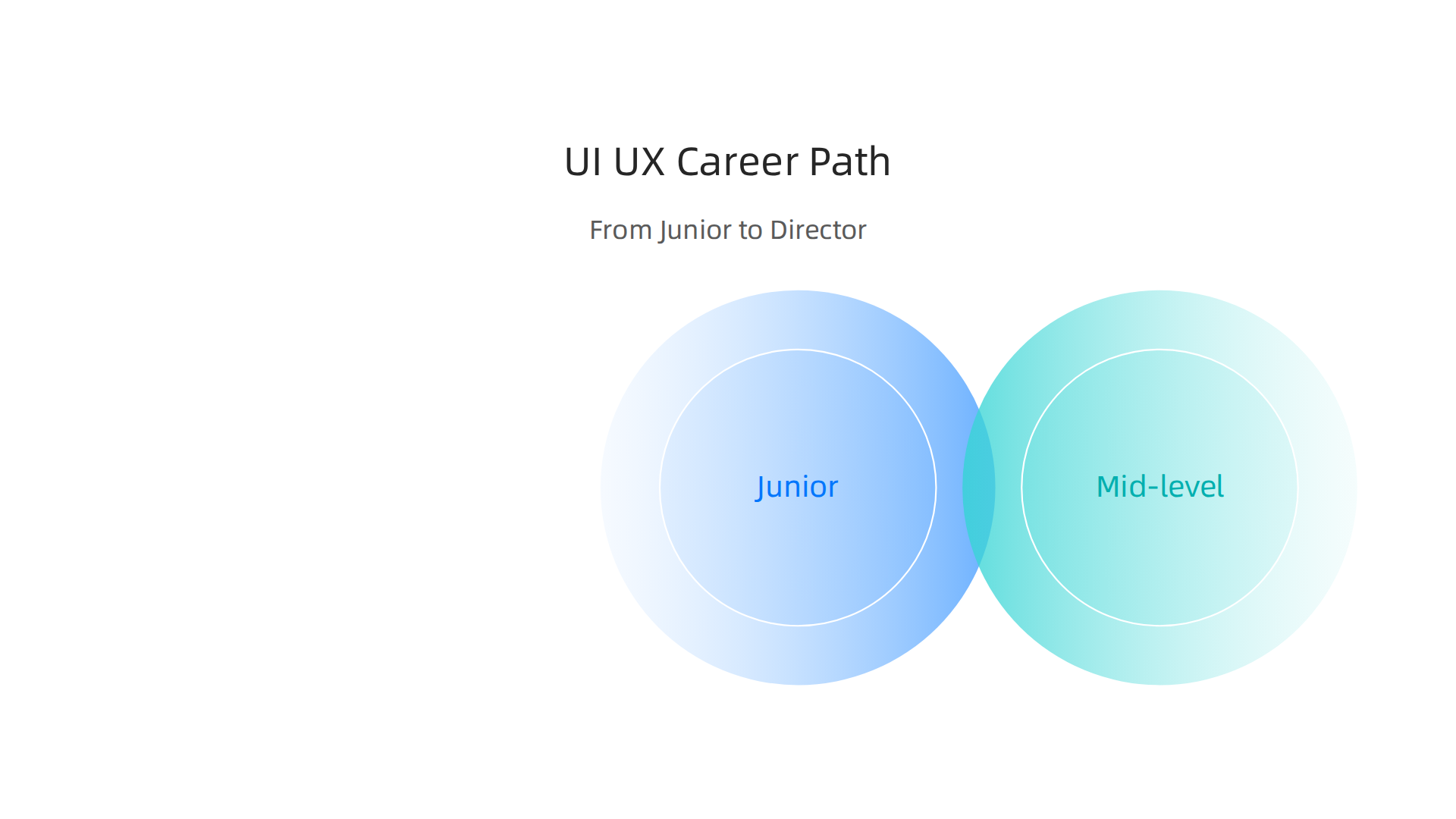
Junior UI/UX designer (0-2 years). This is where most people start. They work under senior guidance and focus on executing designs, not setting strategy. According to the CareerBldr UX salary guide, entry-level UX designers earn between $65,000 and $90,000 in 2026. The UI/UX Jobs Board reports hourly rates around $50 to $75 for juniors.
Mid-level UI/UX designer (2-5 years). This is a sweet spot for SMBs. These designers can run projects on their own. They handle user research, wireframing, and visual design without handholding. The Untitled UI salary guide shows mid-level UX designers earning $110,000 to $153,000 in 2026. That is a lot less than a senior, but you still get someone who can deliver real results.
Senior UI/UX designer (5-8 years). Seniors lead strategy, mentor juniors, and make high-level decisions about product direction. Coursera’s 2026 salary guide puts senior UX designers at about $180,000. The Built In salary data shows an average of $122,716, with a wide range from $40,000 to $215,000 depending on location and company size.
Lead or staff designer (8+ years). At this level, designers influence company-wide design systems and processes. They often earn between $150,000 and $253,000 according to Coursera’s guide.
UI/UX director (10+ years). Directors manage entire design teams, set budgets, and align design with business goals. Salaries here often exceed $200,000, especially at larger companies.
What about freelancing or switching industries? Some designers go freelance to earn more per hour. The UI/UX Jobs Board lists senior freelance rates at $100 to $150+ per hour. But freelance work comes with risks: no benefits, inconsistent income, and the need to find your own clients. Switching industries (like moving from e-commerce to healthcare) can also boost pay but usually requires learning new domain knowledge.
The smart move for your SMB. You do not need a director or a senior from day one. Hiring a mid-level designer at a reasonable salary and investing in their growth is often the best strategy. They bring solid skills, and you can help them level up over time. If you want to learn more about matching roles to your budget, check out our guide to UX design jobs and hiring strategies in 2026.
And if building an in-house team feels like too much overhead, services like Weblish handle your design and growth needs for one flat monthly fee. You get senior-level work without the senior-level salary.
How SMBs Can Attract and Hire UI/UX Talent on a Budget
The salary numbers we just covered can feel overwhelming if you run a small or mid-sized business. Paying a senior designer $180,000 or a director $200,000+ is not realistic for most SMBs. But here is the good news. You do not need to match those numbers to get great design work. You just need to be smart about how you find and hire talent.
Use Freelance and Contract-to-Hire Models
One of the safest ways to bring in UI/UX talent without a big commitment is through freelance or contract-to-hire arrangements. Freelance rates for UI/UX designers in 2026 range from $30 to $285 per hour, according to the Golance hourly rate guide. A senior freelancer might charge $100 to $150 per hour, but you only pay for the hours you need. That keeps your cost predictable and lets you test a designer on a real project before offering a full-time role.
Another option is hiring a UX strategist for specific high-impact projects. Senior strategists at boutique agencies charge $250 to $400 per hour, as noted in the Foundey cost breakdown. That sounds expensive. But a short engagement can fix a major usability issue and pay for itself many times over.
Invest in Your Employer Brand
Here is something many SMBs overlook. Designers care about more than just the salary of a ui ux designer. They want to work on meaningful projects where they have real influence.

A study by Forrester found that every dollar invested in UX returns up to $100. When you communicate that your business values design and invests in user experience, you attract designers who care about impact, not just a paycheck.
Share your mission, your customer stories, and the real problems your product solves. Designers who feel connected to your purpose will often accept a lower salary in exchange for autonomy and meaningful work. This is how you compete with big companies that offer bigger base pay.
Consider Part-Time and Fractional Resources
A growing trend in 2026 is using fractional or part-time design leaders. Instead of hiring a full-time director, you bring in an experienced designer for 10 to 20 hours per week. The Dribbble agency cost guide shows that full agency projects can run from $10,000 to $500,000+. But a fractional arrangement gives you senior-level thinking at a fraction of that cost.
For SMBs that need ongoing design support without the overhead of a full employee, services like Weblish offer a done-for-you growth service with flat monthly pricing. You get senior-level web design and optimization without the senior-level salary.
If you want to improve your current site without hiring a designer right away, check out our guide on how to make your small business website convert visitors to customers. It covers practical changes you can make today.
Get started with Weblish by signing up and claiming your free trial
The ROI of Professional UI/UX Design for SMB Growth and Lead Generation
Maybe you are still worried about that ui and ux designer salary number. It is fair to hesitate. But here is the truth. Spending money on good design is not an expense. It is one of the highest returning investments you can make.
The research backs this up. A famous study by Forrester found that every dollar invested in user experience returns up to $100. That is a 9,900% return, according to a Parallel HQ analysis of that study. When you put that into perspective, even a senior level salary of a ui ux designer stops looking scary and starts looking like a steal.
What That ROI Looks Like in Real Numbers
Professional UI/UX design does not just make your site look pretty. It directly affects your bottom line in a few specific ways.
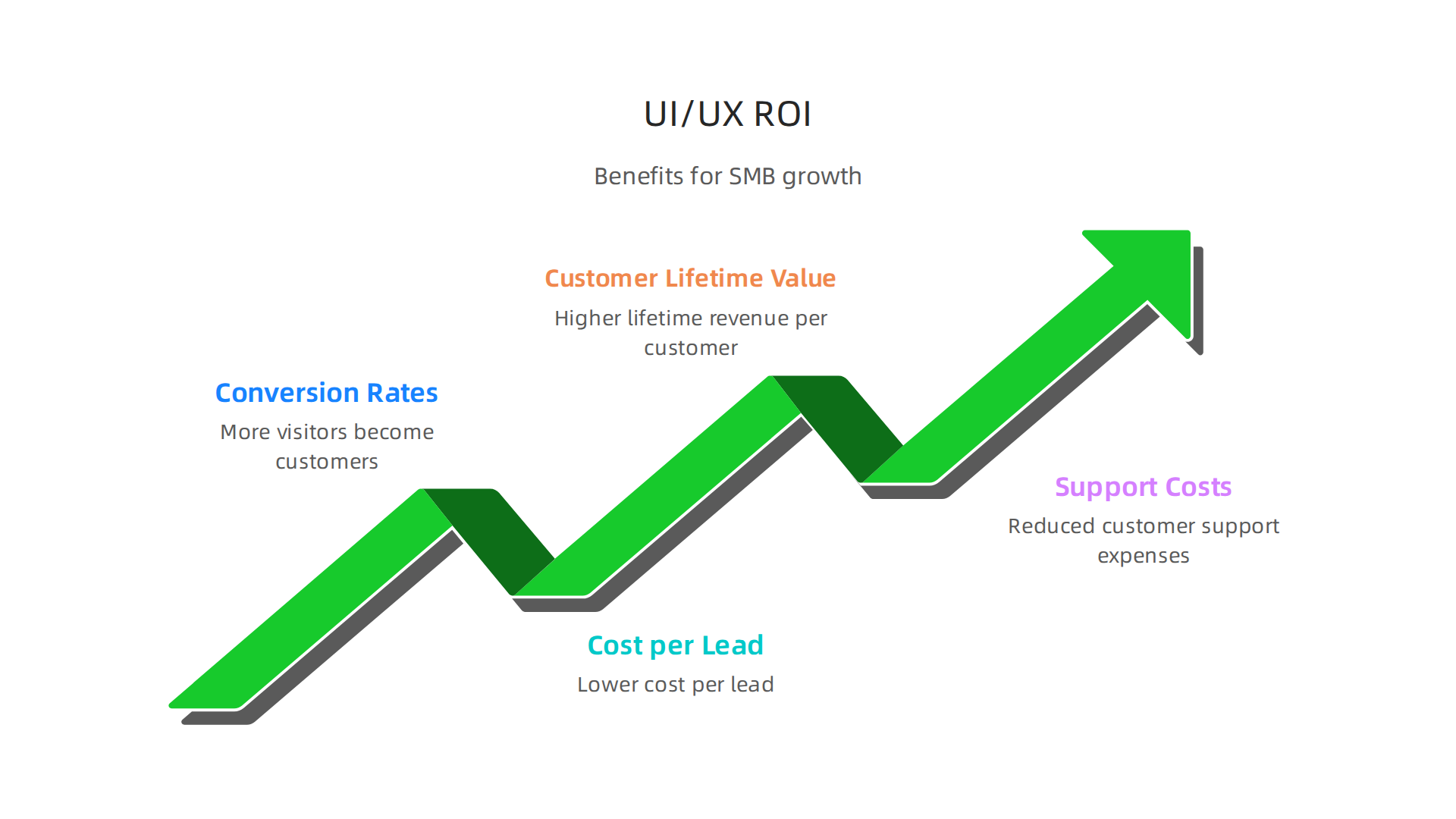
Better conversion rates. When your website is easy to use and guides visitors naturally, more people fill out forms, make purchases, or book calls. A well designed user flow can lift conversion rates by 100% or more.
Lower cost per lead. If your site converts better, you need less traffic to hit your lead goals. That means your ad spend goes further. You get more leads for the same budget.
Higher customer lifetime value. When users have a good experience, they stick around longer and buy more often. They also refer others. Good UX builds trust, and trust drives repeat business.
Reduced support costs. A user friendly interface means fewer confused customers calling or emailing for help. The Atico³ blog on UX design ROI highlights real benchmarks from SaaS companies that saw support tickets drop significantly after a UX redesign.
All of this adds up to a massive return that far outweighs the salary of a ui ux designer or the cost of hiring an agency.
How SMBs Can Capture This ROI
You do not need a full in-house team to see these results. Many SMBs are using fractional or project based designers to redesign one critical page or fix their checkout flow. Even a single UX improvement can start paying for itself within weeks.
This is exactly the approach Weblish takes. Their done for you growth service gives you senior level web design and optimization for a flat monthly fee. No massive upfront costs. No need to hire a full time designer. Weblish clients have seen measurable ROI by applying UX best practices to their websites.
If you want to understand the basics of how design drives business value, start with our simple guide on what UI design is and how it boosts your bottom line. It will help you see why investing in design is really investing in growth.
When you are ready to stop worrying about the ui and ux designer salary and start earning the ROI, try Weblish with a free trial and see the difference professional design makes.
Future Trends: UI/UX Designer Compensation in 2026 and Beyond (AI and Specialization)
So we have seen how investing in design pays off big time. But what about the future? If you are thinking about the salary of a ui ux designer in the years ahead, the picture is shifting fast. Here is what you need to know.
AI Is Not Killing Design Jobs, It Is Changing Them
Yes, AI tools like Figma AI and generative design are everywhere now. They automate repetitive tasks like resizing screens or generating color palettes.

But here is the thing: companies still need humans who understand strategy, psychology, and business goals. The demand for strategic, human-centered designers is still high.
According to the Coursera 2026 UX Designer Salary Guide, a mid-level UX designer (2–4 years) earns about $109,000, while senior designers (5–7 years) pull in $180,000. Principal designers can hit $253,000. Those numbers show that the ui and ux designer salary for experienced professionals remains strong, even as AI reshapes the field.
The CareerBldr UX Designer Salary Guide confirms that total compensation for senior roles in big tech can exceed $250,000. So if you are worried that AI will make designers obsolete, don’t be. The roles are just evolving.
Specialization = Higher Pay
Here is where things get interesting. Designers who specialize in emerging areas like voice UI, AR/VR, and accessibility are commanding a premium. The IxDF article on UI & UX designer salaries notes that specialists can earn up to 30% more than generalists. That is a huge jump.
Think about it: as more businesses build smart speakers, virtual try-ons, and inclusive interfaces, they need experts who understand the unique challenges of those mediums. The ui/ux designer jobs with the highest pay in 2026 are often the ones focused on niche skills. The UI/UX Designer Salary Guide from Refonte Learning projects that roles like Product Designer, UX Researcher, and Design System Specialist will surpass $120,000 in 2026.
Remote Work Is Leveling the Playing Field
Another major trend: remote and distributed teams are normalizing ui and ux designer salary across different geographies. A senior designer in a low-cost area can now charge rates similar to someone in San Francisco. The Built In Senior UX Designer Salary data shows a wide range of $40,000–$215,000, but the average is around $122,716. Geography matters less than skill now.
For SMBs, this is great news. You do not need to compete for talent in expensive tech hubs. You can hire remotely or, even better, use a service like Weblish to get senior-level design work at a flat monthly fee. No need to worry about the ui ux designer pay of a full-time specialist.
If you want to dig deeper into how these trends affect hiring, check out our guide on UX design jobs in 2026 and how to navigate roles and salaries. It will help you understand what to look for when bringing design talent on board.
The future of design compensation is bright for those who adapt. And for SMB owners, the smartest move is to partner with a team that already follows these trends.
Summary
This guide explains what SMBs should expect to pay UI/UX designers in 2026, breaking down clear salary benchmarks by experience level and highlighting the big factors that change pay—specialization, company funding, and remote work. It shows why mid-level hires are the practical sweet spot for most small businesses, outlines alternatives like freelancers, contract-to-hire, and fractional leaders, and explains how employer brand, equity, and flexibility can stretch your budget. The article also covers the business case for investing in UX, with concrete ROI examples for conversion, lead generation, and reduced support costs, and it maps career progression from junior to director so you can plan hires over time. Finally, it previews future trends—AI augmentation and niche skills—that will affect compensation and hiring choices, and points to practical strategies and services that let SMBs get senior-level results without senior-level salaries.