.png)
What Search Engine Marketing Means for Small Business Success
This article explains what search engine marketing (SEM) really means for small businesses and why a clear definition matters for smarter spending and faster re...

Why defining search engine marketing matters for small businesses
For many small business owners, figuring out how to get noticed online can feel like a big puzzle. You hear lots of words thrown around, like SEO, SEM, digital ads, and more. But what exactly does "search engine marketing means" to your business? Having a clear idea of what search engine marketing (SEM) really is can make a huge difference in how you spend your time and money.

Simply put, search engine marketing is about making sure your business shows up high on search engines like Google when people look for things you offer.
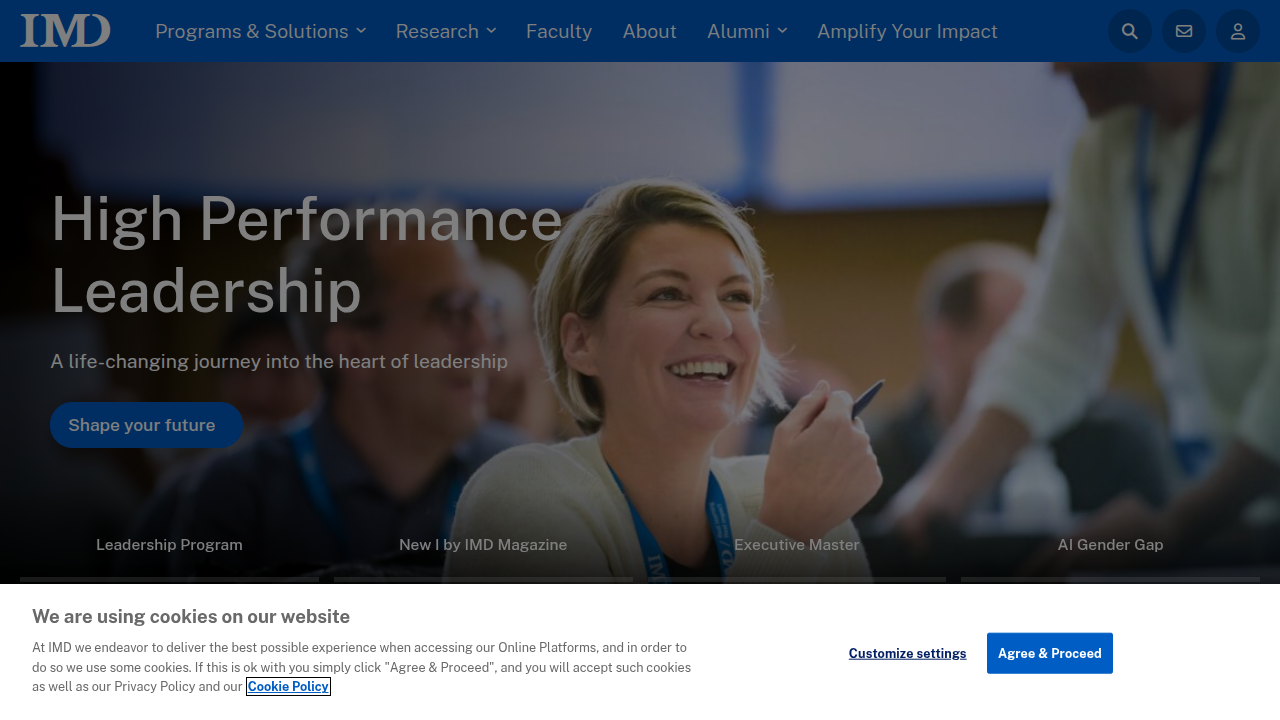
This usually involves paying to put your ads at the top of search results. For example, when you search for "best coffee shop near me," the first few results you see that say "Ad" next to them are often part of a search engine marketing effort. This helps businesses connect with customers who are actively looking for their products or services What is search engine marketing (SEM)? – IMD Business School.
Many small businesses make a common mistake: they think search engine marketing is just one simple thing. They might believe it’s only about paid ads, or they might confuse it with search engine optimization (SEO), which is about getting free clicks by ranking high naturally What is SEO Marketing? [A Comprehensive Overview]. This confusion can lead to problems. You might spend money on the wrong things, or miss out on important ways to reach customers. Without a clear marketing definition for search engine marketing, you could waste your budget on tactics that don’t bring the right people to your website. Understanding the true scope of search engine marketing means knowing how to make smart choices for your business.
In this guide, we’ll give you practical and trustworthy advice. We’ll break down the different parts of search engine marketing, explain how to measure if it’s working, and help you choose the best way to get your business seen. We’ll show you how to truly turn your website into a tool for getting more customers, making sure your marketing efforts lead to real growth. To learn more about how to set up your online presence for success, discover how to make your small business website convert visitors to customers.
Ready to take your online presence to the next level?
Grow Your Traffic on Autopilot
To truly make smart choices for your business, you need a clear marketing definition of what search engine marketing means. Think of search engine marketing (SEM) as everything you do to get your business seen on search engines like Google, mostly through paid advertising. When you search for something online, the first few results you often see with a little "Ad" label next to them are thanks to search engine marketing. These are ads that businesses pay for to show up at the very top. This helps them quickly reach people who are looking for exactly what they offer.
Many people think search engine marketing is only about paid ads, or they mix it up with search engine optimization (SEO). Here’s the thing: while SEM mainly uses paid ads to boost your visibility, some definitions also include SEO as part of a larger plan to get seen on search engines. SEO is about making your website good enough to rank high naturally, without paying for each click. But for small businesses, when we talk about search engine marketing, we are usually talking about the paid side. It’s about getting fast results by paying to place your business in front of customers right away, even if SEO takes more time to build up. Learning about this wider idea can help you build a full online plan for your business Search Engine Marketing: SEM Basics for Beginners.
So, for a small business in 2026, what does search engine marketing typically cover? It usually means setting up and running ads on search engines.
This includes things like:
- Google Search Ads: These are the text ads that show up at the top and bottom of Google search results.
- Google Shopping Ads: If you sell products, these ads show pictures of your items directly in search results.
- Bing Ads: Similar to Google Ads, but for the Bing search engine.
The main goal of all these activities is to make sure your business is visible when potential customers are actively searching. This is often called "dominating high-intent demand" because you’re reaching people who already want something and are looking for it right now Search Engine Marketing (SEM) in 2026: Dominating High-Intent …. Understanding this focused marketing definition of search engine marketing means you can stop guessing and start putting your money where it will work best. To learn how to create a full plan that brings in new customers, find out how to Create An Internet Marketing Strategy That Generates Leads For Your Small Business.
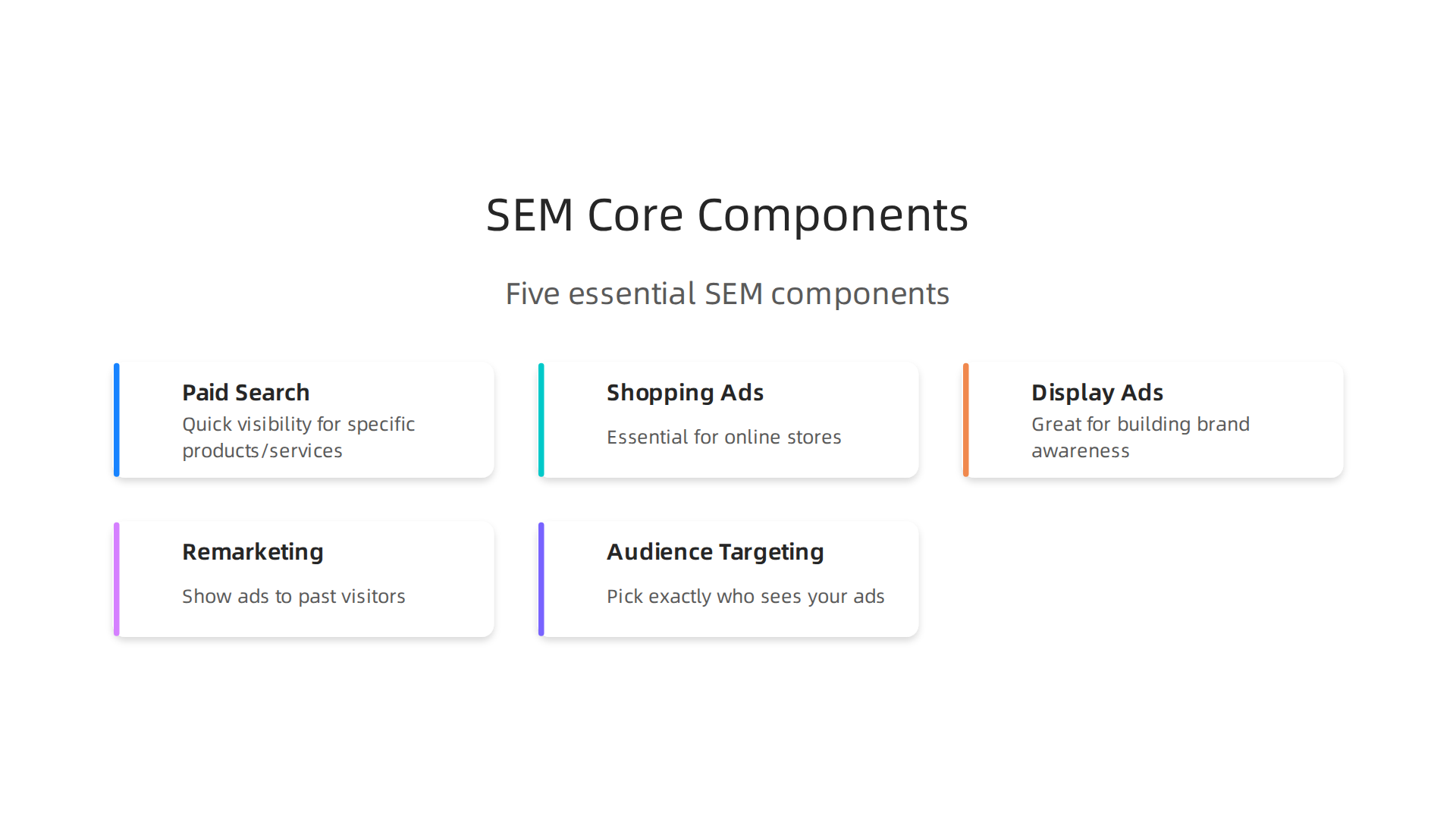
When we talk about what search engine marketing means, it’s not just one thing. It’s a mix of different strategies to help your business show up on search engines. For small businesses in 2026, understanding these parts helps you spend your money wisely.
Here are the core parts of search engine marketing:
-
Paid Search (Text Ads)
This is what many people first think of with SEM. These are the text ads that appear at the top and bottom of search results pages. You’re paying to show up when someone types in certain words, called keywords.- When to use it: Perfect for small businesses that want quick visibility for specific products or services. If someone searches for "plumber near me" and you’re a plumber, you want your ad there right away. This directly targets people with "high intent" who are looking to buy or find a service now.
- Targeting and Creative: You pick keywords people search for. Your ad creative is simple text that clearly tells people what you offer and why they should click.
- Budget Trade-off: You pay per click, so the more clicks you want, the more you pay. It can be competitive for popular keywords.
-
Shopping Ads
If you sell physical products, Shopping Ads are a must. These ads show up with pictures of your products, prices, and your store name directly in search results.- When to use it: Essential for online stores (e-commerce businesses). It helps your products stand out visually to people ready to shop.
- Targeting and Creative: These ads use your product feed (a list of all your products) to match with what people are searching for. The creative is mostly the product image itself, price, and a short title.
- Budget Trade-off: Very effective for converting sales, but requires good product data.
-
Display Ads
Display ads are banners, images, or even short videos that show up on other websites that people are browsing. These aren’t on search results pages directly, but they are still part of a wider search engine marketing plan to grow your presence.- When to use it: Great for building brand awareness or reminding people about your business. It’s like putting up a billboard, but online and much smarter. For example, a new coffee shop could use display ads to show pictures of their cozy space to people interested in "local cafes" in their area.
- Targeting and Creative: You can target people based on their interests, age, location, or even the type of websites they visit. The creative is visual, so clear, attractive images or videos are key.
- Budget Trade-off: Can offer wide reach for a lower cost per view than search ads, but clicks might not be from people ready to buy right away.
-
Remarketing (Retargeting)
Remarketing is when you show ads to people who have already visited your website but didn’t buy anything or fill out a form. It’s a way to bring them back.- When to use it: Super useful for almost any small business. Someone might have looked at your services, left, and then you remind them about your business later. It’s like giving a gentle nudge.
- Targeting and Creative: You target people based on their past actions on your site. The creative can be very specific, like showing them the exact product they looked at.
- Budget Trade-off: Usually has a high success rate because you’re targeting people who already showed interest. The audience size is smaller, but they are often closer to making a choice.
-
Audience Targeting
Beyond just keywords, modern search engine marketing means you can pick exactly who sees your ads. This is called audience targeting.- How it works: You can tell the ad platforms to show your ads only to people who fit certain groups. This includes their age, what they are interested in (like "people who love gardening"), what their income level is, or even what events they are going through (like "new parents").
- When to use it: This makes all your ad types smarter, especially display and remarketing ads. It helps make sure your ads reach the right eyes, which saves you money. For example, if you sell baby products, you’d want to target "new parents."
- Targeting and Creative: You define the audience groups. Your creative should speak directly to that group’s needs and interests.
- Budget Trade-off: Better targeting usually means less wasted ad spend, even if the cost per click might be a bit higher for a very specific group.
These different parts work together to create a strong online presence. Think of it as having many tools in your toolbox, each for a specific job.

If you’re looking for the best search engine for small business lead generation in 2026, understanding how these components work is key. You can learn more about how to put these pieces together to capture traffic and convert customers by understanding What is search engine marketing (SEM)?.
To help your website turn visitors into leads with smart, automated strategies, you can Grow Your Traffic on Autopilot by connecting your website with Weblish.When we talk about what search engine marketing means, it’s not just one thing. It’s a mix of different strategies to help your business show up on search engines. For small businesses in 2026, understanding these parts helps you spend your money wisely.
Here are the core parts of search engine marketing:
-
Paid Search (Text Ads)
This is what many people first think of with SEM. These are the text ads that appear at the top and bottom of search results pages. You’re paying to show up when someone types in certain words, called keywords.- When to use it: Perfect for small businesses that want quick visibility for specific products or services. If someone searches for "plumber near me" and you’re a plumber, you want your ad there right away. This directly targets people with "high intent" who are looking to buy or find a service now.
- Targeting and Creative: You pick keywords people search for. Your ad creative is simple text that clearly tells people what you offer and why they should click.
- Budget Trade-off: You pay per click, so the more clicks you want, the more you pay. It can be competitive for popular keywords. To get real leads, exploring Google Search Ads for Small Business: 10 Tactics That Deliver Real Leads can be very helpful.
-
Shopping Ads
If you sell physical products, Shopping Ads are a must. These ads show up with pictures of your products, prices, and your store name directly in search results.- When to use it: Essential for online stores (e-commerce businesses). It helps your products stand out visually to people ready to shop.
- Targeting and Creative: These ads use your product feed (a list of all your products) to match with what people are searching for. The creative is mostly the product image itself, price, and a short title.
- Budget Trade-off: Very effective for converting sales, but requires good product data.
-
Display Ads
Display ads are banners, images, or even short videos that show up on other websites that people are browsing. These aren’t on search results pages directly, but they are still part of a wider search engine marketing plan to grow your presence.- When to use it: Great for building brand awareness or reminding people about your business. It’s like putting up a billboard, but online and much smarter. For example, a new coffee shop could use display ads to show pictures of their cozy space to people interested in "local cafes" in their area.
- Targeting and Creative: You can target people based on their interests, age, location, or even the type of websites they visit. The creative is visual, so clear, attractive images or videos are key.
- Budget Trade-off: Can offer wide reach for a lower cost per view than search ads, but clicks might not be from people ready to buy right away.
-
Remarketing (Retargeting)
Remarketing is when you show ads to people who have already visited your website but didn’t buy anything or fill out a form. It’s a way to bring them back.- When to use it: Super useful for almost any small business. Someone might have looked at your services, left, and then you remind them about your business later. It’s like giving a gentle nudge.
- Targeting and Creative: You target people based on their past actions on your site. The creative can be very specific, like showing them the exact product they looked at.
- Budget Trade-off: Usually has a high success rate because you’re targeting people who already showed interest. The audience size is smaller, but they are often closer to making a choice.
-
Audience Targeting
Beyond just keywords, modern search engine marketing means you can pick exactly who sees your ads. This is called audience targeting.- How it works: You can tell the ad platforms to show your ads only to people who fit certain groups. This includes their age, what they are interested in (like "people who love gardening"), what their income level is, or even what events they are going through (like "new parents").
- When to use it: This makes all your ad types smarter, especially display and remarketing ads. It helps make sure your ads reach the right eyes, which saves you money. For example, if you sell baby products, you’d want to target "new parents."
- Targeting and Creative: You define the audience groups. Your creative should speak directly to that group’s needs and interests.
- Budget Trade-off: Better targeting usually means less wasted ad spend, even if the cost per click might be a bit higher for a very specific group.
These different parts work together to create a strong online presence. Think of it as having many tools in your toolbox, each for a specific job. If you’re looking for the best search engine for small business lead generation in 2026, understanding how these components work is key. You can learn more about how to put these pieces together to capture traffic and convert customers by understanding What is search engine marketing (SEM)?.
To help your website turn visitors into leads with smart, automated strategies, you can Grow Your Traffic on Autopilot by connecting your website with Weblish.
When you dive into paid search, often called PPC (Pay-Per-Click), it’s like setting up a shop at the busiest market online.

You want to make sure the right people see your shop at the right time. This is a big part of what "search engine marketing means" for getting quick results.
Keywords and What People Are Really Looking For
First, you need to pick the words or phrases people type into search engines. These are called keywords. But it’s not just about the words themselves. It’s about what people mean when they type them. This is called "keyword intent."
- If someone types "buy red shoes," they want to buy shoes right now. That’s strong buying intent.
- If someone types "how to clean red shoes," they’re looking for information. They’re not ready to buy yet.
For your business, you want to pick keywords where people are looking for what you offer. Think about what your ideal customer would type before they make a choice.
Match Types: How Close Do Keywords Need to Be?
To control who sees your ads, search engines use "match types." In 2026, these are simpler but still need careful thought. They tell the search engine how closely a person’s search must match your keyword for your ad to show up.
- Broad Match: Your ad can show for searches that are related to your keyword, even if they’re not exact. It’s like casting a wide net. For example, if your keyword is "shoes," your ad might show for "boots" or "sneakers." This can get you lots of views, but some might not be right for your business.
- Phrase Match: Your ad will show if someone’s search includes your keyword phrase in the same order, but they can have words before or after it. So, for "red shoes," your ad might show for "comfortable red shoes" or "red shoes on sale."
- Exact Match: Your ad only shows if someone searches for your exact keyword or very close variations of it. If your keyword is "[red shoes]," your ad would show mostly for "red shoes." This means fewer views but often higher quality clicks.
Learning more about these match types is a key strategy for beginners in paid advertising in 2026, as they impact how your ad money is spent 10 Must-Know PPC Strategies for Beginners Entering Paid.
You can also use negative keywords. These are words you tell the search engine not to show your ad for. For example, if you sell new shoes, you might add "used" as a negative keyword so your ad doesn’t show up for "used red shoes." This saves you money on clicks from people who aren’t interested in what you sell.
Bidding Strategies: How Much Will You Pay?
When you run ads, you’re telling the search engine how much you’re willing to pay for a click or an action. This is called bidding. There are different ways to do this:
- Manual Bidding: You set the exact amount you want to pay for each click. This gives you a lot of control but takes more time and attention.
- Automated Bidding: The search engine uses smart computer programs (AI) to figure out the best bid for you. You tell it what your goal is, like getting the most clicks or the most sales, and it tries to reach that goal within your budget. Many small businesses find automated bidding helpful in 2026, but it’s important to understand when to use it and when to stick with manual control Automated vs Manual Bidding in Google Ads: 2026 Guide.
Most businesses use automated bidding in 2026 because it can often get better results by making fast changes based on tons of data.
Writing Ad Copy That Works
Your ad copy is the actual text people see. Even with the best keywords and bids, a boring ad won’t get clicked. Good ad copy is:
- Clear: It tells people exactly what you offer.
- Helpful: It answers a question or solves a problem for the searcher.
- Unique: It shows why your business is special.
- Action-oriented: It uses words that encourage people to click, like "Shop Now," "Learn More," or "Get a Quote."
Think of it as your quick sales pitch. You only have a few lines to convince someone to choose you. Also, make sure your ads lead to a specific page on your website that matches what the ad promises. This helps you get more leads for your small business and is a vital step in how you can create an internet marketing strategy that generates leads for your small business.
Structuring Your Account
Keeping your ad account organized is important, too. This means grouping similar keywords and ads together. If you sell different products or services, you’ll want different ad groups for each. For example, a bakery might have one ad group for "wedding cakes" and another for "birthday cakes." This helps you keep your ads super relevant to what people are searching for.
Getting your ads organized is a smart way to make sure your money works hard. But paid ads are just one part of a bigger picture called search engine marketing. This is where we look at the difference between SEO and SEM, and how they both help your business.
SEO vs SEM: How They Overlap and When to Prioritize Each
You’ve learned about paid search, which is sometimes called PPC. This is when you pay to show up at the top of search results right away. This kind of advertising is a big part of what search engine marketing means. Search engine marketing is a wide idea that covers everything you do to be seen on search engines.
It includes two main parts:
- SEM (Search Engine Marketing): This is the umbrella term for all strategies used to ensure your business is visible on search engine results pages (SERPs). It includes both paid advertising (PPC) and organic methods.
- SEO (Search Engine Optimization): This is about making your website better so it naturally ranks higher in search results without paying for ads. It’s about getting free clicks.
So, SEM is the bigger idea, and SEO is a very important part of it. Think of it this way: SEO is like building a strong foundation for your house so it stands tall naturally, while paid search is like putting up a giant sign for your house that people see right away.
Let’s look at how they are different:
Time to See Results
- Paid Search (Part of SEM): You can see results very quickly, sometimes in a few hours or days. You pay, your ad shows up, and people click.
- SEO: This takes much longer. It can be weeks or even months to see your website move up in search results. Building that strong foundation takes time and effort. You might not see big changes in your SEO KPIs That Matter in 2026 for a while.
Costs and Predictability
- Paid Search (Part of SEM): You pay for every click, so costs can add up fast, but you have a lot of control over your daily budget. It’s very predictable in how much you spend each day.
- SEO: It doesn’t cost money per click, but it does require time and resources. You might pay for people to write helpful articles, fix your website, or get expert advice. In 2026, small businesses might spend a few hundred to a few thousand dollars a month on SEO services, depending on their goals, as highlighted in "SEO Pricing in 2026: What SEO Really Costs" SEO Pricing in 2026: What SEO Really Costs. The results are less predictable at first, but over time, SEO can bring in many free visitors.
How They Work Together
For most small businesses, using both SEO and paid search is the best way to go.
- Quick Wins and Testing: Paid search lets you get visitors right away. You can use it to test which keywords work best and which ads get the most clicks. This data can then help you improve your SEO efforts.
- Long-Term Growth: SEO builds a strong online presence that keeps bringing in visitors even if you stop paying for ads. It makes your business an authority in its field.
- Double Visibility: When you use both, your business can show up in search results twice: once as a paid ad and once as an organic (free) listing. This makes you more noticeable.
It’s like having two ways for customers to find you on the same busy street.
When to Prioritize Each
- If you need quick sales or are launching a new product: Focus on paid search first. It gets immediate attention.
- If you want to build a lasting brand and reduce long-term marketing costs: Invest in SEO. It’s a marathon, not a sprint, but it pays off with steady, free traffic.
- For best results: Many small businesses find success by starting with paid search to get things moving, then slowly investing more in SEO to build for the future. You might even consider getting help to guide your efforts. If you’re wondering how to get started, learning Why Your Small Business Needs an SEO Consultant in 2026 can give you a clear path forward.
Now, you know that using both SEO and paid ads can help your business be seen. But how do you know if these efforts are actually working? This is where measuring your success comes in. Understanding what search engine marketing means for your business also involves knowing how to check if it’s bringing you closer to your goals. You need to look at important numbers, figure out where your customers are coming from, and make clear reports.
Primary KPIs for Small Business Goals
KPIs are Key Performance Indicators. They are simply the most important numbers that tell you if your marketing is doing well. For small businesses, focusing on a few key KPIs helps you see if your search engine marketing is bringing in real results. According to SEO Sherpa, tracking the right KPIs is vital to show how your efforts connect to real business growth in 2026 SEO KPIs: How to Track and Prove SEO Success in 2026.
Here are some important ones:
- CPL (Cost Per Lead): This tells you how much money you spend to get one potential customer interested in your business. You want this number to be low, meaning you’re getting leads without spending too much.
- CPA (Cost Per Acquisition): This is similar to CPL, but it measures how much it costs to get one actual customer. It’s often higher than CPL because not all leads become customers. Knowing your CPA helps you understand if your marketing spend is worth it for each new sale.
- ROAS (Return on Ad Spend): This shows you how much money you get back for every dollar you spend on ads. If your ROAS is 3:1, it means you get $3 back for every $1 you spent. A high ROAS is great!
- Conversion Rate: This is the percentage of people who take a desired action on your website, like filling out a form or buying something. If 100 people visit your site and 5 buy something, your conversion rate is 5%. A higher conversion rate means your website and marketing are working better.
For small businesses, these KPIs help make sense of your marketing definition and how well your online efforts are performing.
Practical Attribution for Small Businesses
Attribution is about figuring out which parts of your search engine marketing helped a customer decide to buy from you. Imagine a customer sees your ad on Google, then later finds your blog through an organic search, and finally buys something after seeing your Facebook post. Which step gets the credit?
For small businesses, trying to track every single step can be too much. Here are some simple ways to think about attribution:
- Last Click: This gives all the credit to the very last thing a customer clicked before buying or contacting you. It’s simple and easy to track.
- First Click: This gives credit to the very first thing a customer clicked that led them to your business. This helps you understand what first brings people to you.
- Asking Customers: Sometimes the easiest way is just to ask! "How did you hear about us?" can give you great insights.
Even simple attribution helps you know where your marketing money is working best.
Reporting and Dashboards
Once you’re tracking these numbers, you need to look at them regularly. For small businesses, a good reporting schedule might be once a month.
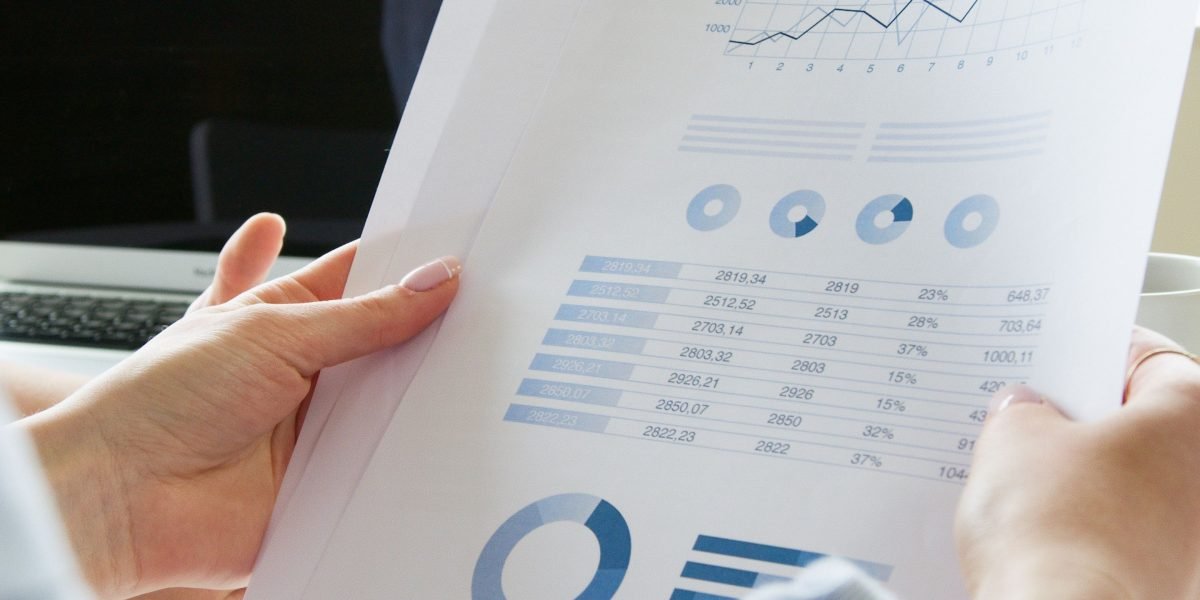
This lets you see trends and make changes if needed.
A simple dashboard for your search engine marketing performance could include:
- Website Visitors: How many people came to your site.
- Leads Generated: How many potential customers contacted you.
- Sales/Conversions: How many actual sales or desired actions happened.
- Total Marketing Spend: How much money you spent on ads and SEO efforts.
- Your Key KPIs: CPL, CPA, ROAS, and Conversion Rate.
Having a clear dashboard helps you quickly understand what your search engine marketing means for your business’s health. It’s also smart to automate some of this. If you want to dive deeper into making your reports easier, learning how to use the Google Search Console API to automate your SEO reports can save you a lot of time and effort How to use the Google Search Console API to automate your SEO reports.
If keeping track of all this feels overwhelming, remember that there are services that can help you with your web design, SEO, and ongoing marketing. You can Get started with Weblish by signing up and claiming your free trial to see how they can simplify things for you. When you connect your website with Weblish, you can Grow Your Traffic on Autopilot with AI.
Now that you know how important it is to check if your marketing is working, let’s talk about the tools you use to make it happen. Figuring out what your search engine marketing means for your business also involves picking the right ways to get your message out there. This means looking at different online tools and services.
Platforms, Tools, and Automation Options (When to DIY vs Use Managed Services)
When you’re doing search engine marketing, you have many choices for platforms, tools, and how much work you want to do yourself. These choices help you build and manage your online presence, whether it’s through paid ads or improving your website for search.
Main Types of Tools
Here are the main kinds of platforms and tools for your search engine marketing efforts:
- Search Ad Platforms: These are where you set up and run your paid ads. The biggest one is Google Ads, but there are others like Microsoft Ads too. These platforms let you pick keywords, write ads, and choose who sees your ads.
- Bidding Tools: These help you decide how much to pay for your ads to show up. In 2026, many platforms use smart AI to help with bidding. This means the system can automatically adjust your bids to get the best results for your money. You can also bid manually, but many small businesses find automated bidding helpful to save time and get good results, as explained in an Automated vs Manual Bidding in Google Ads: 2026 Guide.
- Analytics Tools: These tools, like Google Analytics, help you see what people do on your website after clicking your ads or finding you through search.
They show you how many visitors you have, what pages they look at, and if they complete important actions.
- SEO Tools: These are for making your website rank higher in search results without paying for ads. They help you find good keywords, check how your website is doing, and see what your competitors are up to.
Doing It Yourself (DIY) vs. Getting Help
You can choose to manage your search engine marketing yourself or get help from others. Each path has its good and bad points.
- Doing It Yourself (DIY): If you have time and are eager to learn, you can manage your marketing campaigns. This gives you full control and can save you money on service fees. However, it takes a lot of time to learn everything, keep up with new changes in 2026, and run campaigns effectively. For some tips, you can check out ideas for your overall marketing technology for small businesses stack that generates leads.
- Using Platform Automation: Many platforms today, especially for paid ads, offer smart automation powered by AI. This can handle tasks like bidding and showing your ads to the right people. It’s a great middle ground if you want better results without having to spend all your time on small details. However, it’s still important to keep an eye on things, as AI tools work best with good guidance. Many of the top PPC trends for 2026 involve increased AI automation, broad match types, and platform-boosted campaigns, according to the Top PPC Trends of 2026.
- Using Managed Services or Agencies: This means hiring experts to handle all or part of your search engine marketing. They have the knowledge and experience to get strong results, which saves you time and often leads to better performance. This is helpful if you don’t have the time, skills, or if your campaigns become too complex. If you are wondering if this is the right choice for you, learning why your small business needs an SEO consultant in 2026 can help you decide.
How to Choose What’s Best for You
Here’s a simple checklist to help you pick the right approach:
- For DIY: Choose this if you have a smaller budget, lots of free time, and want to learn all about search engine marketing.
- For Platform Automation: Go this route if your budget is growing, you want smart results, and you don’t have time for daily tasks, but you can still check on things often.
- For Managed Services: This is best if you need top-level results, don’t have the time or skills, and are ready to invest more to make your marketing work harder for your business.
Understanding what search engine marketing means for your company involves making smart choices about your tools and who manages them.
Making smart choices about your tools and who manages them is just the first step. Next, you need a clear plan for how to use those tools. Understanding what search engine marketing means for your company truly comes alive when you have a simple, actionable strategy. For small and mid-sized businesses (SMBs), this means balancing what you can do now with what will help you grow later.
A simple SEM strategy for SMBs: budgets, testing roadmap, and ongoing optimization
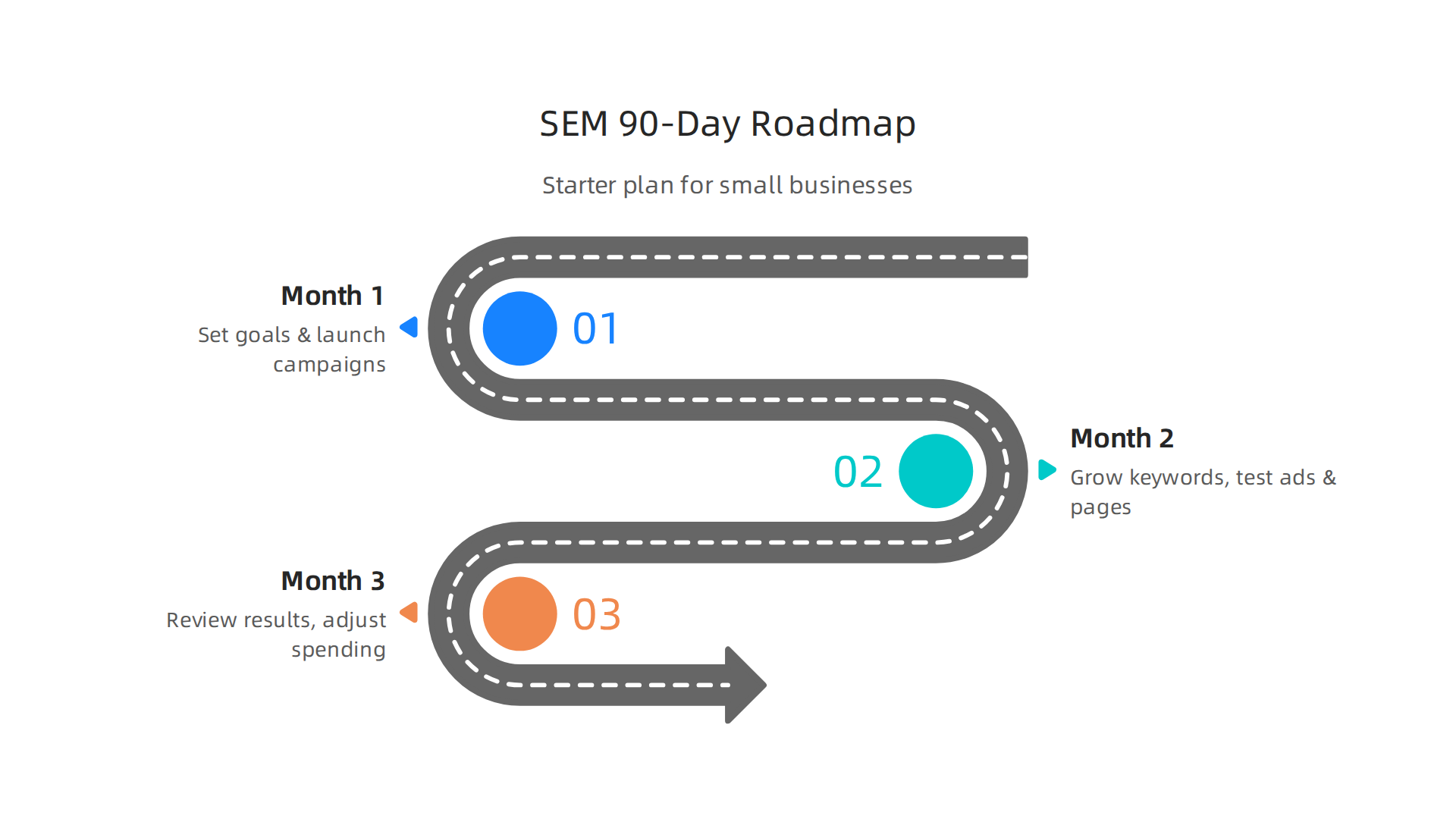
A strong search engine marketing plan doesn’t have to be complex. For SMBs, a good strategy focuses on getting quick wins while also building for the future. Here is a simple 90-day roadmap to get you started, along with tips for keeping things running smoothly.
Your 90-Day SEM Starter Roadmap
This roadmap helps you spread out your efforts, learn what works, and make smart choices about your budget.
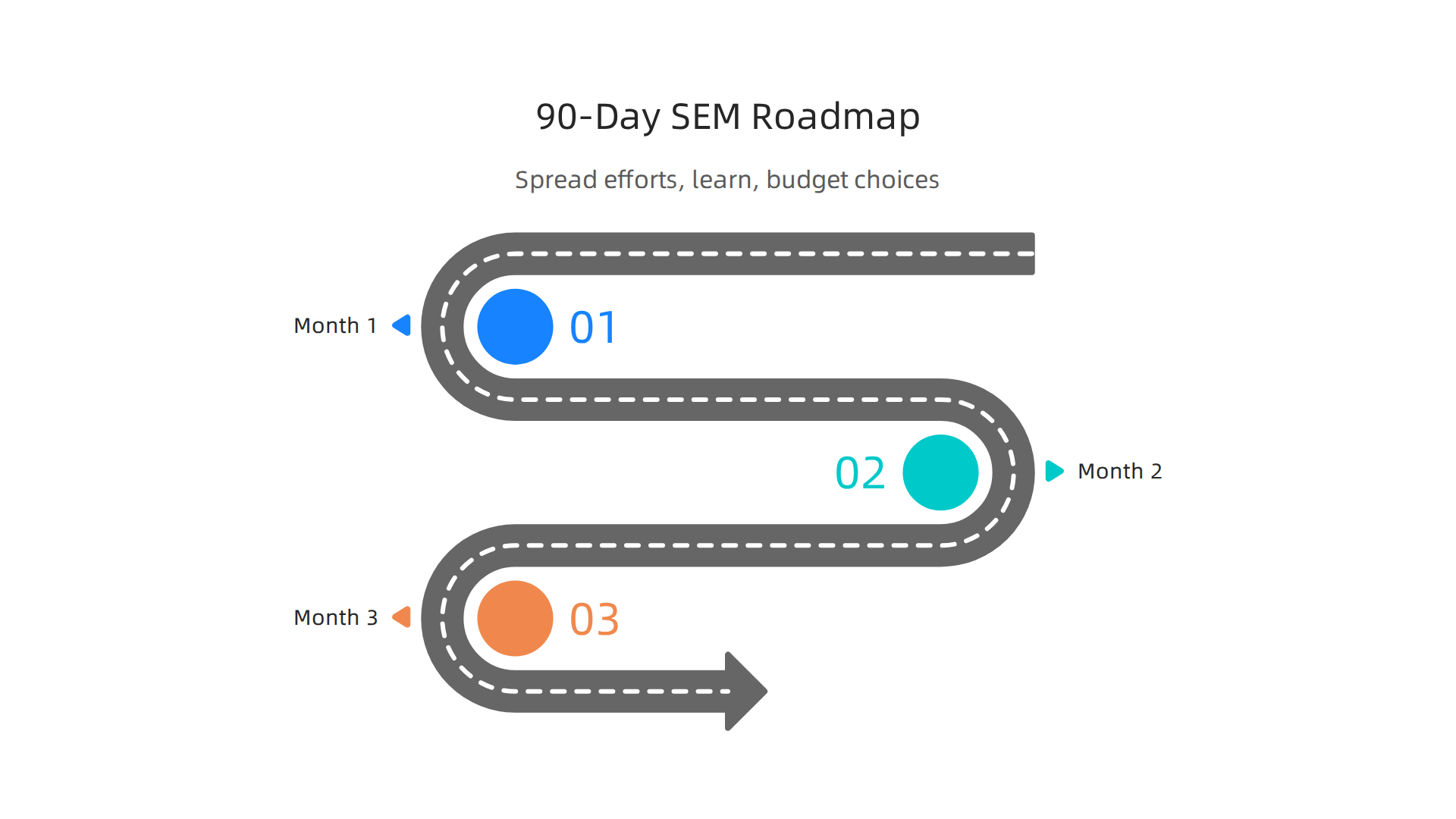
To help with planning your money, take a look at a helpful guide on Marketing Budget 2026: Your 90-day guide to getting it done.
Month 1: Setup and Quick Wins
- Set Clear Goals: What does search engine marketing mean for your business right now? Do you want more calls, website visits, or online sales? Knowing this helps you focus.
- Find Your Keywords: Use simple tools to find keywords people search for that relate to your business. Start with "long-tail" keywords, which are longer, more specific phrases that often bring in customers ready to buy.
- Launch Your First Campaigns: Set up basic paid ad campaigns on platforms like Google Ads. Focus on a few important services or products. At the same time, make sure your website’s main pages are set up well for search engines. This includes clear titles and descriptions. For more help with ads, check out these Google Search Ads for Small Business: 10 Tactics That Deliver Real Leads.
- Allocate a Budget: Start small with your ad budget. It’s okay to begin with a few hundred dollars a month to test the waters. For more help with this, you can read a 2026 Small Business Budget Planning and Strategy Guide.
- Optimize Key Pages: Make sure your website’s main pages, like your service or product pages, are easy to find and use.
Month 2: Expand and Test
- Grow Your Keywords: Add more keywords to your ad campaigns and look for new ideas for your website content.
- Test Your Ads and Pages: Try different headlines and descriptions for your ads. Also, test how well different landing pages work. A landing page is where people go after clicking your ad. You can learn more about this by reading Landing Page vs Homepage: Understand Their Roles to Convert More Customers. Small changes can make a big difference in how many people become customers.
- Start Basic Content: Write a few simple blog posts that answer common questions your customers have. This helps your website show up for more searches.
Month 3: Refine and Plan Ahead
- Review Your Results: Look at what worked well and what didn’t. Did certain ads get more clicks? Did some keywords bring more customers?
- Adjust Your Spending: Put more money into the ads and keywords that are working best. Reduce spending on those that aren’t.
- Plan for Long-Term SEO: Think about bigger projects, like writing more detailed articles or getting other websites to link to yours. These things help you build authority over time.
Balancing Quick Wins and Long-Term Improvements
The biggest part of what search engine marketing means for an SMB is finding a good balance.
Paid ads (like Google Ads) give you quick wins. You can get traffic and leads almost right away. But, you have to keep paying for them to keep working.
SEO, or improving your website for search engines without paying for ads, is a long-term game. It takes more time to see results, but once your website ranks higher, you get "free" traffic over a longer period.
The best strategy uses both. Use paid ads to get customers now and to learn what keywords work. At the same time, slowly build up your website’s SEO so you get steady, free traffic later on.
Low-Cost Monthly Maintenance and Optimization Checklist
Even after your first 90 days, you need to keep an eye on your search engine marketing efforts. This doesn’t have to take a lot of time or money:
- Check Ad Performance: Once a week, spend 15-30 minutes looking at your ad campaigns. Are they getting clicks? Are people taking action on your website? Pause ads that aren’t working.
- Review Keywords: Look for new keywords people are searching for. Also, check your existing keywords to make sure they are still bringing in the right kind of visitors.
- Monitor Website Health: Make sure your website is running fast and all links are working. Simple tools can check for these things.
- Update Content: Once a month, try to add or update a piece of content on your website, like a blog post or an FAQ page. This keeps your site fresh for search engines.
- Check Competitors: Briefly look at what your competitors are doing online. Are they running new ads? Are they ranking for certain keywords?
By following these simple steps, you can make sure your search engine marketing means ongoing success for your small business.
Connect your website with Weblish and grow your traffic on autopilot with AI. Grow Your Traffic on Autopilot.
Summary
This article explains what search engine marketing (SEM) really means for small businesses and why a clear definition matters for smarter spending and faster results. It breaks SEM into practical parts—paid search, shopping ads, display, remarketing and audience targeting—and shows when to use each channel. You’ll learn how keywords, match types, bidding, and ad copy work together, plus how SEM and SEO overlap and when to prioritize each. The guide covers the KPIs to track (CPL, CPA, ROAS, conversion rate), simple attribution approaches, and how to build monthly reports and dashboards. It also compares DIY, platform automation, and managed services so you can pick the approach that fits your budget and time. Finally, you get a simple 90‑day roadmap and low‑cost maintenance checklist to start, test, and scale SEM that drives real leads and sales.