Why Organic Social is Your Best Internet Marketing for Online Business Tool
Unlock the power of organic social to boost your brand. Learn how to use organic social media for small business growth and find the best social media for business without paid ads.


No-cost advertising through organic social media is a highly effective means of businesses connecting with their audiences. It's all about building genuine relationships through regular posts, comments, and shares which eventually create real interactions on platforms like Facebook, Instagram, or LinkedIn. The digital world has become so hyper-competitive where people are scrolling tirelessly, that organic social has grown to be the dominant factor for trust to be developed, hence traffic to the site is redirected and sales are increased sustainably. Whether you are a local businessman/entrepreneur or you own an e-commerce store, the turning point for making traction in your business could be the application of organic social mainly when it is combined with the intelligent internet marketing for online business strategies. This method allows you to get in touch with people who are genuinely interested in what you sell and transform them from the once-gazing audience to lifelong clients.
What is Organic Social and Why Does It Matter for Your Business
Organic social is the cumulative effect of your users' unpaid sharing of your content through their social profiles as well as the natural way your content spreads on social platforms without any paid promotion. It's the posts, stories, and videos you share directly from your business page that gain visibility through likes, shares, and comments from real users. Contrary to ads that depend on budgets meant to push content to a broad audience, organic social is primarily about developing a community around your brand via engaging with them consistently and providing valuable content.
This is extremely significant for your business, as it generates a compounding effect. After some time, each interaction counts; conversely, customer acquisition costs go down and audience trust increases. To illustrate my point, people who are shown your real behind-the-scenes content tend to feel connected to you and therefore are more likely to visit your site or make a purchase. Data provided by Hard Part Media states that organic social is a driver of brand awareness and engagement without the need for ads, humanizing your brand in a way that paid efforts often can't match. Furthermore, ConvertBomb illustrates that organic social media creates trust and builds loyal communities, which keeps your audience engaged for a long period of time.

Organic social is an integral part of the customer journey: it is in the awareness stage, it brings your business to new people; in the next one is the consideration, it answers their questions and shows value; and at conversion, it gives them a little push toward buying. This is especially true for small businesses as it provides them with the same opportunity to fight against bigger competitors. Precise Creative states that organic social creates your brand voice and promotes the company culture, initiates conversation that contributes to growth. In the absence of it, you are missing out on real connections that are the driving force for organic social media success. On the contrary, blending organic social into your internet marketing for online business strategy can increase web traffic and return sales dramatically, which in turn, makes it a cornerstone for sustainable business growth.
Comparison between Organic Social Media and Paid Social Strategies
Keywords: organic social, organic social media, internet marketing for online business, best social media for business, how to use social media for small business
The choice between organic social media and paid social strategies is determined by your goals, budget, skills, and timeline. Organic social is similar to the process of planting seeds that coexist and develop for a long time but in a constant manner, based on content quality and community building for reach. Paid social, on the other hand, is more like renting a billboard—through ads, it offers quick visibility, but it stops when the budget does.
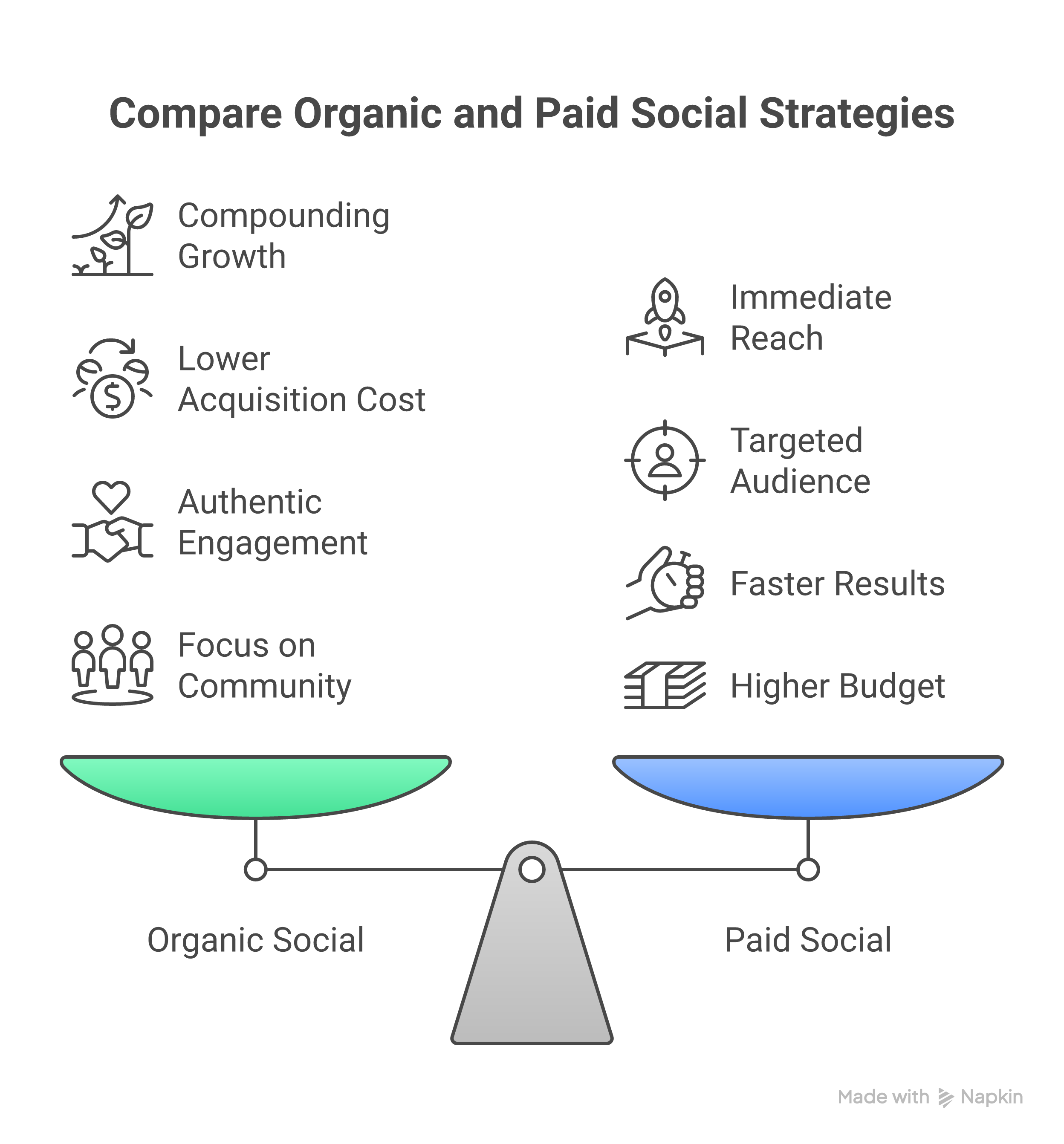
Organic social is the best way to build long-term relationships and save costs. Paid social is for blasting at full speed and reaching a specific market. But the real efficiency is in using both forms: organic social media for nurturing the audience and paid for amplification of the most successful content. For example, Sprout Social mentions that non-ad content is more trustworthy for readers, even when it has some promotional aims, thus it can be the foundation of hybrid strategies. Sprinklr also states that organic social relations are the result of the value given to them, which is worth much more than paid ads, which can offer some value but cannot replace authentic relationships.
If you're short on budget or want to make the audience loyal to your brand, prioritize organic social media; go for paid ads if you have product launches or events you want to happen now. According to Business.com, organic social builds your brand's authentic image gradually and supports paid efforts, making the results better. In internet marketing for online business, the combination of the two leads to organic social media managing the "why us" branding, while paid drives the "buy now" urgency, resulting in a higher overall ROI.
Identifying the Best Social Media Platforms for Your Business
Keywords: organic social, organic social media, internet marketing for online business, best social media for business, how to use social media for small business
The process for choosing the best social media for business commences with the grasp of your target audience and objectives. LinkedIn, as a platform used for B2B companies, is excellent for professional networking and sharing of ideas, etc. Instagram and TikTok, the platforms for B2C brands that are most popular among companies for creating visual stories, usually are assigned the second place, after Facebook, where sites yield the most benefits through community groups and location services.
The channel that you choose as a primary must be the one which most of the customers reach. For example, a fashion e-commerce site might find Instagram to be its main channel, while Twitter may be a secondary one for real-time updates. Volusion points out the profit from organic social media as brand authority, which is seen mostly on the right platforms, thus, for e-commerce sites, it increases engagement. Hard Part Media believes that the best strategy is to concentrate on channels that are in line with your content type to ensure maximum organic reach. This is a key part of internet marketing for online business.
To make quick decisions, below is the comparison table for the most effective social media platforms you can use for business:
| Platform | Best For | Audience Type | Key Strength for Organic Social | Example Business Fit |
|---|---|---|---|---|
| Local & broad reach | B2C, Local | Community-building & events | Small retail shops | |
| Visual content | B2C, Young | Stories & reels for engagement | Fashion/e-commerce | |
| Professional networking | B2B | Thought leadership posts | Consulting firms | |
| Twitter (X) | Real-time conversations | B2B/B2C | Quick updates & trends | News/media brands |
| TikTok | Short videos | B2C, Gen Z | Viral challenges & fun | Lifestyle products |
This table showcasing the choice of organic social media platforms based on personal preferences is presented thanks to the platform insights from ConvertBomb and Precise Creative and is like a guide for making a decision according to your needs. The best way is always to try a couple of them and see which one drives the best organic social interactions.
A 7-Step Process to Utilize Social Media in Small Business
The right way to use social media for small business productively hinges on the creation of a straightforward and prioritized plan on organic social. The first step is to specify and set your goals, may it be driving more traffic to your website or building email lists. Therefore, step 1: Create your optimized profile on the platforms you have chosen – a clear bio, logo, and link to the site!
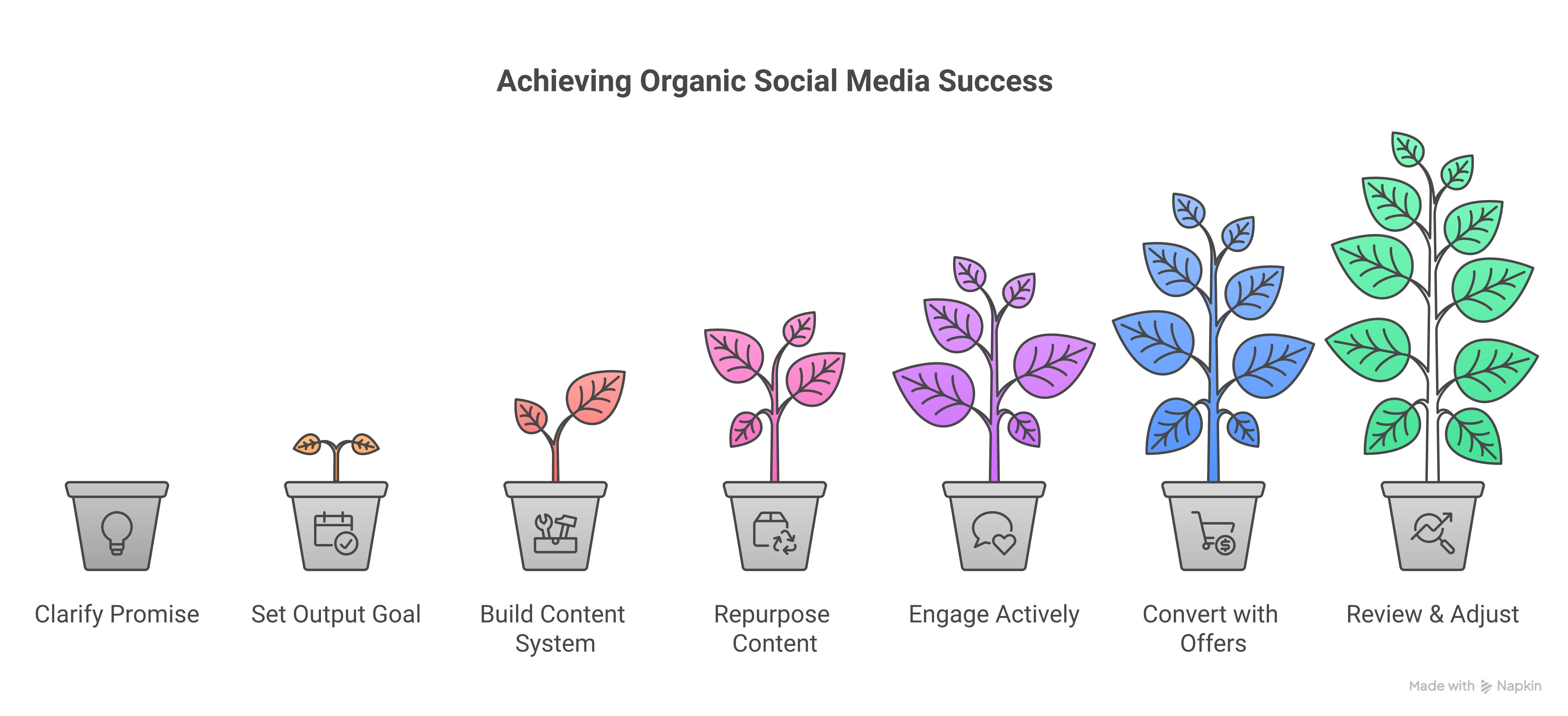
Step 2: Make a content calendar with regular posting of 3 to 5 times per week targeting to keep the public engaged without overwhelming them. Concentrate on the topics that interest the customers the most like problem-solving issues or entertainment. Our Brain Trust explains organic social as the practice of posting content without promotional boosts to grow and support followers, which is great for small teams.
Step 3: Interact – complement and respond to the viewers on the comment section and be active in related conversations to create a community. Step 4: Utilize the inbuilt analytics to measure what is working well and reframe your approach on the basis of the results. Sprout Social suggests this mixed approach for small enterprises where organic increases credibility.
Step 5: Collaborate with influencers or partners who will promote your cross-promotion campaign. By adhering strictly to these steps implementing social media exceptionally well in your business, you will notice positive outcomes as Volusion claims regarding e-commerce, which along with other marketing techniques, achieves the desired result.
The addition of organic social media to your internet marketing for online business strategy significantly increases their overall effectiveness by creating direct links between social posts and sales. This is the most beneficial aspect of this social media as it directly alters the search engine optimization (SEO) of your website by resulting in you sharing blog links over organic social media, thereby driving traffic. The obvious benefits of this will be the website marking you as relevant in searches by search engines. Combine it with email marketing, for example, by promoting newsletters in posts and in this way, you will power-up your list with in-house subscriptions.
Organic social networking is also perfect for community outreach. It can live stream events like a Q&A or run polls that help build relationships. It is also great for business partnerships; for example, you can tag existing collaborators in the post to increase your audience. Monitor user actions like UTM links to track them and see the rise of conversion from post likes to buy options. Sprinklr highlights the fact that organic social is the one that provides a value that can be attached to larger strategies too.
Business.com demonstrates that the organic social way is to build up a reputation that magnifies email open rates and SEO ranks. Hard Part Media assembles it for raising awareness that is channeled through paid ones. This collaboration of the two streams results in organic social being a traffic-generating engine for your internet marketing for online business.
Defining Metrics, Benchmarks, and ROI for Organic Social Media
Track organic social media but first measure it in the right way by using leading indicators. Examples include reach, engagement rate (likes, comments, shares divided by followers), and follower growth—these represent initial momentum. On the other hand, the lagging indicators of this will be the website traffic from organic social media and how many conversions were got or closing sales from this.
The benchmarks are the numbers: for beginners, aim for 1 to 3 percent engagement on posts, and for good organic social, a 5 to 10 percent monthly follower growth is a healthy number. What is the ROI for the business? Take the value acquired (like, $10,000 in sales from social-driven traffic) and compare that with zero ad spending, focusing solely on the customer's lifetime value.
According to ConvertBomb, trust-building metrics such as tracking community growth are important. Precise Creative provides standards for brand voice consistency. Work with these to set your goals and readjust quarterly for a better ROI in your organic social media decisions.
Insight into Content Ideas, Formats, and Examples for Organic Social Media
Content related to organic social should revolve around pillars like problem-solving (tips, tutorials), product showcasing (user stories), and behind-the-scenes (team spotlights). Formats include images for fast feedback, videos for storytelling, and carousels for step-by-step guides.
For example, a coffee shop can post a video explanation on brewing coffee at home that addresses frequently asked customer questions, receiving shares in return. Meanwhile, a tech startup may provide infographics on industry trends. Small businesses can benefit from nurturing posts as suggested by Our Brain Trust.
Volusion is a perfect example for an e-commerce site that mixes user-generated content with other content in its collection. Sprout Social suggests including polls as an engagement-driving tool. This suggestion ensures the freshness and relevance of your organic social.
Discovering Workflow Tools and Suggested Posting Pace
Platforms such as Buffer or Hootsuite provide the functionality needed to create and schedule organic social posts, while Google Analytics shows the results of your work. For better team collaboration, Canva is used for visuals while Later controls Instagram specifics.
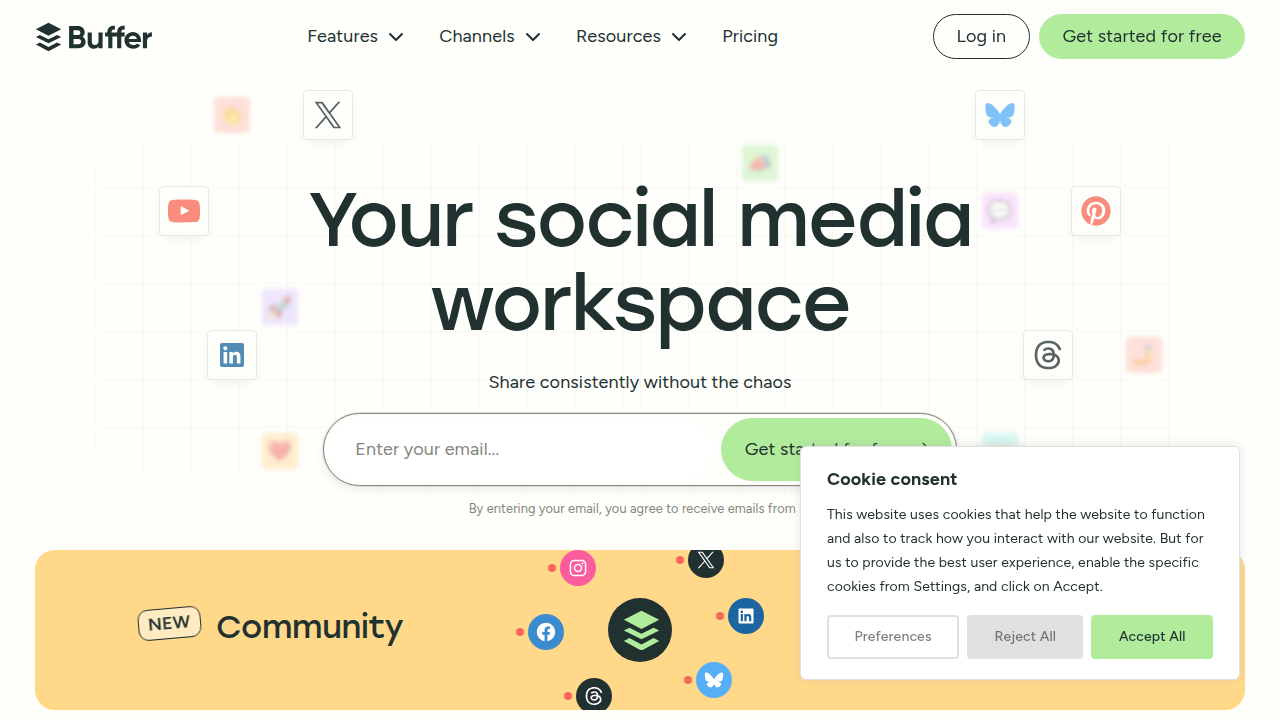
Recommended cadence: 3-5 primary platforms weekly, avoiding burnout by batching content for the next month. Tools for authentic scheduling are embraced by Sprinklr. Business.com advises long-term organic social media with the help of sustainable rhythms.
Hard Part Media is a company that uses engagement tracking tools. This ensures the organic social is done right and not too much is added to your team.
A Practical Organic Social Checklist for Teams
Here is a list of tasks for the organization of organic social media:
- Daily: Respond to comments; monitor mentions.
- Weekly: Post 3-5 times; review engagement analytics.
- Monthly: Audit content performance; plan next month's calendar.
- Quarterly: Assess follower growth; refine strategy.

The social media should be organic and should be improved continually. ConvertBomb has a weekly community check. Precise Creative suggests tasks for culture-sharing. Volusion proposes a quarterly review of ROI.
Common Traps in Organic Social and How to Avoid Them
Key things that should be avoided such as using the wrong platforms—solution: study the audience first. No interaction leads to no account activity; counteract by daily conversations. Spending money on ads that are not effective is tiring; stay with a post cadence.
Inconsistent branding leads to confusion among followers, which is why it is crucial to maintain a style guide. Our Brain Trust warns against unrealistic expectations for organic social media. Sprout Social suggests avoiding ad-like organic social posts. Sprinklr proposes that low reach can be avoided by concentrating on value in organic social media.
Core Topic Explainer: FAQs about Organic Social Media
How often should I post for organic social? 3-5 times a week on the main platforms to remain visible without spamming.
How do I evaluate ROI for organic social media? Follow traffic and sales from social links and aim at benchmarks like a 2% conversion rate.
Which is the best social media for business? It depends on the business. LinkedIn is mainly for B2B, while Instagram is for visual B2C products. This is important for internet marketing for online business.
Hard Part Media talks about frequency. Business.com covers ROI. ConvertBomb helps with choosing a platform, a key consideration for how to use social media for small business.
Unpacking Implementation and Maintenance
To implement, you should start small: select a single social media platform, create 10 posts, and be active in your interactions with your audience. Expand according to your level of experience. Staying on track requires checking metrics monthly, adjusting content as per comments, and keeping current on algorithm changes for organic social media.
Precise Creative is enumerating the starting points. Volusion has the idea of regular audits. Connect it with internet marketing for online business to ensure the continued success of your organic social media.
Further Learning Resources in Organic Social Strategy
Keywords: organic social, organic social media, internet marketing for online business, best social media for business, how to use social media for small business
拓展视野,阅读Sprout Social的混合指南获取更进一步的高级技巧,以了解organic social media。 我们的大脑信托的私营企业规划手册为您提供实用的建议,关于how to use social media for small business。阅读ConvertBomb的增长洞察和Sprinklr的选择框架以获取切入型internet marketing for online business策略的资源,这些策略涉及organic social。这些材料推广您的organic social media知识的存储,并帮助您了解best social media for business。