Internet Marketing for Small Business Get Consistent Leads for Growth
This article explains why, in 2026, small business websites must do more than look good: they need to generate leads, qualified prospects, and measurable return…


Why small businesses can’t treat the web as a brochure anymore
Remember when having a website was enough? It was like an online business card, showing what your company did. But those days are long gone. In 2026, the internet is not just a place to display pretty pictures of your business. If your website simply sits there looking good but doesn’t bring in new customers, it’s like having a beautiful shop with no door.
Many small businesses face this exact problem: their websites don’t turn visitors into people who want to buy.
Actually, most small businesses now have fast internet. Back in 2014, less than half of small businesses had speedy broadband access. But by 2024, that number jumped to 83.9 percent, meaning most businesses are now fully connected Issue Brief No. 23 – Small Businesses Access to Broadband Internet. Even advanced tools like Artificial Intelligence (AI) are being used by smaller companies. For instance, between late 2024 and mid-2025, about 8.2 percent of businesses with fewer than five employees were using AI Frequently Asked Questions About Small Business. This shows how much the online world has changed and how much people expect from businesses online.
This shift means that good internet marketing for small business is no longer just a nice extra. It’s a must-have. A website must work hard for you. If your business internet marketing efforts aren’t bringing in new leads, your website might be falling short. It could be one of those useless websites that looks good but doesn’t help your bottom line.
This guide will give you a clear plan to change that. We’ll show you how to turn your online presence into a steady stream of new customers, without needing a huge budget upfront. It’s about making your website an active tool for growth, not just a digital brochure. We’ll cover ways to improve small business website conversion so your online business marketing truly pays off.
Ready to get more customers visiting your site without constant effort? Grow Your Traffic on Autopilot.
Why internet marketing matters for small businesses today
You know how a beautiful shop needs a door to let customers in? Well, in 2026, your website is that shop, and internet marketing for small business is the door. It’s no longer enough for your website to just sit there and look pretty, like a picture book. Today, your online presence must work hard for you. It needs to bring in new customers every single day.
This is a big change from how things used to be. Before, having any website at all showed you were modern. Now, your website needs to prove its worth by getting real results. It’s all about how many interested people it brings in and how much money you make from them. This shift means that every dollar you spend on small business internet marketing should lead to clear wins for your company.
Getting Real Results: Leads, Prospects, and Money
Good internet marketing for business means you’re looking for specific things:
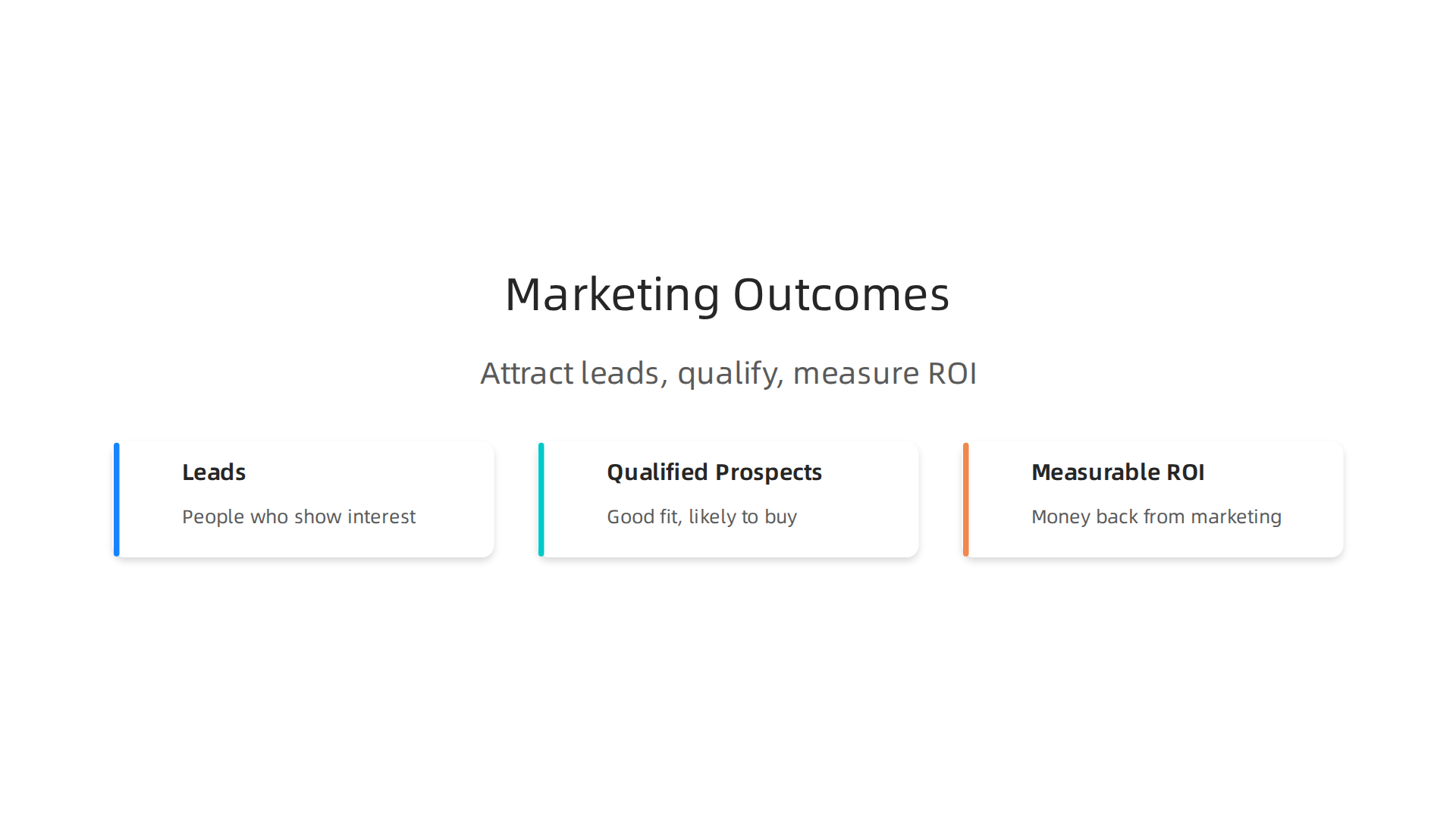
- Leads: These are people who show interest in your products or services. Maybe they filled out a form, signed up for your newsletter, or downloaded a guide. They’ve raised their hand to say, "I want to know more!"
- Qualified Prospects: Not all leads are created equal. A qualified prospect is a lead who is a good fit for what you offer and is likely to buy. They’re more than just curious; they have a real need that your business can meet.
- Measurable ROI (Return on Investment): This is a fancy way of saying you need to see that the money you put into marketing brings back even more money. You want to know that your business internet marketing efforts are actually helping your bottom line.
For example, small businesses might find that getting a new lead can cost anywhere from $40 to $120, or even more, depending on their industry and how they get the lead Google Ads Benchmarks for Small Businesses (2026 Data). But here’s a helpful tip: getting leads through organic methods, like good content that shows up in search results, can cost 40% to 60% less than paying for ads Cost Per Lead by Industry: 2026 Benchmarks & Data. This shows why a smart internet marketing for online businesses plan is so important. You need to know which efforts bring in the best leads for the least amount of money.
It’s clear: for your small business to grow in 2026, your internet marketing must deliver leads, turn them into qualified prospects, and show a good return on your money. Having a clear plan with strong digital marketing strategies for businesses is key to making this happen.
Now, let’s talk about the important ways your internet marketing for small business can actually bring in those interested people and help your company grow. Think of these as the main roads that lead customers to your digital doorstep. For small businesses, it’s wise to pick a few main roads and do them really well, instead of trying to be everywhere at once. Most small businesses find success by focusing on 3-5 high-impact marketing channels, rather than spreading their efforts too thin Small Business Marketing Strategies That Work In 2026.
Here are the core ways to bring in consistent leads:
Search Engine Optimization (SEO)
SEO is all about making your website show up higher on search engines like Google when people look for things you offer. It’s like having the best sign on the busiest street. When someone types "best coffee shop near me" and your shop appears first, that’s SEO working. This kind of business internet marketing brings people to your site naturally, without you paying for each click. It takes time to see big results, often months, but once your site ranks well, it can bring in leads for a much lower cost than paid ads. Many experts suggest strong SEO content optimization strategies that work for small businesses, especially focusing on local SEO to reach customers nearby. The cost per lead from organic search can be significantly lower, sometimes between $15 to $50, compared to other methods AI Lead Generation for Small Business: The 2026 Playbook – aidev.
Pay-Per-Click (PPC) Advertising
PPC means you pay each time someone clicks on your ad. Google Search Ads are a great example of this. You bid on keywords related to your business, and your ad shows up at the top of search results. This is a fast way to get in front of customers who are actively looking for what you sell right now. The good thing is you can control your budget and target very specific groups of people. However, it can also be more expensive. For instance, the average cost per click for Google Ads is around $70.11 Conversion Rate Benchmarks for YOUR Industry …. It’s a quick way to get traffic, but you need to manage your ads carefully to make sure you’re getting a good return. Learning about Google Search Ads for small business can help you spend your money wisely.
Email Marketing
Email marketing is still a champion for internet marketing for business. It’s about sending helpful messages to people who have given you their email address. This could be newsletters, special offers, or updates. It helps you build a strong relationship with your audience over time and can turn interested leads into loyal customers. The best part? It often has a very high return on investment (ROI) because you own your email list. You’re talking directly to people who want to hear from you. You can learn how to build a drip marketing campaign that converts for your small business to keep your audience engaged.
Social Media Marketing
Using social media platforms like Facebook, Instagram, or LinkedIn for your internet marketing for online businesses helps you connect with many people. You can share fun posts, useful tips, and show off your products or services. It’s great for building your brand and creating a community around your business. While it can lead to sales, its main strength is often in getting your name out there and helping people get to know, like, and trust you. Different platforms work best for different businesses, so you need to know where your customers spend their time. For example, an Instagram marketing strategy for small businesses might be perfect for a local boutique.
How to Prioritize Channels
For small businesses, choosing which of these small business internet marketing channels to focus on depends on a few things:
- Your Budget: SEO and email marketing can be very cost-effective in the long run, even if they take time. PPC can give fast results but needs a consistent budget.
- Your Timeline: If you need leads right away, PPC might be your first stop. If you’re building for the future, SEO is key.
- Your Customers: Where do your customers hang out online? Are they searching on Google, scrolling through social media, or checking their emails? Go where they are.
It’s often best to start with one or two channels, master them, and then add more as you grow. This focused approach helps you get real results without getting overwhelmed. If you’re looking to streamline your online efforts and get these channels working together efficiently, you might want to Grow Your Traffic on Autopilot by connecting your website with a service that uses AI to manage your growth.
Getting people to your website is only half the battle for successful internet marketing for small business. Once they arrive, your website needs to turn them into interested leads or customers. This is called conversion. You don’t always need a big, expensive website redesign to make this happen. Often, small, smart changes can make a huge difference.
Smart Changes for More Leads
Focus on making your website clearer and easier to use. This way, visitors understand what you offer and what they should do next. Here are key areas to look at:
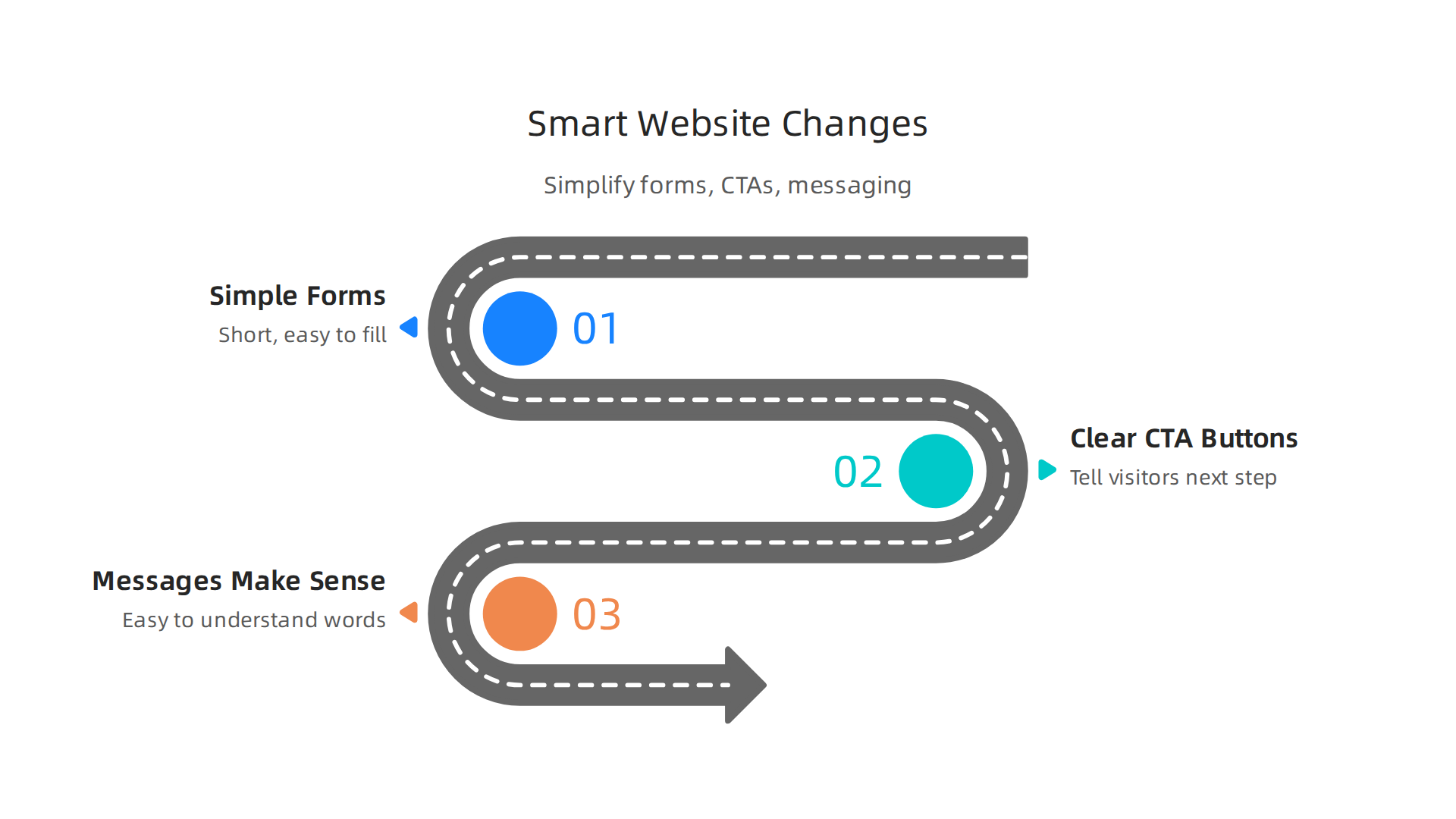
- Make Your Forms Simple: If you want people to fill out a form, make it short and easy. Only ask for the most important information. Long forms can scare people away.
- Clear Call-to-Action (CTA) Buttons: A CTA is like a helpful sign telling your visitors what step to take. Buttons like "Call Us Today," "Get a Free Quote," or "Sign Up for Our Newsletter" work best when they stand out. It’s often better to have one very clear CTA on a page, as pages with a single, clear call to action convert much better than those with many choices Conversion Rate Optimization (CRO) Statistics 2026 – Searchlab.
- Messages That Make Sense: Your website’s words should be easy to understand. Tell visitors clearly what you do, how you can help them, and why they should choose you.
Quick Fixes for Better Experience
Beyond forms and words, some technical and design tweaks can greatly improve your site’s ability to get leads for your business internet marketing.
- Speed Up Your Site: People don’t like waiting. A website that loads fast keeps visitors happy and engaged.
- Works Well on Phones: Most people use their phones to look at websites in 2026. Make sure your site looks and works great on any size screen.
- Show Proof and Trust: People trust other people. Displaying customer reviews or testimonials can greatly increase how many visitors take action Top Strategies For Ecommerce Conversion Optimization In …. You can also add security badges or logos of companies you’ve worked with.
- Easy to Find Things: Your website menu should be simple and clear. Visitors should be able to find what they’re looking for without getting lost.
By making these kinds of small, focused changes, your internet marketing for online businesses can become much more effective without needing to build a whole new website. This approach helps turn more of your website visitors into valuable leads. If you want to dive deeper into how to make your website work harder for you, learn more about small business website conversion: 8 ways to turn visitors into leads.
Turning your website visitors into leads is a big win for any internet marketing for small business plan. But how much should you spend to get those results?
And how do you know if you’re getting your money’s worth? Understanding pricing and what you get back is key to smart business internet marketing.
Different Ways Agencies Charge
When you look for help with your internet marketing for online businesses, you’ll see different ways that marketing companies charge for their work. Knowing these helps you compare options:
- Monthly Retainers: This is very common for ongoing work, like keeping your website ranking high on Google (SEO) or running your social media. You pay a set amount each month for a certain amount of work. For small businesses, these plans often cost between $1,000 and $3,500 per month depending on what services you need Digital Marketing Agency Pricing: 2026 Cost Guide. Some small business agencies might charge $2,500 to $12,000 monthly for more complete plans The Complete 2026 Guide to Choosing, Pricing, and ROI.
- Project-Based Fixed Fees: For one-time jobs, like building a new website or setting up an email campaign, an agency might charge a single, agreed-upon price.
- Performance-Based: In this model, the agency’s pay is linked to how well their marketing works for you. For example, they might get a bonus if they bring you a certain number of new customers. This way, their goals are directly aligned with yours.
- Hybrid Models: Some agencies mix these approaches, perhaps a smaller monthly fee plus a bonus for great results.
In 2026, there are mainly six pricing models digital marketing agencies use, but monthly retainers are still the most popular for continuous services for small business internet marketing 6 Proven Digital Marketing Agency Pricing Models.
Figuring Out Your Return on Investment (ROI)
ROI means "Return on Investment." It’s a fancy way of asking: "Am I getting more money back than I’m spending?" For your internet marketing for business, you want a positive ROI.
Here’s a simple way to think about it:
- Know Your Costs: Add up how much you spend on marketing each month.
- Estimate Your Gains:
- How many new leads or customers do you expect from this marketing?
- How much is each new customer worth to your business (their average purchase, or what they spend over time)?
- Compare: If your marketing costs $2,000 a month and brings in 10 new customers, and each customer brings in $300, you’ve made $3,000. So, you spent $2,000 and got back $3,000. That’s a good return.
You can also think about the "payback period." This is how long it takes for the money you make from the marketing to cover the cost of the marketing itself. For example, if you spend $1,000 on a marketing plan that brings in $200 extra profit each month, your payback period is five months.
Choosing a marketing partner that offers clear pricing and focuses on real results is important. Look for companies that make it easy to see where your money goes and what kind of return you can expect. This helps you invest wisely and avoid surprises. If you’re looking for help to find the right partners, it’s a good idea to learn how to choose a marketing firm that generates leads for your small business.
Ready to see how a clear strategy can bring you consistent leads and grow your business?
Grow Your Traffic on Autopilot
You’ve learned how to pick a good partner and what to expect with costs and how your money can grow. But getting your internet marketing for small business off the ground is just the first step. To keep those leads coming and your business growing, you need to think about what happens next. This means keeping your online efforts running smoothly, watching what works, and making things better over time. It’s like taking care of a garden; you plant the seeds, but you also need to water it and pull weeds to get good results.
Checking What Works: Analytics and Reports
After you’ve started your internet marketing for business, how do you know if it’s actually bringing in customers? This is where "analytics" comes in.

It’s a fancy word for keeping track of numbers. You need simple ways to see if your marketing is working and if the money you spent is giving you a good return.
Here’s how to keep an eye on things:
- Website Visitors: How many people visit your website? Where do they come from?
- Lead Quality: Are the people contacting you actually good potential customers?
- Conversion Rates: How many visitors turn into leads or sales? Getting more people to take action on your website is called conversion rate optimization (CRO). A clear plan for CRO can help turn more visitors into customers, especially for B2B businesses, by focusing on goals and setting up good tracking B2B Conversion Rate Optimization: 2026 CRO Playbook.
- Channel Performance: Which marketing efforts (like social media, Google ads, or blog posts) are bringing you the best leads?
By tracking these things, you can see what’s working and what isn’t. This helps you make smart choices about where to put your time and money. For ideas on how to improve these numbers, you might find useful tips on small business website conversion.
Keeping Your Website Healthy and Fresh
Your website is the heart of your internet marketing for online businesses. It needs regular care to stay in top shape.
- Site Maintenance: This means making sure your website is secure, fast, and easy for people to use on their phones and computers. Slow websites or ones with problems can make visitors leave quickly.
- New Content: Keep adding fresh, helpful content like blog posts, news, or updates. This shows Google that your site is active and useful, which can help you show up higher in search results. It also gives your customers new reasons to visit.
- A/B Testing on a Budget: This is a smart way to make small changes to your website or ads and see which version works better. For example, you might try two different headlines for a landing page to see which one gets more clicks. Even small businesses can do simple A/B tests to improve their results. Studies show that A/B testing on landing pages can increase conversions by as much as 30% Conversion Rate Optimization Statistics 2026: Benchmarks & Gains.
Using Smart Tools for Small Business Internet Marketing
In 2026, many new tools can help small businesses with their ongoing marketing tasks. Artificial intelligence (AI) is becoming a big helper. About 8.8% of small businesses are now using AI to some extent Research Spotlight – AI In Business: Small Firms Closing In. These tools can help you:
- Write new content faster.
- Manage your social media posts.
- Analyze your website data to find patterns.
- Automate repetitive tasks, saving you time and money.
Finding the right internet marketing tools that save time is a great way to improve your business internet marketing without needing a huge team.
By taking care of these ongoing tasks, your initial investment in internet marketing will keep paying off, bringing in more leads and helping your business grow steadily.
Ready to see how a clear strategy can bring you consistent leads and grow your business? Grow Your Traffic on Autopilot
All the work you put into setting up your internet marketing for small business will bring good results if you keep it up. But here’s a big question for many small business owners: should you do all this marketing yourself, or should you hire someone to help? Making this choice can feel tricky, but thinking about a few key things can make it clear.
The Big Decision: Do It Yourself or Get Help?
When it comes to internet marketing for business, there are good reasons for both doing it yourself and hiring a partner. It really depends on what your business needs right now.
- Time: Do you or your team have enough hours each week to learn about marketing, plan everything, and actually do the work? Good internet marketing takes a lot of time and effort. If you’re already swamped, adding more tasks might not be the best idea.
- Skills: Are you good at writing, designing, understanding how websites work, and reading numbers? Small business internet marketing needs many different skills. If you don’t have these skills, or don’t want to learn them, getting help might be smarter.
- Money: It might seem cheaper to do it yourself, but if you spend a lot of time on marketing that doesn’t work well, you could lose money. Hiring a pro might cost more upfront but could bring in more customers and sales faster. Agency pricing for small businesses can vary greatly, with monthly retainers typically ranging from $1,000 to $3,500 depending on the services included and how competitive the market is Digital Marketing Agency Pricing: 2026 Cost Guide.
- How Fast You Need Results: If you need to see new customers quickly, a good marketing partner often has the experience and tools to make things happen faster. They know what works and can skip the trial and error you might go through.
Many small businesses find that focusing on a few key marketing channels and tracking everything carefully is the best approach, whether doing it themselves or with help Marketing Strategies for Small Businesses in 2026.
Checklist for Choosing an Internet Marketing Partner
If you decide to look for help with your internet marketing for online businesses, here’s a quick checklist to guide you. This helps you find a good fit and avoid bad choices.
Positive Signals to Look For:
- Clear Pricing: They tell you exactly what you’re paying for. Most agencies in 2026 use monthly retainer models for ongoing work, with prices tailored to small businesses The Complete 2026 Guide to Choosing, Pricing, and ROI.
- Good Communication: They talk to you often and explain things clearly.
- Goals and Reports: They want to know your business goals and promise to show you how their work is helping.
- Focus on Your Business: They take time to understand your company and your customers.
- Real Experience: They have helped other businesses like yours.
- Good Reviews: Other clients speak highly of their work.
If you’re wondering how to pick the right expert, we have more tips on how to choose a marketing firm that generates leads.
Red Flags to Watch Out For:
- Hidden Costs: They don’t want to tell you the full price upfront.
- Too-Good-To-Be-True Promises: They say they can get you to number one on Google overnight or guarantee tons of sales without understanding your business.
- Poor Communication: They are hard to reach or don’t answer your questions clearly.
- No Clear Plan: They don’t explain how they will help you reach your goals.
- One-Size-Fits-All: They offer the same plan to everyone, without thinking about what makes your business internet marketing unique.
- No Reports: They don’t plan to show you how their work is performing.
Choosing the right path, whether DIY or hiring a team, is a big step. By thinking carefully about your needs and what makes a good partner, you can make a smart choice for your business’s online growth. You can also explore different SEO packages for small businesses 2026 to understand what options are available when hiring external help.
Once you’ve thought about your business’s needs and decided if you’ll do your internet marketing for small business yourself or get help, it’s time to make a plan.

A clear, step-by-step plan for the first 90 days can help you start seeing real results and bring in new customers.
A Concrete 90-day Plan to Generate Your First Consistent Leads
This plan helps you build a strong foundation for your internet marketing for online businesses and make sure your efforts turn into real leads and sales.
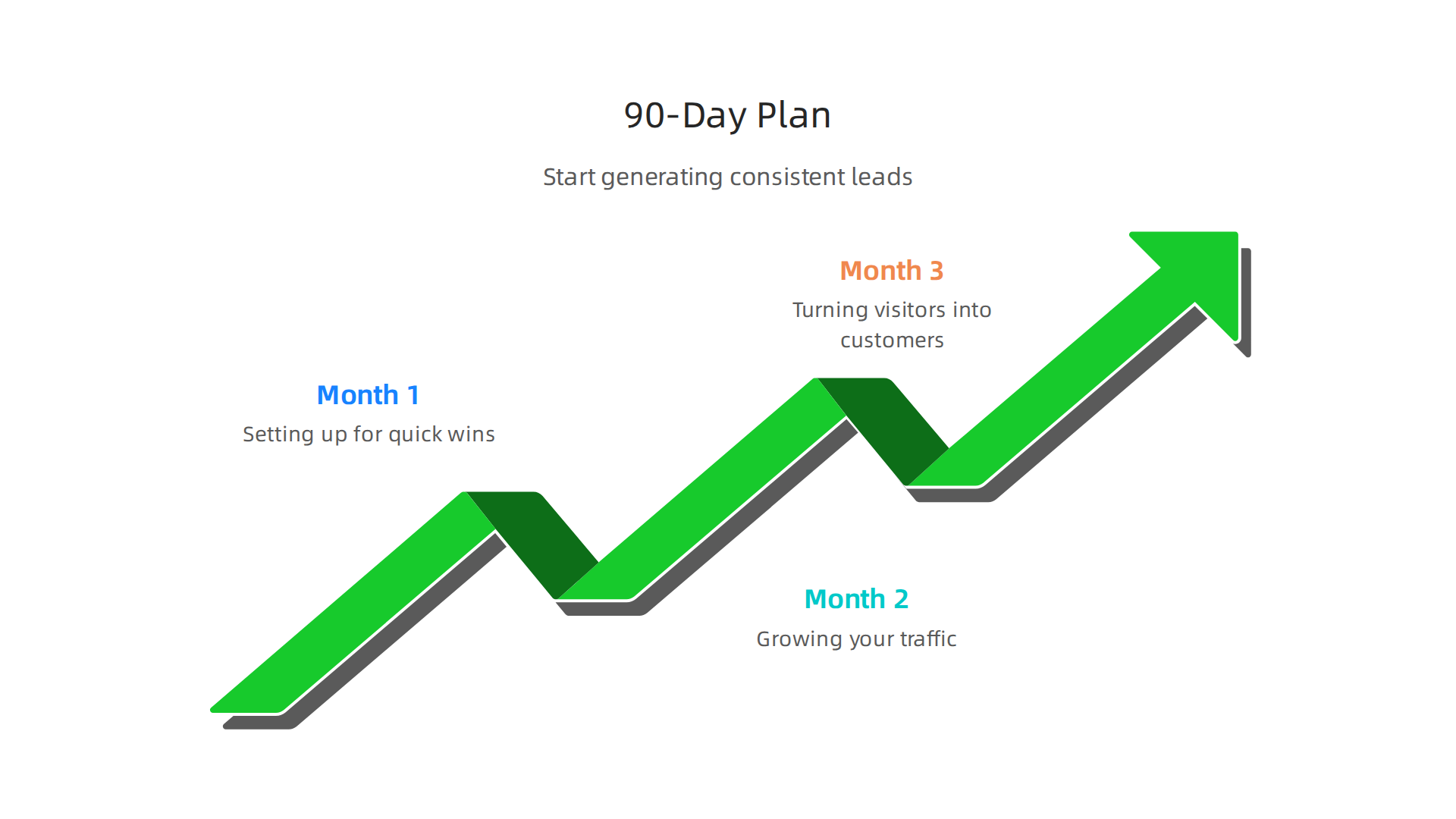
Month 1: Setting Up for Quick Wins
The first month is all about getting the basics right and finding easy wins.
- Week 1-2: Get Your Online Home Ready. Make sure your website is easy to use and loads fast. It should clearly tell visitors what you do and what you want them to do next. This is called conversion optimization. A good website should convert 2-5% of visitors into leads, but with smart design, it can be higher Lead Generation Benchmarks: What Good Looks Like in 2026.
- Week 3-4: Start with Local SEO and Content. If you have a local business, make sure your business listing on Google is correct and complete. For any business, start creating simple content, like short blog posts that answer common customer questions. This is called an "Organic Foundation" because it helps people find you without paying for ads. Many experts agree that focusing on a few high-impact channels like content creation and local SEO is key for small businesses Small Business Marketing Strategies That Work In 2026. You can also learn how to create an internet marketing strategy that generates leads for your small business.
Month 2: Growing Your Traffic
Now that your foundation is solid, it’s time to bring more people to your online door.
- Week 5-6: Boost Your Search Presence. Continue with SEO (Search Engine Optimization) to help your website show up higher in search results. This means using the right words on your site that your customers are searching for. Organic search can have a much lower cost per lead, often ranging from $15 to $50, compared to other channels like PPC or LinkedIn ads AI Lead Generation for Small Business: The 2026 Playbook.
- Week 7-8: Try Social Media and Email. Pick one or two social media platforms where your customers spend most of their time and share your content there. Start collecting email addresses and send helpful newsletters. Email marketing is still one of the most effective ways to talk to your customers. Many small and medium businesses (SMBs) find success by prioritizing 1-2 platforms and using consistent messaging The SME Survival-to-Scale Blueprint for 2026: Marketing That Works.
Month 3: Turning Visitors into Customers
The last month focuses on making sure the people visiting your site actually become leads.
- Week 9-10: Optimize Your Website for Leads. Look at what pages people visit most and where they leave your site. Make sure your call-to-action buttons (like "Contact Us" or "Get a Quote") are clear and easy to find. This is a critical part of business internet marketing.
- Week 11-12: Test and Tweak Your Messages. Try different headlines, pictures, or descriptions to see what gets people to take action. Even small changes can make a big difference in how many leads you get. For many businesses, the median website conversion rate is around 2.9%, but top programs can do much better Lead Generation Statistics 2026: 80+ B2B.
How to Measure Success at 30, 60, and 90 Days
It’s important to check your progress often to see what’s working and what’s not.
- At 30 Days: Look at how many people are visiting your website and how long they stay. Are more people finding you through local searches?
- At 60 Days: See if your traffic is growing. Are people signing up for your email list or downloading your content? This shows that your small business internet marketing is starting to attract interested people.
- At 90 Days: This is where you measure leads! How many new contacts have you gotten through your website? What is your cost per lead? The average cost per lead can vary greatly by industry and channel, but in 2026, the global average CPL is around $198 across all industries and channels Channel-Level Breakdown. This helps you know if your marketing is bringing in enough business for the money you’re spending.
By checking these numbers, you can make smart choices to improve your internet marketing for business and keep those leads coming.
Ready to see consistent traffic growth for your business?
Grow Your Traffic on Autopilot
Summary
This article explains why, in 2026, small business websites must do more than look good: they need to generate leads, qualified prospects, and measurable return on investment. It reviews the main internet marketing channels—SEO, PPC, email, and social—why to focus on a few high-impact tactics, and how organic traffic typically costs less over time. You’ll learn simple conversion improvements (clear CTAs, short forms, mobile speed, and trust signals), common pricing models agencies use, and a practical 90‑day plan to get consistent leads. The guide also covers how to measure success with basic analytics, when to use AI and tools to save time, and how to decide between doing marketing yourself or hiring a partner. By following the advice here you’ll be able to prioritize channels, improve your website’s ability to turn visitors into customers, and track the ROI of your internet marketing efforts.