
How to Use Graphic Design Internships to Transform Your Small Business Brand
This article explains how small businesses can use graphic design internships to get professional visuals affordably and build a hiring pipeline. It covers why…


Introduction
Great design helps small businesses compete.

But hiring a full-time designer or an agency often costs more than most owners can spend. With over 36 million small businesses in the US (source), standing out with professional visuals is more important than ever.
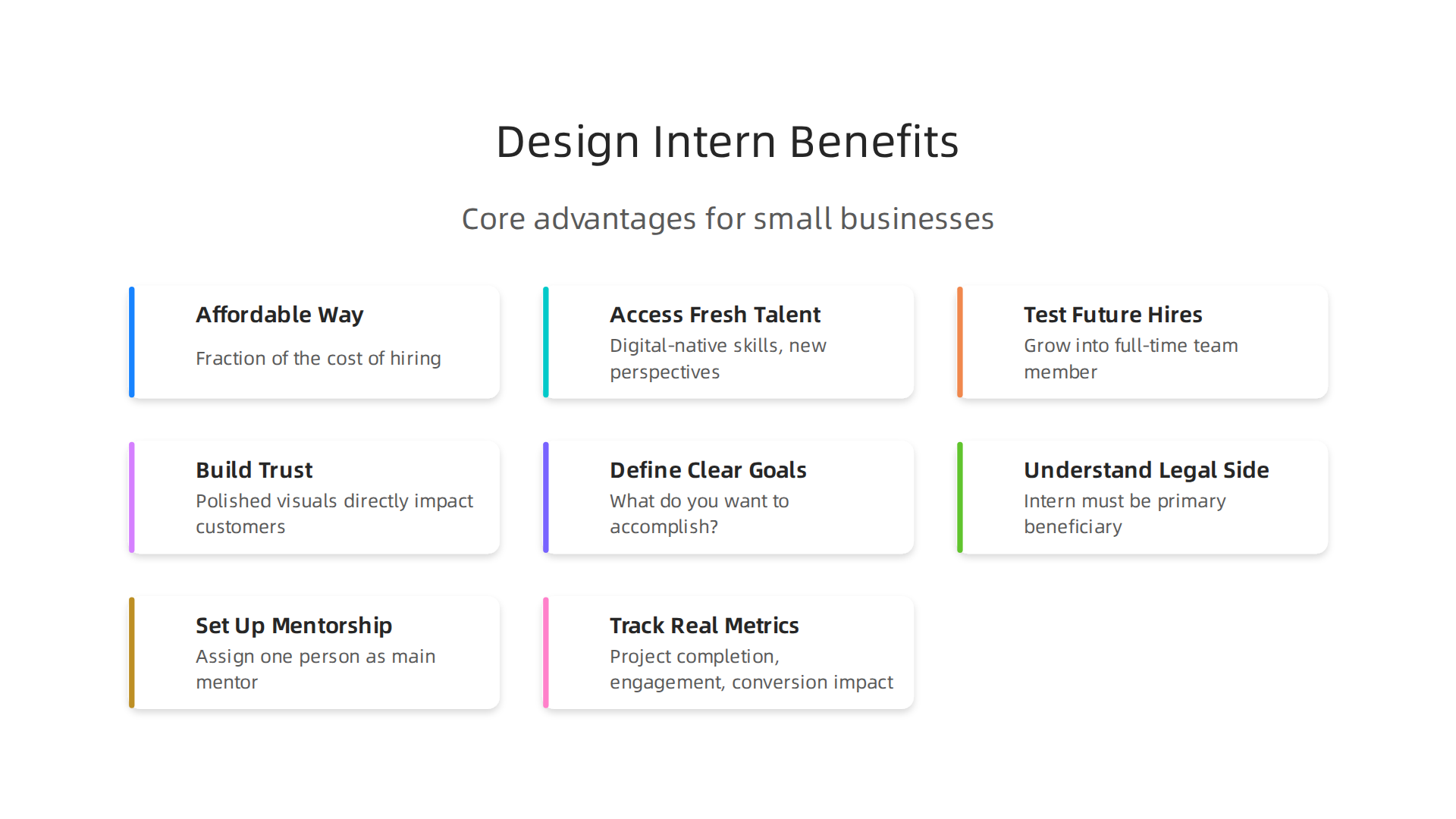
Graphic design internships give you an affordable way to access fresh talent. Interns bring digital-native skills and new perspectives. They know the latest tools and trends. They can help you create logos, social media posts, and website graphics that catch attention. If you’re wondering how to build a more complete design operation, check out our guide on why your small business needs a design team and how to build one.
This guide covers everything you need to know about using graphic design internships for your business. You’ll learn where to find interns, how to set them up for success, and how to measure the results.
If you want to build a stronger visual brand without the high cost, consider working with a growth partner like Weblish to handle your design and digital marketing.
Ready to take your business growth to the next level? Grow Your Traffic on Autopilot with Weblish.
Why Graphic Design Internships Matter for Your Small Business
Let’s be honest. When someone lands on your website or sees your social media post, they make a snap judgment. Bad design pushes them away. Professional design does the opposite. It builds trust on the spot.
Studies show that polished visuals directly impact how customers see your brand. Small businesses that invest in good design see higher conversion rates and stronger customer loyalty
(source). That trust you earn from a clean logo or a well laid out webpage can be the difference between a bounce and a sale.
Here’s the thing. You don’t need a big agency budget to get that professional look. Graphic design internships give you access to talented people who are eager to prove themselves.
Interns are digital natives. They grew up on Canva, Figma, and Adobe Creative Cloud. They know what looks good on Instagram and what converts on a landing page.
They also come at a fraction of the cost of hiring a senior designer or a full agency. For a small business owner watching every dollar, that matters. You get high quality work without the high price tag.
And here’s a bonus you might not have thought about. Internships let you test future hires before you commit. A strong intern can grow into a full time team member who already knows your brand inside and out. That saves you time and training costs down the road.
If you want to see what good design can do for your specific pages, check out these 9 graphic design ideas for small business websites that generate leads. They show you exactly how to turn visitors into customers.
The bottom line? Graphic design internships give you affordable access to the creative firepower your business needs to compete in 2026. That trust and those conversions start with visuals that look like you mean business.
Ready to take your business growth to the next level? Grow Your Traffic on Autopilot with Weblish.
Structuring a Valuable Graphic Design Internship Program
So you’re ready to bring on a graphic design intern. That’s exciting. But here’s the thing. A good program doesn’t happen by accident. You need a structure that helps both you and your intern succeed.
Without a plan, you both lose. The intern wanders without direction. You get work that doesn’t match what you need. It’s frustrating for everyone.
Let’s fix that.
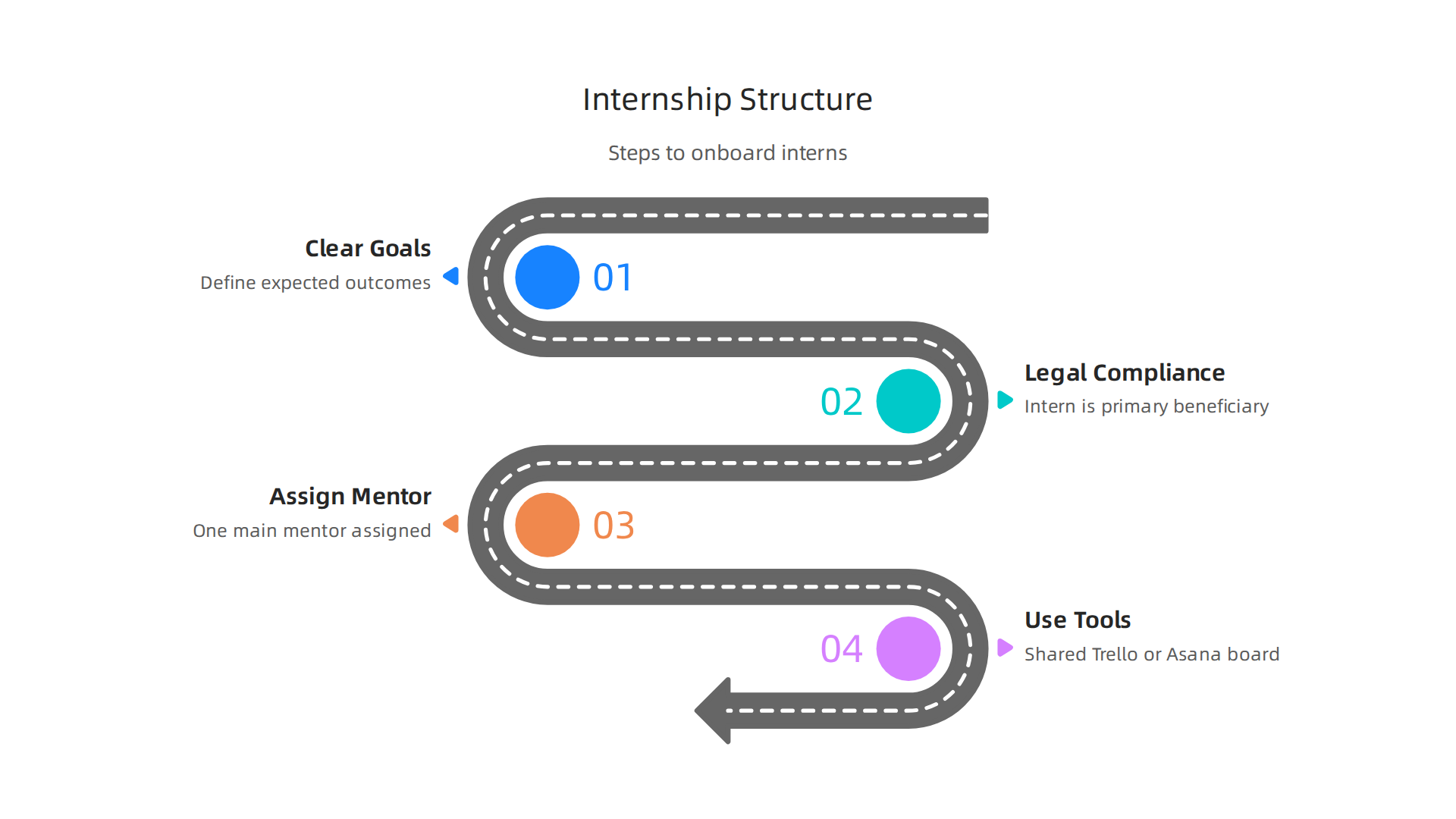
Define clear goals and deliverables first. What exactly do you want this intern to accomplish? Write it down. Maybe they create ten social media templates per week. Maybe they redesign your email newsletter. Maybe they help with your website refresh.
Be specific. When you set clear objectives, your intern knows exactly what to focus on. The Design Business Council points out that structured internships benefit both sides when expectations are clear (source). You’ll get better work. Your intern will get real portfolio experience.
Think about projects that connect to their future career. If they dream of landing junior graphic design jobs, give them real client work. Not just resizing images. Real challenges that stretch their skills.
Understand the legal side. This matters a lot. The National Association of Colleges and Employers strongly recommends paying your interns
(source). Paid interns are more motivated and your program builds a better reputation.
If you can’t pay, be careful. Unpaid internships have strict rules from the Department of Labor. The intern must be the primary beneficiary of the arrangement. That means education comes before your business needs.
Also check if your intern can earn college credit. Many schools require specific paperwork. A little upfront effort here saves headaches later.
Set up mentorship and feedback loops. This is where the magic happens. Assign one person as your intern’s main mentor.

Someone who can answer questions in real time, not three days later.
Schedule weekly check-ins. Fifteen minutes to review work, give constructive feedback, and answer questions. Show them how to improve. Explain why one design choice works better than another.
Track their progress. You’ll be amazed how fast a motivated intern grows with regular guidance. And here’s a bonus. Many graphic design internships turn into full time hires. The Society for Human Resource Management suggests that a strong internship program feeds your future hiring pipeline (source) through the BambooHR guide on program creation (source).
One more thing. Use tools to stay organized. A shared Trello board or Asana project keeps tasks clear. Something like Get started with Weblish can also help you manage your digital presence while your intern handles design work.
A well structured program turns a temporary helper into a long term asset. Take the time to build it right.
Where to Find Top Graphic Design Interns
Your program structure is ready. Now the question is where to find great graphic design interns.
You have more options than ever. The trick is using the right channels.
Start with online job platforms. LinkedIn is the biggest professional network. Post your internship and filter by skills like Adobe Creative Suite or Figma. Indeed has a dedicated section for graphic design internship summer 2026 roles where thousands of students search daily
(source).
Don’t skip Handshake. It’s built for college students and recent graduates. Many career centers push opportunities through it. For design specific talent, try niche boards like Prosple which aggregates top graphic design internships across the US (source). You will find candidates serious about design as a career.
Build relationships with local schools. This is an underrated strategy. Reach out to the art or communications department at nearby colleges. Ask to share your internship posting with their students.
Professors often send opportunities directly to classes. That personal referral gives you instant credibility. Students from local programs often want to stay in the area after graduation. That makes them great candidates for future junior graphic design jobs. Small businesses can absolutely compete for top talent by being intentional with their outreach (source). For more on growing your creative capacity, check out why your small business needs a design team and how to build one.
Go remote to widen your pool. You don’t have to limit yourself to candidates who can commute. Remote graphic design internships let you hire from anywhere.

More applications, more diversity, and often stronger portfolios.
A student in rural Nebraska might have amazing skills but zero local opportunities. Your remote position could be their big break. And you get top talent without geographic limits.
When you use multiple channels, you build a steady pipeline. Post on platforms, talk to schools, and embrace remote work. You will find fantastic interns ready to grow with your business. Implement your program the right way with a clear sourcing strategy (source).
Evaluating Portfolios and Choosing the Right Candidate
You have a pile of applications. Everyone says they love design. How do you pick the one person who will actually help your business grow?
Look for problem solving, not just pretty pictures.
A great portfolio shows more than nice colors. It shows how the candidate thinks. Look for projects where they explain their choices. Why did they pick that font? How did they solve the client’s real problem?
Many companies skip applications without a solid portfolio (source). And the best portfolios include strong visual evidence of real thinking (source). This matters for all graphic design internships, not just full time graphic designer jobs.
If you are not sure what to look for, check out this guide on how to build a UI/UX designer portfolio that wins clients in 2026. It will help you spot the candidates who truly understand design strategy.
Next, assess communication and responsiveness.
A candidate who replies fast and asks good questions will be easier to work with. Send them a simple email. See how they respond. Are they professional? Do they show curiosity? Good communication is half the battle in any working relationship.
Finally, give them a small test project.
A portfolio can hide weaknesses. A test project reveals how someone works under real conditions. Keep it small and pay them for their time.
Ask them to redesign a tiny part of your website or create a social graphic. Watch for:
- How they interpret your brief
- Whether they ask clarifying questions
- How they handle your feedback
This practical test works for junior graphic design jobs and freelance graphic designer jobs too. It shows you their real process and work ethic. When you take these steps, you choose an intern who will be a true asset to your team, not just someone with a pretty portfolio.
Onboarding and Managing Your Intern for Success
You picked the right person. Now it is time to make sure they thrive. Good onboarding turns a promising candidate into a real contributor quickly. Without it, even the best intern can feel lost and underperform.
Start with clear onboarding materials and access.
Before day one, send them everything they need. This includes login details for your design tools, brand guidelines, file-sharing folders, and a list of key contacts. Show them where to find templates, past projects, and style guides. A well-organized start helps them feel confident and reduces questions later. Many successful graphic design internships fall apart because the intern spends the first week just trying to find files. Do not let that happen.
Set expectations with a project roadmap.
Give them a written plan for the first few weeks. Break big goals into small tasks. For example, week one might be learning your brand style. Week two could be creating social media graphics. This roadmap helps them see progress and understand priorities. According to Indeed, clear expectations are a key part of any internship experience (source). When you set expectations early, you also prepare them for future junior graphic design jobs or freelance graphic designer jobs.
Schedule regular check-ins and provide feedback.
Block 15 minutes each week for a one-on-one video call. Use this time to review their work, answer questions, and give constructive feedback. Be specific. Instead of saying "this looks good," say "the color choice matches our brand well, but let us try a bolder headline." Frequent feedback builds their skills and keeps projects on track. It also strengthens your working relationship.
When you invest in onboarding, your intern becomes a productive part of your team faster. This approach works for all graphic design internships, whether you hire for a few months or a full year. For more tips on building a strong design team, read our guide on why your small business needs a design team and how to build one.
Onboarding and managing your intern sets the stage. But how do you know the program actually worked for your business? That is where measuring ROI comes in.
ROI stands for return on investment. For graphic design internships, it is about answering a simple question: Did the intern’s work bring more value than the time and money you spent?
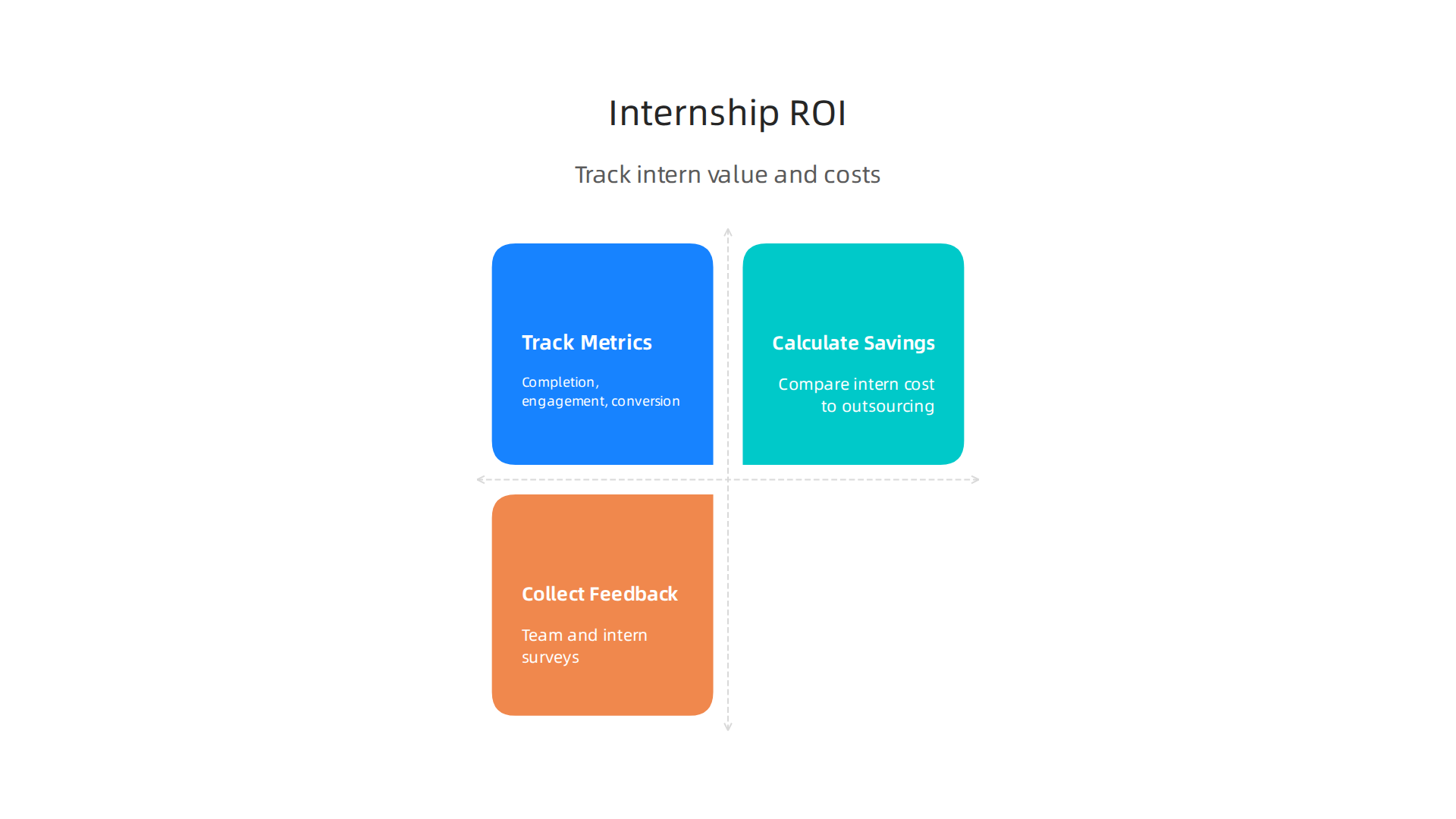
Here is how to measure that in a practical way.
Track real metrics.
Do not just guess whether the intern helped. Look at specific numbers.
- Project completion: How many design tasks did they finish? Count social media graphics, email headers, or website assets. Each completed project saves your team hours.
- Engagement: Did their designs perform well? Check click-through rates on emails or likes and shares on social posts. Strong performance shows their work resonates.
- Conversion impact: Did any of their assets lead to sales or signups? For example, a new landing page banner they created might have boosted your conversion rate. This connects their work directly to revenue.
Tracking these numbers gives you hard proof of the intern’s contribution. It also helps you decide whether to hire them for junior graphic design jobs after the internship ends.
Calculate cost savings.
Hiring an intern is often much cheaper than using an agency or a full-time employee. Compare what you spent on the intern (stipend, software access, your supervision time) to what you would have paid for the same work elsewhere.
For example, if your intern created 20 social media graphics in a month, estimate the cost of outsourcing that work to a freelancer. You might find you saved hundreds or even thousands of dollars. This calculation helps justify continuing graphic design internships in the future.
Use feedback surveys.
Ask your team and your intern for honest opinions. Send a short survey at the end of the program. Questions can include:
- Did the intern’s work meet your quality standards?
- How much time did the intern save your full-time designers?
- Would you recommend hosting another intern?
Also ask the intern about their experience. Their answers can help you improve future programs. Many businesses use this feedback to shape their approach to graphic design jobs and hiring pipelines.
When you measure ROI clearly, you gain confidence in your internship program. You also learn what to improve for next time. And if you want to turn that intern’s work into even more traffic and leads for your business, consider using a service that handles growth on autopilot. Grow your traffic on autopilot by connecting your website with Weblish’s AI-powered growth system.
Creating a Positive Internship Experience That Attracts Top Talent
Measuring ROI tells you whether your past program worked. But if you want to attract the best people for your graphic design internships in 2026, you need to build an experience that talented designers actually want to join.
The competition is real. Right now, there are hundreds of graphic design internship summer 2026 openings listed on job boards. Top candidates have choices. So how do you stand out?
Offer meaningful projects, not just administrative tasks.
No talented designer wants to spend weeks resizing logos or fetching coffee. Give your intern real work that matters. Let them create branded graphics and marketing materials that the company actually uses. One example from Minneapolis College of Art and Design shows a graphic design intern focusing on creating branded graphics and visual assets to support branding. That kind of project builds a portfolio and keeps the intern engaged. When you assign work that connects to real business goals, you also build your pipeline for future junior graphic design jobs.
Provide mentorship and career development.
Your intern wants to grow. Set aside time each week for feedback sessions. Walk them through your design process. Show them how you handle client feedback. This investment pays off. Interns who feel supported are more likely to apply for graphic design jobs at your company later. And if you need help building a strong team, check out this guide on why your small business needs a design team and how to build one.
Create a supportive and inclusive culture.
A positive environment makes people do their best work. Introduce your intern to the whole team. Include them in team meetings. Ask for their ideas. When people feel welcome, they contribute more. And that makes your search for freelance graphic designer jobs or full-time hires much easier.
A great experience today means top talent tomorrow.
Case Studies: Small Businesses That Transformed Their Brand with Interns
Still not sure if a graphic design intern is worth the investment? Let me show you three real examples. These case studies prove that the right graphic design internships can change your business.

And the wrong ones can teach you what to avoid.
A Professional Services Firm That Rebranded with an Intern
A mid-sized accounting firm wanted a fresh look. They had old branding that felt boring and outdated. But they did not have a big budget for a design agency.
They hired a graphic design intern from a local college. The intern worked on visual concepting and production across digital and print platforms, similar to what you see at paid internship programs like the one at the Segerstrom Center for the Arts. The result? A clean new logo, updated brochures, and a modern website header. The whole rebrand cost less than $2,000 in intern pay. A design agency would have charged five times that.
The firm also used this intern as a pipeline for future junior graphic design jobs. When the internship ended, they hired the designer full time. That saved thousands in recruiting costs.
An E-commerce Startup That Increased Sales Through Intern-Led Design
A small online store selling organic skincare products was struggling. Their website looked messy. Product photos did not pop. And their social media graphics were all over the place.
They brought in a graphic design intern for a summer project. The intern redesigned the product listing pages, created consistent social media templates, and made email banners that matched the brand. Within three months, the store saw a 22 percent increase in conversion rate. According to the state of the graphic design industry in 2026, businesses that invest in design see measurable returns on their investment, especially in areas like brand consistency and visual appeal.
That intern later started taking on freelance graphic designer jobs on the side, but the store kept them on retainer. Smart move.
Lessons Learned from Failed Internships
Here is the honest part. Not every internship works out. One local restaurant tried a graphic design internship but made every mistake in the book.
First, they gave the intern no direction. The intern sat at a desk for two weeks with nothing meaningful to do. Second, they treated the intern like an errand runner, not a designer. The intern quit after a month. Third, they expected the intern to know everything without any mentorship.
What went wrong? The business did not plan the internship. And in a market with over 67 active graphic design internships listed on job boards, talented designers have choices. If your program feels like a waste of time, they will leave.
The lesson here is simple. Treat your intern like a real team member. Give them real work. Offer feedback. And if you need help building a strong design operation that attracts the best people, check out this guide on why your small business needs a design team and how to build one.
Want to keep the momentum going after your internship program takes off? Grow your traffic on autopilot so your newly designed brand actually gets seen by the right people.
Summary
This article explains how small businesses can use graphic design internships to get professional visuals affordably and build a hiring pipeline. It covers why internships matter—better first impressions, higher conversions, and lower costs—then walks through structuring a program with clear goals, legal and pay considerations, mentorship, and onboarding. You’ll learn where to find candidates (LinkedIn, Handshake, schools, and remote hires), how to evaluate portfolios and run paid test projects, and practical steps to measure ROI with engagement and conversion metrics. The guide also shows how to create a positive internship experience that attracts top talent and includes real case studies of wins and failures so you can avoid common pitfalls. After reading, you’ll know how to recruit, manage, and measure an internship that delivers real design work and potential long-term hires.