
Build Your Small Business Marketing Plan for Predictable Growth
This article explains why small and mid-sized businesses need a scientific, repeatable marketing plan instead of one-off tactics that waste time and money. It w…


Why SMBs Need a Scientific, Repeatable Marketing Plan (Not Ad‑Hoc Tactics)
Many small and mid-sized businesses (SMBs) often face big challenges. They might not get new customers often enough, making their growth feel like a roll of the dice. Sometimes, their website is just a nice-looking online brochure that does not bring in new sales leads. Also, many SMBs do not have a large team just for marketing, which leaves them without enough help to truly grow their business. This means their growth can feel uncertain, not steady.
Instead of a clear path, many businesses try different things without a proper marketing plan.

They might run an ad here, post on social media there, or update their website once in a while. These are called ad-hoc tactics. They are like throwing darts in the dark and hoping one hits. This way of doing marketing usually leads to wasted money and a lot of frustration. Businesses need more than just random actions; they need a real marketing strategy that works.
What if there was a better way? A way that used facts and testing, much like science? This is what a scientific, repeatable marketing plan offers. It means you do not just guess; you plan, you test, and you learn. For example, research in 2026 showed that for small businesses, marketing often brings back $5 for every $1 spent, especially with digital marketing efforts like email Marketing statistics for small business in 2026. This kind of return is what a good marketing plan helps you aim for.
This article will show you how to build a strong marketing plan step-by-step. We will talk about how to think about your overall marketing strategy, how to measure what works, and how to put your plan into action even with a small budget. The goal is to get new customers coming in like clockwork. This means turning your website into a powerful tool that brings in leads, not just a pretty online brochure. For example, understanding what is web design and how to build a lead generating website is a crucial part of this whole marketing effort.
If you are tired of marketing that does not bring results, it might be time for a change. A good marketing plan is not just about trying things; it is about using a smart approach, sometimes called "marketing science," to guide your decisions. It means looking at the "four ps of marketing" (Product, Price, Place, Promotion) and making them work together for your business. You can learn more about the core ideas of marketing with this marketing vs advertising framework. For many SMBs, a professional, managed service can provide this expertise. You can Start your free trial with Weblish, a service that helps businesses like yours with web design, SEO, and social media marketing. With the right help and a clear marketing plan, you can have a strategy that brings predictable results. If you want to take the guesswork out of attracting customers, you can also Grow Your Traffic on Autopilot with AI-powered tools and a focused strategy.
Why a Data-Driven Marketing Plan Beats Ad-Hoc Tactics
Getting new customers should not feel like a shot in the dark. That is what happens with ad-hoc marketing. It means you just try different things without a clear plan. You might post on social media because someone told you to, or run an ad because it feels right. There is no real idea behind it, and you cannot tell if it actually works. This kind of reactive marketing activity wastes money and time because you are not learning what helps your business grow.
A much better way is to use a data-driven marketing plan. Think of it like a science project for your business. First, you have an idea, which we call a hypothesis. For example, your idea might be: "If I use brighter pictures in my ads, more people will click." This is the start of a hypothesis-driven campaign. You do not just guess; you form a smart guess, then you test it.
Here is how a data-driven approach works to find out what truly brings in customers:
- Measurement: You track everything. How many people saw your ad? How many clicked? How many became customers? This helps you see the actual results of your efforts. In 2026, many small businesses say that sales and revenue are the most important things to measure in their marketing, proving that numbers matter most The Big Small Business Marketing Trends Report for 2026.
- Control Groups: This is a smart way to test. You might show one version of an ad to some people (your test group) and a different version, or no ad at all, to another group (your control group). By comparing what happens, you can truly know if your changes made a difference or if something else caused the result.
- Attribution: This means figuring out exactly which marketing actions led to a sale or a new customer. Did they see an ad, then visit your website, then sign up for your email, and then buy? Attribution helps you connect all those dots. When you know which parts of your marketing plan are working best, you reduce wasted spend. You can focus your budget on high-ROI channels, which are the ones that bring back the most money for every dollar you put in. Knowing how to measure this means you can expect a good return on your marketing dollars, with many businesses aiming for $5 in revenue for every $1 spent, as described in the 2026 Framework for SMBs on Measuring Marketing ROI.
This kind of careful, scientific approach makes your marketing predictable. You learn what works and keep doing more of it. You stop wasting money on things that do not bring results. When you pick the right experts to help, you can turn these ideas into real growth. Learn more about how to choose a team that understands this approach by reading about how to choose a marketing firm that generates leads for your small business. This way, your marketing budget is spent wisely, helping your business grow steadily.
A wise marketing budget and predictable growth come from having a clear roadmap. This roadmap is called a comprehensive marketing plan. It is like the blueprint for building your business success. Without it, you are just guessing. A good marketing plan lays out exactly what you want to do, who you want to reach, and how you will know if you are winning.
Here are the main parts of a strong marketing plan:
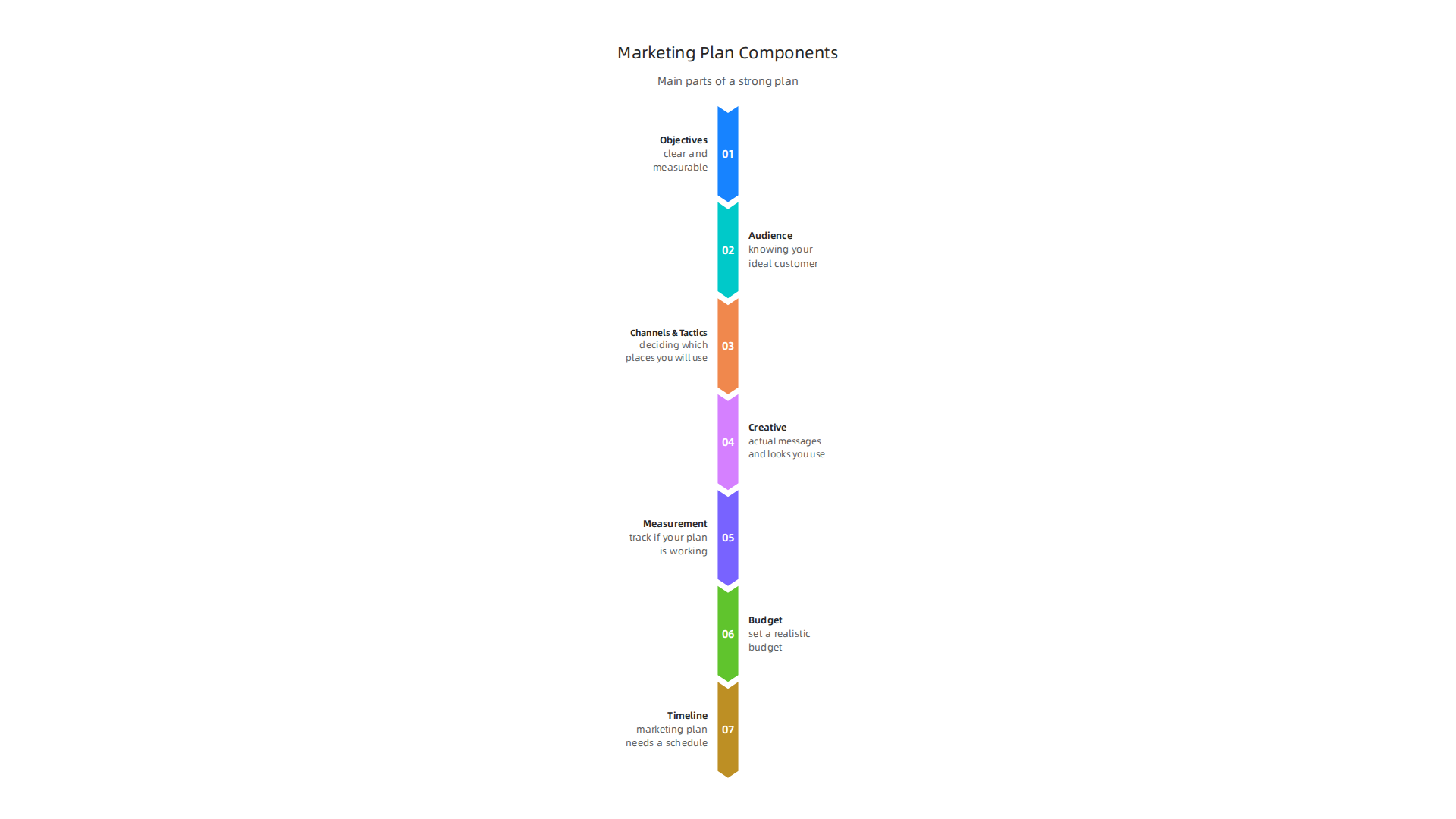
- Objectives (Goals): First, what do you want to achieve? Do you want more people to visit your website? More phone calls? More sales? These should be clear and measurable. For example, "increase website visitors by 20% in the next three months." Many templates for 2026 start with defining these key business objectives and performance indicators.
- Audience: Who are you trying to sell to? Knowing your ideal customer is super important. What do they like? What problems do they have that your business can solve? A good marketing plan template will have you fill out details about your target customer.
- Channels & Tactics: Where will you find your audience? This means deciding which places you will use to talk to them. Will it be social media like Facebook, sending emails, using Google search ads, or making helpful blog posts? Most small businesses pick 3-5 channels to focus on to start How to Create a Marketing Plan for Your Small Business (2026 …). Each channel will have specific actions, or tactics, you will use.
- Creative: This is about the actual messages and looks you use. What will your ads say? What kind of pictures or videos will you share? How will your brand look and feel? This helps your business stand out.
- Measurement: How will you track if your plan is working? You need to set up ways to see your progress, like watching how many people click your ads or sign up for your emails. A good plan always includes key performance indicators (KPIs) to measure success 10 Free Marketing Plan Templates for Small Businesses in 2026.
- Budget: How much money can you spend on your marketing efforts? It is important to set a realistic budget for each part of your plan. This helps you use your money wisely and not overspend.
- Timeline: When will all these things happen? A marketing plan needs a schedule. This could be a 90-day plan or a yearly calendar to keep everyone on track. Many templates include a clear execution calendar Free Marketing Plan Template (2026) | StartupOwl.
For small businesses, one person might be in charge of many of these parts. It is common for the owner or a marketing manager to wear many hats. But even with a small team, it is important to know who is responsible for each piece of the marketing plan. If you are handling it yourself, tools and good planning can make it easier. If you need help creating a solid marketing plan and putting it into action, you might consider getting help with your internet marketing strategy that generates leads for your small business. Having a clear marketing science approach ensures every dollar brings you closer to your goals.
Ready to see how a structured plan can help your business bring in more customers?
Grow Your Traffic on Autopilot
When you are building your marketing plan, setting clear goals is your first big step. It is not enough to just say "I want more sales." You need to be very specific. This is where "measurable goals" come in. They help you know exactly what success looks like and how to get there.
Think of your goals in two ways:
Big Picture Goals (Outcome-Level)
These are the main things you want to achieve for your business. They are about the results, like making more money or getting more customers. For example:
- Increase total sales revenue by 15% in the next six months.
- Get 50 new customers each quarter.
- Boost profit by 10% this year.
These goals are very important because they directly impact your business’s health. For small businesses, sales and revenue are often the most important things to track, with many owners saying these are key metrics for them in 2026. This focus on the money earned for every dollar spent is often called marketing science.
Daily Action Goals (Activity KPIs)
These goals are smaller steps that help you reach your big picture goals. They tell you if your marketing actions are actually working. These are often called Key Performance Indicators, or KPIs. They are like mile markers on your journey.
For example, if your big goal is to get more customers, your KPIs might be:
- More people visiting your website.
- More people filling out a contact form.
- More phone calls from potential customers.
These smaller actions lead up to your main business outcomes. If you see your website visitors going up, that is a good sign you might get more leads and then more customers.
Choosing Your 3-5 Important KPIs
For small businesses, it is best to pick a few main KPIs that are easy to track and directly link to your money goals. You do not need fancy tools to track these.
Here are some good KPIs for small businesses:
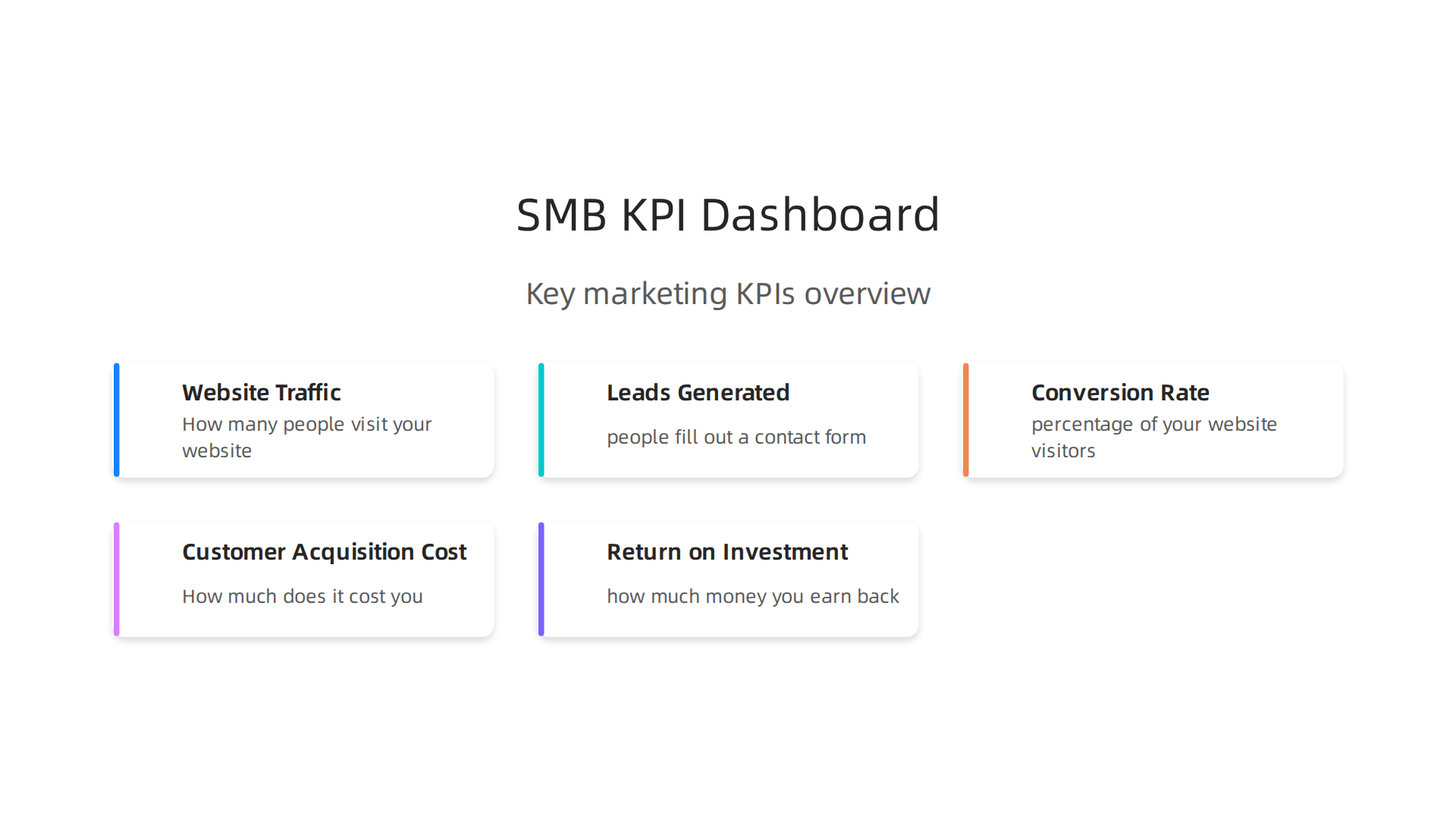
- Website Traffic: How many people visit your website? More visitors mean more chances for sales.
- Leads Generated: This could be how many people fill out a contact form, sign up for your email list, or call you. This is a very direct way to see if your marketing is bringing in interested people. Tracking lead generation KPIs helps you see if your spending is turning into real interest.
- Conversion Rate: This number tells you what percentage of your website visitors actually do what you want them to do, like make a purchase or fill out a form. A higher conversion rate means your marketing and website are working well to turn visitors into leads and customers. To improve this, you might look at small business website conversion tips.
- Customer Acquisition Cost (CAC): How much does it cost you to get one new customer? You want this number to be low.
- Return on Investment (ROI): This tells you how much money you earn back for every dollar you spend on marketing. Many businesses aim to earn $5 for every $1 spent on digital marketing in 2026, though some channels can show even higher returns, like email marketing with a very strong ROI Marketing statistics for small business in 2026. A good marketing plan will always look at how to measure marketing ROI to make sure your efforts are profitable.
By focusing on these clear, measurable goals and KPIs, you can see if your marketing plan is truly working and helping your small business grow in 2026. This clear picture helps you make smart choices, ensuring every step you take pushes your business closer to success.
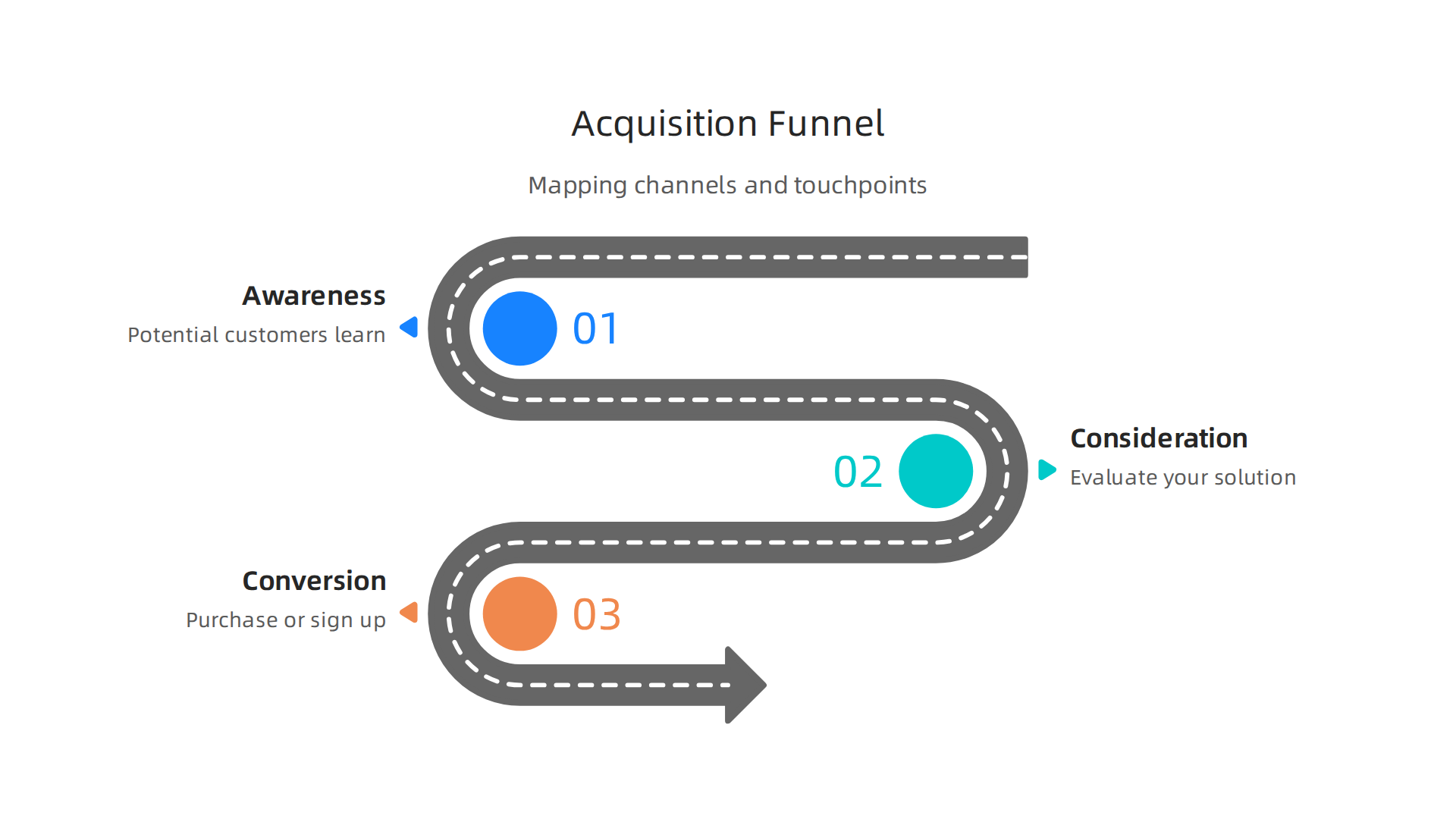
To make smart choices for your business, it is helpful to understand how customers find you. This is called the "customer acquisition funnel." It maps out the steps a person takes from first hearing about your business to becoming a paying customer. Think of it like a journey your customers go on.
This journey has three main parts:
1. Awareness
This is the very first step. Potential customers learn that your business exists. They might not be ready to buy yet, but they know about you. The goal here is to get your brand in front of as many of the right people as possible.
Common ways to build awareness include:
- Social Media: Posting helpful or fun content on platforms like Facebook, Instagram, or TikTok.
- Search Engine Optimization (SEO): Making your website show up higher in Google search results when people look for things related to your business. This is often the top channel for return on investment in 2026, according to some studies, providing long-term compounding benefits for customer acquisition at a lower average cost compared to many other channels B2B Customer Acquisition: Benchmarks & Strategies for 2026.
- Paid Ads: Running ads on Google (paid search) or social media. These can quickly get your message out.
2. Consideration
Once people know about you, they start to think about whether you can solve their problem. They might compare you to other businesses. The goal here is to show them why your business is the best choice.
Ways to help people consider your business include:
- Your Website: Having clear information, reviews, and examples of your work.
- Email Marketing: Sending newsletters with helpful tips or special offers to people who signed up. Email marketing generally has high conversion rates, with some reports showing it as the highest-performing channel, converting traffic at nearly 20% on average CRO Statistics for 2026: What the Data Says About Conversions.
- Online Reviews: Good reviews from past customers can really help.
3. Conversion
This is where a potential customer makes a purchase or takes the final step you want them to. They become a lead or a customer.
Ways to help people convert include:
- Clear Call to Actions: Buttons on your website that say "Buy Now" or "Contact Us."
- Easy Checkout Process: Making it simple to buy something or fill out a form on your website.
- Special Offers: A limited-time discount can encourage people to act.
Choosing the Right Channels for Your Small Business
When building your marketing plan, you do not have to use every channel. For small businesses, it is smart to pick just a few that work best for you. Here is what to think about:
- Cost: How much does it cost to reach potential customers on this channel? Some channels, like SEO, can be very cost-effective over time, with average customer acquisition costs as low as $48 according to some 2026 reports SMB Customer Acquisition Cost 2026: Up 222% | Stealth Agents.
- Measurability: Can you easily track if your efforts on this channel are working? (This links back to the KPIs we talked about earlier!)
- Time to Value: How long will it take to see results? Paid ads can bring quick traffic, while SEO might take months to show big changes.
- Scalability: Can this channel grow as your business grows? Can you easily put more effort or money into it if it works well?
Your business needs a marketing plan that brings in new people and turns them into happy customers. Making sure your website gets seen by the right people is a big part of that. If you’re looking to consistently improve your online presence and turn visitors into leads, consider exploring tools that manage this process for you.
Ready to see your business grow with steady website traffic? Grow Your Traffic on Autopilot.
Understanding these parts of the customer journey and picking the right channels are key steps in building a strong marketing plan. It helps you focus your efforts where they will make the most difference, ensuring your business stays on track for success in 2026. A well-designed website, for instance, is a critical touchpoint across all these stages, helping you build a lead generating website that actively converts visitors.
Budgeting and Resource Allocation for Predictable Growth
Once you know which marketing channels are right for your business, the next big step is figuring out how much money and effort to put into each one.

This is called budgeting and resource allocation. Having a smart budget is a key part of any good marketing plan, helping you grow in a steady way.
How Much to Spend on Marketing?
For small businesses, deciding on a marketing budget can feel tricky. A common rule of thumb is to set aside a part of your total sales (revenue) for marketing. How much exactly depends on how old your business is and how fast you want to grow.
- New businesses or those focused on fast growth might spend more, sometimes 10% to 20% of their gross revenue. This helps them get noticed.
- Established businesses that just want to keep their current customers and slowly grow might spend less, around 5% to 10% of their revenue How to Create a Marketing Budget for Your Small Business – Adwave. Some experts suggest multiplying your yearly revenue by 0.07 for a "maintenance" budget or 0.10 for a "growth" budget Marketing Budget for Small Business: How Much to Spend ….
Another way to think about your budget is to start with your income goals. For example, if you want to make $120,000 more this year and each customer brings in $2,000, you need 60 new customers. Then you figure out how much it costs to get each new customer through marketing How to Set a Small Business Marketing Budget in 2026.
How to Split Your Marketing Budget
Once you have a total budget, you need to decide where to spend it. This usually means choosing between different types of marketing:
- Paid Acquisition (like ads): This means paying for ads on Google or social media. They can bring quick results and traffic to your website. If you need sales right away, paid ads can be a good choice. For many small service businesses, paid search and social ads might take up 40-50% of the marketing budget Marketing Budget for Small Business: Real Numbers [2026].
- Content and SEO Investment: This includes creating helpful blog posts, videos, or improving your website so it shows up higher in search results. This takes more time to show big results, but it can bring in customers at a lower cost over the long run. A good plan might put about 60% of the budget into organic channels like SEO, content, email, and social media, and 40% into paid ads What should a small business marketing budget look like?.
The trade-off is often speed versus long-term value. Paid ads offer faster results, but they stop working as soon as you stop paying. SEO and content build up over time, bringing in visitors consistently without ongoing ad spend, creating a strong foundation for your marketing plan. For predictable growth, it’s wise to invest in both, finding a balance that works for your specific business goals.
Practical Tips for Budgeting
- Start Small and Test: You do not have to spend a lot of money all at once. Start with a smaller "test budget" for new channels. See what works best before investing more.
- Track Everything: Always keep an eye on your marketing efforts. Which channels are bringing in the most customers? Which are costing too much? This links back to tracking important numbers like "cost per lead" and "customer acquisition cost," which we touched on before.
- Be Flexible: Your marketing plan is not set in stone. If something is not working, be ready to change your budget and try something else. The world of marketing changes quickly, so being able to adapt is key.
Building a smart marketing plan means understanding where your money goes and what you get back from it. This careful approach helps you create an internet marketing strategy that generates leads for your small business and keeps it growing.
Now that you have your marketing budget and know how to divide it, the next important step is to make sure your money is working as hard as possible. This is where the "marketing science" part comes in: testing, measuring, and improving your efforts over time. A good marketing plan isn’t a one-time thing, it’s a process of always getting better.
How to Test and Improve Your Marketing
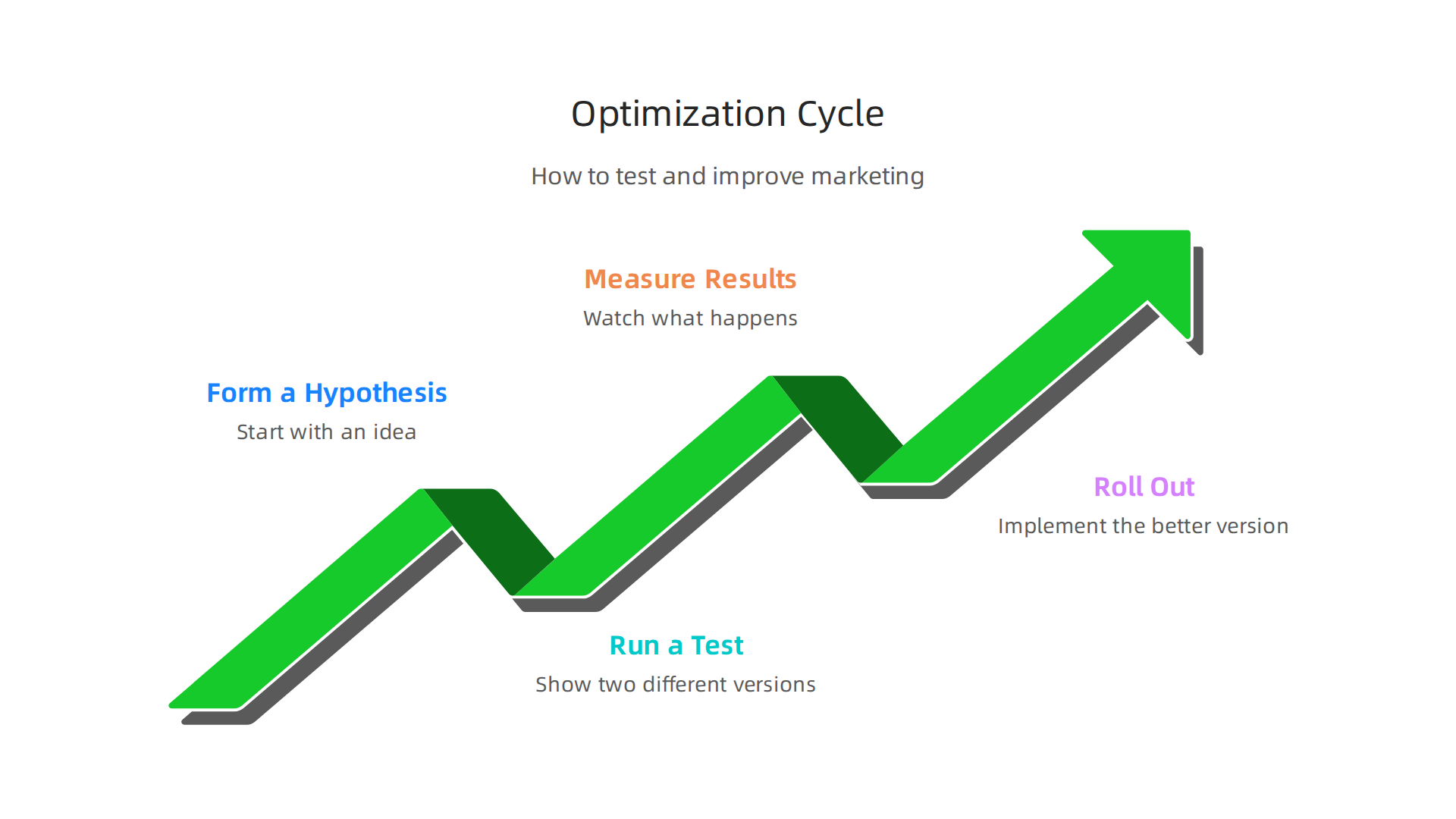
Think of your marketing plan like a science project. You have ideas (hypotheses), you run experiments (tests), you look at the results (measurement), and then you make changes based on what you learn (optimization). This helps you figure out what truly makes your customers act.
- Form a Hypothesis: Start with an idea about what you think will work better. For example, "Changing the button color to red will make more people click to buy." Or, "A shorter ad headline will get more attention." You need to guess what will happen and why, before you test it A/B Testing for Small Business: What to Test and How ….
- Run a Test: The most common way to test is called A/B testing. This means you show two different versions of something to different groups of people at the same time. Half your website visitors might see the red button (version A), and the other half see the green button (version B). This lets you compare them fairly A/B Testing: The Beginner’s Guide (2026) – Inspectlet. For example, you could test different headlines on your website, or two different pictures in a social media ad.
- Measure the Results: While your test is running, you need to watch what happens. Which version made more people click, sign up, or call you? For small businesses, it’s often best to pick one main thing to measure, like form submissions or phone calls A/B Testing for Small Business: Where to Start | Verlua. This clear goal helps you see if your changes worked.
- Roll Out What Works (and Learn from What Doesn’t): If version A clearly performs better, then you should start using version A everywhere. If neither version made a big difference, or if version B won, you now have new information. Every test, whether it "wins" or "loses," teaches you something valuable about your customers and your marketing efforts. This constant cycle of learning and improving is key to any strong marketing plan.
Simple Ways to Measure Your Marketing
You do not need fancy tools to start measuring. Here are some simple setups for small businesses:
- Website Analytics: Tools like Google Analytics can show you how many people visit your website, what pages they look at, and where they come from. For a visual look at how people use your site, you can even use free tools like Microsoft Clarity to watch recordings of user sessions and see where they click or get stuck The A/B Testing Playbook for Small Service Business Websites: How to Run Experiments That Actually Improve Conversions.
- Track Your Goals: Make sure you know when someone completes a desired action, like filling out a contact form, calling your business, or buying something. Most website platforms or ad tools let you set up "conversion tracking" for these important actions. Creating a clear plan for what you want to measure helps align your marketing with business objectives How to Build a Marketing Measurement Plan (Template …).
- Simple Spreadsheets: For smaller businesses, a basic spreadsheet can track your weekly leads, sales from different marketing sources, and how much you spent. This helps you understand your "four Ps of marketing" in action: how your Product, Price, Place, and Promotion are working together.
By keeping a close eye on your numbers, you can continuously fine-tune your marketing activities. This builds a strong, adaptable marketing strategy that ensures you’re always making the best choices for your business’s growth. If you are struggling with this, finding the right help can make a big difference for your business.
Remember, the goal is to make sure your website actively brings in new customers. If you need help turning your website visitors into leads, explore how to get more out of your existing website traffic.
Want to see how your website can perform better and bring in more leads? Grow Your Traffic on Autopilot.
Now, let’s talk about how to actually make these marketing ideas happen, especially when you do not have a lot of money or people to help. This is where you think about doing things yourself, hiring someone else, or using smart tools.
Build, Buy, or Hybrid: Picking Your Path
When putting your marketing plan into action, you have a few choices:

- Build (Do It Yourself): This means you or your team handle all the marketing tasks. This includes things like writing social media posts, sending emails, or updating your website. Doing it yourself can save money if you have the right skills and enough time. But it can also take a lot of effort and might not always be the fastest way to grow.
- Buy (Outsource): This means you hire outside help. This could be a marketing agency or a freelance expert. They specialize in marketing, so they often get things done faster and better. However, hiring help costs money. You would want to pick a good partner, like a trusted digital marketing agency, and make sure you understand what services they will provide. When you outsource, it is important to check their work and make sure it fits your overall marketing plan.
- Hybrid (Mix and Match): This is a mix of doing some tasks yourself and hiring others. For example, you might handle social media comments but hire someone to manage your SEO or run your ad campaigns. This can be a smart way to save money while still getting expert help where you need it most.
Using Automation to Do More with Less
Marketing automation is super important for small businesses in 2026. It means using special software to do repetitive tasks for you. Things like sending welcome emails, posting on social media, or even replying to customer messages can be done automatically AI Marketing Automation for Small Businesses (2026 Guide).
Tools like HubSpot, ActiveCampaign, or Brevo offer free or low-cost ways to start automating things like email marketing 10. Omnisend. Social media tools can schedule your posts so you do not have to remember to do it every day. Automating parts of your marketing plan frees up your time so you can focus on other important parts of your business.
Before picking a tool, think about your main marketing goal, how much time you have, and your budget Best Marketing Tools for Small Business in 2026: The Complete AI …. Also, list all your current marketing tasks to see what takes the most time and could be automated Marketing Automation for Small Business: The 2026 Complete Guide.
Making the Right Choice for Your Business
Choosing the best approach depends on your business’s unique situation. Ask yourself:
- How much money do you have for your marketing efforts?
- How much time can you spend yourself each week?
- What are your main marketing goals, such as getting more leads or sales?
- Do you need specialized skills, like for search engine optimization (SEO) or web design?
For example, if you want to make sure your website is always bringing in new customers, you might look into services that focus on lead generation and conversion. You could also consider internet marketing tools that save time and cut costs for small businesses. When choosing outside help or automation tools, always think about what channels you want to automate, like email or social media, and if the tool can grow with your business Best Marketing Automation Software (2026): 11 Tools …. Taking advantage of free trials for these tools is also a good idea before you commit Best Marketing Tools for Small Business in 2026 – Salesforce. This way, you can test if they fit your specific marketing plan.
Summary
This article explains why small and mid-sized businesses need a scientific, repeatable marketing plan instead of one-off tactics that waste time and money. It walks you through the core components of a reliable plan—clear objectives, target audience, channels and creative, measurement, budget and timeline—and shows how to pick 3–5 KPIs that tie marketing activity to real business results. You’ll learn how to map the customer acquisition funnel (awareness, consideration, conversion), choose channels based on cost and time-to-value, and balance paid ads with long-term SEO and content. The piece also covers practical budgeting rules of thumb, simple testing methods like A/B experiments, and options for implementation: do-it-yourself, outsource, or hybrid. Finally, it emphasizes automation and continuous measurement so you can scale predictable growth and stop guessing which activities actually drive customers.