
Boost SMB Lead Generation with Online Learning Platforms for Web Design
Small and mid-sized businesses often have websites that look good but fail to generate leads or require costly fixes; this article explains why online learning…


Why SMBs Should Consider Online Learning Platforms for Web Design
For many small and mid-sized businesses (SMBs) in 2026, a website is a must-have. But here’s the thing: having a website that just looks pretty isn’t enough anymore. A lot of these sites might grab your eye, but they don’t actually bring in new customers or help your business grow. Even worse, some need constant fixing and updates, which takes a lot of time and money. It’s like having a fancy car that stays in the garage because it’s always breaking down.
This is a big problem for businesses trying to get ahead. They need websites that work hard for them, turning visitors into real leads and sales.

But hiring expensive web design agencies for every little change or update can be costly and confusing. The good news is that there’s a smart way around this: online learning platforms. These platforms offer a great chance for SMBs to get better at web design and digital marketing without breaking the bank.
Using online learning platforms can help your business in a few key ways. First, they can help fill any gaps in your team’s skills. Imagine your employees learning how to make a website that truly brings in new customers. Platforms with web development certificate programs or even free web design courses can train your staff on the latest tools and tricks. This means you won’t always have to rely on outside help, saving you money in the long run. Actually, many businesses are using online learning platforms to train their employees effectively today, as highlighted in "17 best online learning platforms for businesses in 2026" LearnWorlds.
Platforms like Coursera, Skillshare, and Udemy are great examples of places where you can find excellent web design courses. These types of websites allow your team to learn new skills at their own pace, fitting around their busy work schedules. Whether you’re looking for Coursera web design courses or exploring other websites like Coursera for specialized training, the options are wide. This helps your business stay up-to-date and continuously improve your online presence. By building internal knowledge, you can make sure your website isn’t just a pretty picture, but a powerful tool for getting leads.
Ready to see how a professional online presence can transform your business?
Grow Your Traffic on Autopilot
What ‘web design’ training typically covers on major platforms
So, now that we know online learning platforms can help, what exactly do they teach about web design? When you look into web design courses on popular sites like Coursera or even other websites like Coursera, you’ll find a wide range of topics. These courses are designed to give your team the skills needed to build a website that not only looks good but also works well for your business.
Here are the main things these trainings typically cover:
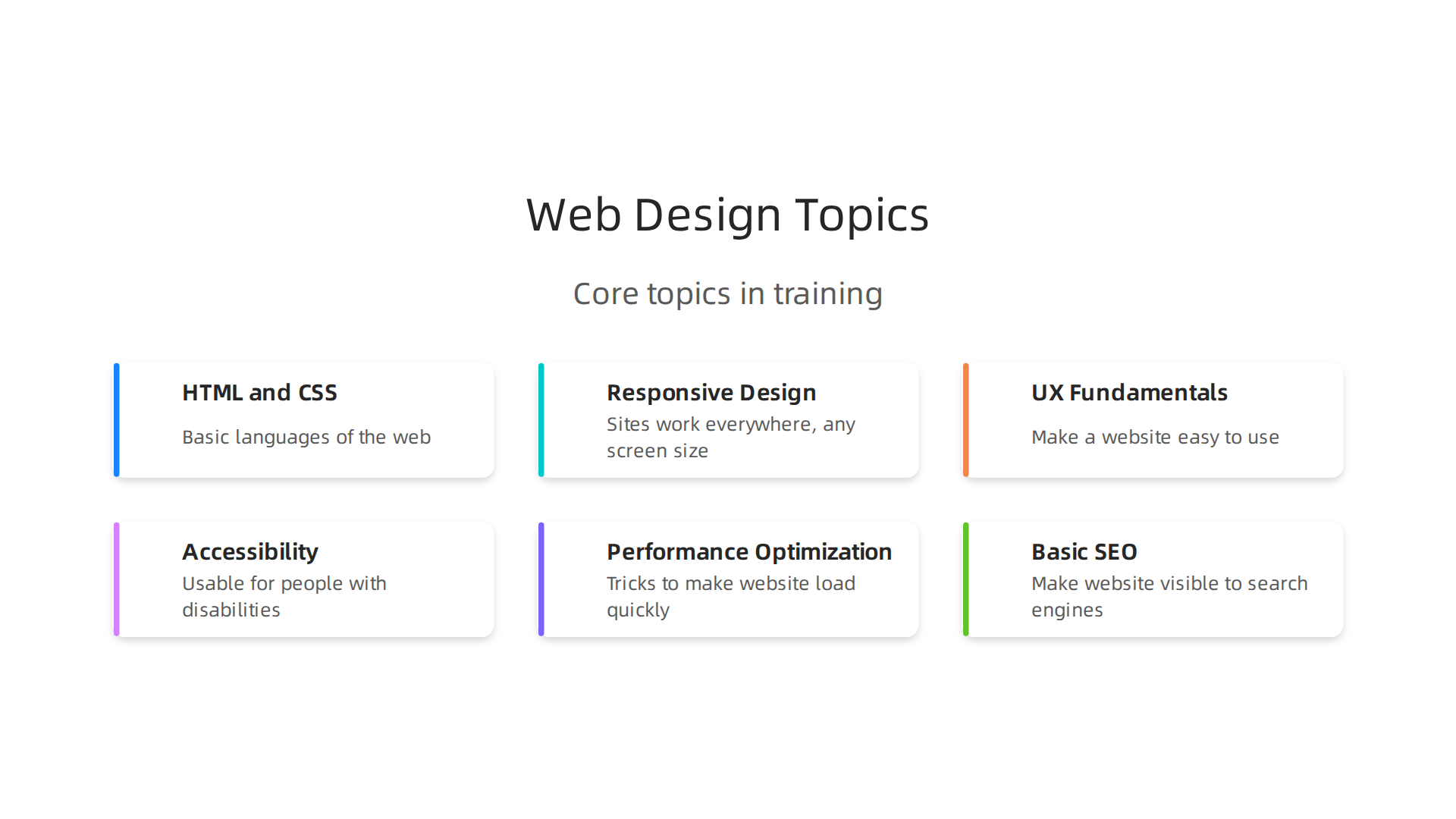
- The Building Blocks: HTML and CSS
These are the basic languages of the web. HTML is like the skeleton of a website, giving it structure, and CSS is like the clothes, making it look pretty with colors, fonts, and layouts. Many free web design courses start here, as they are essential for anyone wanting to build a website from scratch. - Making Sites Work Everywhere: Responsive Design
People look at websites on many different devices, like phones, tablets, and big computers. Responsive design teaches how to make sure your website looks great and works perfectly no matter the screen size. This means your business’s site will always give visitors a good experience. - Happy Users: UX Fundamentals
UX stands for User Experience. This part of the training teaches how to make a website easy and pleasant for people to use. It’s about understanding what visitors want and designing the site to help them find it easily. A good user experience keeps people on your site longer and helps them become customers. You can learn more about how designing UX for trust transforms website visitors into customers. - Websites for Everyone: Accessibility
This topic focuses on making websites usable for people with different abilities. For example, it covers how to make sure someone using a screen reader can understand your site, or how to design for people with color blindness. It’s about being fair and making sure everyone can access your information. - Fast and Smooth: Performance Optimization
Nobody likes a slow website. This training teaches tricks to make your website load quickly. A faster site keeps visitors from getting frustrated and leaving, and it also helps your site rank better on Google. - Getting Found: Basic SEO
SEO stands for Search Engine Optimization. These courses introduce ways to make your website more visible to search engines like Google. This includes using the right words and setting up your site so more potential customers can find your business online. Learning about SEO web design generates consistent leads for SMBs.
Many online platforms offer different kinds of learning experiences. You can find simple lecture-based courses where you watch videos and read materials. There are also project-based courses where you learn by building things, which is super helpful for real-world skills. Some platforms even offer bootcamp-style courses that are more intensive, or guided specializations which can lead to web development certificate programs and often end with a bigger "capstone" project to show what you’ve learned. These specialized programs, like those offered by universities on Coursera, can really boost your team’s expertise.
Platforms like Coursera: Survey of Alternatives and How They Differ
While platforms like Coursera are great for learning web design, they are just one type of online learning option out there. Actually, there are many different websites like Coursera that offer different ways to learn, each with its own benefits. Choosing the right one depends on what your team needs.

Let’s look at the main kinds of platforms and how they are different:
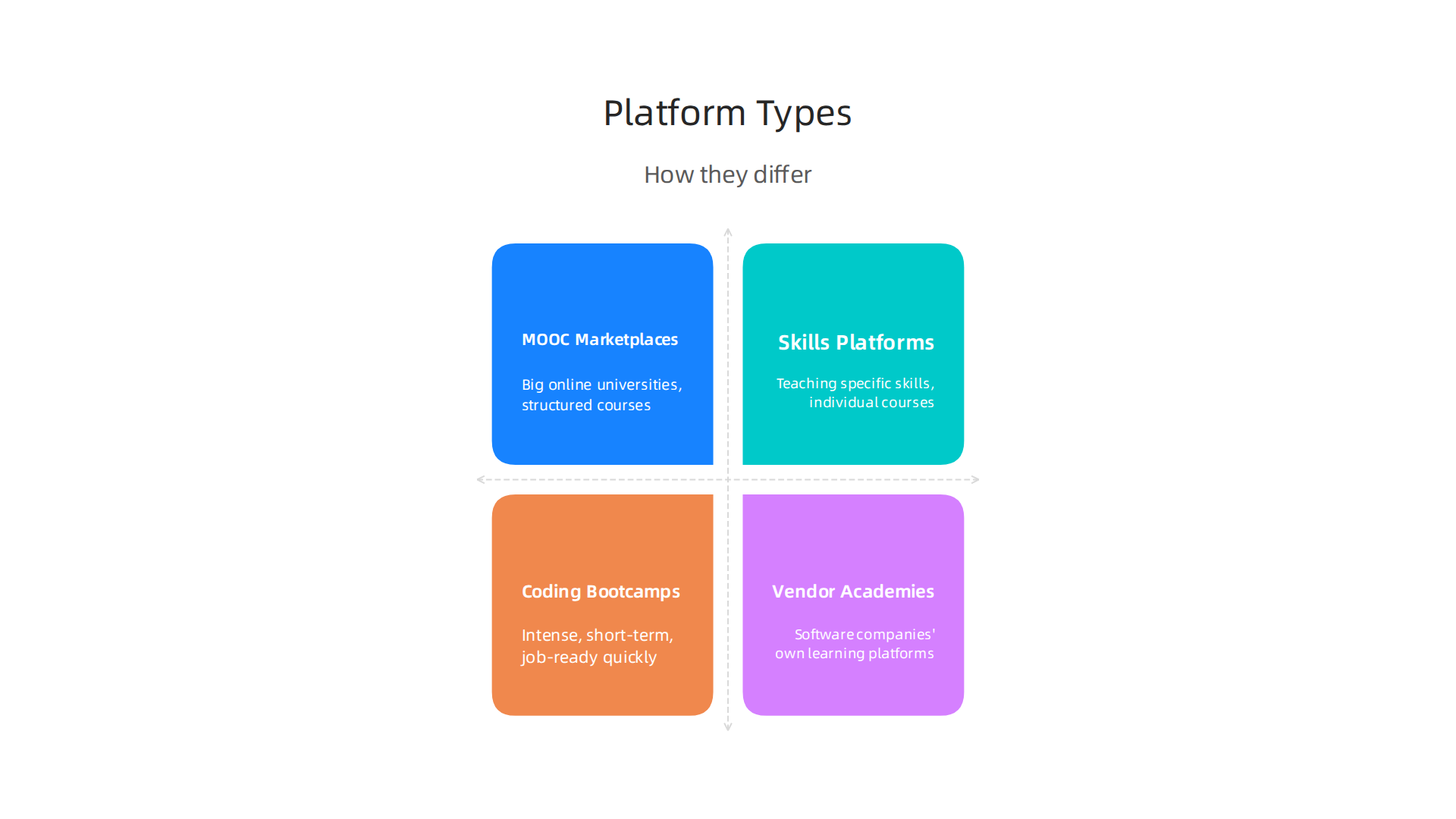
Different Types of Online Learning Platforms
- MOOC-Style Marketplaces: Think of these as big online universities. Coursera and edX are good examples. They often partner with real universities and big companies to offer structured web design courses and even full web development certificate programs. You can find everything from free web design courses to paid specializations. These platforms are known for their academic quality and recognized credentials.
- Skills-Based Platforms: Websites like Udemy, Codecademy, and Treehouse focus more on teaching specific skills. They might not have university partnerships as often, but they offer tons of individual courses. Udemy, for example, has thousands of web design courses, some of which are free. These platforms are often more flexible, letting you pick and choose exactly what you want to learn, from front-end basics to advanced topics.
- Coding Bootcamps: These are intense, short-term programs designed to get you job-ready quickly. Bootcamps, whether online or in-person, are very hands-on and focus on practical projects. They are usually more expensive but can be a fast track to a new career in web development. FreeCodeCamp is a popular free option that gives you a bootcamp-like experience with free certifications and a strong community, as noted by experts comparing Coursera alternatives.
- Vendor-Led Academies: Some software companies create their own learning platforms. For example, Webflow University offers courses specifically on how to use their Webflow design tool. These are great if you know you want to specialize in a particular platform or technology.
How Features Differ Across Platforms
When looking for the best online web design training for your team, it’s helpful to compare features beyond just the courses themselves:
- Credentialing and Certifications: Many platforms offer certificates when you finish a course or program. For MOOCs, these might be university-backed and carry more weight with employers. Other platforms offer their own certificates. Think about whether your team needs a highly recognized certificate for their career or just wants to gain new skills.
- Project Review: Some platforms include projects that are reviewed by instructors or mentors. This is a huge help because you get direct feedback on your work. Udacity, for instance, is known for its mentor-reviewed projects, which can really boost learning. Building a strong portfolio is key for web designers, and getting good feedback on projects helps a lot. You might even want to learn how to build a portfolio UI/UX designer that wins clients in 2026.
- Community Support: Learning can be easier when you have others to talk to. Many platforms have online forums or communities where students can ask questions, share ideas, and help each other. This is especially useful if your team is learning on their own.
- Mentor Access: Some programs offer one-on-one time with a mentor. This personal guidance can be invaluable for tackling tough problems or getting career advice. This kind of support is a big plus when comparing Coursera alternatives in 2026.
- Enterprise Plans: If you’re training a whole team, look for platforms that offer business or enterprise plans. These often come with special features for tracking progress, managing multiple learners, and dedicated support.
The best choice for your business will depend on your goals, budget, and how your team learns best. Exploring these different web design courses and platform types will help you find the perfect fit.
When you pick an online learning platform for your team, knowing what makes a good course is super important. It’s not just about finding any [web design courses] or [web development certificate programs]; it’s about finding ones that truly help your team learn and grow. Let’s look at how to tell if a course is good and if your team will really learn from it.
Signs of a Good Quality Course
Look for these clues to know if a course is worth your time and money:
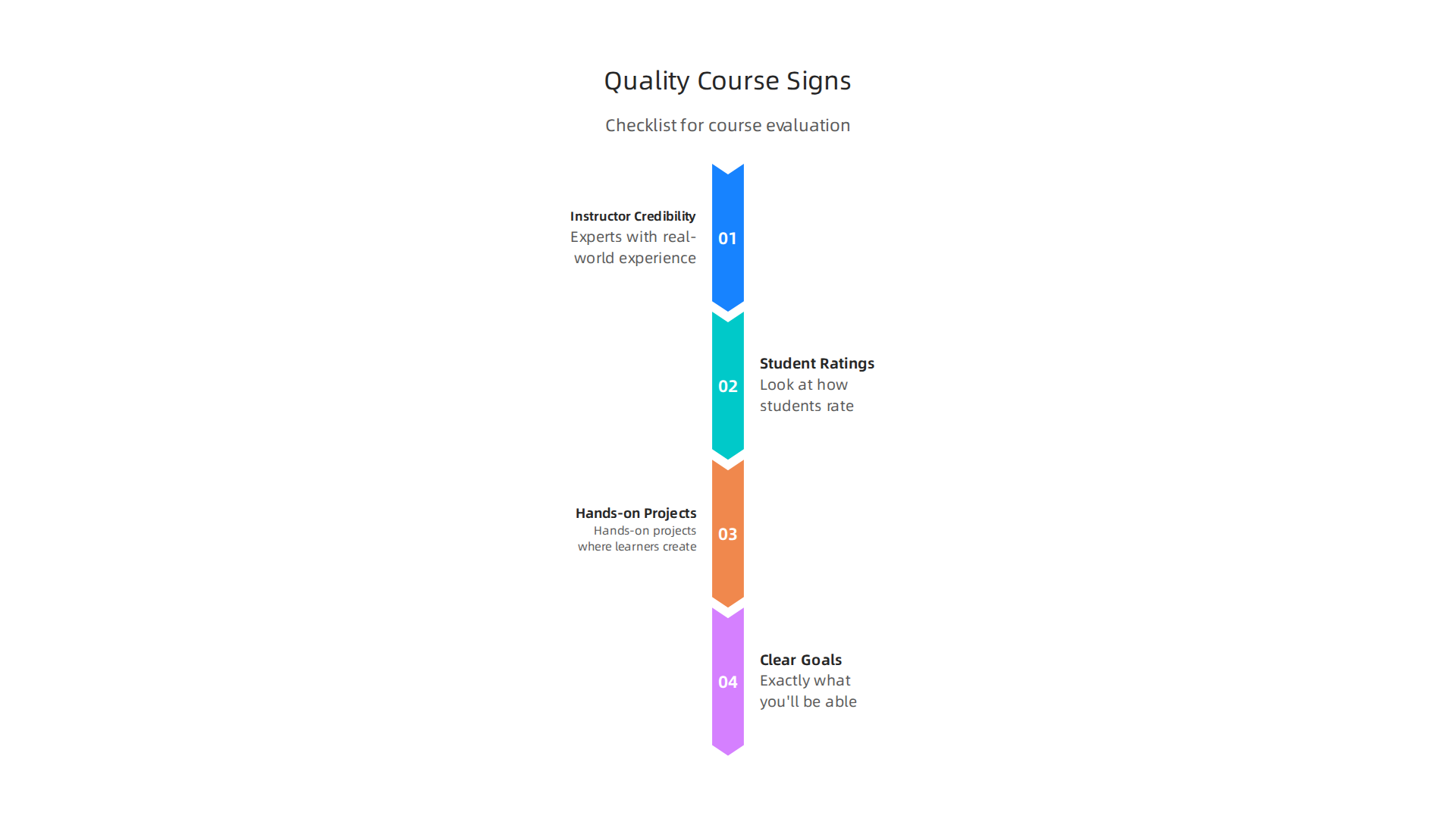
- Who is Teaching? Check out the people who teach the course. Are they experts in web design? Do they have real-world experience? Courses taught by experienced people often share better, more practical advice.
- What Do Other Students Say? Just like buying a product, reviews are key. Look at how other students rate the course. Do they say good things about the lessons, the teachers, and how much they learned? Platforms like Coursera often show student reviews and ratings, which can give you a good idea of quality. For example, the "No-Code Websites: Learn with Projects Specialization" on Coursera often gets high marks from learners No-Code Websites: Learn with Projects Specialization – Coursera. You can compare features, ratings, and user reviews on websites like Coursera to make a smart choice.
- Learning by Doing (Project-Based Learning): For web design, just watching videos isn’t enough. Your team needs to build things. Good courses have hands-on projects where learners create websites or parts of them. This is called project-based learning, and it helps people understand and remember what they learn much better. Studies show that this way of learning really helps students get better results A study of the impact of project-based learning on student …. Many excellent [web design courses] today include real projects, like those on Sessions College Web Design I Course | Sessions College or Udemy Web Development: Project Based Learning. Some courses even offer instructor or peer feedback on these projects, which is a big plus. For example, some Coursera courses use peer-reviewed assignments to help students learn how to create a website effectively How To Create a Website in a Weekend! (Project-Centered …).
- Clear Goals and Outcomes: A good course will tell you exactly what you’ll be able to do by the end. Will your team be able to design a landing page? Build a full multi-page website? For example, some courses promise you’ll have a completed landing page for your portfolio Eduqqation – Apps on Google Play. These clear goals help you measure if the course is effective.
Evidence That the Learning Works
It’s not just about finishing a course; it’s about what your team gains from it:
- Real Skill Gains: Does the course actually teach your team new, useful skills? For [web design courses], this means learning things like how to use coding languages (HTML, CSS), design tools, and how to make a website look good and work well. Look for courses that clearly state they help learners develop job-relevant skills with hands-on projects, like certain CSS courses on Coursera CSS Projects: Design & Build Websites.
- Portfolio-Ready Projects: For web designers, showing off your work is everything. The best [web design courses] will help your team create projects they can put in a portfolio. These projects prove their skills to future clients or employers. Many online learning platforms, including [websites like Coursera], offer real-world projects that lead to a job-ready portfolio Incolearn. If you want to learn more about this, check out how to make a portfolio website design that generates leads for small businesses.
- Employers Know and Value It: If a course or certificate is recognized by companies or institutions, it can open doors for your team. This is often true for [web development certificate programs] from well-known platforms or universities, which means the credentials carry more weight with employers Coursera-Like Websites 2026: Top Alternatives Ranked.
Choosing the right online learning path means looking beyond just the course title. By focusing on these signs of quality and clear results, you can pick the best options for your team’s growth, whether they are looking for [free web design courses] or full certificate programs.
When you run a small or mid-sized business, how much money you spend on learning for your team is a big deal. Picking the right online course isn’t just about what they learn, but also about getting good value.

Let’s look at the different ways online courses charge money and how to pick the best ones without breaking the bank.
How Online Courses Charge Money
Online learning platforms use different ways to charge for their courses. Knowing these can help you choose smarter.
- Subscription Plans: Many big learning platforms, often called [websites like Coursera], let you pay a monthly or yearly fee. With this fee, you get access to a large library of courses. It’s like Netflix for learning, where you can watch as many shows (courses) as you want. This can be great if your team plans to take many [web design courses] or even full [web development certificate programs]. Subscriptions often cost around $20 to $299 per month in 2026, giving ongoing access to content and programs How to Price Online Courses for Maximum Revenue in 2026: Fro.
- Pay Per Course: With this plan, you pay a one-time fee for a single course. Once you buy it, you usually own it forever, or for a very long time. This is good if your team only needs to learn one specific skill. The typical cost for a one-time course payment is about $99 in 2026, though prices can range from $97 to $500 for self-paced courses 71 Online Course Statistics You Need to Know (2026).
- Bootcamps and Live Programs: These are often more intense and usually cost more. They might include live classes, direct help from a teacher, and group projects. They’re like going to a fast-track school online.
- Team or Enterprise Pricing: Some platforms offer special prices for businesses that want to enroll many employees. This can be a good deal for small and mid-sized businesses (SMBs) because the cost per person can go down.
How to Figure Out the Real Cost
The sticker price isn’t the only thing to think about. Here’s how to look at the full cost:
- Course Fees: This is the most direct cost. It’s what you pay for the subscription or the single course. Some companies also offer [free web design courses] which can be a good starting point, though they might not offer as much depth or support.
- Time Investment: How much time will your team spend learning? Time spent learning is time they’re not working on other tasks. You need to think about how this affects your business.
- Extra Help Fees: Does the course offer extra help, like one-on-one calls with an instructor or help with projects? Sometimes these cost extra, but they can be very helpful for learning complex skills. Some courses might even offer a community layer with ongoing support, which can be an extra cost but adds value Pricing Online Courses in 2026: Data From 200+ Course ….
- Opportunity Cost: This is a fancy way of saying, "What else could your team be doing?" If they’re spending 10 hours a week on a [coursera web design courses], what important work are they missing out on?
Choosing the right online learning option for your business means looking at both the upfront cost and the time your team will spend. It’s about finding the best way to get new skills that will help your business grow. For example, if your team needs to improve your company’s online presence, understanding different course options is key. To learn more about getting your website to work harder for you, check out how to build a lead generating website with this web development tutorial.
After choosing a learning path for your team, the goal is often to see real business growth.
Ready to take your business to the next level?
Grow Your Traffic on Autopilot
After choosing a learning path for your team, the goal is often to see real business growth. Making your website work harder to bring in new customers, also known as lead generation, is a key part of that growth. So, how can small and mid-sized businesses (SMBs) really use online courses to fix their website’s lead-generation problems? It’s all about smart planning and putting what you learn into action.
How SMBs can use courses to fix website lead-generation problems
Training your team with online courses can turn your website from a simple online brochure into a machine that brings in new leads. Here’s how to make it happen.
Practical Workflows for Learning and Growth
Learning isn’t just about watching videos; it’s about doing. For SMBs, connecting course knowledge directly to business tasks is super important.
- Train One Employee for Impact: Instead of everyone taking general classes, pick one key employee to focus on specific training, like [web design courses] or even full [web development certificate programs]. This person becomes your in-house expert. They can then lead efforts to improve your website. This approach lets one person dive deep, bringing back specialized knowledge to your company. Many platforms, including [websites like Coursera], offer project-based learning which is great for this, as students often complete real-world projects during the course of their learning experience SEVEN YEARS OF ONLINE PROJECT-BASED LEARNING ….
- Pair Training with a Project Backlog: When your employee takes a course, ask them to apply what they learn to real website tasks. For example, if they’re taking [coursera web design courses], their homework could be fixing a slow page on your company’s site or designing a new landing page. This turns learning into immediate action for your business. Project-based learning is very effective for website development training, helping students improve their learning outcomes and thinking skills VIVABIO Efektivitas Project Based Learning Secara Online ….
- Run Sprints Aligned to Marketing Goals: Think of short bursts of focused work, like "sprints." Your trained employee can take their course knowledge and, over a week or two, focus on one marketing goal. Maybe it’s improving how many people sign up for your newsletter or making a specific product page convert better. This direct link between learning and marketing goals helps you see clear results. To learn more about creating a marketing plan that brings in leads, check out how to create an internet marketing strategy that generates leads for your small business.
Combining Learning with Tools for Better Results
What you learn in courses is powerful, but it’s even better when you use it with the right tools.
- Apply Course Projects to Live Site A/B Tests: Many online [web design courses] teach about making changes to a website to see what works best. Your employee can take a lesson learned, like a new button color or page layout, and test it on your live website. This is called A/B testing. It helps you see what truly makes visitors take action, like filling out a form or buying something. Platforms like Coursera offer specializations that focus on hands-on projects, which means learners can immediately use what they’ve built No-Code Websites: Learn with Projects Specialization – Coursera.
- Use Learnings to Improve Conversion Paths and Content: Courses often share secrets for making your website easier to use and more convincing. Your trained employee can use these ideas to improve the "path" a customer takes on your site, from first visiting to becoming a lead. They can also make your website content more engaging and helpful, which directly boosts how many leads your site gets. If you’re looking for [free web design courses] or paid options, make sure they include practical projects for best results 15 Best Web Design Courses: Free and Paid Options | Brand Vision. For more tips on getting your website to convert visitors, read about small business website conversion 8 ways to turn visitors into leads.
By taking a structured approach to online learning, SMBs can turn educational investments into real, measurable improvements for their website’s lead-generation efforts.

This means more customers and stronger business growth in 2026. For businesses looking for continuous support in web design, development, and marketing to generate consistent leads, you might want to Get started with Weblish.
By taking a structured approach to online learning, SMBs can turn educational investments into real, measurable improvements for their website’s lead-generation efforts. This means more customers and stronger business growth in 2026. For businesses looking for continuous support in web design, development, and marketing to generate consistent leads, you might want to Get started with Weblish.
Choosing the right platform and next steps for SMBs
Now that you know how online courses can help your business, the next big step is picking the right learning platform and making sure your new skills actually get used. It’s not just about signing up for any class; it’s about making smart choices for your team and your website’s success.
How to pick the best online learning platform
Choosing a course or platform needs a bit of thought. Here’s a simple checklist for small and mid-sized businesses (SMBs) in 2026:
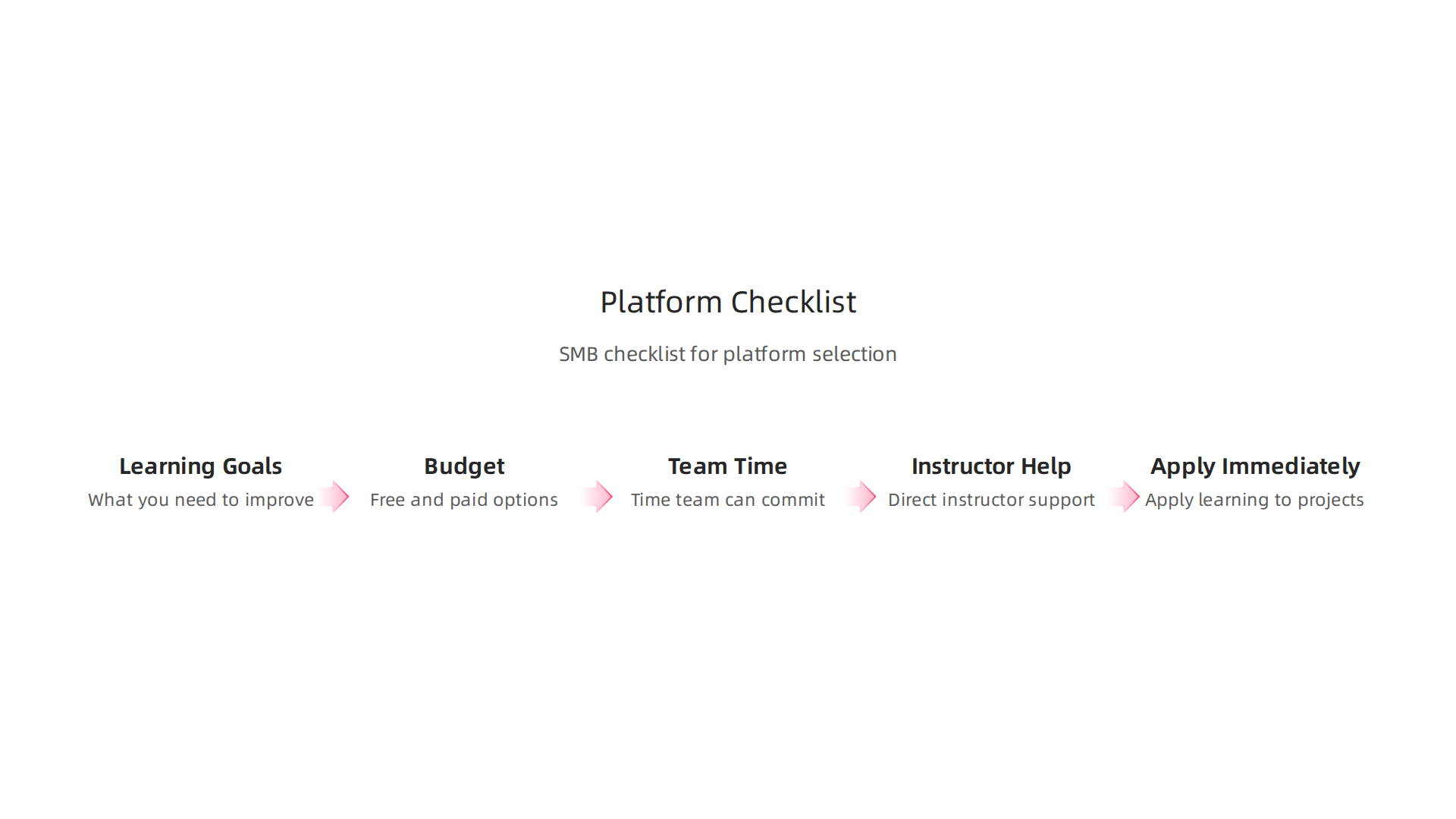
- What are your team’s learning goals? First, think about what you really need to improve. Do you need basic [web design courses] to make your site look better? Or do you need more in-depth [web development certificate programs] to build new features? Maybe you just need to learn how to make a landing page convert better. Knowing your goal helps you find the right fit. For example, some platforms offer specific training like Build Professional Websites Through Practical Projects | Coursera for practical skills.
- What’s your budget like? Online courses come at different prices. You can find [free web design courses] or paid options. Some courses cost a one-time fee, while others are part of a monthly subscription to access many classes. In 2026, the median one-time payment for an online course is around $99, but subscriptions can be around $49.99 per month for ongoing access to content 71 Online Course Statistics You Need to Know (2026). Consider what works best for your company’s wallet.
- How much time does your team have? Some courses are quick, while others take many weeks or months. Think about how much time your chosen employee can realistically spend learning each week without falling behind on their other work.
- Do you need help from a teacher? Some courses offer direct help from instructors or a community where you can ask questions. This can be super helpful if your team needs extra guidance. Other platforms, like some [websites like Coursera], focus on hands-on projects, which means you learn by doing. Many top learning platforms for businesses offer structured learning and analytics to track progress 17 best online learning platforms for businesses in 2026.
- Can you use what you learn right away? Look for courses that let you apply what you learn to real-world projects. This is key for fixing your website’s lead-generation problems. For example, a web design certificate (self-paced) often involves building projects that can be immediately used or tested on your company’s site.
Smart steps to take after choosing a course
Once you’ve picked a great online course, here’s how to make sure it truly helps your business grow:
- Pilot one course with clear goals: Don’t try to train everyone on everything at once. Pick one important course, like one of the many [coursera web design courses] available, and have one team member go through it. Before they start, decide exactly what you want to achieve. For example, "After this course, our website’s sign-up form will get 10% more leads."
- Give time for real work: Learning is only half the battle. Your employee needs dedicated time to put their new skills into action on your actual website. This means making changes, testing new ideas, and improving your site based on what they learned. This ensures the training isn’t just theory but leads to tangible improvements.
- Combine training with testing and changes: Encourage your trained employee to use their new skills to run A/B tests on your website. This means trying out different versions of a page or button to see which one works better for getting leads. This constant testing, also called Conversion Rate Optimization (CRO), helps you keep improving your website little by little. To learn more about how different web designs impact your business, check out how to choose the best website design programs for SMB lead growth.
By following these steps, your SMB can make the most of online learning in 2026. This turns your investment in education into a direct way to get more customers and boost your business growth.
Ready to see how an optimized website can automatically bring in more business?
Grow Your Traffic on Autopilot
Summary
Small and mid-sized businesses often have websites that look good but fail to generate leads or require costly fixes; this article explains why online learning platforms are a practical, cost-effective way to build in-house web design and marketing skills. It describes key course topics—HTML/CSS, responsive design, UX, accessibility, performance, and basic SEO—then compares platform types (MOOCs, skills marketplaces, bootcamps, vendor academies) and features like certificates, project reviews, community support, and enterprise plans. The piece outlines how to pick quality courses (instructor experience, reviews, project-based work, clear outcomes), explains pricing models and hidden costs, and gives a step-by-step approach for SMBs to convert training into business impact: pilot one employee, apply projects to a backlog, run A/B tests, and measure improvements in leads and conversions. Ultimately, readers will learn how to choose the right platform and turn online courses into measurable website growth without overspending on external agencies.