
What a UI/UX Design Course Teaches for Real Business Growth
This article explains what a UI/UX design course teaches and why those skills matter for both individuals and small businesses. It defines UI (visual interface…


Having a great website or app is super important for small businesses and professionals today in 2026. Think about it: when someone visits your website, do they find what they need easily? Does it look good and feel nice to use? This is where UI/UX design comes in, and understanding what a UI/UX design course teaches can make a huge difference.
UI stands for User Interface. This is everything you see and touch on a website or app, like the buttons, colors, pictures, and text. UX stands for User Experience. This is about how someone feels when using your product. Is it easy to find things? Is it fun to click around? Both are key to making a digital product successful.
So, what is a UI UX design course? Simply put, a UI/UX course teaches you how to make digital products that are both good-looking and easy to use. These courses often cover how to tell UI and UX apart, and how to create things like user profiles, which help you understand who your customers are and what they need from your website or app. They also teach you how to plan out how users will move through your site, from start to finish. This includes thinking about what information goes where and how people will find it BCA UIUX Syllabus 2026-2027.
Many people think that a design UI UX course is only for those who want to become full-time designers at big tech companies. But that’s not true! Small business owners, marketing managers, and even sales professionals can learn a lot from a good UI/UX course. Knowing these skills helps you make better decisions for your own website or digital tools, which can lead to more customers and better business growth. Your website isn’t just a brochure; it should be a powerful tool for getting new leads.
In this guide, we’ll give you a clear framework to help you understand how to pick the right UI/UX course. We’ll look at the costs involved, what you can expect to learn, and how these skills can really help your business thrive.
Ready to see how better design can bring more people to your website?
Grow Your Traffic on Autopilot
When you sign up for a UI/UX design course, you’re getting much more than just lessons on how to use design software. You learn a special way of thinking that puts the user first. This is called "user-centered design," and it’s super important for any website or app you want to build.
What You Learn About UI (User Interface)
A big part of a design UI UX course is understanding UI. Remember, UI is all about what you see and interact with on a screen. In a course, you learn how to make these parts look good and work well. This includes:
- Visual Design: You’ll learn about colors, fonts, and images. What colors make people feel calm or excited? Which fonts are easy to read? How do pictures help tell your story? Learning these things helps you create a website that catches the eye and keeps visitors interested, helping them see the elements of visual design working together.
- Layout and Placement: Where should a button go so people can find it easily? How should text be arranged so it’s not too crowded? A course teaches you how to organize everything on a screen so it feels natural and simple to use.
- Interaction Design: This is about how things move and react when you click or tap them. Does a button change color when you hover over it? Does a menu slide out smoothly? These small details make a big difference in how much someone enjoys using your site.
What You Learn About UX (User Experience)
UX is the other half of the puzzle, focusing on how people feel and think when they use your digital product.
A good UI/UX course dives deep into this. You’ll cover topics like:
- User Research: Before you design anything, you need to know who your users are. What do they like? What problems do they have? Courses teach you how to ask the right questions, do surveys, and create "user personas." These are fake profiles that stand for your typical customer. Understanding user research is a key part of any good course curriculum Understanding User Research Course Catalogue.
- Information Architecture: This sounds fancy, but it just means organizing information in a way that makes sense. Think about a library: if books were just thrown everywhere, it would be hard to find what you need. A course teaches you how to create a clear "map" of your website so users can easily find what they’re looking for.
- User Flows: This shows the path a user takes through your website or app to complete a task. For example, what steps do they take to buy something? A course helps you plan these steps to be as smooth and easy as possible.
Key Skills and Learning Outcomes
So, what is a UI UX design course really teaching you? It gives you a set of practical skills:
- Foundational Understanding: You learn the basic rules and ideas behind great design, including usability and how to make things easy for everyone to use. You get a foundational understanding of UI and UX design principles.
- Wireframing and Prototyping: These are like rough sketches and early working models of your website or app. You learn to make simple drawings (wireframes) and then more interactive versions (prototypes) to test your ideas quickly. Many courses teach you to do UI/UX Design using Figma or similar tools.
- Usability Testing: This is where you watch real people use your designs to see what works and what doesn’t. You learn how to gather feedback and use it to make your designs better. This helps make sure your digital tools are truly helpful.
- Design Thinking: This is a problem-solving approach where you deeply understand a problem, come up with many ideas, build a solution, and then test it. It helps you create products that people truly need and want.
Who Benefits from a UI/UX Course?
These skills are helpful for many different people:
- Small Business Owners: You can make smarter choices about your website and apps, ensuring they attract more customers and run smoothly. Knowing these skills helps your website convert visitors into leads.
- Marketing Managers: You’ll better understand how design affects your marketing efforts and can work more closely with designers to make campaigns that truly connect with people.
- Anyone who builds digital products: Even if you’re not a full-time designer, understanding UI/UX means you can create better things, whether it’s a small app or a new part of your company’s website. If you’re wondering what is a UI/UX designer, these courses help answer that too.
Learning about UI/UX isn’t just for fancy tech jobs. It’s for anyone who wants to make a better digital presence that works harder for their business.
A UI/UX course doesn’t just teach you theories; it equips you with real skills and processes you’ll use every day. So, what is a UI UX design course really like? It offers a mix of hands-on technical abilities and smart ways of thinking that help you solve problems.
Hard Skills You’ll Master
These are the concrete skills you gain that help you build and improve digital products:
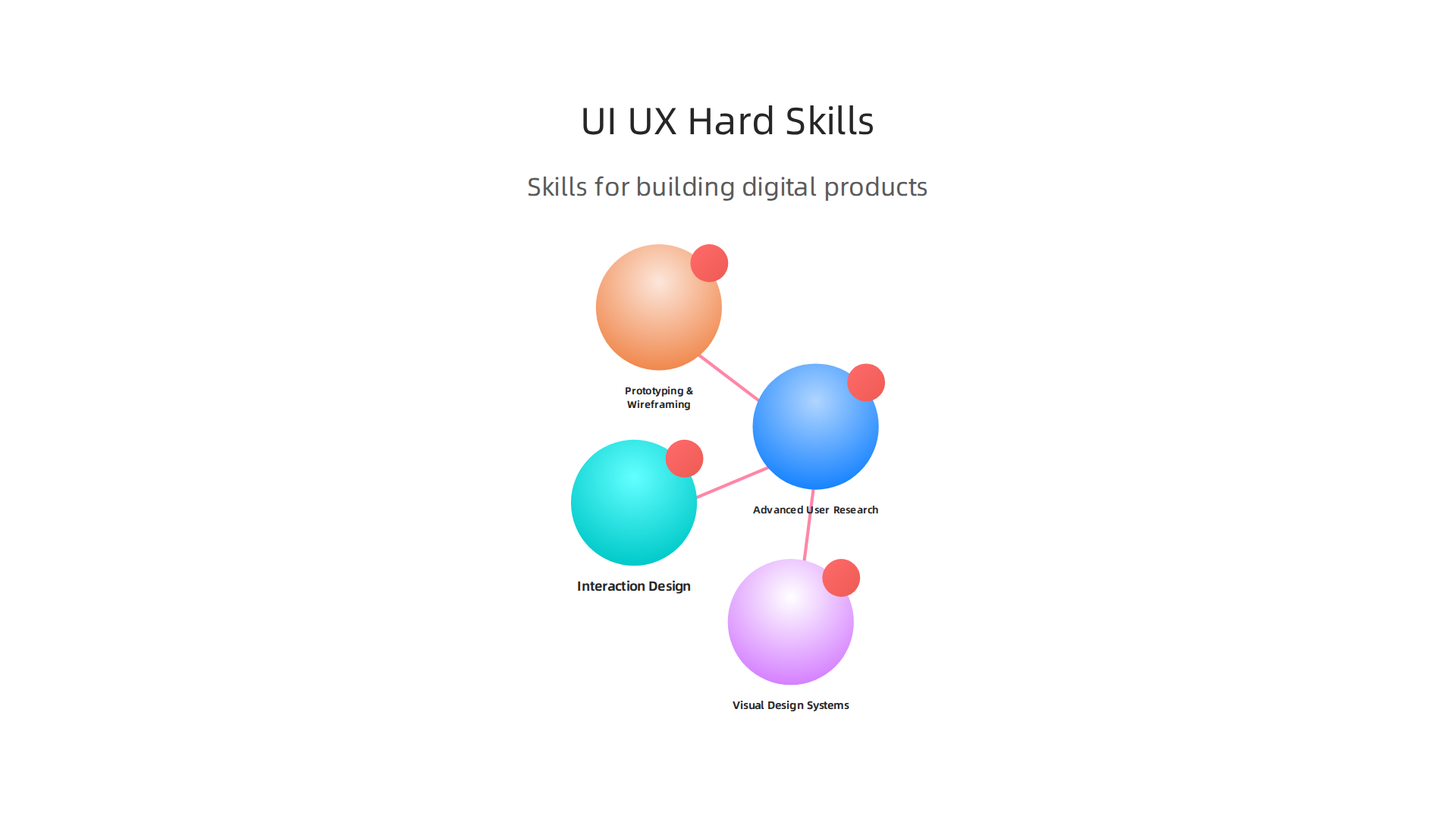
- Advanced User Research: Beyond just knowing who your users are, a good design UI UX course teaches you how to dive deep. You’ll learn to create detailed user personas, which are like profiles of your ideal customers, along with empathy maps and user journey maps. These tools help you understand what users think, feel, and do at each step of their interaction with your product, as covered in many modern syllabi BCA UIUX Syllabus 2026-2027. Learning to develop diverse user personas is a key competency for UX designers today UX Competency Matrix.
- Interaction Design Principles: You’ll learn to apply the rules of how users interact with a system. This involves designing responsive elements and creating logical user flows that make tasks easy and intuitive. Courses teach you to evaluate interfaces based on established UX/UI principles to ensure they are effective and easy to use SubjectTeachingSchemeFormat.
- Prototyping and Wireframing: These are crucial for testing your ideas before building the full product. You’ll move from simple sketches (wireframes) to more interactive models (prototypes). Many programs teach you to use popular tools like Figma, Adobe XD, and Sketch to develop these interactive designs Understanding UI/UX Course Syllabus And Subjects. Learning to create prototypes for mobile and web apps is a core skill taught in such programs Design 3556 New Course.pdf.
- Visual Design Systems: This involves creating a consistent look and feel across all parts of a product. You learn how to choose colors, fonts, and icons that not only look good but also help users understand and navigate your product easily. This builds on the fundamental understanding of what is UI design.
Soft Skills and Key Processes
It’s not all about tools; a good UI/UX course also builds important ways of thinking and working with others:
- Design Thinking: This is a problem-solving approach that helps you understand user needs deeply, come up with creative solutions, and test them quickly. It’s an iterative process, meaning you keep refining your ideas based on feedback. Applying design thinking to real-world problems is a major learning outcome B. Tech (Computer Science & Engineering) with ….
- Usability Testing and Feedback: You’ll learn how to set up tests where real users interact with your prototypes. Then, you’ll gather their feedback to find out what works well and what needs fixing. This step is vital to making sure your designs are truly user-friendly. Courses also include sections on research and analysis to improve product designs www.cromacampus.com.
- Stakeholder Communication: You’ll often work with different people, like business owners, developers, and marketing teams. A what is ui/ux design course teaches you how to present your ideas clearly, listen to feedback, and work together to make the best product. This is crucial for successful projects.
Tools and Deliverables You Learn to Produce
When you finish a UI/UX course, you’ll have a set of practical items you can show off. You’ll learn to create:
- User Personas and Journey Maps: Detailed documents explaining your target users and their paths.
- Wireframes and Prototypes: The interactive models of websites or apps you designed.
- Design System Guides: Documents that lay out the visual rules for your product.
- Usability Test Reports: Summaries of your testing findings and recommendations.
- A Professional Portfolio: This is perhaps the most important deliverable, showcasing all your projects and skills. Learning how to build a portfolio UI UX designer is often a key part of the curriculum.
By the end of such a course, you’ll have a strong foundation for a career in this field, whether you’re aiming for product designer jobs 2026 or looking to improve your business’s online presence.
After learning what a UI/UX course teaches you, it’s time to look at the different ways you can get these skills. Not every learning path is the same, and what works best for one person might not be right for another. For small and mid-sized business (SMB) owners, choosing the right type of UI/UX course means thinking about time, money, and how quickly you need to put new skills to use.
Types of UI/UX courses: bootcamps, certificates, degrees, and microcredentials
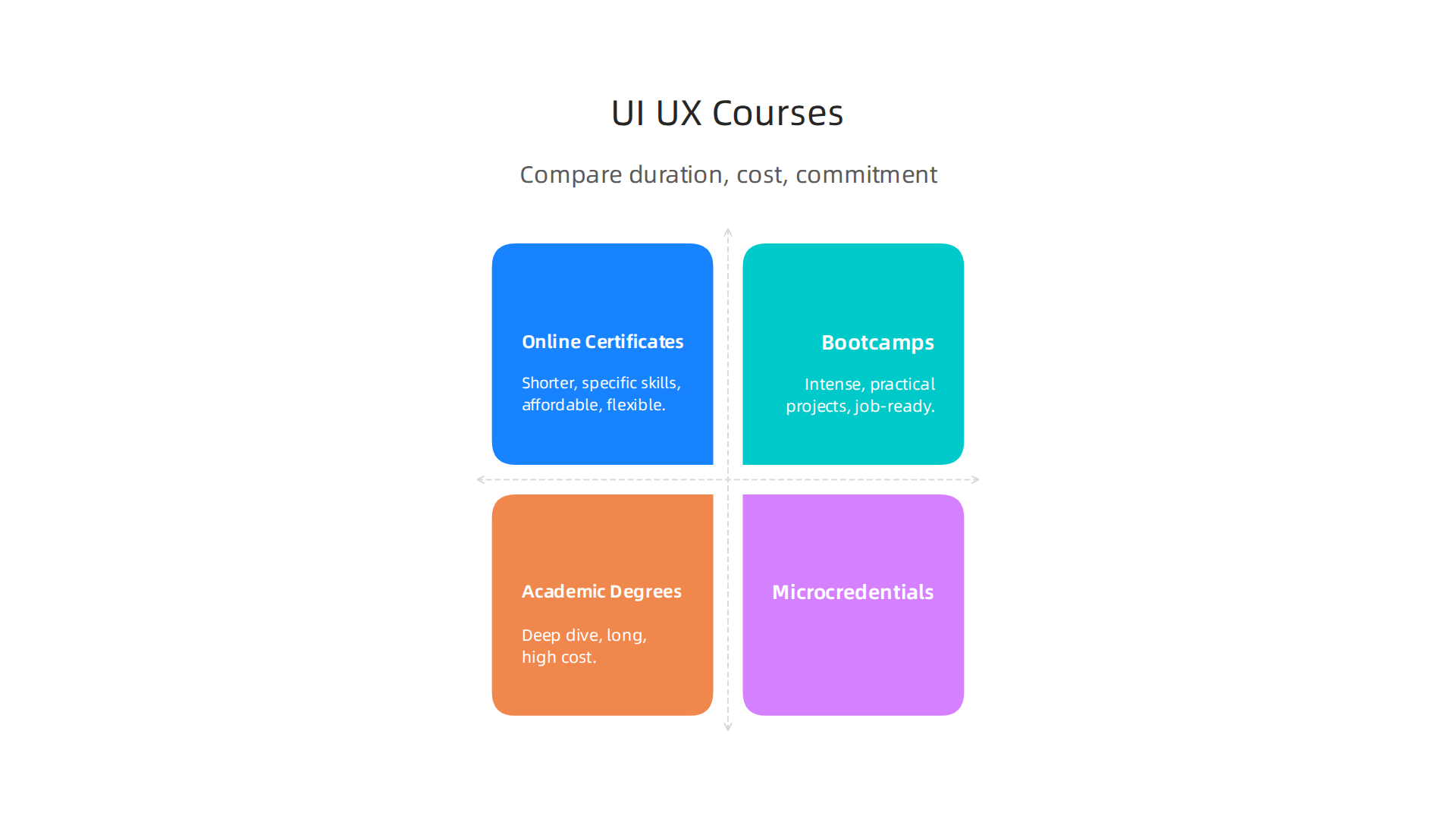
When you decide to take a UI/UX design course, you’ll find a few main types. Each one offers a different level of study, time commitment, and cost.
Let’s break them down.
Online Certificates and Microcredentials
These are often shorter, self-paced programs. They usually focus on specific skills or tools, like learning Figma or doing user research. Many of these programs can be finished in just a few months, like the Google UX Design Certificate, which can take about six months at 10 hours a week and often costs less than $300 in 2026, according to experts Is UX Design Worth Learning in 2026? An Employer’s Guide.
- Pros for SMBs: They are usually very affordable and flexible. You can learn key skills without taking a lot of time away from your business. They’re great for quickly boosting your website’s user experience.
- Cons for SMBs: They might not offer deep, hands-on feedback or career support. The credential itself proves you finished a program, not necessarily that you passed a tough exam 9. The School Of Ux: Best….
UI/UX Bootcamps
Bootcamps are more intense and typically run for three to six months. They are often full-time or very structured part-time programs. Bootcamps aim to get you job-ready quickly by focusing on practical projects and building a portfolio. They usually cost more than certificates, ranging from $7,000 to $15,000 for most programs in 2026 Best UX Design Bootcamp Picks for 2026. Some even offer dedicated mentorship and job placement help Google Ux Vs Bootcamps Vs…. For instance, many bootcamps cover key areas like user research, design principles, and prototyping The 12 Best UX Design Certificates (2026).
- Pros for SMBs: If you or an employee needs to gain a wide range of practical UI/UX skills fast, a bootcamp is a strong choice. You’ll build a solid portfolio to show off the new skills you’ve gained, which can be very helpful for your business.
- Cons for SMBs: The higher cost and time commitment can be a challenge. While intensive, the outcomes can vary, and some portfolio projects might look similar to other bootcamp graduates.
Academic Degrees
Degrees like a Bachelor’s in Interaction Design or a Master’s in Human-Computer Interaction (HCI) offer the deepest dive into UI/UX. These programs take several years to complete, typically two to four years, and come with a much higher cost, often ranging from $40,000 to over $100,000 5. Laws Of Ux (free). They provide a strong theoretical base and access to academic research networks Best UX Design Courses Online 2026.
- Pros for SMBs: A degree gives you a very thorough and well-rounded education, preparing you for complex roles and strategic thinking in design.
- Cons for SMBs: The long duration and high cost make this option less practical for most SMB owners or employees looking for quick, actionable skills. It’s more suited for those just starting out their education who want a deep academic foundation.
Choosing the Right Path for Your Business
For an SMB owner, the goal is often to get actionable skills quickly to improve your website and attract more customers. A full academic degree might be too much if you just need to make your current website better.
Often, a shorter, practical program like an online certificate or a bootcamp is enough. These courses teach you how to create websites that truly work for your users, turning visitors into loyal customers. Improving your website’s UI/UX can directly lead to better online performance.
To explore options that blend great design with business growth, you can start by learning more about how to choose your best UI UX design course for career and business in 2026. If you’re ready to see how a professional team can help your business get found online and convert more visitors, consider connecting your website with Weblish.
Grow your traffic on autopilot with AI. Grow Your Traffic on Autopilot
Choosing the right UI/UX course isn’t just about picking between a certificate, a bootcamp, or a degree. It’s also really important to make sure the course is good and that the teachers know their stuff.

You want to pick a program that truly teaches you "what is ui ux design course" all about and gives you useful skills.
How to evaluate UI/UX course quality and instructor credibility
When you’re looking at different UI/UX courses, you need to check a few things carefully. This will help you find a program that delivers real value for your time and money.
A Checklist for Good Course Quality
Here’s what to look for when evaluating a "design ui ux course":
- Clear Syllabus: A good course will have a very clear plan of what you will learn week by week. It should list all the topics, tools (like Figma or Adobe XD), and projects you’ll work on. If a course is vague about its content, that’s a warning sign.
- Instructor Experience: Who is teaching this UI/UX course? Look for instructors who have real-world experience working as UI/UX designers. Do they have a strong portfolio or have they worked on projects you recognize? Good instructors can share practical tips you won’t find in a textbook.
- Student Projects and Portfolios: Ask to see examples of projects that previous students have completed. A key part of any good UI/UX course is building a strong portfolio. If former students have impressive work, it shows the course is teaching valuable skills. For tips on how to build one yourself, check out how to build a UI/UX designer portfolio that wins clients in 2026.
- Career Support: Does the program offer help with finding a job or applying your new skills to your business? Some bootcamps, for example, offer dedicated mentors and job placement help, which can be a big plus for getting your new skills recognized.
- Type of Credential: It’s helpful to know if you’re getting an exam-based certification or just a certificate of completion. Some programs require you to pass tough exams to prove what you know, while others just show you finished the course itself, according to experts reviewing certifications in 2026 11 UX Certifications and Boot Camps for All Skill Levels.
Red Flags to Watch Out For
Not every "ui/ux course" is created equal. Be careful of these common warning signs:
- Vague Promises: If a course promises you’ll become a "design guru" without explaining how, that’s a red flag. Look for clear, measurable learning goals.
- No Portfolio Requirement: If a UI/UX course doesn’t make you build a portfolio of projects, it’s probably not worth your time. Practical work is central to learning UI/UX.
- Poor Feedback Structure: How will you get help when you’re stuck? Will you receive detailed feedback on your projects? Courses with little to no feedback on your actual design work won’t help you improve.
How to Validate Claims and Ensure a Good Fit
To make sure you’re picking the best UI/UX course for your needs, do a little digging:
- Review Alumni Work: Look up former students on LinkedIn or professional design sites. See what they’re doing and what their portfolios look like. This gives you a real look at what kind of skills the course helps people get.
- Ask for Sample Projects: A good course should be happy to show you examples of what you’ll be working on.
- Look for Measurable Outcomes: Does the course talk about how its students have improved their websites or increased conversions? These real-world results are a strong sign of quality.
By using this checklist, you can better choose your best UI UX design course for career and business in 2026 and ensure it leads to the growth you want for your business.
Once you find a great what is ui ux design course, the next big step is to show what you’ve learned. This means building a strong collection of your work, often called a portfolio. It’s how future employers and clients can really see your skills in action, not just hear about them.
What Employers and Clients Look For
Think of your portfolio as your best work showcase. Experts agree that it should have about three to five strong examples, known as case studies. These case studies need to explain what problem you solved with your design, how you worked through it, and what good came from your efforts. People looking to hire you want to see how your designs led to real business results, like making more money or getting more customers. A good portfolio shows these important business outcomes clearly, according to a guide on how to build a UX portfolio that actually gets you hired in 2026.
Each case study should be detailed. It should tell a clear story of your design process. This often includes showing how you understood the user’s problem, your step-by-step approach, what design elements you created, the impact your design had, and what you learned along the way. Showing your thinking process is just as important as the final look of your design, as highlighted in a guide about 11 UX Portfolio Examples + How to Build Yours in 2026.
Turning Course Projects into Business-Focused Case Studies
Your projects from a design ui ux course are a perfect starting point. To make them powerful, don’t just share pretty pictures. Instead, focus on the story behind each design.
- Start with the Problem: What was the challenge you were trying to fix?
- Explain Your Role: What exactly did you do? Were you part of a team, or did you work alone?
- Show Your Process: What steps did you take from start to finish? Did you do user research? Create wireframes?
- Highlight the Outcome: What was the result of your design? Did it make a website easier to use? Did it help people find what they needed faster?
A strong portfolio typically includes 3 to 5 detailed case studies that show your ability to solve user problems and deliver measurable outcomes.
Paths to Show Impact to Small Businesses
For small businesses, showing direct impact is very important. You can highlight how your designs led to:
- Better Conversions: This means more website visitors took a desired action, like buying a product or filling out a form.
- Increased Engagement: Users spent more time on the site or interacted more with its features.
- Reduced Support Calls: A clear
ui/ux coursedesign can make products or services easier to understand, so customers need less help.
You can show this impact through things like A/B testing results, where you compare two versions of a design to see which one works better. You can also show how a website redesign led to measurable improvements, like more traffic or happier users. Always link your design work back to how it helps the business grow or save money. Understanding what is a UI/UX designer for small business lead generation can help you focus your efforts on what truly matters to businesses.
If your business needs a website that truly brings in new customers, understanding what is ui/ux design course principles and hiring experts can make a big difference. Get started with weblish by signing up and claiming your free trial to transform your website into a powerful lead-generating tool.
Now, after you’ve learned what a great portfolio looks like, let’s talk about what it costs to get there. Knowing the price and how much time you need to put in is super important for both people wanting to learn and for businesses looking to grow.
How Much a UI/UX Design Course Costs and How Long It Takes
The cost and time for a what is ui ux design course can change a lot depending on the type of course you pick. Here’s a simple look:
- Self-Paced Online Courses: These are often the cheapest. You might pay anywhere from around $150 to $1,500, but some can be up to €1,600 or more. Programs like the Google UX Design Certificate can cost about $49 each month and often end up being between $150 to $470 total, depending on how fast you go through it. They usually take 3 to 8 months if you spend about 10 hours a week on them, but you can go at your own speed Best UX Design Courses Online 2026.
- Live Online Courses (Cohorts): These are a bit more structured. They can cost from £1,000 to £2,000, and usually run for 6 to 12 weeks part-time UX Design Courses UK 2026 – The Complete Guide.
- Intensive Bootcamps: These are the most expensive and fastest way to learn. They can range from €5,000 to €15,000. For example, some UX Academy programs cost around $8,499. They are often full-time and can take 15 to 21 weeks The 14 Best UX Design Courses for 2026 (For Beginner … – Designlab.
No matter which design ui ux course you pick, the main goal is to build a strong portfolio that gets you ready for a job. For example, some programs in India cost around ₹40,000–₹90,000 and take 4 to 6 months to get you job-ready Best Online UI UX Courses With Placements in India (2026). If you’re looking for the best fit for your needs, it helps to understand how different courses stack up. You can explore options to choose your best UI UX design course for career and business in 2026.
Value for Businesses and Learners
For individuals, a good ui/ux course is an investment in your future. It can lead to new job opportunities and better pay. The return on investment (ROI) means that the money and time you spend now can come back to you many times over in your career.
For small and mid-sized businesses (SMBs), thinking about a what is ui/ux design course means looking at the bigger picture. Instead of just seeing the cost, businesses should think about how good design can save money and bring in more customers.
Here’s how businesses can get value:
- Train Your Team: You can have your current staff take a design ui ux course. This makes your team better at creating user-friendly websites and apps, which can lead to more sales and happier customers.
- Hire New Talent: Look for junior designers who have just finished a strong UI/UX course and built a great portfolio. They can bring fresh skills and ideas at a lower cost than very experienced designers.
- Partner with Experts: Sometimes, it makes more sense to work with a company that offers design and marketing services. This way, you get the benefits of skilled UI/UX designers without having to hire and train a whole new team.
By investing in good UI/UX design, whether through training or hiring, businesses can build websites that work harder to get leads and grow.
Ready to see how expert design and AI can make your website a lead-generating machine? Weblish can help you transform your online presence for predictable growth. Grow Your Traffic on Autopilot and start making your website work smarter, not just harder.
Summary
This article explains what a UI/UX design course teaches and why those skills matter for both individuals and small businesses. It defines UI (visual interface elements) and UX (how users feel and move through a product), then details the specific topics covered—visual design, layout, interaction, user research, information architecture, user flows, wireframing, prototyping, usability testing, and design thinking. The guide shows who benefits (SMB owners, marketers, aspiring designers), compares course types (self-paced certificates, bootcamps, and degrees), and gives realistic cost and time ranges. It also offers a quality checklist for choosing a program, highlights deliverables you’ll produce (personas, prototypes, design systems, portfolio case studies), and explains how these skills translate into more leads and better business outcomes.