
The Best Website Design Firm for Small Business Lead Generation
This article explains how small and mid-sized businesses should pick a website design firm that actually generates leads instead of just looking good. It covers…


Introduction
Your website is the first thing most potential customers see. It is your digital storefront, your sales team, and your credibility all rolled into one. But here is the hard truth: many small and mid-sized businesses build websites that look good yet fail to bring in real leads.

They spend thousands on a pretty design only to wonder why no one calls or fills out the contact form.
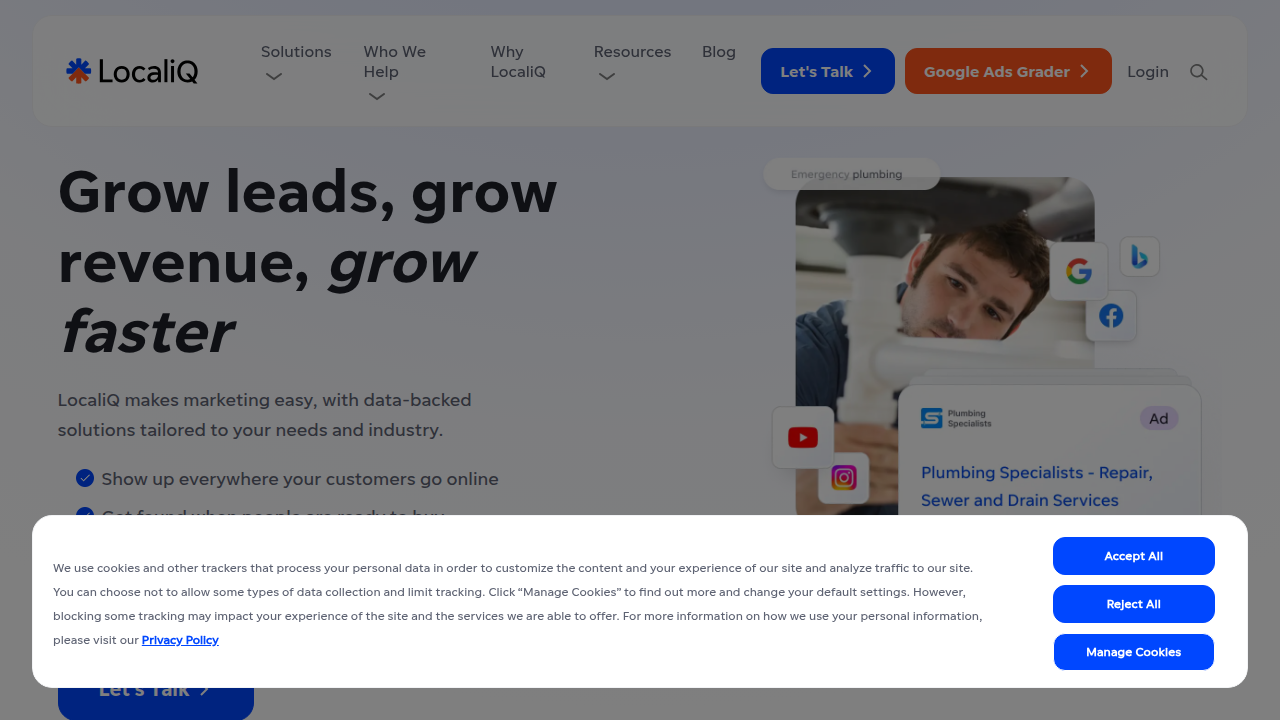
This struggle is real and widespread. According to the latest data from LocaliQ, 59% of small businesses say getting new leads and customers will be challenging in 2026.
That is a big number. The problem is not a lack of effort. The problem is often a disconnect between how a website looks and how it actually works. A beautiful site that does not convert is just an expensive business card.
The difference between a website that sits there and one that generates leads every day comes down to one thing: choosing the best website design firm for your specific needs. The right partner does not just make things look nice. They focus on strategy, user experience, speed, and clear calls to action. They build websites that guide visitors toward becoming customers. They turn your site into a growth engine.
Too many business owners pick a designer based on flashy portfolio shots alone. But the best companies for website design understand that your website must do more than impress. It must perform. It must load fast, work well on phones, and make it easy for people to take the next step. If your current site struggles with any of these, it might be time for a change.
You can start improving your site today by learning how to turn it from a passive brochure into an active lead machine. Check out this guide on how to make your small business website convert visitors to customers for practical steps you can take right now.
But if you want to stop guessing and start seeing consistent results, a trusted partner makes all the difference. The best design for a website is one that combines beautiful visuals with conversion-focused functionality. That is what sets the top firms apart.
Weblish is built exactly for this challenge. We combine elegant design with ongoing SEO, content, and social media support so your website works hard for you every single day. Connect your website with Weblish and grow your traffic on autopilot with AI.
No upfront build fees, no agency chaos. Just a clear strategy and a team that cares about your growth.
The choice is simple. Keep settling for a site that looks good but does nothing. Or partner with a firm that builds websites designed to generate leads and grow your business. The rest of this article will show you exactly what to look for and how to make the right decision.
What Defines the Best Website Design Firm?
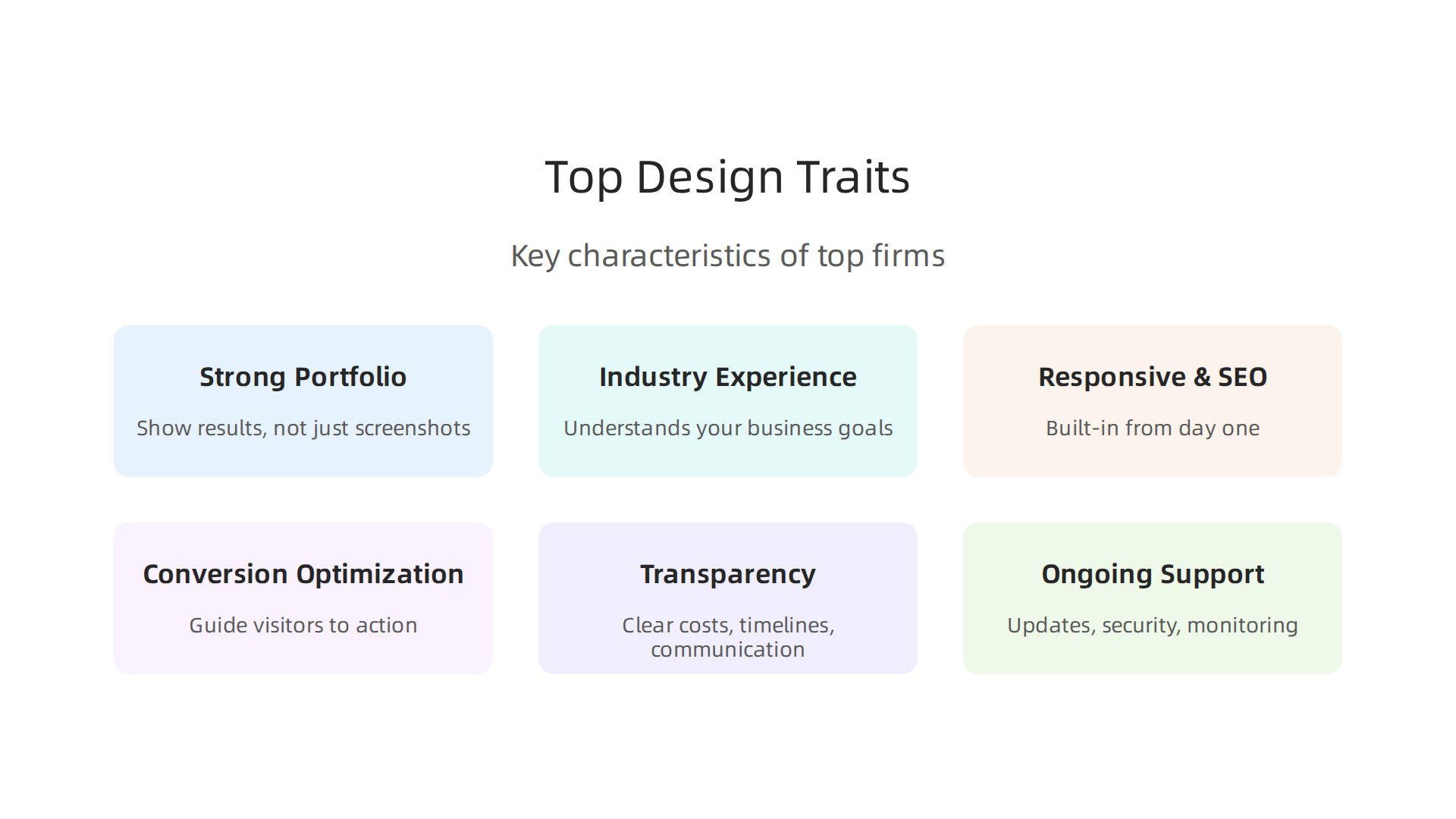
So how do you actually tell which firms are the real deal? Not every company that calls itself a "design firm" can deliver results. The ones that truly earn the label share a few clear traits.
If you know what to look for, you can skip the fluff and pick a partner that will grow your business.

A strong portfolio is just the start. Every firm can show you pretty screenshots. But the best companies for website design go deeper. They show you results. Did their last project increase leads? Did the site load faster? Did it rank higher on Google? Look for case studies that include real numbers. According to a solid guide on choosing the best website design companies for small businesses, you should check for variety in their designs, consistent quality, and client testimonials that give you direct insight into past experiences. A firm that can prove it gets results is worth your time.
Industry experience matters, but not in the way you think. You do not need a firm that only works in your exact niche. But you do need one that understands your business goals. Do they ask about your target audience? Do they know how to design for your specific customer? The best design for a website comes from understanding who will use it, not just how it looks.
Responsive design and SEO are non-negotiable. In 2026, your site must work perfectly on phones. It must also be built with search engines in mind from day one. The top firms bake these in from the start. They optimize images, use clean code, and structure your content so Google can find it. If a firm treats SEO as an afterthought, walk away.
Conversion optimization is the secret sauce. A site that looks beautiful but fails to turn visitors into leads is not doing its job. The best design website firms use clear calls to action, simple navigation, and fast loading times to guide people toward taking action. They test things and improve over time. They do not just hand you a site and disappear.
Transparency separates professionals from amateurs. The best website design firm will tell you exactly what you get, how long it takes, and what it costs. No hidden fees. No vague timelines. They communicate openly and keep you involved without overwhelming you. You can learn more about how to spot a great UI/UX designer before you hire one to understand the kind of communication and process that marks a true pro.
Ongoing support keeps your site working. Your website is not a one-time project. It needs updates, security checks, content refreshes, and performance monitoring. The firms that stand out offer ongoing maintenance and optimization. They treat your site like a living asset, not a static brochure.
When you evaluate a firm, ask these questions: What results have you delivered? How do you handle mobile design? What is your SEO process? How do you measure success? How will we communicate during and after the project? The answers will tell you if they are the real deal or just another expensive pretty face.
Top 5 Best Website Design Firms for SMBs in 2026 (Category Breakdown)
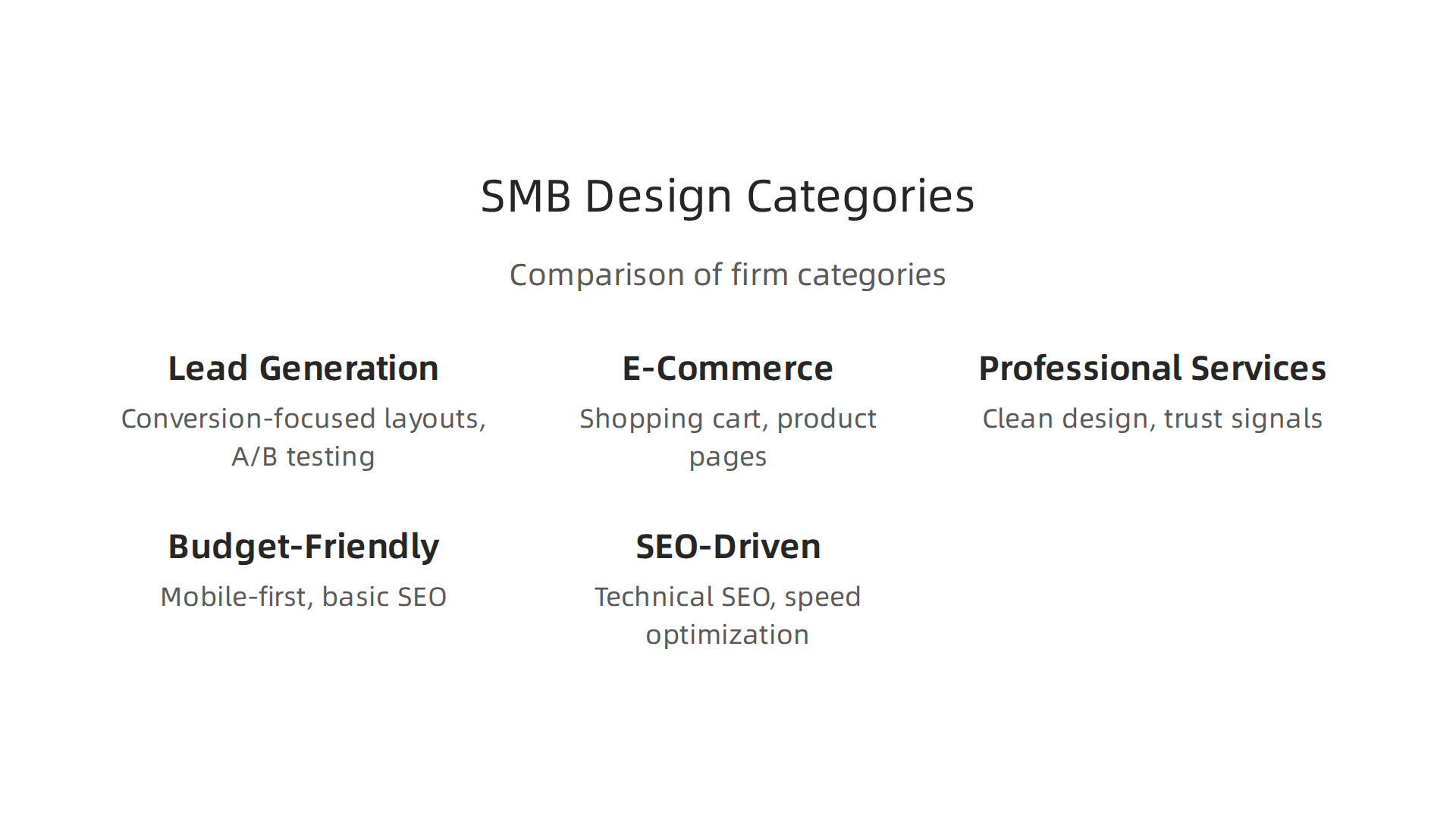
Not every business needs the same kind of website. A local plumber needs leads. An online boutique needs sales. A law firm needs trust. The best website design firm for you is the one that matches your specific goal. That is why we broke down the top firms by category for 2026. Each category highlights firms with proven track records and real client success stories.
1. Lead Generation Machines
Some firms are built to turn visitors into paying customers. They obsess over calls to action, form placement, and page speed. Their portfolios show actual conversion lifts, not just pretty screenshots. According to the 2026 guide on the best small business website design options, these firms prioritize speed, usability, and conversion-driven design as their core focus.
2. E-Commerce Experts
If you sell products online, you need a firm that gets shopping carts, checkout flows, and product pages. They know platforms like Shopify inside and out. They also understand how to reduce cart abandonment and increase average order value. The best website builders for small business 2026 list confirms that for e-commerce specifically, Shopify remains the top choice because it is built for selling from the ground up.

3. Professional Services Specialists
Lawyers, accountants, coaches, and consultants need sites that build trust fast. These firms use clean layouts, strong testimonials, and clear service pages. They avoid flashy gimmicks. Clutch rankings for top web design companies for small business highlight agencies that deliver customized support and strong client communication for service-based clients.
4. Budget-Friendly Builders
Not every business has five figures to spend. Some firms offer solid packages at lower price points without cutting corners. They focus on the essentials: mobile responsiveness, fast loading, and basic SEO. The modern small business web design checklist from real designers confirms that features like SSL certificates, clear navigation, and analytics setup are non-negotiable even on a tight budget.
5. SEO-Driven Design Firms
These firms build for Google from the first line of code. They optimize site structure, headings, image alt text, and page speed for rankings. Their sites are ready to compete in search results from day one. The website design stats for small businesses report shows that SEO integration is a top priority for successful small business websites in 2026.
Comparison Table
| Category | Starting Price Range | Key Features | Best For |
|---|---|---|---|
| Lead Generation | $3,000 – $7,000 | Conversion-focused layouts, optimized forms, A/B testing | Local service businesses, contractors, real estate agents |
| E-Commerce | $5,000 – $12,000 | Shopping cart integration, product pages, inventory management | Online retailers, boutiques, physical product sellers |
| Professional Services | $4,000 – $8,000 | Clean design, testimonial sections, trust signals | Lawyers, accountants, consultants, coaches |
| Budget-Friendly | $1,500 – $3,500 | Mobile-first design, basic SEO, essential pages | Startups, side hustles, very small local businesses |
| SEO-Driven | $5,000 – $10,000 | Technical SEO, content structuring, speed optimization | Businesses in competitive local or niche markets |
If you want to learn more about building a site that ranks, check out this guide on SEO content optimization strategies for small businesses. And once your site is live, the work does not stop. You need ongoing support and traffic growth. Ready to see how a done-for-you growth service can transform your site? Grow your traffic on autopilot with Weblish and let experts handle the rest while you focus on running your business.
How Website Design Drives Lead Generation for SMBs
Now that you have a clear picture of the top design firm categories, it is time to see how the best website design firm actually turns visitors into leads. A gorgeous site means nothing if it does not bring in calls, form fills, or emails. The right design is built from the ground up to generate leads, and that comes down to a few core principles.
Clear CTAs and Optimized Forms
Every great lead generation site puts calls to action front and center. Buttons like "Get a Free Quote" or "Book a Consultation" need to be obvious. They should appear near decision points, not hidden in a footer. According to the B2B website design best practices guide for 2026, strategic user journeys built around clear pathways and contextual CTAs help visitors move from curiosity to action without hunting for information. The same source emphasizes that forms should be minimal. Ask for only what you truly need. Too many fields and people walk away.
Forms also need to load fast and work perfectly on mobile. Even a small friction point can tank your conversion rates.
Mobile Responsiveness and Page Speed
Here is the thing: more than half of your traffic probably comes from phones. If your site takes longer than three seconds to load, most people leave. Small business website statistics for 2026 show that a one-second delay in load time can reduce conversions by up to 20 percent. And 38 percent of visitors will leave a site with poor design or layout. That is a lot of lost leads simply because a page felt slow or looked broken on mobile.
The best companies for website design obsess over Core Web Vitals and mobile-first layouts. They know speed is not a bonus feature. It is a requirement.
CRM and Marketing Tool Integration
A lead is useless if it disappears into a black hole. Your site needs to talk to your customer relationship management system and email tools. When someone fills out a form, their information should automatically enter your pipeline. Follow-up emails should trigger right away. This creates a seamless experience for both you and your prospect.
To learn more about structuring your site pages for better conversions, check out this guide on landing page vs homepage. Understanding the difference helps you build pages that drive specific actions rather than generic browsing.
Remember, the best design for a website is not about flashy animations. It is about making it easy for a potential customer to raise their hand and say, "I am interested." When your design supports that goal, leads follow naturally.

Pricing Transparency: What SMBs Should Expect to Pay
Here is where things get confusing. You ask five agencies for a quote and get five completely different numbers. One says $2,000. Another says $20,000. How do you know what is fair? The truth is, website design pricing varies a lot. But once you understand the models, hidden costs, and how to compare quotes, you can make a smart choice without getting ripped off.
The Three Main Pricing Models
Most design firms use one of three ways to charge.
Fixed-price projects: You pay one set fee for the whole site. This works best when the scope is clear. You know exactly what you will get for your money. According to the 2026 small business web design cost guide from Clickk, a basic site from a small agency might run between $5,000 and $10,000. A more advanced one can go up to $25,000 or more.
Hourly rates: The agency charges for each hour they work. This can be unpredictable if the project changes along the way. The Eleken article on web design agency pricing explains that hourly billing is very common, but you need to track hours carefully. Rates can range from $75 to $200 per hour depending on the firm.
Monthly retainers: Some agencies offer ongoing support for a flat monthly fee. This often includes hosting, updates, and small changes. It gives you predictable costs month after month.
Watch for Hidden Costs
The upfront price is only part of the picture. Many small business owners forget about ongoing expenses. Hosting, domain renewal, SSL certificates, and security updates all add up. The breakdown of small business website costs for 2026 from GruffyGoat shows that annual maintenance for a small business site usually falls between $1,000 and $6,000. That is $80 to $500 per month on top of your build cost.
Also watch out for revision fees. Some agencies include two rounds of changes. After that, each extra revision costs extra. Third-party integrations like booking systems or payment gateways can also add hundreds of dollars.
How to Compare Quotes
Rather than looking at the bottom number only, ask what is included. Get a detailed scope of work. Does the price cover copywriting, SEO setup, mobile optimization, and training? The guide to small business web design packages from Sensoriium breaks quotes into three tiers: starter ($2,000 to $6,000), growth ($8,000 to $20,000), and strategic partner ($25,000 and up). Each tier fits a different business stage.
Before you sign, also check who handles the work. A freelancer might charge less but lack backup. A medium agency gives you a team. To learn more about evaluating designers, read our guide on how to spot a great UI/UX designer before you hire one. Knowing what to look for helps you avoid costly mistakes.
Get Predictable Pricing Without the Guesswork
You do not have to navigate this alone. If you want transparent, all-in-one pricing for a site that actually generates leads, consider a service that bundles design, development, and ongoing support into one monthly fee. That way you know exactly what you will pay and you get expert help every month.
Grow Your Traffic on Autopilot by connecting your website with Weblish. Their subscription model removes surprise costs and delivers a professional site that works for your business. No more guessing what a fair price is.
Why SEO and Ongoing Maintenance Are Non‑Negotiable
You just spent thousands on a new website. It looks amazing. Colors pop. Images load fast. But a month later, nobody is visiting. Sound familiar? This happens when a design firm focuses only on looks and forgets about search engines.
A beautiful website is useless if people cannot find it. That is where SEO comes in. And SEO is not something you add later like a coat of paint. It has to be built into the foundation from day one.
The best website design firm will plan your site structure, page titles, headings, and loading speed around what search engines and real people need. According to the LinkedIn guide on top website design services that generate leads, SEO and web design must be deeply integrated from the start. That means choosing the right keywords, writing clear alt text for images, and making sure your site loads in under three seconds. Even a one-second delay can cut conversions by up to 20%.
Ongoing Maintenance Protects Your Investment
Your site is not a set-it-and-forget-it project. Hackers constantly look for weak spots. Software needs updates. Plugins go out of date. And your content gets stale over time.
When you work with a firm that offers post-launch support, you avoid all that stress. They handle security patches, performance checks, and content refreshes. This keeps your site fast, safe, and ranking well. The 2026 small business website statistics from Network Solutions show that 94% of first impressions are tied to website design, and poor mobile usability drives visitors away. Regular maintenance prevents that.
If you are wondering about the right approach to keeping your site visible, check out our guide on why your small business needs an SEO consultant in 2026. It explains how consistent SEO work builds traffic over months, not days.
What to Ask Before You Sign
When comparing agencies, do not stop at the design mockups. Ask them directly:
- How do you build SEO into the site from the beginning?
- What does your post-launch maintenance plan include?
- How often will you update content and check for security issues?
A firm that answers those questions clearly is the one worth hiring. The best companies for website design treat SEO and maintenance as core parts of the service, not afterthoughts. That is how you get a site that looks good and actually brings in leads month after month.
How to Choose the Right Website Design Firm for Your SMB
Finding the best website design firm for your small business takes more than a quick Google search. You need a partner who understands your goals, your budget, and your industry. Here is a simple process that works.
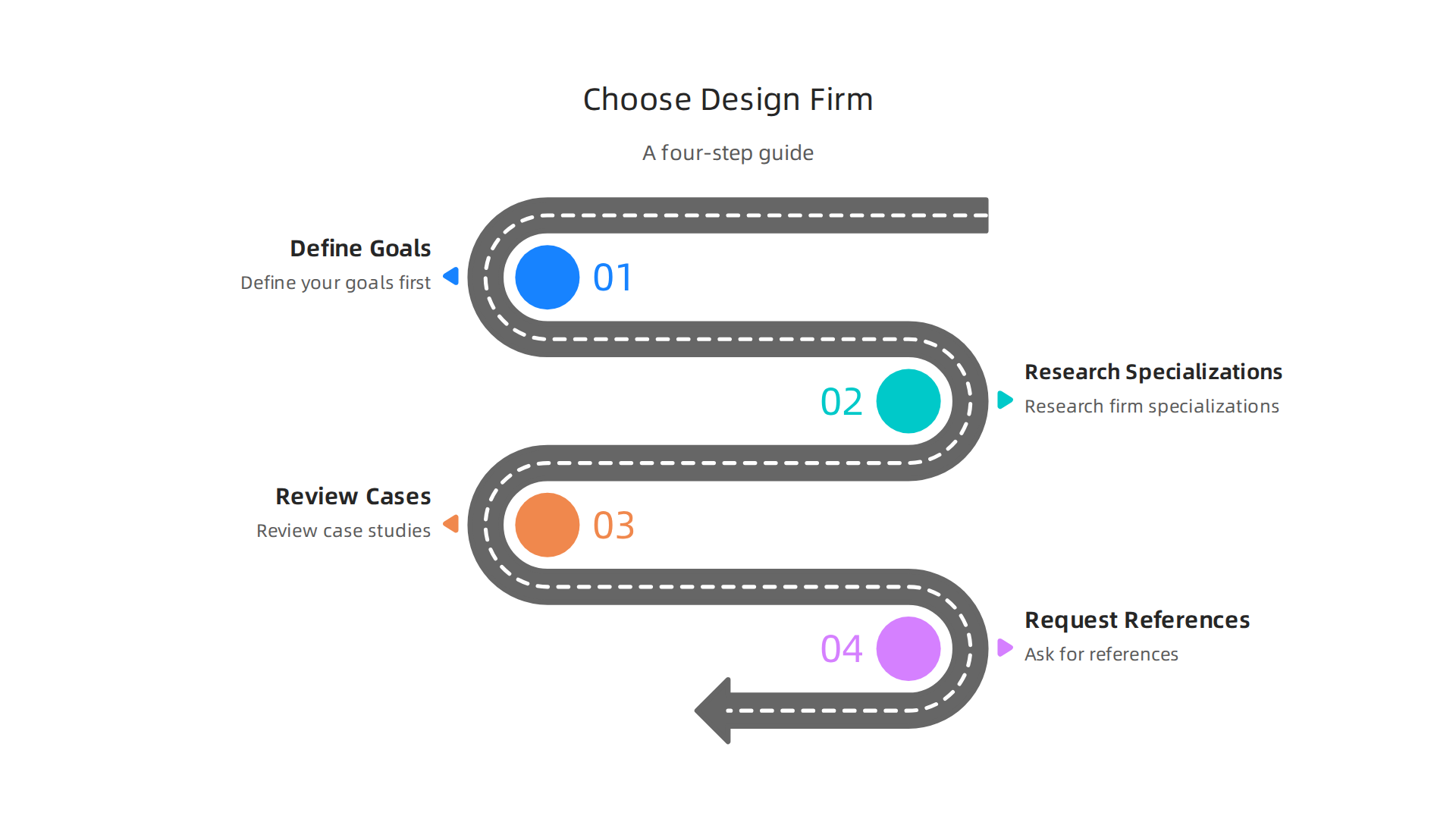
Step 1: Define Your Goals First
Before you look at any portfolio, get clear on what you want your site to actually do. Do you need more leads? A way to sell products? A place to prove your credibility online?
Each goal changes the type of firm you should hire. Write down your top three priorities. Share them with every firm you talk to. A great agency will use those goals to guide every design choice they make.
Step 2: Research Firm Specializations
Not every firm fits every business well. Some specialize in eCommerce. Others focus on service-based companies. The best companies for website design have real experience in your specific space.
When you research, look for firms that clearly explain how they work with small businesses. According to the detailed guide on choosing the best website design companies for small businesses in 2026, you should look for budget awareness, local market insight, and relevant industry experience. These three traits tell you a firm truly understands your daily challenges.
Step 3: Review Case Studies and Portfolios
A firm’s past work tells you more than any sales pitch ever will. But do not just check if the sites look pretty. Pay attention to these details:
- Do their designs look different from each other? That shows they adapt.
- Is the quality consistent across every project?
- Do they share real results like traffic growth or higher conversion rates?
If a firm cannot show you at least three strong case studies, that is a red flag. The website design best practices from experienced firms always include measurable outcomes you can verify.
Step 4: Ask for References and Compare Proposals
Talking to past clients is worth more than any glossy brochure. Ask for two or three references from businesses similar to yours. Call them. Ask about communication, whether the project stayed on schedule, and if the final site actually delivered results.
When you compare proposals, watch closely for vague pricing. The best design for a website comes from firms that break down their costs clearly. If a proposal feels like a guessing game, walk away.
Red Flags That Should Stop You Cold
Here are warning signs that a firm is not the right choice:
- No portfolio at all or only one or two samples
- Cannot explain how they handle SEO and search visibility
- Pushy sales tactics or pressure to sign today
- Pricing keeps changing between conversations
- Unclear about who will actually build your site
Trust Signals That Matter
On the other hand, these signs point to a firm you can count on:
- Proven results they can share with real numbers
- Transparent communication about timeline and costs
- A clear process from kickoff to launch
- Willingness to let you talk to past clients directly
If you want to learn more about what makes a designer truly great before you commit, this guide on how to spot a great UI/UX designer before you hire one covers the core qualities to look for.
A Final Thought
Choosing the right partner is one of the biggest decisions you will make for your online presence.

Take your time. Ask the hard questions. Look for a firm that treats your business like a long-term relationship, not just another project on their list.
Connect your website with Weblish and grow your traffic on autopilot with AI. It is one simple way to see what a well-designed, lead-generating site can really do for your business starting today.
Summary
This article explains how small and mid-sized businesses should pick a website design firm that actually generates leads instead of just looking good. It covers the key traits of high-performing firms—measurable portfolios, SEO-first builds, mobile responsiveness, conversion optimization, transparency, and ongoing support—and breaks top firms into categories like lead-generation, e-commerce, and budget-friendly options. You’ll learn practical pricing models, hidden costs to watch for, the questions to ask prospective agencies, and the specific design and technical elements that drive conversions (fast pages, clear CTAs, CRM integrations). The guide also explains how to compare proposals, spot red flags, and prioritize post-launch maintenance so your site keeps delivering results, with a note on subscription-style services for predictable pricing and continuous growth.