
Ecommerce Website Design Services Turn Visitors Into Buyers for SMBs
This article explains why professional e-commerce website design services are essential for small and mid-sized businesses and how the right approach turns a br…


Why e-commerce website design services matter for small and mid-sized businesses
In 2026, most people shop online. It’s not just a nice option anymore; it’s how businesses reach their customers. If you run a small or mid-sized business, you might already have a website. But is it really helping you sell more? Or is it just a fancy online brochure that doesn’t bring in new customers?

This is where great ecommerce website design services become super important. A well-designed e-commerce site doesn’t just look good; it’s built to turn visitors into buyers. It’s like having a top salesperson working for you 24/7. In fact, e-commerce sales made up 17.1 percent of all retail sales in the second quarter of 2026, showing how big online shopping has become. Many small businesses are also planning to invest more in their websites this year to keep up with these changes, with 43% saying they will improve their site’s performance Top Website Statistics for 2025 – Advisor.
However, many small and mid-sized businesses (SMBs) face big problems with their current websites. Maybe their site gets a lot of visitors, but very few of them actually buy anything or even send an email. This happens when a website doesn’t clearly show what it offers, isn’t easy to use, or doesn’t build trust with visitors Website Lead Generation Problems: Why Visitors Leave. It’s like having a store that people walk into but can’t find what they need or don’t feel welcomed.
Another big pain point for SMBs is dealing with traditional web design agencies. Often, these agencies charge a lot of money upfront, and it’s hard to know exactly what you’re paying for. This lack of clear pricing and messy project management can make growing your business feel very frustrating. You need more than just a pretty site; you need a powerful sales tool that also includes good ecommerce seo services so people can easily find you. This is why choosing the right ecommerce web development company is key.
If you’re looking for help to make your website work harder for your business, you need a solution that takes away these worries. You want a service that understands how to build a site that not only looks great but also brings in leads and sales consistently.
If you’re ready to improve your online presence, you can Grow Your Traffic on Autopilot with smarter tools. You might also want to Get started with a free trial to see how a dedicated growth service can help.
When you look for professional ecommerce website design services, you should know exactly what you’re getting. It’s not just about picking a design and hoping for the best. Good service guides you through a clear process, making sure your new online store truly helps your business grow.
Clear Steps to a Great E-commerce Website
A good ecommerce web development company follows a few key steps to make sure your website is perfect for selling:
- Discovery: This is where the team learns all about your business. They ask about your goals, what you sell, who your customers are, and what makes you special.

It’s like planning a trip; you need to know where you’re going before you start driving.
- Design: Next, they create how your website will look and feel. They make sure it’s easy to use and looks nice on all devices, like phones and computers. The goal is to make shopping simple and fun for your customers.
- Development: This is when the actual website is built. Programmers write the code and put all the pieces together. They add features like shopping carts, payment options, and ways to manage your products.
- Launch: Once everything is ready and tested, your new website goes live. This is an exciting step where your online store opens its doors to the world.
- Optimization: After your site is live, the work isn’t over. Professional services keep an eye on how your website is doing. They make small changes to help more visitors become buyers. This is called conversion rate optimization, and it’s key because the average conversion rate across all e-commerce sites is typically under 3% in 2026, meaning many visitors don’t buy right away 2026 Marketing Statistics, Trends, & Data. Ongoing optimization can help improve this number greatly Why Conversion Rate Optimisation is Key in 2026.
Different Ways to Get E-commerce Help
You can find e commerce website design services offered in different ways:
- Project-based services: You pay a set amount for a specific project, like building a new website. Once it’s done, the service ends. This can be good for a one-time big change.
- Subscription models: With this, you pay a regular fee, usually monthly, for ongoing help. This often includes everything from design updates to technical support and performance improvements. It’s like having a team always working on your site. This is a popular option for small and mid-sized businesses looking for predictable costs.
- Managed services: This is similar to a subscription, but it often means the company handles almost everything for you. They don’t just fix problems; they actively work to grow your online business through things like ecommerce seo services, content updates, and more. This can be a smart choice because managed services aren’t just about saving money; they’re about giving your business a competitive edge and helping it move faster Managed Services ROI: From Cost Center to Strategic … – BBI.
No matter which model you choose, ongoing maintenance is very important. Websites need regular updates to stay safe, fast, and easy to use. A professional service will make sure your site always runs smoothly, so you can focus on running your business.
To make sure your online store really works for your business, the first step is planning. This is where good ecommerce website design services begin. It’s like building a house; you need a clear blueprint before you start putting up walls.
Defining Your Goals and How to Measure Them
Before any design work begins, you need to know what you want your website to achieve. This means setting clear, conversion-focused goals. A "conversion" is when a visitor does something you want them to do, like buying a product, signing up for an email list, or filling out a contact form.
For example, your goal might be:
- "I want to sell 50 items each month."
- "I want 100 people to sign up for my newsletter every week."
- "I want 20 people to contact me for a service each month."
These goals help an ecommerce web development company understand what success looks like for you. To track these goals, you’ll use Key Performance Indicators (KPIs). These are simply ways to measure if you are hitting your goals. For example, if your goal is to sell 50 items, your KPI would be "number of sales."
It’s also important to think about your target customer journey. Who are your customers? What steps do they take from finding your website to making a purchase? Understanding this helps avoid common mistakes where websites look good but don’t bring in new business. Actually, many websites look nice but fail to get real leads because they don’t have a clear plan for what visitors should do next or why they should trust the business Why Most Business Websites Fail to Generate Leads (Even ….
Simple Ways for Small Businesses to Learn About Their Customers
You don’t need a huge budget to do important research for your new website. Small and mid-sized businesses (SMBs) can use these simple methods:
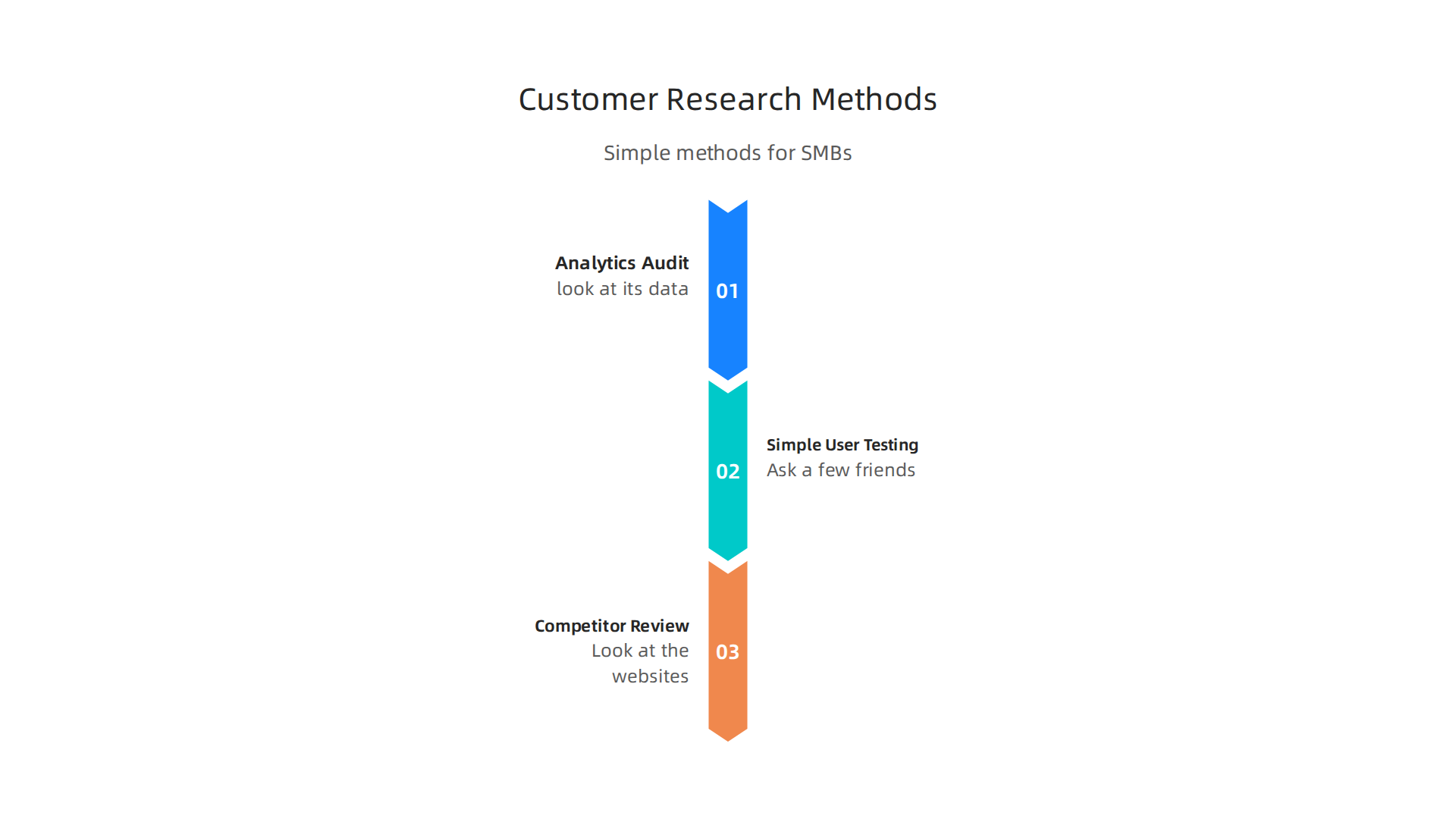
- Analytics Audit: If you have an old website, look at its data. Tools like Google Analytics can tell you how people found your site, what pages they visited, and where they left. This can show you what worked and what didn’t. Learning from past website performance can help you make your small business website convert visitors to customers.
- Simple User Testing: Ask a few friends, family members, or loyal customers to use your website (or a basic design idea) and tell you what they think. Watch them as they try to find a product or complete a purchase. Their honest feedback is gold! This helps make sure your site is easy for everyone to use.
- Competitor Review: Look at the websites of other successful businesses in your field. What do they do well? What can you learn from their designs and how they sell things online? This isn’t about copying; it’s about seeing what works in your market and making it even better.
This planning and discovery phase is key for any e commerce website design services because it sets the stage for a website that not only looks good but also helps you reach your business goals. In 2026, over 43% of small businesses are planning to put money into making their websites work better, showing just how important this step is Top Website Statistics for 2025 – Advisor. By doing this groundwork, you make sure your investment in a new website pays off.
Ready to see how a professional team can turn your business goals into a powerful online store?
Grow Your Traffic on Autopilot
After you’ve done all that important planning and learned about your customers, the next big step is to make sure your website is easy and enjoyable for them to use. This is where good UX (User Experience), conversion optimization, and mobile-first design really shine for ecommerce website design services. Think of it this way: your website might look great, but if people can’t easily find what they need or complete their purchase, they will leave.
UX, Conversion Optimization, and Mobile-First Design for Ecommerce
UX is all about making your website pleasant and simple for visitors. When a website has good UX, people can move through it without getting confused. Conversion optimization means making it super easy for visitors to do the things you want them to do, like buying a product or signing up for your newsletter.
A big part of getting more sales is making sure people finish their checkout process and don’t leave items in their cart. Here are some key things that help:
- Easy Checkout Steps: Don’t make people jump through too many hoops. A simple, clear checkout with few steps means fewer people will give up. Offering a guest checkout option, so people don’t have to create an account right away, is also very helpful.
- Clear Buttons and Text: All buttons, like "Add to Cart" or "Buy Now," should be easy to see and click. The text should be big enough to read without squinting.
- Build Trust: Show security badges, customer reviews, and clear return policies. This helps people feel safe buying from your store.
- Accessibility for Everyone: Your website should be usable by everyone, including people with disabilities. This means things like having good color contrast, easy-to-use forms, and making sure interactive parts are big enough to tap on a phone screen. In 2026, many experts follow guidelines like WCAG 2.2 to make sure websites are truly accessible, which helps more people shop easily online Ecommerce Accessibility Guide 2026. This includes making sure buttons and selectors are at least 24×24 pixels big, especially on mobile. Simple forms are also important for everyone, including blind users, to make shopping easier Strategies to Ensure Equal Access to Blind Users in E ….
Mobile Commerce and Performance Best Practices
Most people today use their phones to shop online. This means your e commerce website design services must be "mobile-first." This means designing for smaller screens first, then making it work for bigger computer screens.
Here’s what makes a great mobile shopping experience:
- Fast Loading: Nobody likes a slow website. Your mobile site should load very quickly, so customers don’t get bored and leave.
- Easy Navigation: Menus should be simple to find and use. A good search bar that works well on phones is also important. Knowing how to set up internal site search for SMBs can turn your website into a lead-generating machine.
- Touch-Friendly Design: Buttons and links need to be spaced out so people don’t accidentally click the wrong thing with their finger.
- Helpful Features: Things like letting customers zoom in on product images, saving their shopping cart for later, and having clear, easy-to-fill-out forms are all very important for mobile shopping Mobile E-commerce Best Practices for UX (With Infographic) – Toptal. Good ecommerce web development company teams understand these details.
By putting a lot of thought into UX, conversion optimization, and making sure your site works perfectly on phones, your business can turn more visitors into happy customers.
A great website does not just happen by itself. It takes a clear plan and careful work. When you hire an ecommerce website design services provider, you should know what steps they will take. This is called the design and development process. It has different stages, each with its own goals and timeline. For small and mid-sized businesses (SMBs), this process usually moves quickly, but it still needs to be done right.
The Steps to a Successful Ecommerce Website
Here are the main phases in building your online store:
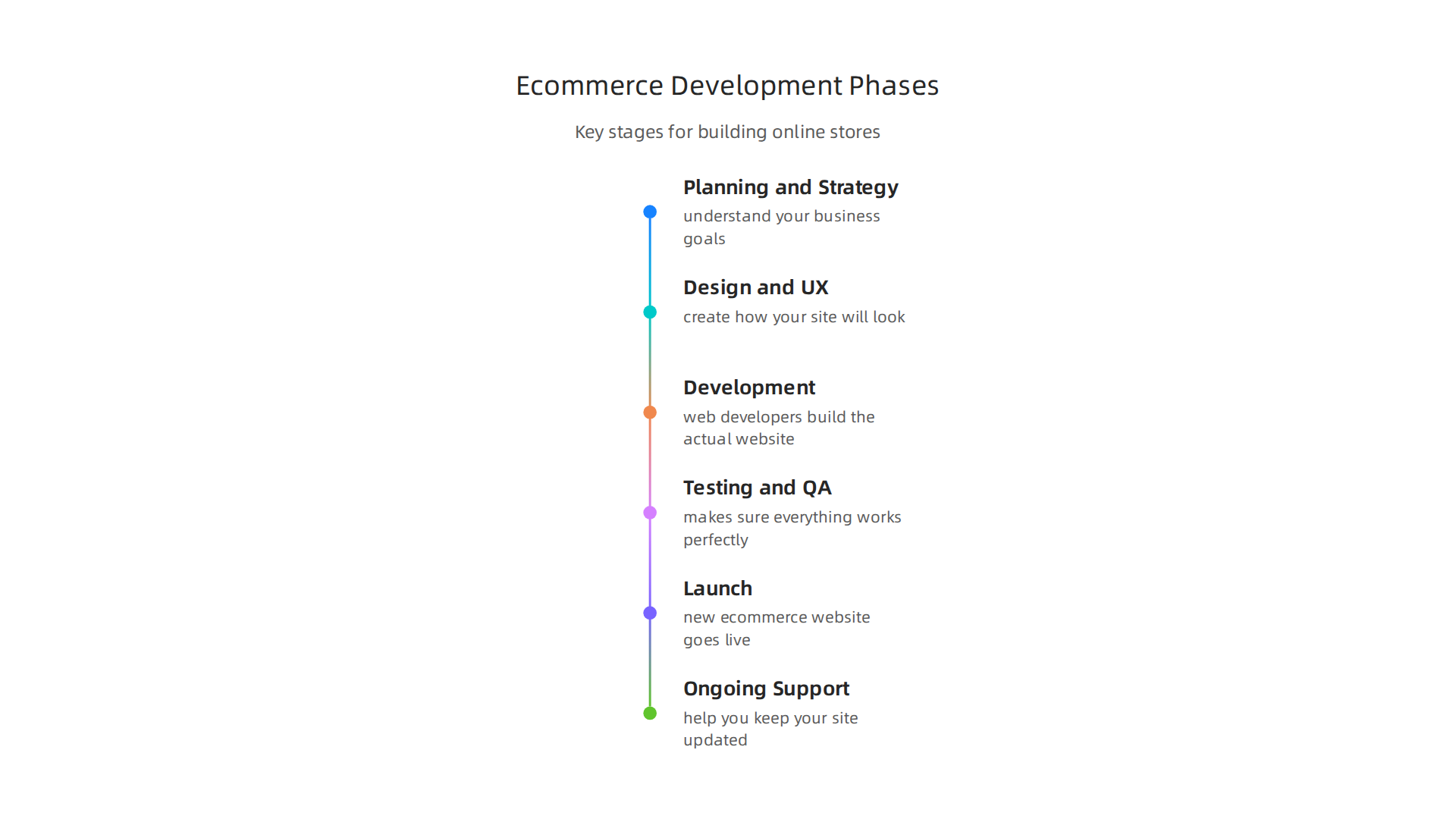
- Planning and Strategy: First, your team works to truly understand your business goals and what your customers need. This includes looking at your products and what makes your business special.
- Design and User Experience (UX): This is where your website starts to take shape. Designers create how your site will look and feel. They make sure it’s easy to use and looks good on all devices. You’ll see mockups or drawings of your future site.
- Development: After the design is approved, the web developers build the actual website. They write the code, set up the shopping cart, and add all the features. This is where your design becomes a real working website.
- Testing and Quality Checks: This is a very important step before your site goes live. It makes sure everything works perfectly.
- Launch: Once all checks are done and everything is ready, your new ecommerce website goes live for the world to see.
- Ongoing Support and Growth: Even after launch, a good ecommerce web development company will help you keep your site updated, secure, and growing.
For SMBs, this whole process can often take a few weeks to a few months, depending on how complex your store needs to be.
Important Checks Before Your Site Goes Live
Before your website opens for business, a good ecommerce seo services provider will do several quality checks:
- Quality Assurance (QA): This means looking for any mistakes or "bugs" in the website. Every button must work, every link must go to the right place, and all forms must collect information correctly. This often includes checking the full website experience, as noted in general ecommerce launch checklists 10 eCommerce Website Checklist For Launch Success in ….
- Accessibility: Your website needs to be usable by everyone, including people who have disabilities. This means testing for things like screen reader compatibility, keyboard navigation, and good color contrast. Many follow guidelines like WCAG 2.2, making sure that all important parts, like buttons and payment fields, can be used by assistive technologies E-Commerce Accessibility 2025: Complete WCAG …. It’s crucial for payment fields to be detectable by screen readers to ensure equal access How to Make Your Online Store ADA & WCAG Compliant.
- Performance: A slow website can make customers leave. Checks are done to make sure your site loads fast. This often involves making images smaller without losing quality and using special tools to deliver content quickly.
- Security: Keeping customer information safe is a must. All parts of your website should be secure, especially where people enter payment details. This means using strong security like HTTPS and making sure payment options are safe E-commerce Security: Checklist and Best Tools in 2026. Regular security checks are a key part of protecting your business and your customers’ trust.
By carefully going through these steps and checks, your new website will be ready to welcome customers and help your business grow.
Do you want to make sure your website follows all these best practices and grows your online store?
Grow Your Traffic on Autopilot
After making sure your new online store is ready to go, the next big step is understanding the money side of things. Knowing how to pay for your ecommerce website design services and what to look for in a quote is super important. It helps you get the best value for your business.
Pricing Models: One-Time Payment vs. Ongoing Plans
When you look for a company to build your online store, you will usually find two main ways they charge for their work:
- Upfront Project Pricing: This is like paying a set amount for the whole project to be built. You pay a big sum at the start or in a few parts until the website is done. This means you know the total cost for the build part right away. But remember, websites often need updates and help after they are launched. So, you might pay a big amount now, then more later for changes or fixes.
- Subscription or Managed Service Models: This is like paying a smaller amount each month. With this plan, you usually don’t have to pay a huge amount of money all at once to build your website. Instead, your payments cover the building of the site and also the ongoing help, updates, and growth work. This model is great for businesses that want steady costs and help with things like SEO and keeping the site fast and safe. It helps your website keep growing without big surprise bills. If you want to check out this kind of support, you can Get started with a free trial with a service that offers ongoing help for your business.
How to Evaluate Quotes and Find Clear Pricing
No matter which pricing model you choose, it’s key to get a clear quote. This means you need to know exactly what you are paying for.
Here are some things to look for when you get a price from an ecommerce web development company:
- What’s Included (Scope): Does the quote clearly say what work they will do? Like how many pages, what special features, and if they will add your products? Make sure it’s all written down.
- What You Get (Deliverables): Will they give you the website design files? Do you own the website once it’s built? These details are important.
- Extra Fees (Recurring Costs): Are there any monthly or yearly fees you need to pay? This could be for hosting your website, special software, or ongoing support. Make sure there are no hidden costs. A good
e commerce website design servicesprovider will be very clear about all fees.
Choosing a good web company is a big decision for your business. To learn more about selecting the right partner, check out our guide on choosing a website development services company for real business growth. Getting a transparent quote helps you avoid problems later and makes sure you get the website you need without breaking the bank.
Once you understand the costs and how to get a clear quote for your ecommerce website design services, the next big step is picking the right tools for your online store. Choosing the right platform is like choosing the right type of building for your shop. It really affects how well your business works and grows online.
Platform choices and integrations: what SMBs need to know
Small and medium-sized businesses (SMBs) have a few main options for building their online store in 2026.
Each choice has its own good and bad points.
Different Kinds of Ecommerce Platforms
-
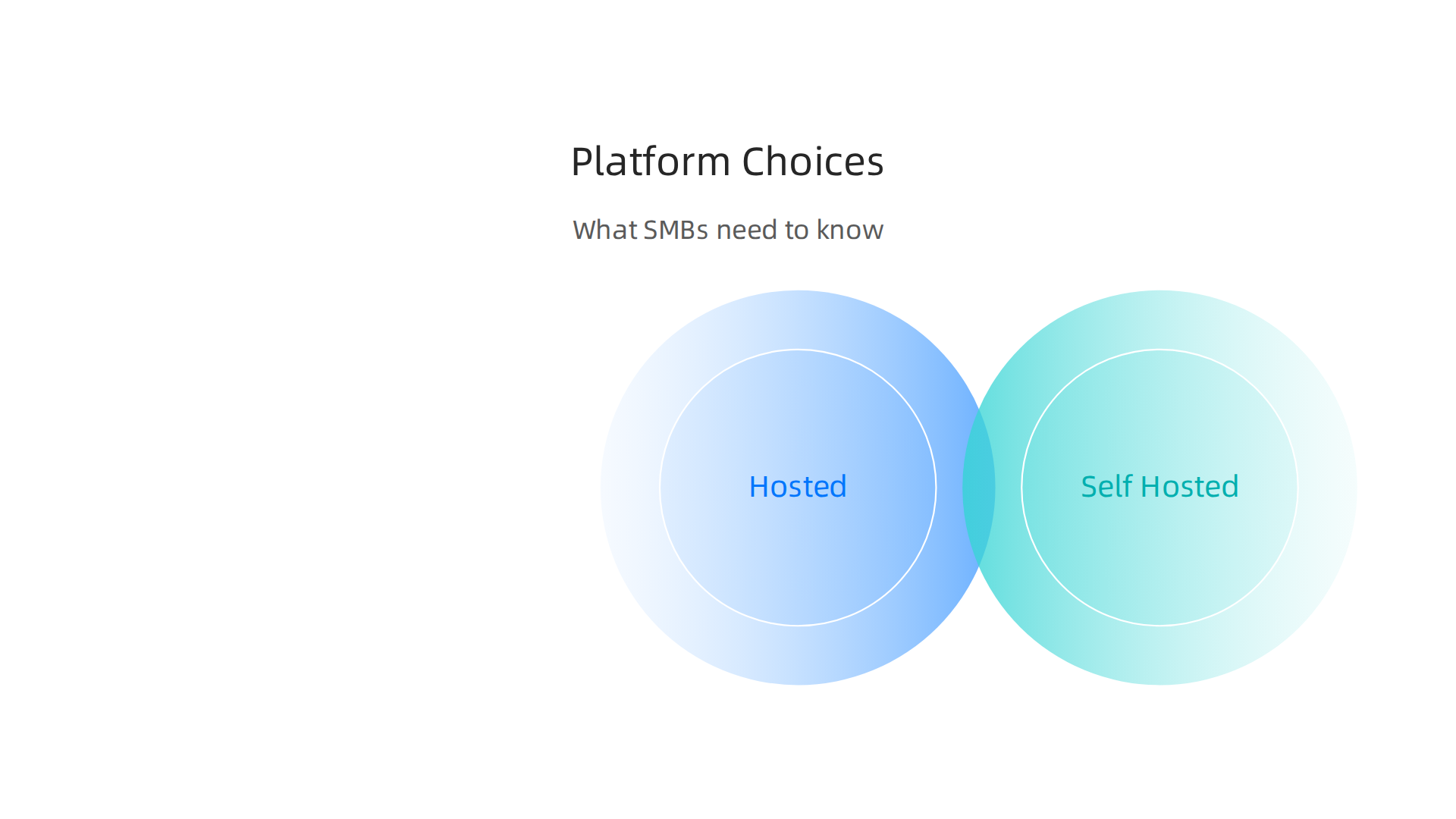
Hosted Platforms (SaaS)
- What they are: Think of these like renting an apartment. The company that owns the platform handles all the hard technical stuff like keeping your website online and safe. You just pay a monthly fee.
- Good points: They are usually easy to set up and use. You don’t need to be a tech expert. Many small businesses find mid-tier hosted platforms, like Shopify and BigCommerce, very helpful because they come with many features built-in. This includes tools for sales, understanding your customers, and connecting with other services Why choose e-commerce solutions for your SMB in 2026.
- Things to think about: You have less control over the code, and you pay a monthly fee. Custom changes might be harder or cost more.
-
Self-Hosted Platforms
- What they are: This is like owning your own house. You buy the land (hosting) and build the house yourself (install the software). You have full control over everything. Examples include WooCommerce (which works with WordPress) or Magento Open Source.
- Good points: You get full control over how your store looks and works. You can change almost anything you want. For businesses that need a lot of special features, a self-hosted platform gives you great freedom 7+ Best Self-Hosted Ecommerce Platform in 2026. You can also own your store completely Best Self-Hosted eCommerce Platforms Compared.
- Things to think about: You need more technical know-how. You are in charge of updates, security, and making sure everything runs smoothly. This can mean more work or needing to hire an
ecommerce web development companyfor help.
-
Headless Commerce
- What it is: This is a more advanced way of building an online store, popular in 2026. Imagine your store’s display (what customers see) is separate from the back end (where you manage products and orders). They talk to each other through special connections.
- Good points: It gives you a lot of freedom to create unique shopping experiences. Your website can be super fast and work on many devices, like phones or smart mirrors. This approach can be very flexible and powerful, especially for businesses that want to grow a lot Best Headless Commerce Platforms in 2026 (Compared). Some headless platforms like Medusa or Saleor can even be self-hosted, giving you even more control Best Headless Commerce Platforms 2026 | YNS.
- Things to think about: It’s more complex and usually costs more because it needs skilled developers to set up and manage Headless eCommerce vs Monolithic 2026: Cost, Maintenance …. It’s not usually the first choice for very small businesses just starting out.
For many small businesses, choosing a simpler hosted platform or a well-supported self-hosted option like WooCommerce makes the most sense. If you’re looking for ongoing support and a platform built for growth, you might find that Productized website platforms why smbs choose them for growth offer a good balance.
Essential Integrations for Growth
No matter which platform you choose, your online store won’t work alone. It needs to connect with other tools to run smoothly. These connections are called "integrations." Good ecommerce website design services make sure these connections are strong. In 2026, the best way to connect these tools is by using special links called APIs Ecommerce Integration Best Practices: The 2026 Guide to Building a ….
Here are the most important tools your store needs to connect with:
- Payment Processing: This lets your customers pay you. Think of services like PayPal or Stripe. Your store needs to talk to these services securely.
- Fulfillment and Shipping: These tools help you manage orders and send them to customers. They keep track of your products and help you print shipping labels. Connecting your store to these systems helps you move orders from payment to delivery with fewer steps and delays Best E-Commerce Platforms for Small Business 2026 | MRPeasy.
- Analytics: This helps you understand what’s happening on your website. How many people visit? What do they click on? Tools like Google Analytics give you this information.
- Marketing Automation: These are tools that help you talk to your customers. This could be for sending emails, running ads, or managing customer relationships (CRM). When these are connected, your marketing efforts work together better. Many helpful "plug-and-play" integrations exist for SMBs, letting you connect to things like Shopify, WooCommerce, and special order management systems quickly Plug-and-Play Integrations for SMBs in 2026 | Faster Setup – Omniful.
Having these integrations set up correctly by an e commerce website design services provider means your online store can grow without a lot of extra manual work. It also helps with things like ecommerce seo services, as a well-connected and fast site often ranks better.
A smart choice in platform and powerful integrations will set your online business up for real success. If you’re looking to enhance your online presence and ensure your website brings in more customers, it’s time to act.
Grow Your Traffic on Autopilot with a service that connects your website with AI tools for consistent growth.
A smart choice in platform and powerful integrations will set your online business up for real success. But even the best online store isn’t a "set it and forget it" kind of thing. To keep growing, getting more customers, and making more sales, you need to keep working on it. This ongoing work is called "optimization," and it’s key for any ecommerce website design services plan in 2026.
7. Ongoing optimization: SEO, CRO, content, and maintenance plans
Think of your online store like a garden. Planting the seeds (building the website) is important, but you also need to water it, give it sunlight, and pull weeds for it to grow big and strong. The same is true for your website. Without ongoing care, it might not reach its full potential.
Continuous optimization means always making small improvements to your website. These small changes add up over time, helping you get more traffic and sales.
An ecommerce web development company often helps businesses put these plans in place. Here’s what an affordable plan for small and medium-sized businesses (SMBs) should include:
Search Engine Optimization (SEO)
SEO helps your website show up higher in search results when people look for products or services like yours. For example, if you sell handmade jewelry, SEO helps your site appear when someone searches "handmade silver necklaces."
- Keyword research: Finding the words people use to search for your products.
- On-page SEO: Making sure your website’s pages are set up correctly for search engines, with good titles and descriptions.
- Technical SEO: Ensuring your website loads fast and works well on all devices. A well-connected and fast site helps with
ecommerce seo servicesand often ranks better. - Building links: Getting other trusted websites to link to yours, which tells search engines your site is important.
Good SEO is not a one-time task; it needs constant attention to keep up with changes in how search engines work and what your customers are looking for. Many businesses hire an SEO consultant in 2026 to help with this.
Conversion Rate Optimization (CRO)
CRO is all about getting more visitors to take action on your website, like buying a product or signing up for a newsletter. This is called converting a visitor into a customer. Even small improvements here can make a big difference to your sales. In fact, many companies see a great return on investment from CRO, often getting 3-5 times their money back in the first year alone Best CRO Agencies of 2026.
Here are some things CRO looks at:
- Website design: Is your site easy to use? Do customers know what to click next?
- Product pages: Do your product pictures look good? Is the information clear? Are there enough details about the products Top Strategies For Ecommerce Conversion Optimization In …?
- Checkout process: Is it simple and quick for people to buy things?
- Call to action buttons: Are they clear and easy to see?
Hiring the right conversion rate optimization agency can help you get more value from your existing website traffic.
Content Marketing
Content marketing means creating helpful and interesting information for your customers, like blog posts, videos, or guides. This content attracts new visitors to your site and helps you build trust with them. For an online store, this could mean writing about how to use your products, sharing customer stories, or giving tips related to your industry. This helps with your overall ecommerce website design services strategy.
Maintenance Plans
Just like a car, your website needs regular check-ups to keep it running smoothly. A good maintenance plan usually includes:
- Security updates: Protecting your site from hackers.
- Software updates: Making sure your platform and tools are always current.
- Backups: Saving a copy of your website so you don’t lose anything important.
- Performance checks: Making sure your site is always fast.
These ongoing steps ensure your online store stays safe, fast, and always ready for your customers. An e commerce website design services provider can bundle these services into an affordable plan, making sure your business website is always working for you, not against you.
Summary
This article explains why professional e-commerce website design services are essential for small and mid-sized businesses and how the right approach turns a brochure-like site into a consistent sales engine. It walks through the full lifecycle — discovery, design, development, launch, and ongoing optimization — and highlights common problems like low conversions, unclear pricing from agencies, and poor mobile or accessibility practices. You’ll learn practical ways to define measurable goals, run simple customer research, and choose between project-based, subscription, or managed service pricing. The guide compares platform types (hosted SaaS, self-hosted, headless) and lists must-have integrations such as payment, fulfillment, analytics, and marketing tools. It also covers UX and mobile-first best practices to reduce cart abandonment and improve trust, plus pre-launch checks for QA, performance, security, and accessibility. After reading, you’ll be able to evaluate quotes, pick the right platform and service model, and plan ongoing SEO/CRO and maintenance to grow your store reliably.