
Choose the Best UI/UX Design Course in 2026 for Career and Business
This article explains how to choose the right UI/UX design course in 2026 for career changers, freelancers and small business owners. It outlines the essential…


Choosing the right path to learn UI/UX design is super important in 2026.

This is true whether you run a small business or want to start a new career. UI stands for User Interface. It’s about how a website or app looks and feels. UX stands for User Experience. It’s about how easy and pleasant it is to use that website or app. A good UI/UX design course teaches you how to make digital things that people love to use.
What a Strong UI/UX Design Course Can Teach You
A strong UI/UX design course can teach you many valuable skills. You learn how to understand what users need, plan out how a product will work, and then design it to be easy and enjoyable. For example, a good course covers things like user research, making wireframes (simple drawings of a layout), prototyping (making early versions of a design), and testing with real people. It also teaches you about visual design, how things interact, and making designs that everyone can use easily. Some even cover new tools like AI in design, as a complete UI/UX course syllabus for 2026 shows UI/UX course syllabus: what good programs teach in 2026.
For small and mid-sized businesses (SMBs), having a great UI/UX means more customers. When your website or app is easy to use and looks nice, people stay longer and are more likely to buy from you. This leads to more sales and helps your business grow. A well-designed website acts like a strong helper for your business, always working to bring in new customers. To learn more about how this helps your company, read about what a UI/UX design course teaches for real business growth. For those building a career, learning UI/UX makes you very valuable. Companies always need people who can make their products better for users.
Common Problems When Looking for the Best UI/UX Design Course
Finding the best UI/UX design course can be tricky. Many courses are out there, but not all of them are up-to-date. Some courses might teach old ways of doing things that don’t help much in 2026. Another big problem is that some courses don’t help you create a strong portfolio. A portfolio is like your design resume, showing off your best work. Without one, it’s hard to get a job or new clients. Also, many learners are unsure if the money and time they spend on a course will really lead to a better career or more business success. It’s important to pick a course that focuses on what you actually produce at the end and how employers will view your skills, as guides on the Best UX Design Courses Online 2026 | Reviewed suggest.
If you’re an SMB owner looking to improve your online presence and attract more customers, a strong website with great UI/UX is key.
Grow Your Traffic on Autopilot
Getting the right skills can change your career or help your business truly shine online. If you are looking to quickly improve your website design and digital marketing without the typical high costs, consider trying a service that manages it all for you.
To pick the best UI/UX design course, it helps to know exactly what skills and projects a good one should offer. In 2026, a top-notch UI/UX design course goes much deeper than just the basics. It teaches you how to think like a designer and create things that truly help people.
What Top UI/UX Courses Teach in 2026: Core Skills and Deliverables
A strong UI/UX course will build your skills step-by-step. It starts with understanding people, then moves to making plans, designing, and testing.
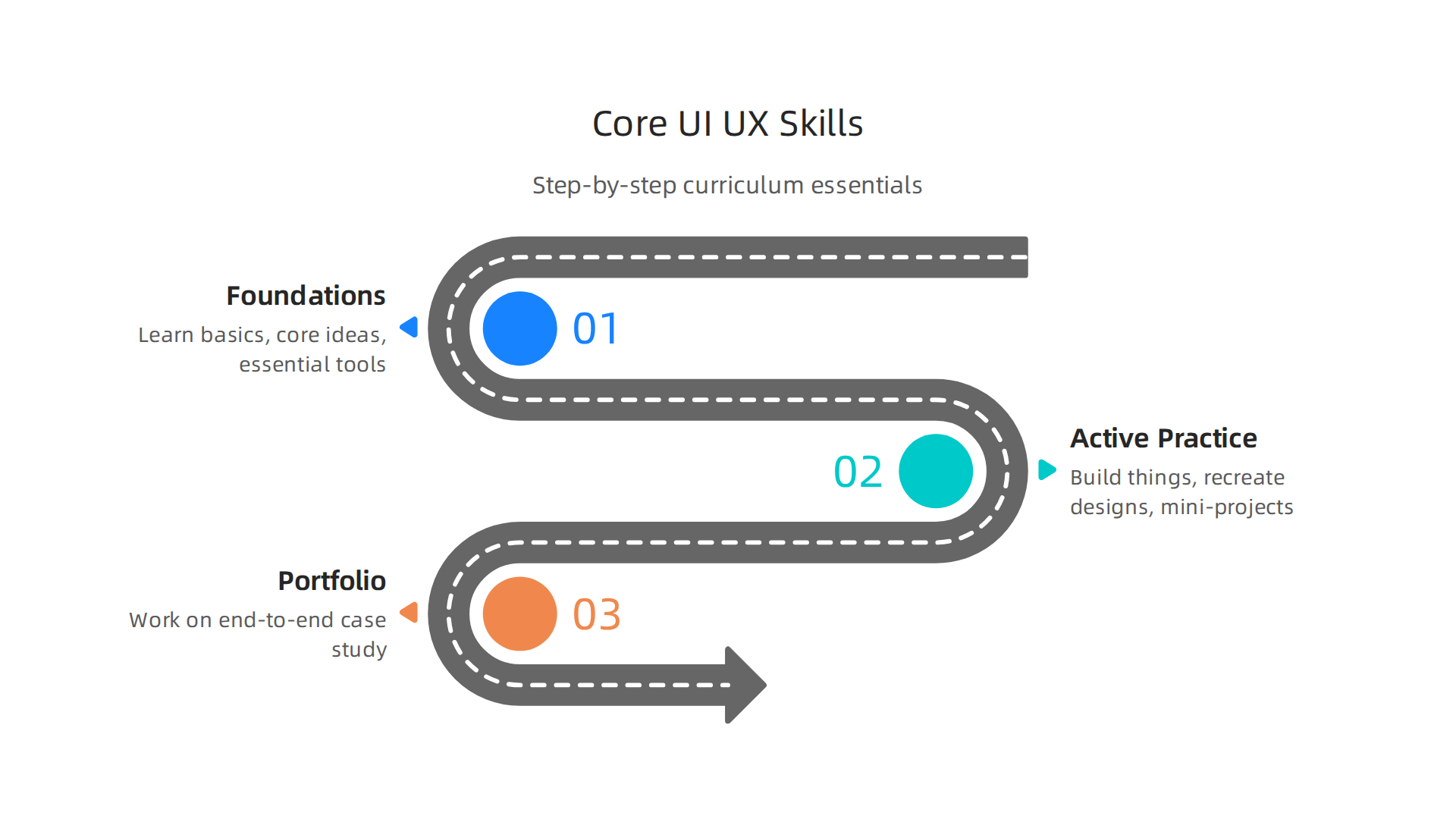
Core Curriculum Elements:
- User Research: This is where you learn about the people who will use your design. You find out what they like, what they need, and what problems they have. A good course teaches you how to do user interviews and surveys to gather this important information. Programs like the one offered by Emily Carr University Continuing Studies highlight user research as a core skill, along with product design strategy and prototyping in their 2026-2027 curriculum Emily Carr University Continuing Studies.
- Interaction Design: This skill focuses on how users will interact with your product. What happens when they tap a button? How do they move from one screen to another? It’s about making those steps feel smooth and natural.
- Prototyping: You’ll learn how to make early versions of your design. These "prototypes" aren’t the final product, but they let you test ideas quickly. Many courses emphasize building prototypes to see how your design ideas work in practice Best UX Design Courses & Certificates [2026].
- Usability Testing: After you make a prototype, you test it with real people. You watch them use your design and see if they can complete tasks easily. This helps you find problems and make improvements before the product is finished. The best UX design course will cover the entire UX process, including conducting user research and running usability tests Best Online UX Design Courses in 2026: Ranked and Compared.
- Handoff: This means preparing your designs so that developers can build them. It includes making sure all parts are clear and ready to be turned into a real app or website.
Portfolio Deliverables and Real-World Project Expectations:
One of the most important things a best ui ux course gives you is a strong portfolio. This is a collection of your work that shows off your skills to potential employers or clients. You can think of it like an artist’s scrapbook of their best drawings.
Here’s what you can expect to create:
- Case Studies: These are detailed stories of your design projects. They show the problem you solved, how you did your research, the design choices you made, and what you learned. This helps prove you can handle real-world challenges.
- Finished Design Projects: You will likely work on several projects from start to finish. These could be redesigns of existing apps, new website concepts, or even designs for new tech. The goal is to build a variety of examples that highlight your abilities. Many bootcamps, for example, end with a product design capstone that pulls everything you’ve learned together UX/UI Design Bootcamp Curriculum 2026.
- Files in Design Tools: You’ll learn to use tools like Figma, Sketch, or Adobe XD. The best ui/ux design course makes sure you have finished files in these programs to show you’re skilled with them.
Creating a powerful portfolio is key to showing what you’ve learned. It’s how you turn your new skills from a ui ux design course into actual job offers or business growth. To learn more about building a strong portfolio that gets you clients, check out our guide on how to build a portfolio UI/UX designer that wins clients in 2026. This way, you can clearly show others how your design thinking leads to real results.
To choose the best UI/UX design course, looking at the course outline, who teaches it, and what past students have achieved is very important.

Think of it this way: a great portfolio shows what you can do, but how you learn those skills truly matters.
How to evaluate course quality: syllabus, instructor credentials, and outcomes
When searching for the best UI/UX design course, you need to check a few key things to make sure you’re getting your money’s worth.
Key Syllabus Red Flags and Must-Haves
First, look closely at the course syllabus. This is like the map for what you will learn. A strong syllabus for a UI/UX design course in 2026 should cover many important areas.
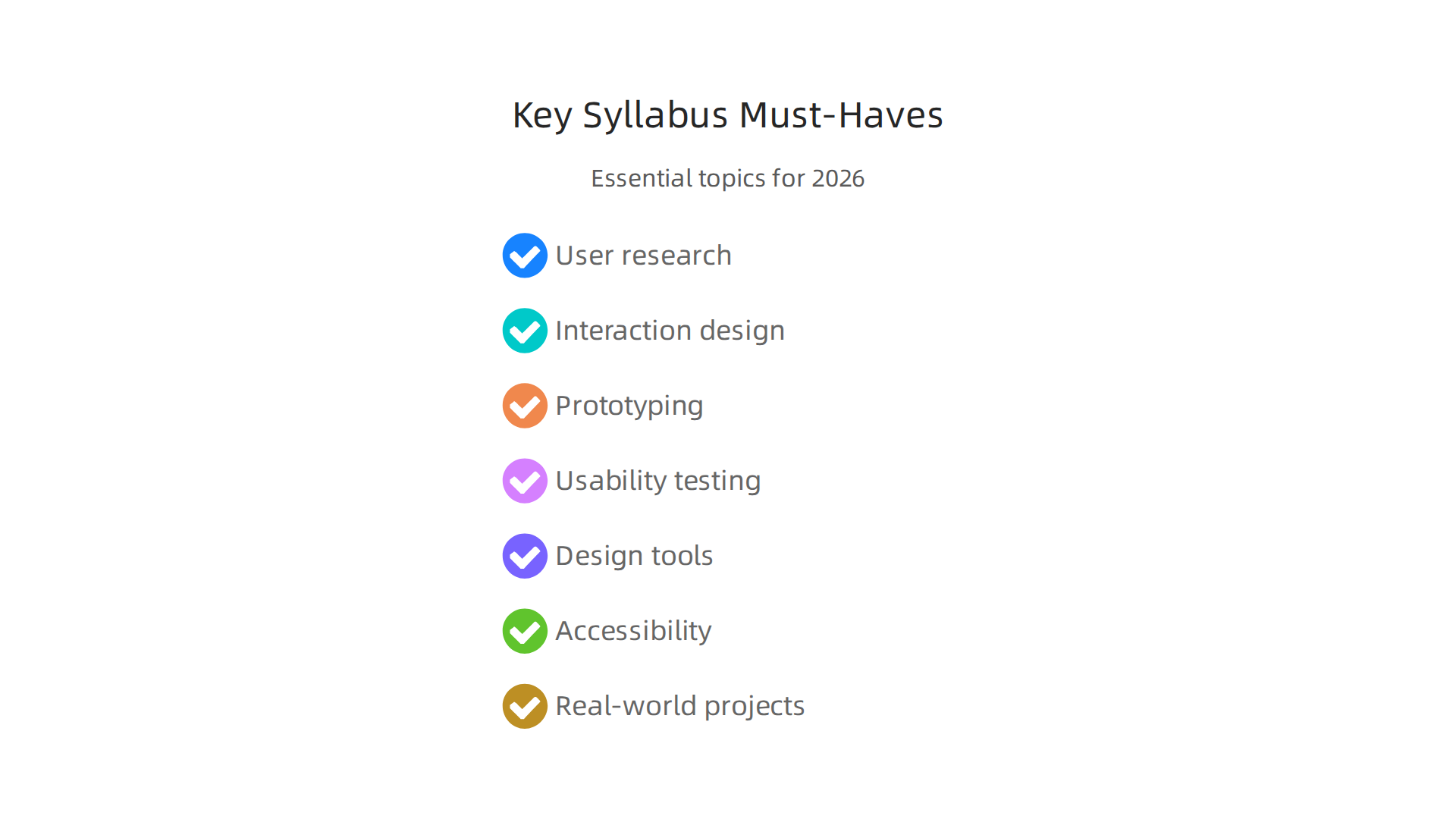
Must-haves include:
- User research: How to talk to people and understand their needs, often through interviews and surveys Course Catalogue For UI/UX & Graphic Design.
- Interaction design: Making sure buttons and menus work in a smooth, easy way.
- Prototyping: Building simple versions of designs to test ideas quickly.
- Usability testing: Watching real people use your designs to find problems.
- Design tools: Learning programs like Figma is a must, as many modern courses focus on it UI / UX Design using FIGMA.
- Accessibility: Designing for everyone, including people with different abilities.
- Real-world projects and case studies: These are vital for your portfolio. Many good programs teach the full UI/UX process, from understanding what UX is to doing user research and testing designs Best Online UX Design Courses in 2026: Ranked and Compared. Some courses even include modern topics like AI design tools UI/UX course syllabus: what good programs teach in 2026.
Watch out for red flags in the syllabus, too. If a course is too short, promises quick fixes, or doesn’t mention practical projects, it might not be the best ui ux course for you. Avoid courses that just touch on basic ideas without diving deep into how things actually work.
Evaluating Instructor Experience
The people teaching the course are super important. An instructor’s experience can make a huge difference. Look for teachers who:
- Have worked as UI/UX designers in real companies.
- Have many years of experience in the field, not just in teaching.
- Are up-to-date with the latest trends and tools in 2026.
Think about it: you want to learn from someone who has actually built successful products and solved real-world design problems. Their practical knowledge is priceless. Preparing instructors with the right skills and knowledge is key to delivering effective online learning Online micro-credentials toolkit.
Measuring Learner Outcomes
Finally, check what happens to students after they finish the course. Good learner outcomes show that the course truly helps people get ahead. Ask about:
- Job placement rates: How many students get jobs in UI/UX design after finishing?
- Salary increases: Do past students report earning more money thanks to the course? Many online learning platforms report that learners often improve their skills and even see a salary increase What Is Coursera?.
- Success stories: Look for examples of past students’ work and what they’re doing now.
Finding a ui ux design course best suited for you means looking at all these parts. Does the course teach you the right things? Are the teachers experts? Do past students succeed? Answering these questions will help you pick a course that genuinely supports your goals. If you’re looking for other ways to boost your skills and improve your business presence, consider exploring how to master advanced UI/UX design course for business leads and growth.
Want to see how great design can help your business get more customers?
Grow Your Traffic on Autopilot
Different types of UI/UX design courses fit different people. What might be the best ui/ux design course for one person might not be for another. It all depends on your goals, how much time you have, and how you like to learn. Let’s look at the main course formats you’ll find in 2026.
Course formats compared: self-paced, instructor-led, bootcamps, and university certificates
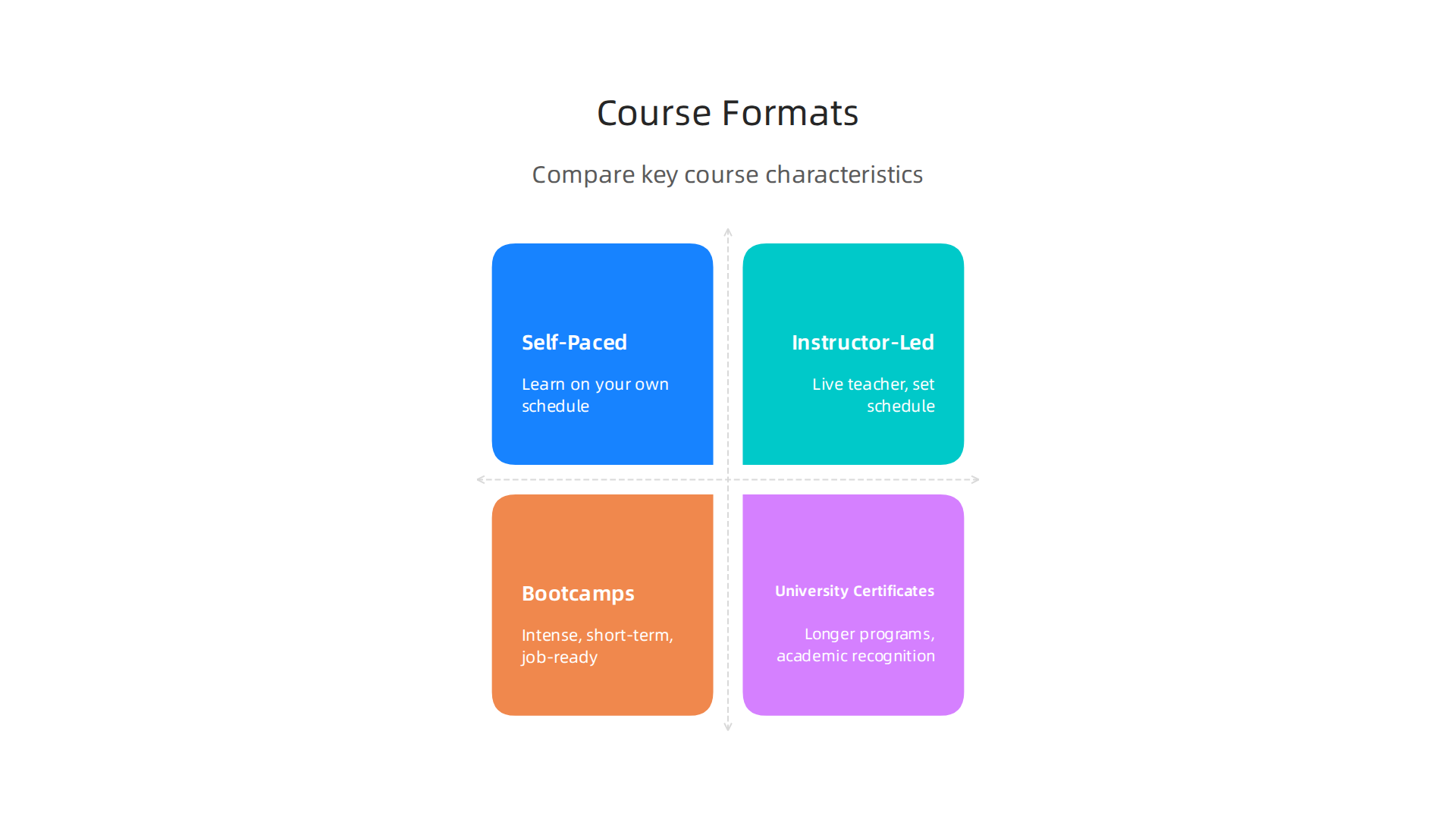
Choosing the right kind of course means thinking about your life and what you want to achieve.

Do you want to change careers fast, just learn new skills, or train your team? Each course type has its own good and bad points.
Self-Paced Courses
Self-paced courses let you learn on your own schedule. You get all the materials and can work through them whenever you want.
- Pros:
- Flexibility: Perfect if you have a busy job or family. You can learn late at night or on weekends.
- Lower Cost: Many self-paced options are more affordable, like some online certificates that might cost around $150 to $300 for a few months of learning
- Good for Upskilling: If you already work in design and just want to learn a new tool or method, this can be a good choice.
- Cons:
- No Direct Support: You usually don’t get a teacher to ask questions right away. This can be hard if you get stuck.
- Easy to Procrastinate: Without deadlines, it’s easy to put off your studies.
- Limited Mentorship: You might miss out on personalized advice and feedback.
Instructor-Led Courses
These courses have a set schedule with a live teacher, either online or in person.
- Pros:
- Guided Learning: Teachers can answer questions and explain difficult ideas. This can really help you understand complex topics like user research or interaction design.
- Feedback: You often get direct feedback on your projects.
- Structure: The fixed schedule helps keep you on track.
- Cons:
- Less Flexible: You have to attend classes at certain times.
- Higher Cost: These often cost more than self-paced options.
Bootcamps
Bootcamps are intense, short-term programs designed to get you job-ready quickly. They often focus on practical skills and portfolio building.
- Pros:
- Fast Career Change: Many bootcamps are made for people who want to switch careers. They teach you a lot in a short time, usually around 3 to 9 months
- Strong Career Support: Many bootcamps offer help with finding a job, like resume reviews and interview practice. Some even offer job guarantees. Bootcamps report an average job placement rate of 78% within six months of students finishing
- Mentorship: You often get a mentor who guides you through your projects. Programs like Designlab’s UX Academy and Springboard are known for strong mentorship models, and some even include AI workflows in their lessons for 2026
- Cons:
- Very Intense: They demand a lot of your time and energy. It’s like a full-time job.
- High Cost: Bootcamps can be expensive, with costs ranging from around $7,900 to $16,000 in 2026. However, many offer payment plans or options to pay after you find a job
- Not for Everyone: The fast pace might not suit all learning styles.
If you’re looking for a structured way to become a UI/UX designer and want to learn about potential earnings, you might find information on UI/UX designer jobs 2026 salary benchmarks and hiring tips for SMBs.
University Certificates and Degrees
These are longer programs offered by colleges and universities.
- Pros:
- Academic Recognition: A certificate or degree from a university is widely recognized.
- Deeper Theory: You often learn more about the theories behind design, not just the tools.
- Networking: You can connect with professors and other students.
- Cons:
- Longer Duration: These programs can take a year or more, much longer than bootcamps.
- Higher Cost: University programs are usually the most expensive option.
- Less Practical Focus: Sometimes, they are less focused on building a portfolio for immediate job entry compared to bootcamps.
When choosing, think about how much structure you need, how much you can spend, and how quickly you want to reach your goals. Some might find a free ui ux design course for small business website leads a good starting point before committing to a paid program.
It’s clear that finding the right learning path depends on many things. One big part of that choice is understanding the cost and what you’ll get back for your money. This is called Return on Investment, or ROI. For both people and small businesses, knowing the true value of a ui ux design course means looking beyond just the price tag in 2026.
Cost, ROI, and pricing models: estimating value for SMBs and individuals
When you pick a UI/UX design course, you’re investing in your future. You want to know that the money and time you put in will pay off. For individuals, this often means getting a new, better-paying job or starting a freelance career. For small businesses, it means a website that brings in more customers and helps you grow.
How to Estimate Your Return on Investment (ROI)
Think about what you want to achieve:
- For a New Job: If you aim for a new job as a UI/UX designer, look at the salaries people earn after finishing similar courses. Many bootcamps, for example, share how many of their students find jobs and what they earn. Some bootcamps report that about 78% of their students find a job within six months of finishing in 2026. Also, a good UI/UX design course helps you build a strong portfolio. A strong portfolio UI UX designer can show potential employers your skills and lead to better job offers.
- For Your Business: If you own a small business, a good best ui ux course can teach you how to make your website easier to use and more appealing. This can lead to more visitors staying longer, signing up for your services, or buying your products. The ROI here is seen in more leads, higher sales, and a stronger brand. You’ll want to choose a UI UX designer course to boost your business lead generation.
- Time-to-Productivity: This means how quickly you can start using your new skills to make money or improve your business. Bootcamps are often faster at getting you job-ready. Self-paced courses might take longer if you don’t stick to a schedule. A university degree might take the longest, but it offers deep learning.
Typical Pricing Models and How to Pay
The cost of a best ui/ux design course can vary a lot. Here’s a look at common ways to pay:
- Upfront Payment: You pay the full cost at once. Some places offer a discount if you do this. For example, some courses might cost around $197 for a single payment, while others can be much higher, like bootcamp costs that might be around $7,350 if paid upfront, reduced from $9,800.
- Monthly Payment Plans: You pay a smaller amount each month over a set period. Many bootcamps offer monthly plans, sometimes ranging from $300 to $800 a month in 2026. Online courses can also have monthly fees, like the Google UX Design Certificate which costs about $49 a month for 3 to 6 months, totaling about $150 to $300. Some courses in places like Mumbai can cost INR 50,000 to INR 2,50,000 for 3 to 6 month programs.
- Loans and Financing: Many programs work with lenders to offer loans. Some even offer 0% interest payment plans if you qualify. You might need to show bank statements or payslips.
- Income Share Agreements (ISAs): With an ISA, you don’t pay anything upfront. Instead, you agree to pay back a percentage of your salary once you get a job and start earning above a certain amount. This can be a good option if you can’t afford the upfront cost.
- Scholarships and Grants: Some programs offer scholarships. Also, new government programs like Workforce Pell Grants might help pay for short training courses, with a maximum award of $7,395 for eligible programs in 2026.
- Free Options: Don’t forget, there are free resources too, like YouTube tutorials or basic online courses. These might not give you a full career path but can be a great way to start and see if UI/UX design is for you.
When you’re looking for the [best ui ux design course], consider the total cost, how long it will take, and what kind of support you get for job hunting or business growth. This will help you make a smart choice for your future.
Want to turn your website into a lead-generating machine? Connect your website with Weblish and Grow Your Traffic on Autopilot with AI.It’s clear that finding the right learning path depends on many things. One big part of that choice is understanding the cost and what you’ll get back for your money. This is called Return on Investment, or ROI. For both people and small businesses, knowing the true value of a UI/UX design course means looking beyond just the price tag in 2026.
Cost, ROI, and pricing models: estimating value for SMBs and individuals
When you pick a UI/UX design course, you’re investing in your future. You want to know that the money and time you put in will pay off. For individuals, this often means getting a new, better-paying job or starting a freelance career. For small businesses, it means a website that brings in more customers and helps you grow.
How to Estimate Your Return on Investment (ROI)
Think about what you want to achieve:
- For a New Job: If you aim for a new job as a UI/UX designer, look at the salaries people earn after finishing similar courses. Many bootcamps, for example, share how many of their students find jobs and what they earn. Some bootcamps report that about 78% of their students find a job within six months of finishing in 2026, according to Hakia. Also, a good UI/UX design course helps you build a strong portfolio. A strong UI/UX designer portfolio can show potential employers your skills and lead to better job offers. If you are wondering about the long-term value, you might want to consider is a UX designer degree worth it.
- For Your Business: If you own a small business, a good best UI/UX course can teach you how to make your website easier to use and more appealing. This can lead to more visitors staying longer, signing up for your services, or buying your products. The ROI here is seen in more leads, higher sales, and a stronger brand. You’ll want to choose a UI/UX designer course to boost your business lead generation.
- Time-to-Productivity: This means how quickly you can start using your new skills to make money or improve your business. Bootcamps are often faster at getting you job-ready. Self-paced courses might take longer if you don’t stick to a schedule. A university degree might take the longest, but it offers deep learning.
Typical Pricing Models and How to Pay
The cost of a best UI/UX design course can vary a lot. Here’s a look at common ways to pay:
- Upfront Payment: You pay the full cost at once. Some places offer a discount if you do this. For example, some online courses might cost around $197, according to Evendeals. Others, like bootcamps, can be much higher. Springboard offers a standard tuition of $9,800, which can be $7,350 if paid upfront.
- Monthly Payment Plans: You pay a smaller amount each month over a set period. Many bootcamps offer monthly plans, sometimes ranging from $300 to $800 a month in 2026, as noted by Hakia. Online courses can also have monthly fees, like the Google UX Design Certificate which costs about $49 a month for 3 to 6 months, totaling roughly $150 to $300. Some UI/UX design course fees in Mumbai in 2026 average INR 50,000 to INR 2,50,000 for 3 to 6 month programs.
- Loans and Financing: Many programs work with lenders to offer loans. Some even offer 0% interest payment plans if you qualify, like Designboat School. You might need to show bank statements or payslips for these plans.
- Income Share Agreements (ISAs): With an ISA, you don’t pay anything upfront. Instead, you agree to pay back a percentage of your salary once you get a job and start earning above a certain amount. This can be a good option if you can’t afford the upfront cost.
- Scholarships and Grants: Some programs offer scholarships. Also, new government programs like Workforce Pell Grants might help pay for short training courses for the first time, with a maximum award of $7,395 for eligible programs in 2026, as outlined by Masters in Data Science.
- Free Options: Don’t forget, there are free resources too, like YouTube tutorials or basic online courses. These might not give you a full career path but can be a great way to start and see if UI/UX design is for you.
When you’re looking for the [best UI/UX design course], consider the total cost, how long it will take, and what kind of support you get for job hunting or business growth. This will help you make a smart choice for your future.
Want to turn your website into a lead-generating machine? Connect your website with Weblish and Grow Your Traffic on Autopilot with AI.
When you’re ready to make a living from UI/UX design, building a strong portfolio is super important.

It’s how you show off your skills to potential clients or employers, especially if you want to freelance or work with small businesses. The best UI/UX design course for you will help you create a portfolio that truly stands out.
What to look for in a course if you’re building a portfolio or freelance business
Choosing the right UI/UX design course is key for those who dream of building a portfolio that wins clients or starting their own freelance business. It’s not just about learning design tools; it’s about learning how to present your work and handle clients.
Real Projects and Portfolio Polish
A great course will focus on helping you create projects for your portfolio. This means:
- Project Scope and Quality: Look for courses that let you work on detailed projects. These projects should be like what you’d see in the real world. You want to show that you can handle a whole project from start to finish. Good portfolios make it clear what you specialize in and prove you can solve actual business problems, reducing risk for clients you want to work with, according to the Best Freelance UX/UI Designer Portfolio Examples.
- Real Client Work vs. Simulated Projects: While simulated projects are helpful for learning, courses that offer real client projects are even better. Working with actual businesses gives you experience with client communication, deadlines, and making designs that meet specific business goals. If real client work isn’t possible, choose a course that guides you to create case studies that reflect real-world challenges. Many experts suggest focusing on two or three strong case studies rather than many weak ones, showing your process and explaining the "why" behind your decisions, as noted in UX Portfolio Examples: Real Portfolios Reviewed & Rated.
- Portfolio Polish: The best UI/UX design course will also teach you how to polish your portfolio. This includes how to write compelling case studies that explain the problem, what you did, and what changed because of your work. Your portfolio should clearly show the impact of your designs, perhaps by sharing results like "reduced bounce rates by 25%," as highlighted in Stop the Generic Portfolio Trap! Design a Stand-Out. It should also show your individual role in each project and what lessons you learned. Building a strong portfolio often means creating a personal website to display your work, complete with three to five detailed case studies that show how you solve user problems and deliver results. Learn how to present your work effectively by boosting your leads by choosing portfolio website templates that convert.
Learning the Business Side of Design
Beyond design skills, a good UI/UX design course will prepare you for the business challenges of freelancing:
- Pricing Your Services: Knowing how to price your work is vital. A great course will teach you different pricing models, how to value your time, and what to charge for different types of projects. This is especially important for small and mid-sized businesses (SMBs) who need clear, fair pricing.
- Client Communication: Learning how to talk to clients is a skill in itself. This means understanding their needs, explaining your design choices, and handling feedback. Look for courses that include lessons or practice in client interactions. Being able to explain "what is UI design" in simple terms to a business owner can make a big difference when trying to land new work and help them understand what you offer.
- Packaging Services for SMB Clients: Many small businesses need design work but might not know exactly what to ask for. A useful UI/UX design course will teach you how to create clear service packages. This could mean offering website redesigns, app UI improvements, or user experience audits as distinct services. Learning to talk about "what is a UI/UX designer" in terms of solving business problems will make you more appealing to these clients.
In summary, a top UI/UX design course will not only teach you the design skills but also give you the tools and knowledge to build an impressive portfolio and effectively manage your freelance business.
Building a practical learning plan: combining courses, projects, and ongoing practice
After picking the best UI/UX design course for your goals, the next step is to make a smart learning plan. It is not enough to just take a course; you also need to put what you learn into practice. This means combining your coursework with real projects, getting feedback, and always learning new things. A good plan helps you go from a beginner to a pro with a strong portfolio.
Your Learning Path: Step by Step
Think of your learning journey like a roadmap. Most experts suggest breaking it down into phases,
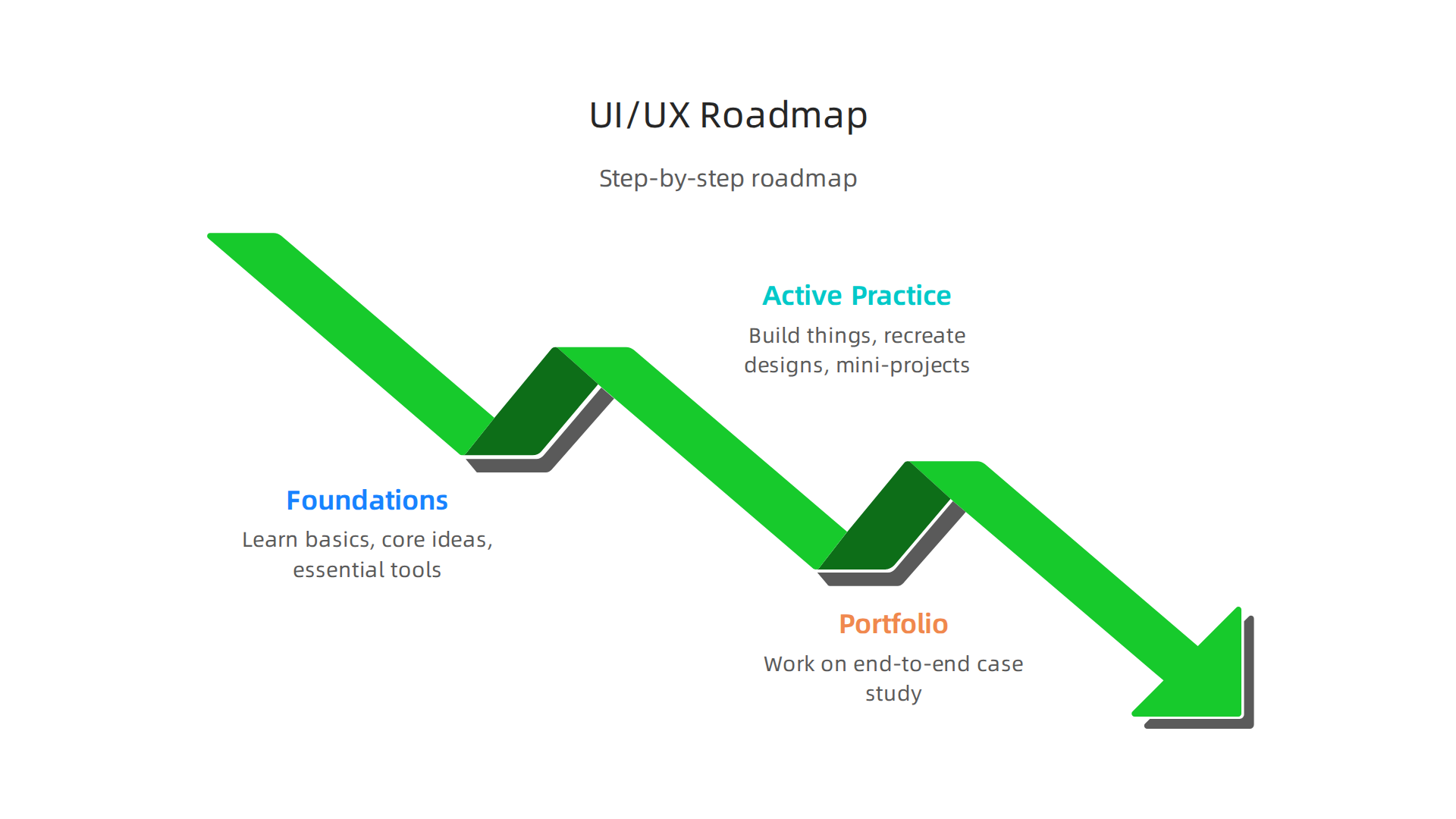
especially for a best UI UX course that wants you to be job-ready in a few months.
- Phase 1: Foundations (Weeks 1-4)
Start by learning the basics. This includes core design ideas like how colors work, different fonts, and how to lay out elements on a screen. You should also get good at using essential tools like Figma. Many roadmaps suggest focusing on visual design principles and basic UX concepts during this time. One guide suggests learning about design principles, basic UX, and getting familiar with tools in the first few weeks, even recommending simple daily UI exercises. These exercises help you build muscle memory for design tasks, as noted in a UI/UX Designer Roadmap. - Phase 2: Active Practice (Weeks 5-8)
Now it’s time to build things. A good way to learn is by recreating existing app screens or parts of popular websites. This helps you understand how good designs are put together. You should also start mini-projects. These could be small tasks like creating a style guide for a fake brand or designing a new feature for an app you use. The goal is to apply what you’ve learned. Actually, daily practice and recreating good designs are key to improving your skills, as highlighted in a UI/UX Designer Roadmap 2026. Try to set aside specific time each day for your design studies, treating it like a real appointment to make sure you stick with it. This focused time helps you move from just learning about skills to actually using them in practice, according to a guide on How to Break Into UI/UX Design in 90 Days in 2026. - Phase 3: Building Your Portfolio (Month 3 and Beyond)
This is where everything comes together. You should work on an end-to-end case study, perhaps by solving a real problem for a small business or even a personal project. This big project will be the main part of your portfolio. It needs to show your full design process, from understanding the problem to creating the final solution. The best ui ux design course will guide you through this, helping you create a detailed story around your project. When doing this, remember that getting immediate, specific feedback is super helpful for getting better. Focus on improving what you are not good at yet, rather than just what you do well, as explained in tips for How to Improve Your UI Design Skills in 2026.
Ongoing Skill Maintenance
The world of UI/UX design changes fast, so you should always keep learning. This means:
- Stay Updated: Read blogs, watch videos, and follow other designers. New tools and ways of thinking come out all the time.
- Practice Regularly: Keep doing small design challenges. Some suggest weekly research practice, daily sketching, and a monthly prototype to keep your skills sharp, as noted in a 90-Day Portfolio & Interview Plan.
- Seek Feedback: Don’t be afraid to show your work to others and ask for their thoughts. Learning how to get feedback and use it to improve your designs is a key part of becoming a good designer.
By following a structured plan like this and choosing the best UI/UX design course that fits your learning style, you can build the skills and portfolio needed to succeed. Many business owners also benefit from understanding UI/UX, and if you’re ready to grow your online presence, it might be time to find out what a UI/UX design course teaches for real business growth.
Ready to turn your design skills into a thriving online business or to help clients do the same? You can automatically attract more visitors and potential clients.
Grow Your Traffic on Autopilot
Summary
This article explains how to choose the right UI/UX design course in 2026 for career changers, freelancers and small business owners. It outlines the essential curriculum a strong course should include—user research, interaction design, prototyping, usability testing, accessibility and developer handoff—and explains why those skills matter for real business results and hireability. You’ll learn how to assess syllabi, instructor experience and learner outcomes, plus the difference between self-paced classes, instructor-led programs, bootcamps and university certificates. The guide covers portfolio expectations (case studies, finished files and real projects), recommended learning phases to get job-ready, and practical cost and payment models to estimate ROI. By the end you’ll know what to look for in course deliverables, pricing, timelines and formats so you can pick a program that builds useful skills and a portfolio that wins clients or jobs.