
Portfolio Website Design That Generates Leads for Small Businesses
This article shows how to turn a portfolio website from a passive gallery into a consistent lead-generation engine. It covers practical design choices—like mini…


Introduction
Your portfolio website is the single most powerful sales tool you own. But here is the truth: most small business websites do not actually generate leads. They just sit there looking pretty.
That used to be enough. A clean template and some nice photos could win you clients a few years ago. Not anymore. In 2026, visitors expect way more. They want a fast, story-driven experience that proves why you are the right choice.
If your site feels generic or outdated, you are losing business. People judge your credibility in seconds.

A boring homepage or a slow loading page sends them straight to a competitor.
The good news? You do not need to start from scratch. With the right portfolio website inspiration, you can turn your digital storefront into a lead generation engine.
This article is your practical guide. Whether you own a small business or manage marketing, you will discover real examples of the best portfolio websites. You will explore website layout ideas that actually convert visitors into customers. And you will get actionable tips you can use today.
Think of this as your roadmap for portfolio website design that really works. Let us begin with what makes a portfolio great and how you can apply those ideas to your own site.
For more hands-on advice, check out these small business website conversion tips that show you exactly how to turn visitors into paying customers.
And when you are ready to put these ideas into action, you can Grow Your Traffic on Autopilot by connecting your website with Weblish. Their done-for-you service builds premium sites that actually generate leads, so you can focus on running your business.
1. Embrace Minimalist & Clean Design to Let Your Work Shine
Here is the thing about minimalism. It is not about having nothing on your page. It is about making sure every single thing earns its place.
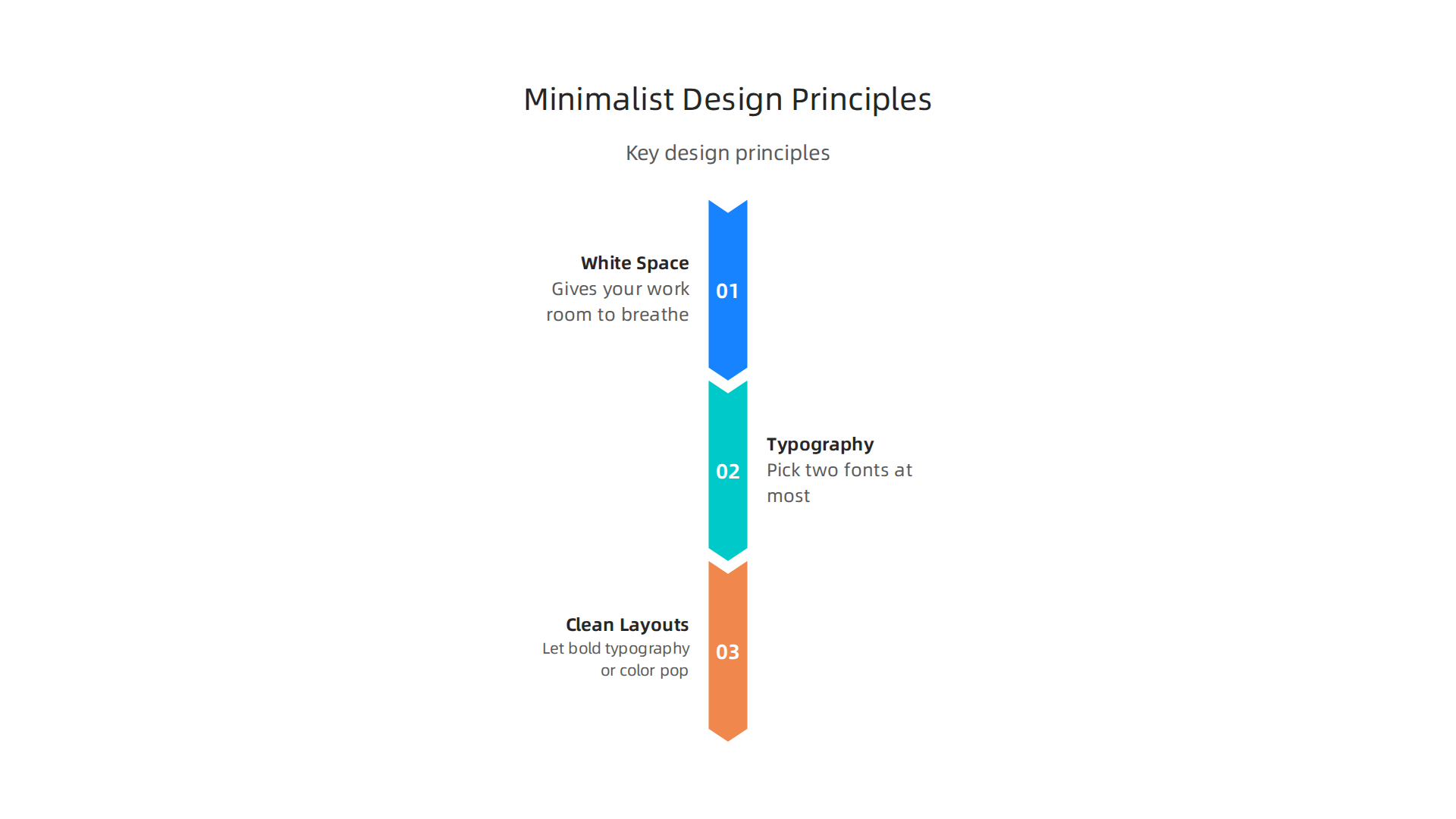
White space (also called negative space) gives your work room to breathe. When you leave empty areas around your images and text, each piece gets the attention it deserves. The result? Visitors actually focus on your portfolio samples instead of feeling lost.
Typography matters just as much. Pick two fonts at most. Use size and weight to guide the eye. A big bold headline says "start here." A smaller subhead whispers "keep going." This hierarchy makes scanning easy.
Many of the best portfolio websites in 2026 use this approach. They keep layouts clean while letting bold typography or a single color pop do the talking. One of the top web design trends for 2026 explains how designers now treat white space almost like a color. It is a deliberate tool, not leftover space.
Why does this work for your business? A clutter-free layout helps visitors make faster decisions. They see your best work first. They understand what you do within seconds. No hunting. No confusion.
Think about the last time you visited a busy, crowded website. Did you stay long? Probably not. The same thing happens with your site. A clean, focused design keeps visitors engaged longer. And longer visits mean more leads.
Want proof? These same website layout ideas apply across all types of portfolios. Check out this guide on using design principles like contrast to convert more visitors for proof that simple layouts work better.
Your portfolio website inspiration should come from one simple idea: Let the work speak for itself. A minimal design says "I am confident in what I do." That confidence builds trust. And trust turns visitors into clients.
2. Create an Interactive & Immersive Experience with Micro-Animations
Here is the thing about a clean design. It gets people in the door. But micro-animations are what keep them inside.
Think about tiny movements on a page. A button that shifts color when you hover over it. An image that fades in as you scroll down. A menu item that gently bounces when clicked. These small moments feel good. And they make visitors want to stay and explore more.
In 2026, the best portfolio websites use subtle motion to guide people through the experience. Hover effects tell you "this is clickable." Scroll reveals whisper "keep going, there is more below." These cues feel natural. They do not need instructions.
The key word here is subtle. You do not want flashing banners or spinning logos. That distracts from your work. Instead, think of motion as a tour guide. It points to your best pieces. It makes navigation feel smooth and effortless.
According to a guide on current portfolio design trends for 2026, small UX details and micro-interactions keep engagement levels high. They make browsing feel more like playing than reading. And that means visitors actually go past your first project.
Why does this matter for your business? A static site feels like a brochure. An interactive site feels like a conversation. When visitors interact with your work, they remember it. They feel more connected. And that connection makes them more likely to pick up the phone or fill out a contact form.
Want to go deeper? This article on building a UI UX designer portfolio that wins clients shows how motion design can make your work stand out from the competition.
Interactivity does not need to be complex. A few well-placed hover effects and scroll animations can turn a ordinary portfolio into something people actually enjoy browsing. And that enjoyment is what turns visitors into leads.
Ready to bring your portfolio to life? Grow Your Traffic on Autopilot and let Weblish handle the technical details while you focus on creating great work.
3. Showcase Case Studies with Data-Driven Results
Here is a truth about hiring decisions. People trust numbers more than opinions. When a potential client visits your portfolio website, they want proof. Not "I helped a client grow." But "I helped a client grow revenue by 150% in six months."
That difference matters. A lot.
The best portfolio websites in 2026 do not just show pretty pictures. They tell stories backed by data.
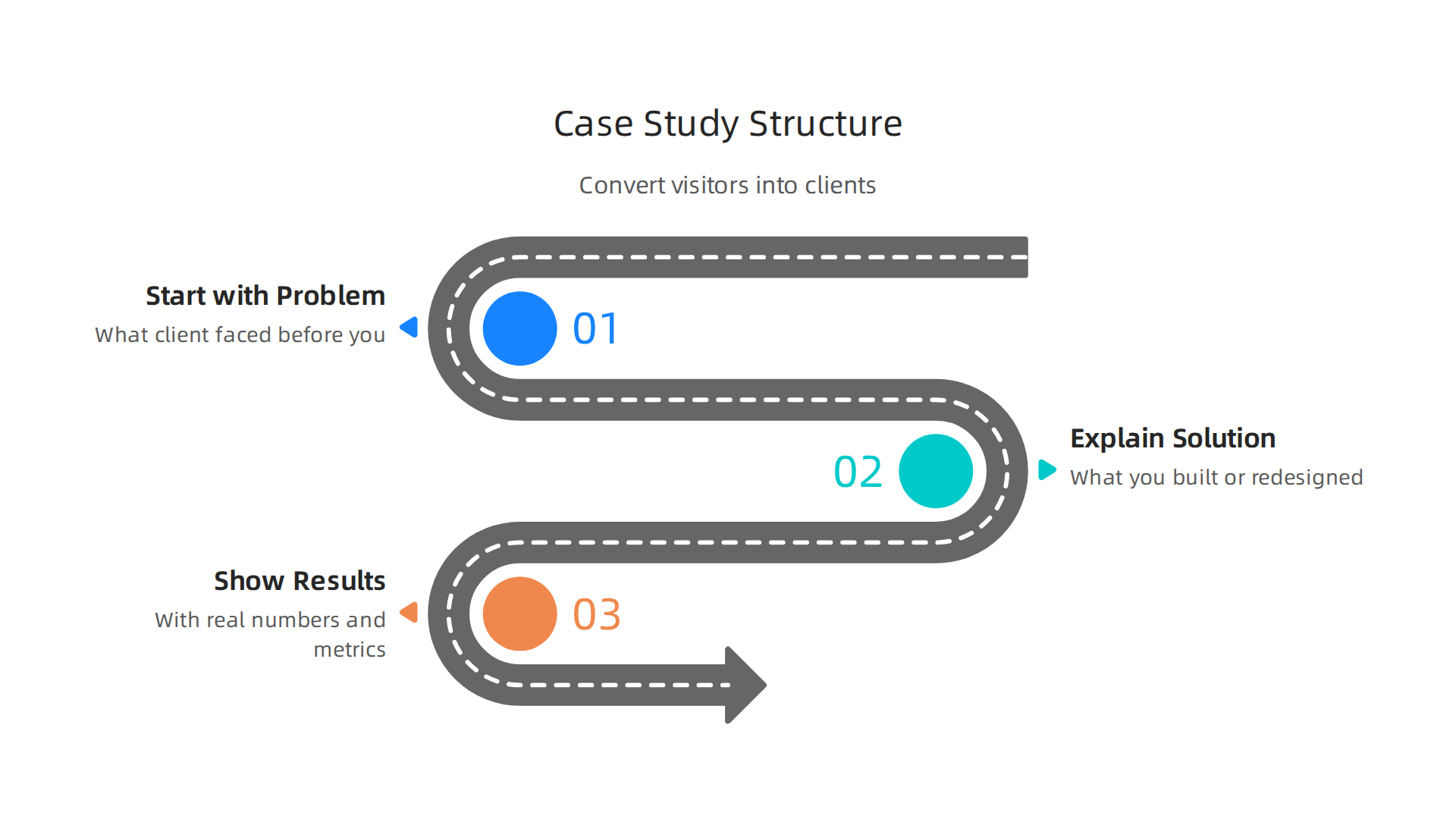
And those stories follow a simple structure that works every time.
Start with the problem. What was the client facing before you stepped in? Be specific. "Their website had a 2% conversion rate and they were losing leads to competitors."
Then explain your solution. What did you build or redesign? Keep it clear. Focus on the actions you took.
Finally, show the results with real numbers. "After the redesign, their conversion rate jumped to 8% and monthly leads doubled." That is the kind of proof that makes someone pick up the phone.
According to a detailed guide on case study examples that convert in 2026, the strongest case studies always end with concrete metrics. Numbers like increased traffic, improved conversion rates, or reduced load times are what close deals.
You can make these case studies even stronger by adding visual proof. Include a client logo. Add a short quote from the client. Before and after screenshots work wonders. These small touches build trust fast.
Want more ways to turn your portfolio into a lead generator? Check out these small business website conversion strategies for practical tips.
Remember, your portfolio is not just an art gallery. It is a sales tool. When you prove your results with real numbers, you make it easy for clients to say yes.
4. Optimize for SEO to Attract the Right Clients Organically
A beautiful portfolio means nothing if nobody finds it. That is where SEO comes in.
Search engine optimization helps your work show up when potential clients are looking for exactly what you offer.
Start with the basics. On-page SEO includes things like title tags, header structure, and image alt text. These small tweaks tell Google what your page is about. When you use clear headings and describe your images properly, search engines can understand your content better. This helps you appear in relevant searches for portfolio website design.
Targeting specific long-tail keywords makes a huge difference. Instead of trying to rank for "graphic designer," aim for something like "freelance graphic designer for healthcare." These longer phrases have less competition. And the people searching for them already know what they want. That means higher quality leads for you.
Think about what your ideal client types into Google. Then build your content around those exact phrases. According to the 2026 guide on organic website traffic strategies, placing target keywords within the first 100 words and in your H1 tag helps search engines understand page relevance.
Adding a blog section to your portfolio site changes everything. Every article you write is a new chance to get found in search. Write about design trends, client success stories, or answers to common questions. Each post pulls in visitors who might become clients.
Want to turn those visitors into paying customers? Learn how to build a UI UX designer portfolio that wins clients in 2026 with practical optimization tips.
SEO is not a one-time thing. It is an ongoing process that brings the right people to your door. And when paired with strong design, it turns your portfolio into a lead generation machine that works around the clock.
Grow Your Traffic on Autopilot by connecting your portfolio with Weblish and letting AI handle the heavy lifting.
5. Integrate Social Proof & Testimonials Throughout the Journey
Visitors are naturally skeptical. They wonder if you can really deliver what you promise. Social proof cuts through that doubt. For small businesses without a big brand name, it is often the difference between a curious look and a booked project.

Start collecting testimonials from day one. Even one happy client gives you real words to use on your site. Do not hide these on a separate page. Place them where decisions happen. Put a powerful quote right next to your call-to-action. Add a short testimonial inside your case studies. That is where people need that extra nudge.
According to the framework for social proof that converts, matching each testimonial to a specific benefit on the page makes the proof feel more authentic. A client who raves about your fast turnaround is best placed near your timeline section.
Video testimonials work even better than text. When a real person speaks on camera about their experience, it feels harder to fake. Research shows that video testimonials can lead to significant conversion improvements over text-only reviews. Just one short clip from a client can transform how visitors see your credibility.
Spread social proof across your entire portfolio website design. The homepage is a great start. But also add client logos, short quotes, or even simple testimonial snippets on your service pages and contact forms. The more touchpoints you cover, the more trust you build.
Want more ways to turn that trust into real leads? Check out these small business website conversion tips to close more deals.
6. Design with a Mobile-First Approach to Capture On-the-Go Visitors
Think about the last time you looked up a service on your phone. You probably landed on a site that was hard to tap, slow to load, and made you zoom in just to read anything. Most visitors give up after that. They leave and find someone else.
Here is the reality for anyone looking for portfolio website inspiration today: mobile traffic now makes up over 60% of visits on many service provider sites. If your homepage does not work perfectly on a small screen, you are turning away more than half of your potential clients before they even see your work.
A mobile-first approach means you design for the smallest screen first and then scale up. That forces you to think about what really matters. Touch-friendly navigation, legible fonts without pinching, and big enough tap targets make a huge difference. Also keep load times fast. Each extra second of load time can cost you a significant number of conversions. Sites that pass all three Google Core Web Vitals thresholds see 24% lower bounce rates according to the guide on how Core Web Vitals affect mobile search rankings in 2026.
Google now uses mobile-first indexing. That means the mobile version of your site is what Google looks at to decide your search ranking. A slow or clunky mobile layout hurts your visibility no matter how good your desktop version looks.
When you browse best portfolio websites for inspiration, notice how the best ones work smoothly on any device. They make navigation simple, use enough white space, and load images without delay. Applying those same principles to your own portfolio website design will keep visitors engaged on the go.
Want to build a winning portfolio that works across all devices? Check out this guide to building a UI UX designer portfolio that wins clients for step by step help.
If you want a done for you solution that handles mobile optimization, fast hosting, and ongoing performance monitoring, get started with Weblish by signing up and claiming your free trial. For even more help turning visitors into leads, connect your website with Weblish and grow your traffic on autopilot with AI.
7. Build a Content Strategy That Demonstrates Your Expertise
A beautiful portfolio shows what you have made. A content strategy shows what you know. That difference matters more than you might think.
When you regularly share blog posts, guides, or short video insights, you position yourself as someone who truly understands their craft.

Clients notice that. A graphic designer who writes about color psychology attracts brand owners looking for a logo refresh. A kitchen remodeler who shares planning tips brings in homeowners ready to start a project. That is how good portfolio website inspiration turns into real client conversations.
The smartest portfolio website design connects your writing directly to your work. Write a guide on kitchen remodeling and link to your best kitchen project. Share a post about branding trends and point to your favorite logo portfolio piece. This creates a clear story for visitors. They see your thinking and your results together. That builds trust fast.
Building a content strategy with topic clusters can dramatically increase your reach. According to the guide on the best strategies to grow organic website traffic in 2026, using linked pillar pages and supporting content can drive significant traffic growth over time. That means more of the right people discover your work.
When you browse the best portfolio websites for ideas, notice which ones include blogs or resource sections. The ones that do are pulling ahead. They understand that showing expertise matters as much as showing finished projects. Your content becomes a reason for people to stay, explore, and trust you enough to reach out. For practical tips on creating content that ranks well and attracts qualified leads, check out these SEO content optimization strategies for small businesses.
8. Use Clear Calls-to-Action & Lead Capture Forms at Every Stage
Here is the thing about portfolio website inspiration. A stunning page that shows off your best work is great. But if a visitor finishes looking and has no idea what to do next, you just lost them.
Every single page on your site needs a purpose. And that purpose needs a button.

Think about what you want people to do after they see a project. Do you want them to request a quote? Book a discovery call? Download your rate sheet? Pick one clear action and make it impossible to miss. A button that says "Get a Quote" or "Book a Call" beats a vague "Learn More" every time. Be direct. Be specific.
The form behind that button matters just as much. Nothing kills a lead faster than a long form with ten required fields. Keep it simple. Name and email is usually enough. You can ask for details once you are on the phone together. Minimal form fields reduce friction and increase how many people actually hit submit.
And here is a trick that works surprisingly well. Set up an exit-intent popup for visitors who are about to leave your site. Offer them something useful for free. A project checklist. A pricing guide. A short ebook on your design process. When you deliver real value without asking for much in return, people are happy to share their email. One effective strategy is to place live notifications or trust signals near your sign-up form to reinforce confidence, as highlighted in this guide on real-time social proof placement.
For a deeper look at how to turn casual browsers into real conversations, check out these practical tips on how to turn visitors into leads through smart website design.
Remember, your portfolio website inspiration should lead somewhere. Every page should point toward the next step.
Once visitors trust your work and your expertise enough to fill out a form, you need a system to keep that momentum going. That is where ongoing support comes in. Grow Your Traffic on Autopilot by connecting your site with a team that handles the rest of the growth journey for you.
9. Speed Up Your Portfolio to Reduce Bounce Rates
You spent time choosing the perfect images and writing clear copy for your portfolio website inspiration. But if those pages take more than a few seconds to load, visitors will leave before they see any of it.
Page speed matters more than most people realize. Google’s own research shows that cutting load time from three seconds down to one can improve conversion rates by up to 27 percent. And a one-second delay on mobile can reduce conversions by as much as 20 percent, according to the 2026 Core Web Vitals performance guide. That is money walking away because a page felt slow.
Speed is also a confirmed ranking signal. Google uses three specific metrics called Core Web Vitals to measure real user experience. Largest Contentful Paint tracks how fast the main content appears. Interaction to Next Paint measures responsiveness. And Cumulative Layout Shift checks whether elements jump around as the page loads. Passing all three thresholds correlates with 24 percent lower bounce rates and measurable organic traffic gains, as explained in this detailed Core Web Vitals optimization guide. That means faster sites not only keep visitors happy but also rank higher in search results.
So what can you do right now to speed things up?
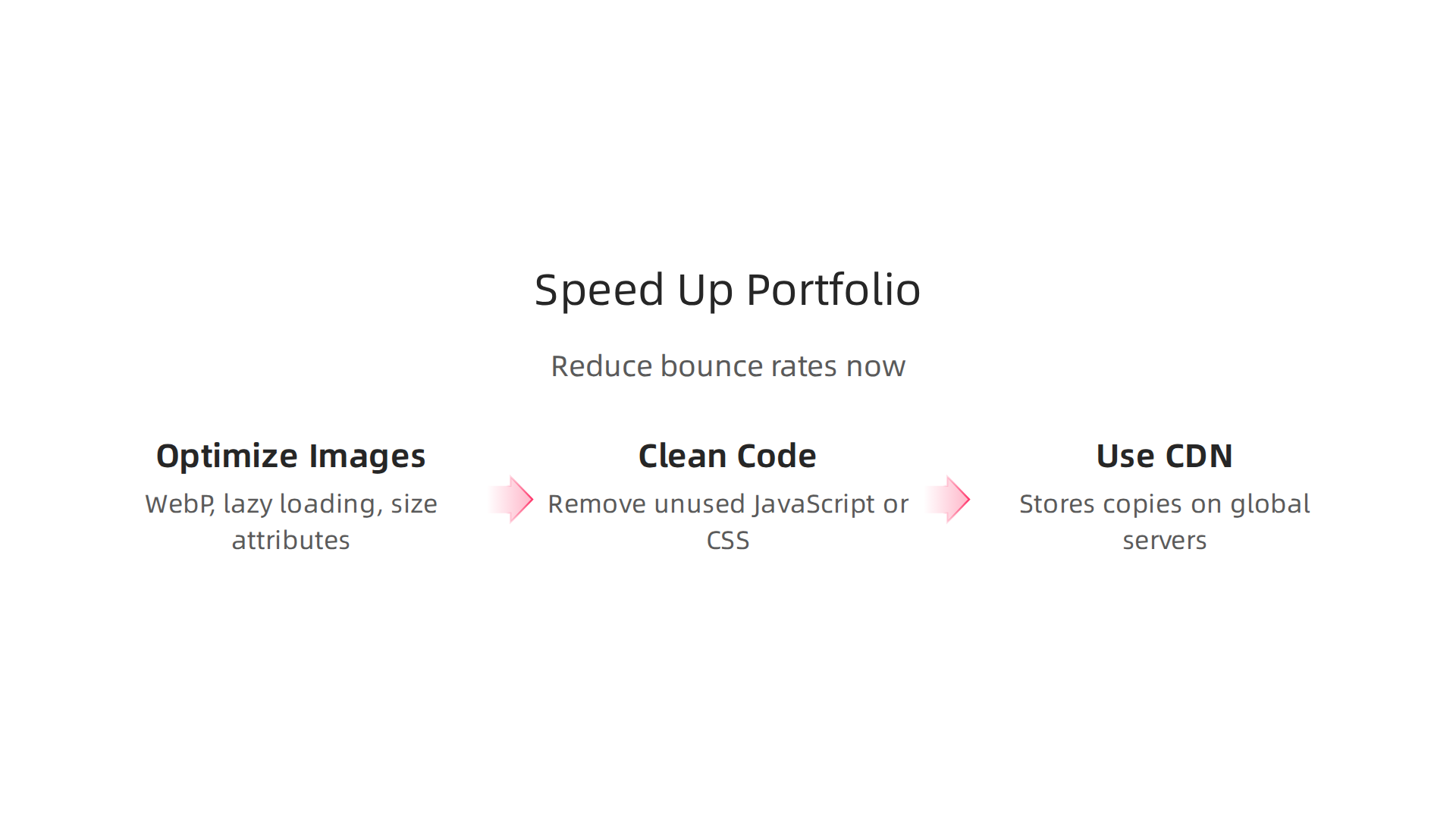
Start with images. They are usually the biggest culprit. Convert them to WebP format, set explicit width and height attributes to prevent layout shifts, and enable lazy loading so images below the fold only load when someone scrolls down to see them.
Then look at your code. Remove any JavaScript or CSS that is not actually needed on each page. Most sites carry 50 to 70 percent of unused CSS. That is dead weight slowing everything down.
A content delivery network also helps. A CDN stores copies of your site on servers around the world so content loads faster no matter where your visitor lives.
If all of this feels technical and overwhelming, you are not alone. Many small business owners do not have time to dig into page speed fixes while also running their business. That is exactly why having a team that handles performance optimization for you makes sense. A professional setup ensures your site stays fast without you needing to learn every technical detail. Check out this guide on how to fix a bored website and stop losing customers for practical next steps that work even if you are not a developer.
Fast load times protect the hard work you put into your portfolio. Slow pages undo everything else. Make speed a priority and watch your bounce rates drop.
10. Leverage AI Tools to Enhance Your Portfolio & Personalize the Experience
Speed gets people in the door. But once they are browsing your portfolio website inspiration, what keeps them exploring? That is where AI tools come in.
A smart AI chatbot can greet visitors the moment they land on your site. Instead of hunting through your menu for your rates or availability, they type a quick question and get an instant answer. The experience feels personal and fast. And it keeps people on your site longer.
Personalization matters just as much. Imagine showing a visitor project examples that match the industry they work in, based on what they clicked before. That level of relevance keeps them scrolling instead of bouncing. Data from recent CRO benchmarks shows AI personalization has improved course completion rates by 70% and reduced dropout rates by 15% across real implementations. Your portfolio can benefit from the same principle.
You can also use AI writing assistants to speed up your case studies and service pages. Writing a strong case study takes time. AI tools help you draft the problem, solution, and results sections faster so you publish more content without burning out. If you want to see how to structure a winning case study, this guide on how to build a UI UX designer portfolio that wins clients covers exactly what works in 2026.
The best part? You do not need to be a tech expert to use these tools. Most AI platforms plug directly into your existing website with simple code snippets.
If managing all these tools and updates feels like too much, you are not alone. Many business owners prefer to hand the whole setup to a team that handles it for them. That is where a done-for-you growth service like Weblish comes in. They build fast, personalized websites and keep everything running so you can focus on your actual work.
Once your portfolio feels helpful and tailored to each visitor, those bounce rates will keep dropping and your lead count will keep climbing.
Ready to see what AI-powered growth looks like for your business? Grow Your Traffic on Autopilot and let the system do the heavy lifting.
Summary
This article shows how to turn a portfolio website from a passive gallery into a consistent lead-generation engine. It covers practical design choices—like minimalist layouts, strong typography, and micro-animations—that keep visitors engaged, plus the must-have content: data-driven case studies, social proof, and a content strategy that demonstrates expertise. You’ll also learn the SEO and mobile-first tactics that bring the right clients organically, simple but effective CTA and form rules to capture leads, and technical fixes (image optimization, unused CSS removal, CDNs) to improve speed and rankings. The guide explains why each change matters for conversions and gives actionable steps you can apply today or hand off to a team to implement. After reading, you’ll know what to change on your site first, how to present proof that closes deals, and which ongoing practices drive more qualified leads over time.