
Link Building Services for Small Business Owners How to Choose the Right Partner
This article explains why link building remains a top SEO priority for small and mid-sized businesses and how to choose the right professional service. It cover…


If you run a small business, you probably already know that Google loves websites with strong backlinks. In fact, link building is still one of the top three ranking factors for Google in 2026. Yet most small and mid-sized business owners don’t have the time or in‑house know‑how to build quality links on their own.
This is where professional link building services come in. They save you hours of outreach and guesswork. But the market is full of confusing pricing and uneven quality. Some providers use spammy tactics that can actually hurt your site. So how do you pick the right partner?
The data backs up the importance of link building. According to Link Building Statistics 2026 – 118 Key Figures You Must Know, websites with more backlinks tend to get significantly more traffic.
The #1 result on Google averages over three times more backlinks than the pages in positions 2 through 10. That’s a big edge.
If you’re also working on your broader SEO strategy, check out our guide on SEO packages for small businesses to see how link building fits into a bigger picture.
This guide is written for business owners, marketing managers, and operations leads who want to evaluate, select, and work with a link building service provider. We’ll cover pricing, red flags, what to expect, and how to make sure you get real results.
Ready to stop guessing and start growing? Grow Your Traffic on Autopilot by connecting your site with Weblish and letting their team handle the SEO and link building for you.
What Are Link Building Services (And What Should You Expect)?
So what exactly are link building services? In simple terms, they are professional services that earn backlinks from other websites to yours. These backlinks act like votes of confidence. When a reputable site links to you, Google sees your content as more trustworthy and ranks it higher.
But not all link building services work the same way. The methods vary a lot. On the safe side, you have white hat tactics. These include manual outreach, guest posting on relevant blogs, and broken link building. A provider using white hat tactics might write a helpful article for a popular industry blog and include a link back to your site. That is totally fine with Google.
On the dangerous side, you have black hat tactics. Some providers use automated link farms, private blog networks (PBNs), or buy links in bulk from low-quality directories. These shortcuts can get your site penalized or even removed from Google search results. For small businesses, staying away from black hat is a must.
A transparent provider will clearly explain their methods before you sign anything. They should tell you what kind of websites they target, how they do outreach, and what timeline you can expect. According to the Top link building services in 2026 guide, the best services are upfront about their approach and avoid vague promises.
When you hire a link building service, you are really hiring their expertise in SEO content optimization and relationship building. They should know which websites in your niche are worth pursuing. They should also track results so you can see which links are actually driving more traffic.
To make sure your whole SEO strategy works together, pair link building with strong on-page content. You can start by learning how SEO content optimization strategies can boost your rankings from the inside out.
The bottom line: A quality link building service saves you time and gets real, safe results. A bad one can cause serious damage. So take the time to understand what you’re signing up for. Ask the right questions before you commit.
Why SMBs Need Professional Link Building Services
Here is a number that might surprise you. Organic search drives around 53% of all website traffic. That is more than social media, paid ads, and emails combined. And one of the biggest factors that decides whether you show up on page one or page ten? Backlinks.
Google treats backlinks like votes. The more quality votes your site has, the more trust it earns. Pages with more relevant backlinks almost always rank higher than those without them. For small and mid-sized businesses, this creates a real problem. You know you need backlinks, but building them takes serious time and skill.
Most SMB owners already wear too many hats. You manage products, customers, payroll, and probably your own website too.

Finding time to research prospects, write personalized pitches, and follow up with website owners is nearly impossible. And even if you had the time, you would still need the right tools and experience to do it well without hurting your site.
This is where professional link building services make a real difference. They handle the entire process for you. They identify high-quality sites in your niche, create valuable content those sites want to share, and build relationships that earn natural backlinks. According to the 80 Link Building Statistics (Updated for 2026), over two-thirds of organizations invest in link building specifically to improve organic traffic and rankings. That tells you how important this work is.
A managed service also levels the playing field. Big competitors often have entire SEO teams working on link building every day. They can afford expensive tools and dedicated outreach staff. But with the right service provider, your small business can earn the same kind of high-quality backlinks without hiring a full department.
Think about it this way. Your time is better spent running your business. Let the experts handle the technical work of building your site’s authority. When you pair professional link building with solid on-page SEO and great content, your website starts attracting more visitors without constant effort.
If you are ready to grow your traffic without spending all your time on SEO tasks, you can Grow Your Traffic on Autopilot. Weblish combines expert strategy with ongoing management so your site keeps climbing the rankings.
For a deeper look at how expert guidance can transform your online presence, check out this guide on why your small business needs an seo consultant in 2026.
Types of Link Building Services: A Comparison Table
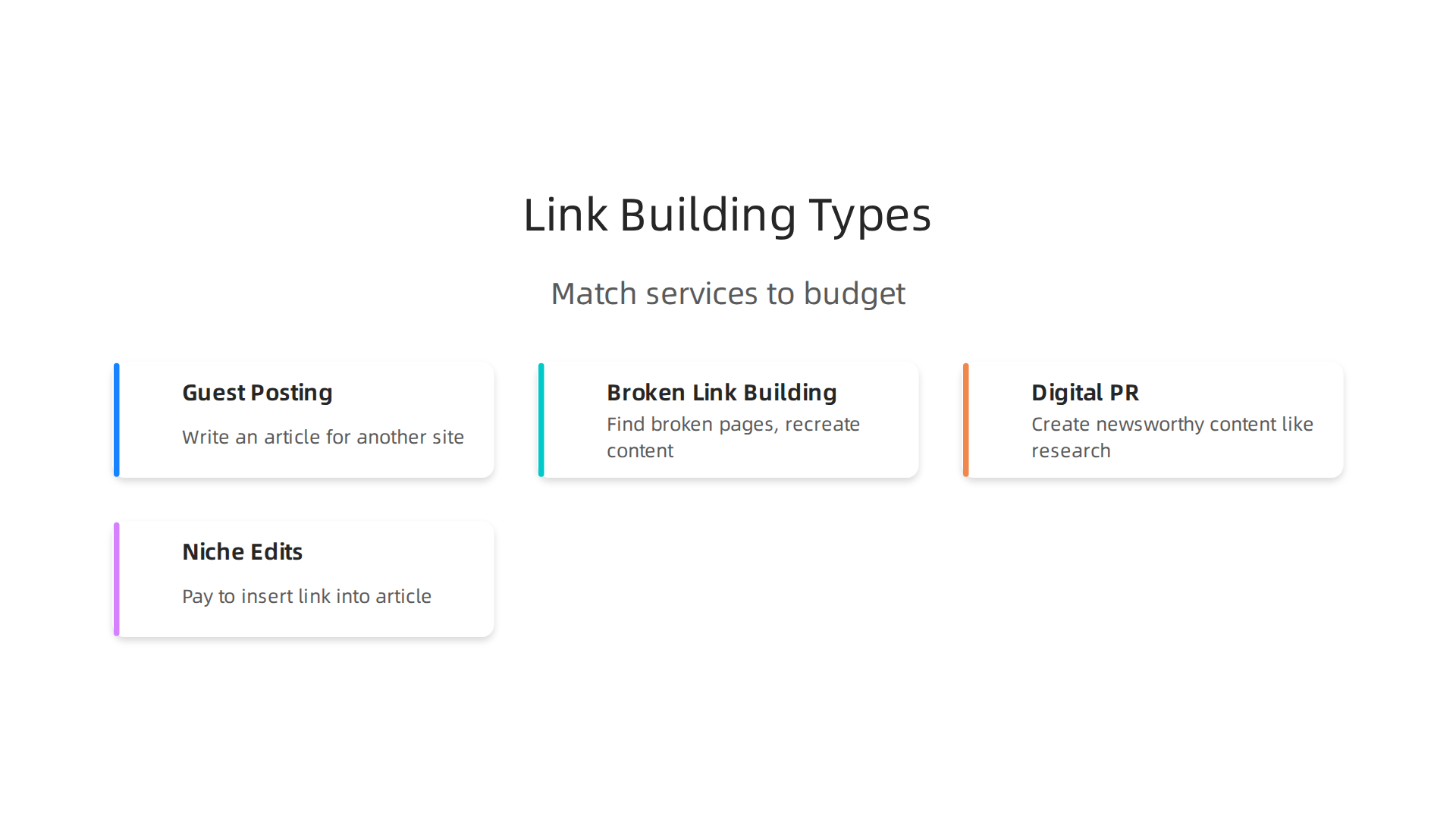
Not all link building services work the same way. Some methods build lasting authority. Others can get your site penalized fast. And pricing varies wildly based on what you choose. Here is a breakdown of the most common service types so you can match your choice to your budget and comfort level.
| Service Type | How It Works | Risk Level | Typical Cost |
|---|---|---|---|
| Guest Posting | You write an article for another site and get a backlink in return. White-hat outreach focuses on relevant, high-quality publications. Research from The Links Guy describes guest posting as one of the oldest and most reliable link building methods when done right. |
| Low to Medium | $100 to $3,000+ per post depending on site authority |
| Broken Link Building | You find broken pages on other sites, recreate better content, and suggest your link as a replacement. This helps the site owner fix a dead resource while you earn a backlink. | Low | $50 to $500 per link earned |
| Digital PR | You create newsworthy content like original research or data stories. Journalists and bloggers cover your story and link back to your site. According to BuzzStream data, digital PR is now the number one link building tactic, surpassing guest posting. | Low | $500 to $5,000+ per campaign |
| Niche Edits | You pay to have your link inserted into an existing article on a relevant site. Often faster than guest posting, but quality checks are critical. | Medium | $100 to $1,000 per edit |
The big difference comes down to method. White-hat services use real relationships and helpful content. They take longer but build trust that lasts. Gray or black-hat methods buy links in bulk, use spammy networks, or trick search engines. These can work for a short time, but Google often catches them. One penalty can wipe out your rankings overnight.
For small businesses, white-hat approaches like guest posting and broken link building are the safest bet. They match what Google wants to see. Pricing for these services also gives you more control. You can pay per link, buy a monthly retainer, or try a project-based package. The right choice depends on your industry, your goals, and how much risk you can handle.
Professional services help you choose the right approach without guessing. They also keep your strategy clean and penalty-free. If you want to understand what fair pricing looks like before you commit, check out this guide on SEO packages for small businesses to spot red flags and compare costs.
Pricing Models & Transparency: What to Look For
Once you understand the different link building methods, the next step is figuring out how you will pay for them. And honestly, this is where a lot of small business owners get tripped up. The pricing can look confusing at first. But once you know the main models, it gets much easier to spot a fair deal.
Most providers offer one of three pricing structures. Each one has its own pros and cons.
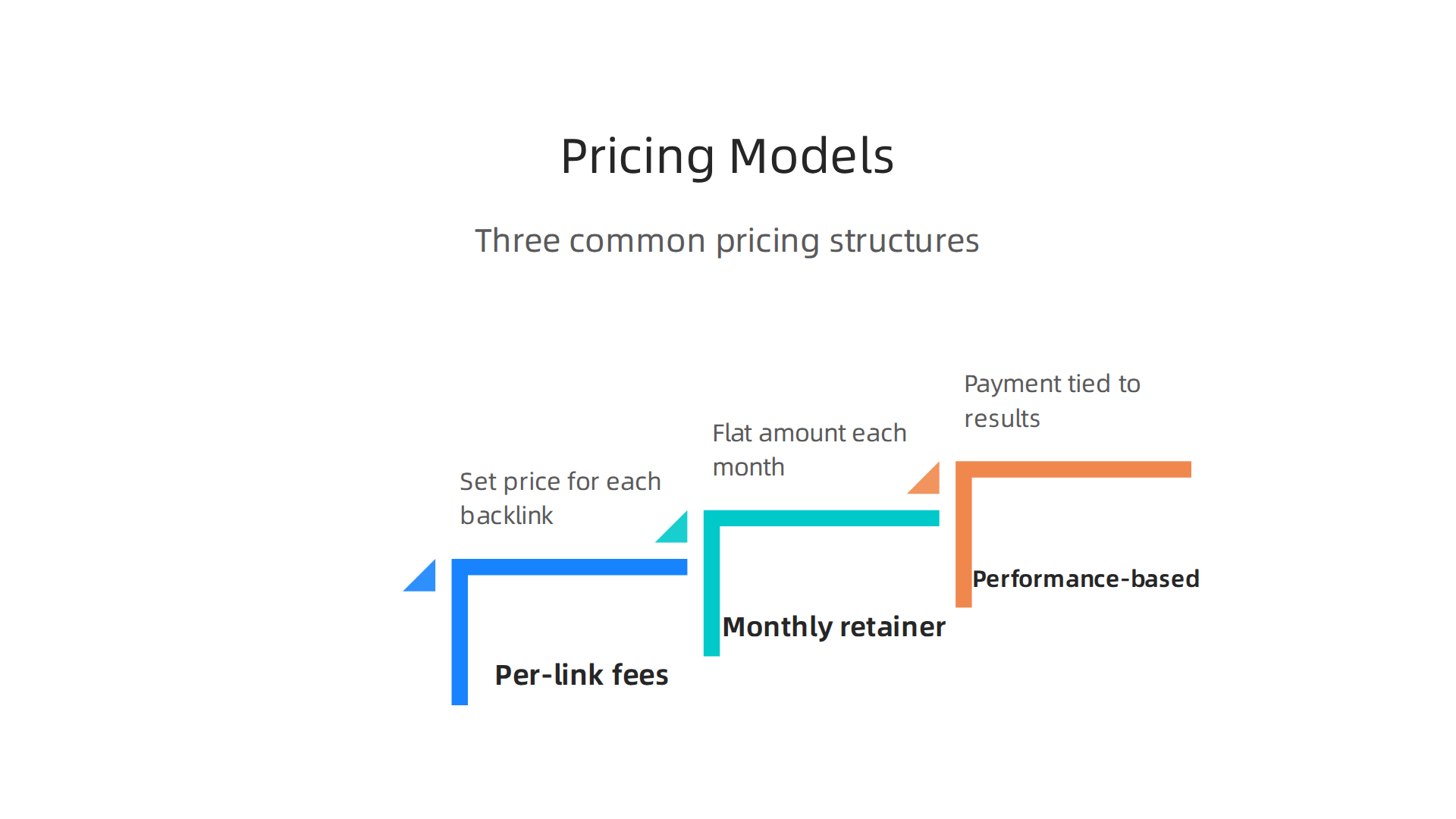
Fixed per-link fees are the simplest. A provider tells you a set price for each backlink they place. This model gives you total control over your budget. You know exactly what each link costs before you commit. The downside is that high-authority links can get expensive fast. And some providers charge per link but still require you to buy a minimum number. Make sure you ask about that upfront.
Monthly retainers are common with full-service agencies. You pay a flat amount each month, usually between $1,000 and $5,000 or more. In return, the agency handles a set number of links, outreach, and strategy. This model works well if you want ongoing growth without managing every detail yourself. But you need to confirm what you are getting each month. Some retainers include only a few links plus reporting and project management. Others bundle in content creation and digital PR.
Performance-based models tie payment to results. You might pay only when a link goes live on a target site or when your rankings improve. These models sound appealing, but they can hide risks. Some providers use aggressive low-quality methods to get fast results. Always check the fine print and ask about their exact approach before signing up.
Here is the tricky part. Hidden costs can show up even with seemingly clear pricing. Watch out for setup fees, management fees, and minimum commitments. Some services charge a one-time onboarding fee of several hundred dollars. Others require a three-month or six-month minimum contract. These add up fast. A provider that seems cheap per link might actually cost you double after the extras.
A transparent provider gives you a clear breakdown before you pay a cent. They share case studies showing real results. They have a refund policy for links that do not perform. And they explain exactly which sites they target and how they earn those links.
The best way to protect yourself is to compare multiple providers side by side. Look at what each package includes and what it leaves out. This practical guide to link building packages breaks down the top options in 2026 so you can see the differences clearly.
Transparency also means the provider can explain their process in plain language. If they use a lot of confusing jargon or avoid direct answers, that is a red flag. A trustworthy partner will welcome your questions. They want you to understand what you are paying for.
Once you feel good about the pricing side, the next big piece is how to vet the people behind the promises. That is what we will cover next.
Red Flags & How to Choose a Link Building Service
Now that you understand pricing, let’s talk about vetting. Not every provider who promises great results deserves your trust. Some will use risky shortcuts that can hurt your site in the long run. Knowing the red flags can save you money, time, and a lot of headaches.
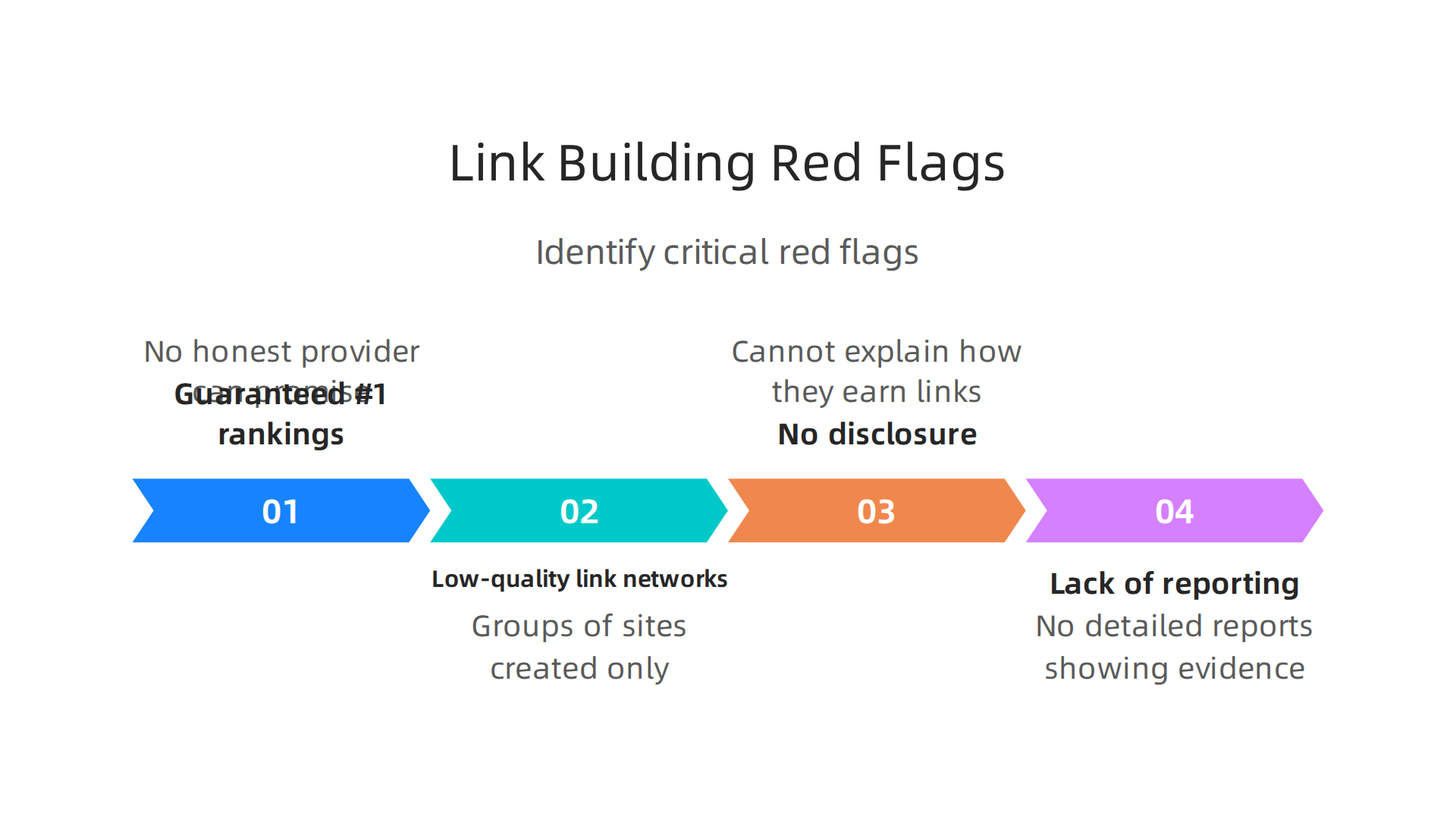
Watch Out for These Red Flags
Guaranteed #1 rankings. This is the biggest one. No honest provider can promise a specific Google ranking because Google controls the algorithm, not them. If a salesperson says they will get you to the top of page one, walk away. A trustworthy service talks about improving your visibility and traffic, not guaranteeing exact positions.
Low-quality link networks. Some providers build links from "private blog networks" or link farms. These are groups of sites created only to host backlinks. Google penalizes sites that use them. Look for signs like vague descriptions of where links come from or refusal to share example domains. The guide to buying high-quality backlinks explains exactly what to watch for in a shady offer.
No disclosure of methods. If a provider cannot explain how they earn links, that is a problem. You should know whether they use guest posts, digital PR, broken link building, or something else. If they hide their process, they are probably doing something they know would make you uncomfortable.
Lack of reporting. Good services send detailed reports showing the URLs, domain authority, traffic estimates, and anchor text of every link they place. If the report is one line that says "10 links built" with no evidence, that is not enough. Check for the red flags in link building reports that most buyers miss.
How to Vet a Provider Properly
First, ask for client references. A real agency will happily connect you with past or current clients who can share their experience.

If they hesitate or make excuses, consider it a warning.
Second, demand a trial period or a small test order. Many reputable services let you start with a small package before committing to a long retainer. This lets you check the quality of their work without risking a lot of money.
Third, verify link quality yourself using small SEO tools like Ahrefs or Majestic. These tools show you domain authority, traffic estimates, and whether a linking site is real or fake. A provider should welcome this due diligence. If they tell you not to check, that is a red flag.
Green Flags That Signal a Good Partner
Trustworthy link building services share certain things. They publish real case studies with before-and-after results. They have clear terms of service that explain exactly what you get, when you get it, and what happens if a link disappears. And they are active in ethical SEO communities like the one on Reddit where professionals discuss best practices.
When you evaluate a provider, compare multiple options side by side. Look at their reporting, their transparency, and their willingness to answer questions. For a deeper look at how different services compare in 2026, check out this practical SEO service provider comparison guide.
And if you want to see how link building fits into a full digital marketing strategy, the guide on SEO packages for small businesses covers pricing, transparency, and red flags all in one place.
The right provider will feel like a partner, not a salesperson. They will educate you and set realistic expectations. Spotting the red flags early keeps your budget safe and your site growing in the right direction.
DIY Link Building vs. Managed Services: Which Is Right for Your SMB?
After learning the red flags and how to vet providers, you still have one big question to answer. Should you build links yourself or pay a managed service to do it for you? This choice is one of the most important decisions you will make for your SEO strategy. Let’s break down both sides so you can pick the right path.
The Case for DIY Link Building
Doing it yourself gives you full control. You choose every target site, craft every outreach email, and approve every placement. Nobody knows your business better than you do.
The pros are real. Your only cost is your time. If you already have strong writing skills and a network in your industry, DIY can be very affordable. You also learn SEO deeply along the way, which helps every other part of your marketing.
But the cons are significant. Link building is a skill that takes months to learn. Most beginners burn weeks sending pitches that get zero replies. The results come slowly, usually 4 to 8 months before you see real ranking movement. And here is the hidden cost: every hour you spend on outreach is an hour you cannot spend on sales, product development, or serving customers. That is the opportunity cost of DIY.
For many small business owners, learning link building from scratch just takes too long. If SEO is not your core skill, you might be better off focusing on what you do best.
The Case for Managed Services
Hiring a link building service brings instant expertise. Good agencies have established relationships with publishers, proven outreach templates, and teams that can scale quickly. They know what works in 2026 and what Google penalizes.
The pros are speed and scale. A managed service can place 5 to 10 quality links in a month while you sleep. They handle the reporting, tracking, and relationship management. You get predictable progress without learning the craft yourself.
The cons are cost and risk. Quality link building agencies charge $3,000 to $12,000 per month, as the 2026 link building pricing report shows. And if you pick an untrustworthy provider, you could waste money or even hurt your site. That is why the vetting tips from the previous section matter so much.
Which Path Wins?
For most SMBs with limited in-house SEO skills, a managed service delivers faster ROI. You get expertise immediately, avoid the learning curve, and keep your focus on running your business. But you must choose a provider with transparent reporting and clear methods.
If you have more time than money and a willingness to learn, DIY can work. Just be realistic about the months of effort needed. You can also blend both approaches. Use a managed service for high-difficulty links while you handle the easier ones yourself.
Whichever path you take, having strong SEO content optimization strategies in place before building links will make every backlink more powerful. Start with great content, then decide how to promote it.
If you want to explore a managed option that takes the guesswork out of link building and overall digital growth, you can get started with Weblish to see how a done-for-you service can build your traffic while you focus on your business.
Grow Your Traffic on Autopilot
Measuring Success: Key Metrics for Link Building Services
You have picked your path. Now the real question: how do you know it is working? Tracking the right numbers will tell you if your investment in link building services is paying off or just burning cash.

Stop Counting Backlinks. Start Measuring Impact.
Many people get excited about the total number of backlinks. That is a trap. A hundred low-quality links from spammy sites can actually hurt you. What matters is relevance and authority.
Focus on these core metrics instead:
Domain Authority (DA) and Domain Rating (DR) of the sites linking to you. A single link from a DA 70 site in your industry can move the needle more than 50 links from random directories. Good seo service providers will target high-authority, relevant sites for your niche.
Referral traffic. Are people actually clicking those links and landing on your site? If a backlink drives zero visitors, it has limited value unless it helps rankings indirectly. You can see this in Google Analytics under Acquisition > Referrals.
Keyword ranking improvements. This is the big one. Did your target keywords move up after the links came in? Set a baseline for your top 10 to 20 keywords before starting any campaign. Then check monthly. Most agencies worth their salt will show you a report that tracks these movements over time.
Conversion rate from organic visitors. All the traffic in the world means nothing if people do not take action. Watch how many organic visitors fill out a form, make a purchase, or call you. If your seo content optimization is solid, better links should lead to more conversions.
Set a Baseline and Track Monthly
Pick a date to start. Record your current DA, referral traffic numbers, top keyword positions, and organic conversions. Then compare month by month. Good providers share dashboards showing these KPIs so you never have to guess. The Link Building Metrics in 2026: 14 KPIs Every SEO Should Track guide breaks down exactly which numbers deserve your attention.
Small seo tools like Ahrefs, Moz, or Semrush can help you track these on your own. But if your provider does not offer transparent reporting, that is a red flag. You should never wonder where your money went.
Understanding these metrics helps you compare seo services pricing against the value you actually get. A cheaper service that delivers zero ranking movement is a waste. A pricier one that steadily improves your positions and traffic is worth every dollar.
If you want to see how a managed service handles reporting and tracking from day one, check out how a clear strategy for SEO packages for small businesses 2026 includes transparent dashboards and baseline setup. That kind of structure takes the guesswork out of measuring success.
Summary
This article explains why link building remains a top SEO priority for small and mid-sized businesses and how to choose the right professional service. It covers what link building services do, contrasts white‑hat methods (guest posts, broken link fixes, digital PR) with risky tactics (PBNs, link farms), and shows the common pricing models you’ll encounter. You’ll learn practical vetting steps—what questions to ask, red flags to avoid, and how to run a small test—plus a comparison of DIY versus managed approaches. The guide also lays out the metrics that actually matter (referral traffic, keyword movement, conversions) so you can measure ROI. After reading, you’ll be able to evaluate proposals, spot unethical providers, pick the right pricing model for your budget, and track whether your link building investment is delivering real results.