
How to Write a Graphic Design RFP That Attracts the Right Designers
This article explains how a formal graphic design RFP (Request for Proposal) helps small businesses avoid scope creep, miscommunication, and cost overruns when…


Introduction
You know your business needs better visuals. Maybe your website feels outdated. Maybe your social media posts don’t grab attention like they should. You might even have a list of 9 graphic design ideas for small business websites that generate leads but no one to bring them to life.
Finding the right person to help with your graphic design services feels like rolling dice.

You put out a call. You get replies from designers who don’t get your brand. You spend hours explaining what you need. And too often, you settle for something that’s just okay.
There’s a simpler way. A graphic design RFP (Request for Proposal) brings structure to the process. It tells designers exactly what you need, your timeline, and your budget. According to tips for compelling proposal graphics, clarity is key when sharing your design needs.

A good RFP helps you attract skilled people who actually fit your business.
Many small businesses skip this step. They think RFPs are only for big companies. But that’s not true. A well written RFP saves you time and delivers better results.
This guide covers everything. We’ll walk through how to define your requirements, evaluate proposals, and tie your design work into a bigger digital strategy. Great design paired with a smart online plan helps your business grow faster.
Connect your website with Weblish and grow your traffic on autopilot with AI. You can Grow Your Traffic on Autopilot here. And if you’re ready to build a complete digital approach, Get started with weblish by signing up and claiming your free trial.
Let’s start with the basics of what makes a strong graphic design RFP and why it matters in 2026.
Why Your Business Needs a Formal Graphic Design RFP
Picture this: You need a new logo and some social media graphics. You find a designer on a freelance platform. The price seems right. You share a quick description and hope for the best. A week later, you get files that don’t match your brand colors, the font is wrong, and the message is confusing. You ask for changes. The designer charges extra. The project drags on for another month. Your budget doubles.
This happens all the time. Without a formal process, graphic design projects often suffer from three big problems: scope creep, miscommunication, and cost overruns. You end up spending more time explaining what you don’t want than getting what you actually need.
A graphic design RFP changes everything. It forces you to think through your requirements before you start talking to designers. You write down exactly what you need: the deliverables, the timeline, the budget, and the brand guidelines. Everyone starts on the same page. No guesswork. No assumptions.
The RGD organization offers a set of best practices for RFPs specifically for graphic design services.
They explain that a fair and complete RFP acts as a gateway to finding the right talent. When you put in the work upfront, you attract designers who take your project seriously.
Another big benefit: you can compare multiple vendors fairly. You get proposals from three or four designers, all responding to the same brief. You see who understands your brand best, who offers the most value, and who fits your budget. No more comparing apples to oranges.
Data backs this up. The latest RFP win rate statistics show that structured procurement processes lead to higher satisfaction.

Teams that use clear RFPs report better project outcomes and fewer surprises. That applies whether you are a Fortune 500 company or a local bakery.
Some small business owners think RFPs are only for big corporations. Not true. Even a simple one page RFP can save you hours of confusion. It shows designers you are organized and serious. They will respond with higher quality work because they know you have clear expectations.
To make your RFP even stronger, pair it with good design knowledge. Learn how to spot a great UI/UX designer before you hire one so you can evaluate proposals with confidence. The more you understand what good design looks like, the better your RFP will be.
Next, we will walk through the exact pieces you need to include in your graphic design RFP and how to write them clearly. That way you never end up in another scope creep nightmare again.
Key Components Every Graphic Design RFP Must Include
A blank page can feel like a big wall when you sit down to write a graphic design RFP. But the truth is, it just breaks down into a few simple sections. Fill these out clearly, and you will get much better proposals every time.
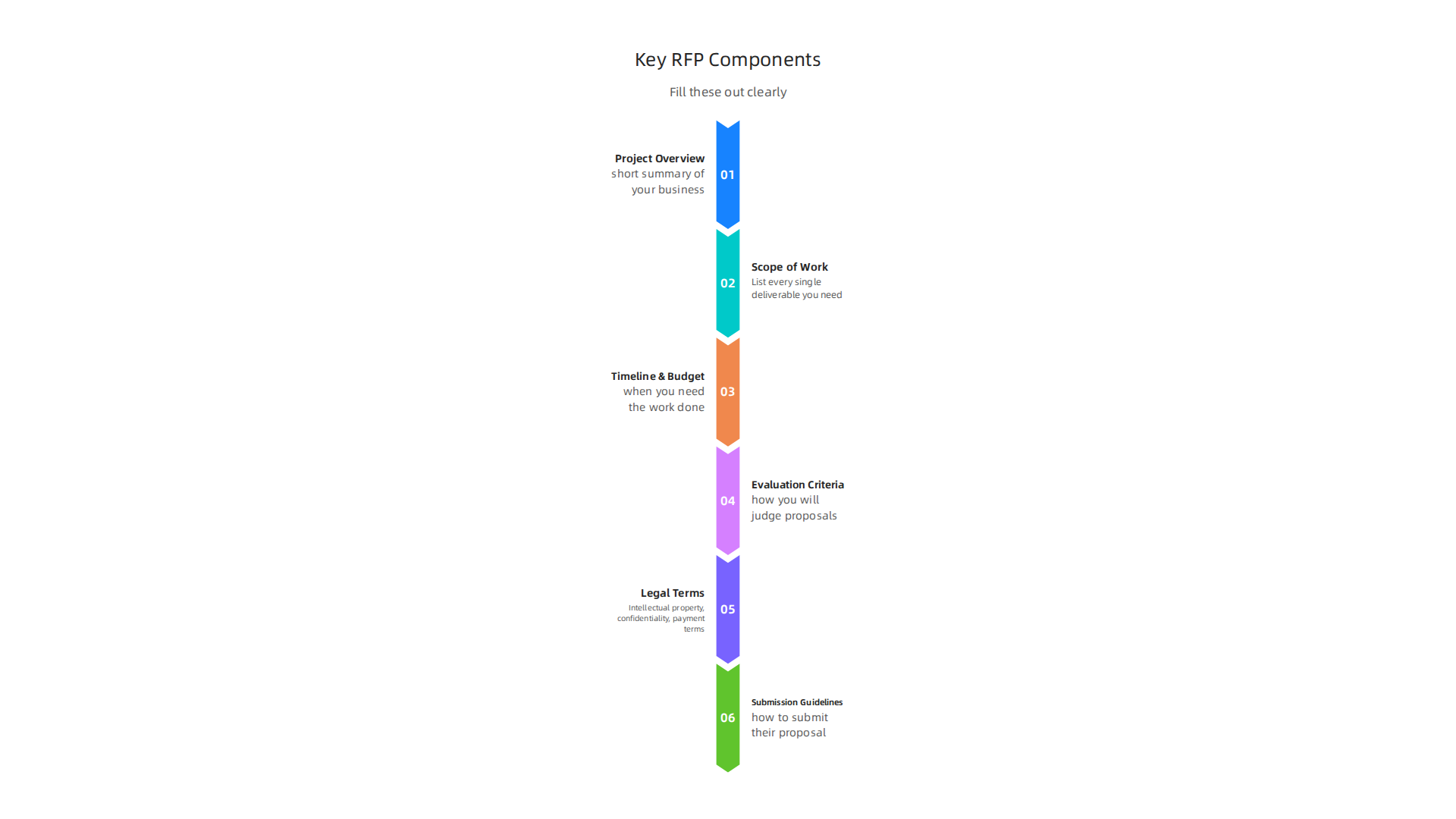
Start with the project overview. This is a short summary of your business, your industry, and why you need design work. Give designers the context they need to make smart creative choices. A good overview helps them understand your brand voice and your target audience from the start.
Next comes the scope of work. This is the most important part. List every single deliverable you need. Do you need a logo? Business cards? Social media templates? Brochures? Website graphics? Be specific. Mention file formats, sizes, and color requirements. If you are not sure what you need yet, look at these graphic design ideas for small business websites to help define your project.
Include your timeline and budget range clearly. Designers need to know when you need the work done and roughly how much you can spend. A budget range filters out designers who are too expensive or too inexperienced for your project. It saves everyone time and frustration.
Add a section on evaluation criteria. Tell vendors exactly how you will judge their proposals. Will you focus more on their portfolio quality, their price, or their experience with your industry? When you share your criteria, designers can tailor their responses to match what matters most to you. This approach is a key lesson from legal services RFP best practices, and it applies perfectly to creative fields too.
You also need to cover legal terms. This protects both you and the designer.
- Intellectual property (IP): Who owns the final designs? Make sure the contract says you get full ownership of the finished files. This is called a work-for-hire agreement. The types of clauses in a contract guide explains the difference between background IP and foreground IP. That knowledge helps you write a fair IP clause.
- Confidentiality: Both sides should agree to keep private information safe. This includes your business data, strategy, and any early design concepts.
- Payment terms: Outline when and how you will pay. A common setup is a deposit upfront, a milestone payment, and a final payment upon delivery.
Finally, write clear submission guidelines. Tell designers exactly how to submit their proposal. Include a deadline, preferred format (PDF is standard), and any specific questions you want them to answer in their response.
Building a clear graphic design RFP takes a little effort upfront. But it leads to better design work, fewer headaches, and a stronger brand identity overall.

Once you find the right designer and start building your brand assets, make sure your website is ready to convert all that new attention into real customers. Let us help you Grow Your Traffic on Autopilot with a site built for results.
How to Define Your Project Requirements for Maximum Clarity
You have the basic structure of your graphic design RFP ready. Now it is time to get specific. The more clarity you bring to your project requirements upfront, the fewer revisions you will need later. Designers are not mind readers. They need clear direction to produce work that matches your vision.
Start by spelling out every single deliverable in detail. Do not just say "a logo." Say "a primary logo, a secondary logo, and a simplified icon version, all in vector format (AI and EPS) with a transparent PNG option." List file formats like PDF, JPG, PNG, and SVG. Mention color spaces like CMYK for print and RGB for web. If you have brand guidelines already, include them in the RFP or link to them. This prevents guesswork and saves time.
Next, attach a creative brief template inside your RFP. A good brief helps designers understand your brand voice, your emotional goals, and the message you want to send. Ask yourself: what feeling should the design create? What action do you want your audience to take? The digital marketing RFP template from Thrive Agency shows how building in a creative brief section can clarify your objectives from the start.
You also need to give background on your target audience and your competition. Describe who you are trying to reach. Are they young professionals? Retirees? Business owners? Share their age range, income level, and what problems they face. Then list two or three main competitors and note what you like or dislike about their branding. This context helps designers position your brand in the market. It also shows that you have done your homework, which builds trust.
Think about your project requirements like a set of instructions. The clearer they are, the better the results. If you struggle to define your brand voice or visual preferences, you can learn from graphic design principles that turn your website into a lead generator to get ideas for what works.
Once you have a rock solid RFP and a designer on board, the next step is building a website that turns their great design into real leads. If you need help with that, you can get started with weblish by signing up and claiming your free trial and let the experts handle the rest.
Evaluating Design Proposals: What to Look For
You have sent out your graphic design RFP and the responses are rolling in. Now comes the part that can make or break your project: picking the right designer.

Do not rush this step. A careful evaluation now saves you from expensive revisions and missed deadlines later.
Start by building a simple scoring rubric. This is a grid where you rate each proposal on the things that matter most to you. Common categories include portfolio quality, pricing, timeline, and strategic fit. Give each category a weight based on your priorities. For example, if your brand needs a fresh direction, weight strategic fit higher than price. A scorecard takes the emotion out of the decision and helps you compare apples to apples.
Look beyond pretty design samples. Anyone can show you a beautiful logo. What you really need is proof that the designer understands your business goals and your target audience. Did their proposal mention your competitors? Did they explain why they chose certain colors or fonts based on your industry? A great proposal shows strategic thinking, not just artistic skill.
Case studies are a powerful tool here. When a designer includes a detailed case study, it shows they can walk through a project from problem to solution. That kind of thorough evaluation reduces the risk of a mismatch. You can learn more from this guide on how to write a case study for your design portfolio to understand what a strong case study looks like.
Also pay attention to how the designer communicates during the proposal process. Are they responsive? Do they ask smart questions? That tells you a lot about what it will be like to work with them. For more tips on what to look for in a designer, check out this advice on how to spot a great UI/UX designer before you hire one.
Once you choose the right designer, the real work begins. You will need a website that turns their great design into real leads. To make that happen without the hassle, connect your website with Weblish and grow your traffic on autopilot with AI.
Common Graphic Design RFP Mistakes and How to Avoid Them
Before you get to the point of choosing a designer and building that lead-generating website, you first need to make sure your RFP attracts the right talent. Many business owners accidentally scare off great designers with simple, avoidable mistakes.
Here are the most common ones and how to fix them.
Mistake 1: Writing a Vague Project Description
When your RFP says something like "We need a logo and a few social graphics," you leave too much room for guesswork. Designers will fill in the blanks with their own assumptions, and you will get proposals that miss the mark.
The fix: Be specific. Describe the exact deliverables, the tone of your brand, and the problem you want the design to solve. Share details about your target audience and your competitors. If you have design terms every small business owner needs to know, use them to explain your needs clearly. The clearer you are, the better the proposals you will receive.
Mistake 2: Asking for Free Spec Work
It is tempting to ask designers to create a sample design before you hire them. But this is a big red flag for professionals. Spec work disrespects the time and skill of designers, and it rarely gives you an accurate picture of what they can do.
The fix: Instead of requesting free work, ask for relevant samples from their portfolio. Look for projects similar to yours in style or industry. A designer with a strong portfolio of graphic design examples that match your needs is a safer bet than someone who will create something rushed for free. Focus on past work, not free designs.
Mistake 3: Ignoring Cultural Fit and Communication Style
Even a talented designer can be a bad fit if your communication styles clash. If you prefer daily updates and they only check email once a week, you will both get frustrated. Many RFPs skip this entirely.
The fix: Include a few questions in your RFP about their preferred communication tools, how often they check in, and how they handle feedback. A quick discovery call can also reveal a lot about their personality and work style. For more advice on finding the right fit, check out the best practices for creating a fair and complete RFP from the Association of Registered Graphic Designers.
Avoid these three mistakes, and your RFP will attract the kind of designers who will deliver work that truly helps your business grow.
Integrating Your Digital Strategy into the Design RFP
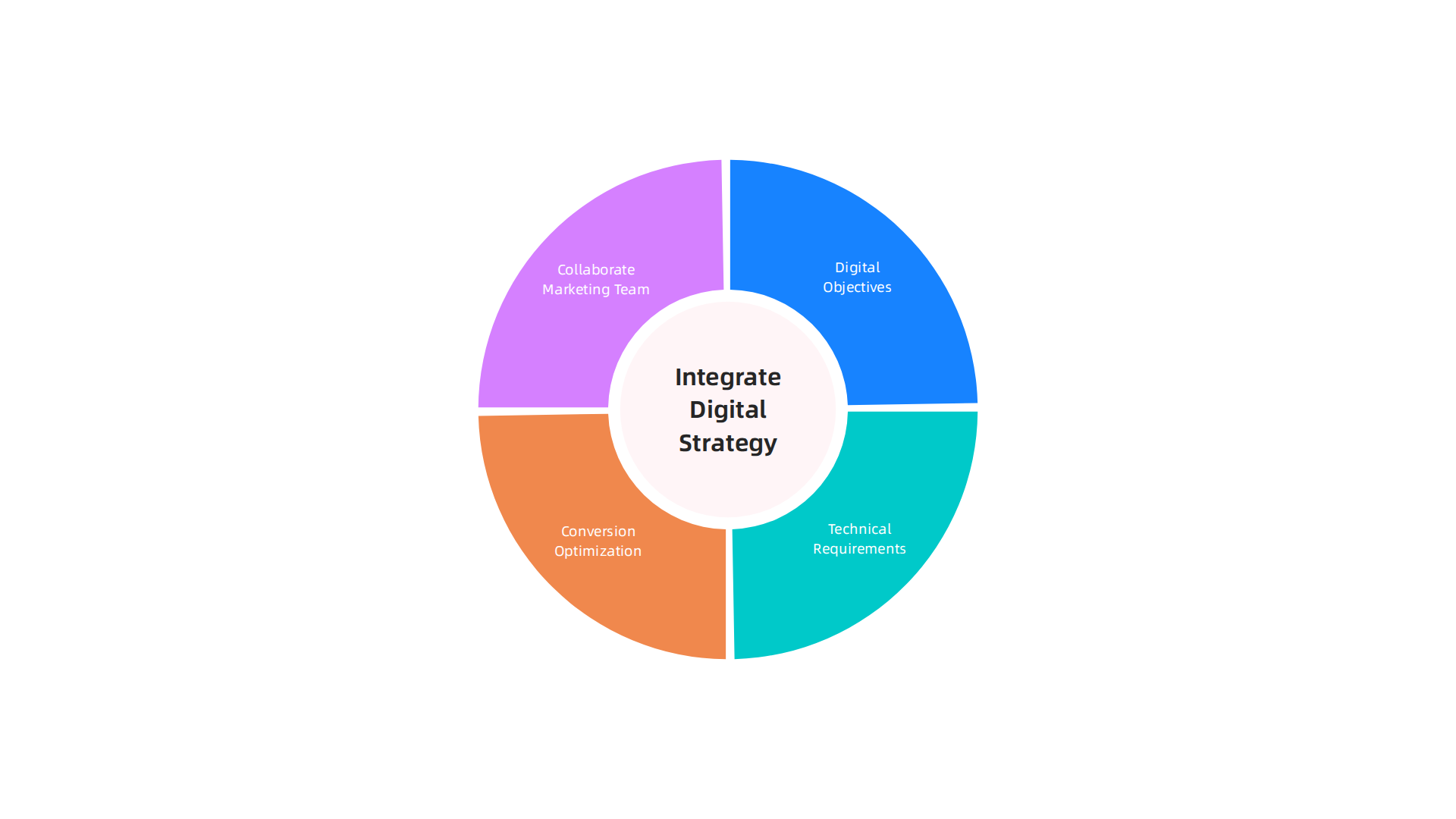
You have fixed the common RFP mistakes and written a clear project description. But there is one more step that many business owners skip. Your graphic design RFP needs to connect directly to your broader digital marketing goals.
If your design project is not aligned with how you plan to attract and convert customers online, you might end up with a beautiful logo that does not actually help your business grow.
Your RFP should reflect your overall digital marketing objectives. Are you focused on lead generation? Brand awareness? Direct sales? Each goal changes what your design needs to do. A lead generation website needs clear calls to action, fast load times, and forms that are easy to find. A brand awareness campaign might prioritize eye catching visuals and emotional storytelling. Designers cannot read your mind, so put these goals in writing.
One way to make this clear is to anchor your RFP to measurable outcomes. Instead of saying "we want a modern design," say "we want to increase our website conversion rate by 20 percent within six months." That shift forces both you and your designer to think about performance, not just aesthetics. You can find a full walkthrough of this approach in the digital marketing RFP guide from DesignRush. It includes a free template that shows how to turn vague goals into specific KPIs.
Include Technical Requirements for SEO and Responsive Design
Your design needs to work well with search engines and mobile devices. If your website does not load quickly on a phone or if it is hard for Google to crawl, you will lose visitors and rankings. So spell out these requirements in your RFP.
Ask designers to explain how they handle mobile first layouts, fast page load times, alt text for images, clean code structure, and integration with your content management system. If you are not sure what to ask for, the SEO RFP guidelines on Clutch.co outline the key technical areas that matter for search visibility. Use those questions as a starting point.
Plan for Conversion Optimization from Day One
Your designer should not just make things look pretty. They need to understand how people actually use your site. That means thinking about conversion paths, button placements, and user flow. Include a section in your RFP that asks designers to show how they have improved conversion rates in past projects.
For a helpful template that covers these details, check out the digital marketing RFP template from Thrive. It includes sections for technical requirements and conversion goals that you can adapt for your design needs. And for more practical tips on improving your website conversion rates, check out this guide on how to turn website visitors into leads.
Collaborate with Your Marketing Team
The best time to involve your marketing team is before you send out the RFP, not after. Your digital marketing partner already knows what works for your audience. They can tell you which design elements drive clicks and which ones fall flat.
Set up a quick meeting with your marketing lead to review your current performance data. Look at your top performing pages and your worst ones. Use that information to shape your RFP requirements. If you do not have an in house marketing team, consider working with a service that combines design and marketing strategy. Get started with weblish by signing up and claiming your free trial. Weblish offers done-for-you growth services that include web design, SEO, and ongoing management, all built around your lead generation goals.
Bring It All Together
A great graphic design RFP does more than describe a project. It sets the stage for design that actively supports your business growth. When you integrate your digital strategy into your RFP, you help designers understand the bigger picture. They will create work that not only looks good but also brings in customers. Once your RFP is ready and you start receiving proposals, you can move forward with confidence. And if you want to simplify the process even further, grow your traffic on autopilot by connecting your website with Weblish. Their AI powered platform helps you maintain momentum after your design project goes live.
Next Steps After Selecting a Design Partner
You did the hard work of writing a strong graphic design RFP, reviewing proposals, and choosing the right partner. Great. But the process does not end when you shake hands. What comes next can decide whether your project succeeds or stalls.

Finalize the Contract with Key Protections
Before any design work starts, get everything in writing. Your contract should clearly spell out milestones, payment schedule, and ownership of intellectual property. Many business owners forget to lock down IP rights, and that can cause problems later. If you want to use the designs for other marketing materials or make changes down the road, you need to own the final files.
A good design contract will include a clause that says the work is “work for hire” or assigns all rights to you. You can look at standard contract clause examples to see how pros handle this. The Types of Clauses in a Contract: An Ultimate Guide explains exactly what IP ownership language should look like. Use that as a checklist when reviewing your draft agreement.
Also agree on payment tied to milestones. For example, 30 percent upfront, 30 percent when the first mockups are approved, and the final 40 percent when you get the final files. This protects both sides and keeps the project moving.
Set Up Regular Check-Ins and Feedback Loops
Design projects can drift off course if you only meet at the beginning and end. Plan to touch base every week or two. These check-ins do not have to be long. A 15-minute video call to review progress and give quick feedback can save you from major revisions later.
During these meetings, keep the focus on your original goals from the graphic design RFP. Remind the designer about the conversion rates or user flow you discussed. If you need ideas on how to turn design elements into leads, this is a good time to review a guide like 9 graphic design ideas for small business websites that generate leads. It can spark conversations about small tweaks that make a big difference.
Plan for Ongoing Collaboration
Your project will likely evolve. Maybe you realize halfway through that you need extra landing pages or a different color palette to match a new campaign. Build flexibility into your contract from the start.
Include a clause that allows for a certain number of revision rounds and a process for requesting additional work outside the original scope. This way, you avoid awkward conversations about extra costs. And when the project wraps up, do not disappear. Good designers can become long-term partners for future graphic design services like social media graphics, email templates, or updated brochures. Keeping the relationship warm makes it easier to scale your brand later.
Taking these steps turns your graphic design RFP into a launchpad for ongoing growth. The contract, the check-ins, and the flexible plan all help the final design work harder for your business.
Summary
This article explains how a formal graphic design RFP (Request for Proposal) helps small businesses avoid scope creep, miscommunication, and cost overruns when hiring designers. It walks through the RFP’s core parts—project overview, scope of work, timeline, budget, evaluation criteria, legal terms, and submission rules—and shows how to make each section specific so proposals are easier to compare. You’ll learn how to write clear deliverables, include creative briefs and audience context, and ask the right technical and SEO questions so designs perform online. The guide also covers how to score proposals, spot strategic thinking in portfolios, and avoid common mistakes like vague briefs or requesting free spec work. Finally, it outlines post-selection steps—contracts, milestone payments, regular check-ins, and planning for future collaboration—so your chosen designer delivers work that drives leads and fits your digital marketing goals.