
How Small Businesses Attract Leads With Facebook Marketing
This article explains a simple, practical approach for small and mid-sized businesses to use Facebook and Instagram ads without expensive agencies or guesswork….


Small and mid-sized businesses, or SMBs, often face a big challenge: how to get new customers all the time without spending a ton of money on marketing agencies. You need to grow your business, but the world of digital marketing online can seem really hard to figure out.
It often feels like only big companies can afford to find new customers steadily.
Actually, many business owners struggle with this. They have websites that look nice but don’t bring in new leads. They might try some marketing ideas, but it’s hard to get real results. This is where a smart approach to something like facebook marketing comes in. Even in 2026, Facebook and its sister platform, Instagram, are still very powerful places to find your ideal customers.
Many people think Facebook marketing is too complicated or too expensive for smaller businesses. They worry about high costs or not having enough staff to manage complex ad campaigns. But the truth is, the Meta platforms (Facebook and Instagram) have changed a lot. They now have smarter tools that help businesses of all sizes find the right people. For example, new strategies in 2026 focus on simpler campaign setups and smart use of AI to find audiences, making it easier for you to reach more people without guessing Meta Ads in 2026: New Algorithm, Creative Strategy & Guide.
This guide will show you how to use powerful Facebook marketing and Instagram marketing strategy ideas that truly work for your business. You’ll learn simple, clear steps to get new customers. We will share actionable strategies you can apply even if you have a limited budget and only a few people on your team. You won’t need to pay huge agency fees. Instead, you’ll discover how to make your own marketing efforts strong and predictable, helping your business get the leads it needs to grow. If you’re looking to build a wider digital marketing online strategy, consider how services like Weblish can help you build your website, manage your SEO, and handle your social media marketing so you can focus on running your business. To transform your website into a powerful customer-attracting tool, consider our full range of small business website development services.
We’ll even touch upon how different parts of your marketing, like affiliate marketing, can fit into a bigger plan. Get ready to turn your online presence into a customer-getting machine!
Connect your website with Weblish and Grow Your Traffic on Autopilot with AI.
Before you spend even one dollar on facebook marketing or any other digital marketing online effort, it’s super important to know what you want to achieve and who you want to reach.

Think of it like planning a trip: you wouldn’t just start driving without knowing your destination or who is coming with you, right? The same goes for your business’s marketing.
Define Your Campaign Goals
First, you need to decide what you want your Facebook and Instagram ads to do for your business. Meta, the company behind Facebook and Instagram, gives you different choices, called "objectives," when you set up an ad. Choosing the right objective helps the system find the best people to show your ad to.
Here are the main goals most small businesses focus on:
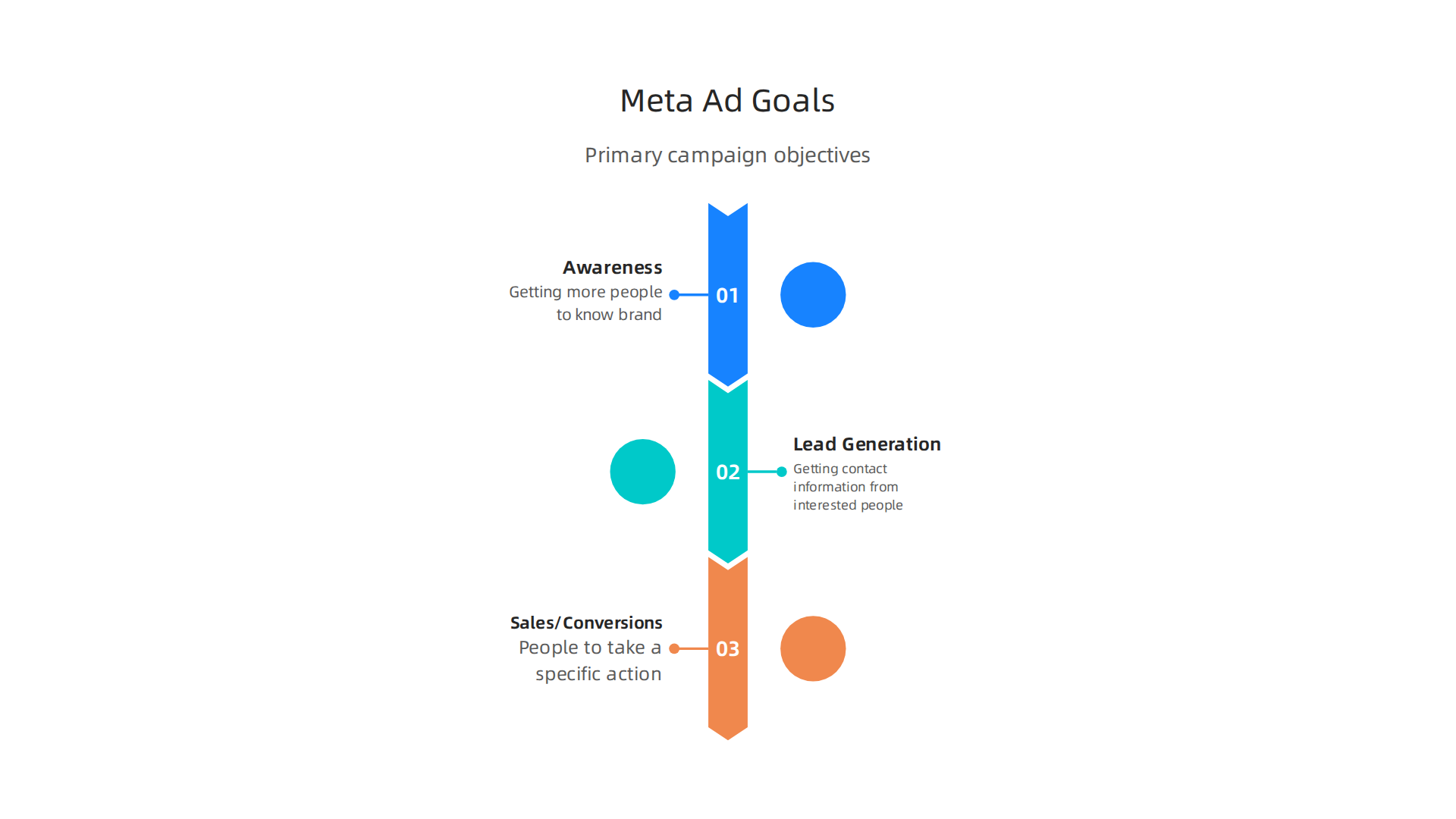
- Awareness: This is about getting more people to know your brand or your product. If you’re new in town or have a new service, you might want people to simply see your name a lot. Meta can help you reach a lot of people for this goal Meta Ads 2026: Facebook & Instagram Advertising Guide.
- Lead Generation: This means getting contact information, like email addresses or phone numbers, from people who are interested in what you offer. For many small businesses, getting new leads is key to growth.
- Sales/Conversions: This is when you want people to take a specific action, like buying something from your website, signing up for a trial, or booking an appointment. Meta will try to show your ads to people most likely to complete these actions How to Use Meta Ads Manager 2026: Complete Guide.
It’s helpful to pick just one main goal for each ad campaign. This makes it easier for Facebook’s smart systems to work for you. Having clear goals helps you create a strong small business marketing plan for predictable growth.
Find Your Best Customers
After you know your goals, the next step is to figure out who your ideal customer is. On Facebook and Instagram, you can be very specific about who sees your ads. This is part of a good instagram marketing strategy.
Here are simple ways to find your target audience:
- Location: If your business is local, you can target people in specific cities, towns, or even within a certain distance of your store. This is great for restaurants, salons, or local services.
- Interests: You can target people based on what they like. For example, if you sell hiking gear, you can target people interested in "hiking," "outdoors," or "camping." If you sell art supplies, you can target those interested in "painting" or "crafts."
- Lookalike Audiences: This is a powerful tool. If you have a list of your best customers, Facebook can find other people on its platforms who are very similar to them. This helps you reach new people who are likely to be interested in your business The Complete Meta Ads Targeting Guide for 2026.
In 2026, Meta also uses something called "Advantage+ Audience," which uses AI to discover new potential customers for you. This means you don’t always have to guess who to target. You can start broad and let the platform’s smart tools help you fine-tune who sees your ads Meta Ads Complete Guide 2026: Setup, Targeting, Optimization ….
By setting clear goals and knowing your audience, you make sure your ad budget works hard for you. This means less wasted money and more chances to get new customers for your business.
After you know what you want to achieve and who you want to talk to, the next big step in your facebook marketing plan is to pick the right way to show your message. Think of it like choosing the right outfit for an event. The outfit changes depending on where you’re going. The same is true for your ads on Facebook and Instagram. Choosing the right ad format and where your ad shows up (called "placements") can make a big difference in how well your message is received.

Pick the Best Ad Formats
Meta, the company that owns Facebook and Instagram, gives you different ways to show your ads. These are called ad formats. Each one works a bit differently and can be better for certain goals. Here are the most common ones small businesses use in 2026:
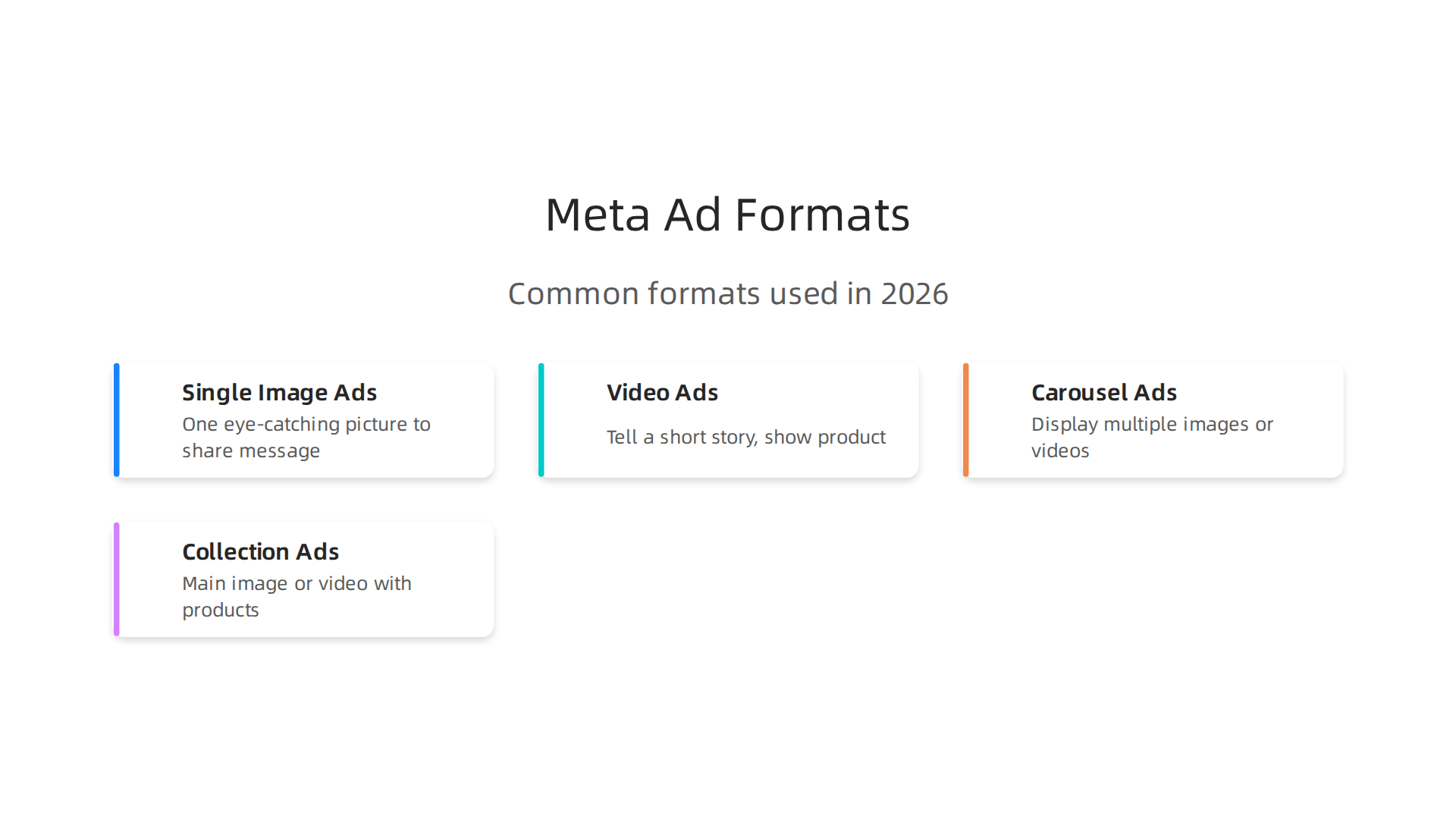
- Single Image Ads: These are simple and direct. You use one eye-catching picture to share your message. They are great if you have a clear offer or want to get people interested quickly. They work well for almost any goal, from making people aware of your brand to getting them to buy something Meta ads best practices to follow in 2026.
- Video Ads: Videos are super engaging. You can tell a short story, show how your product works, or give a sneak peek behind your business. Vertical videos, which are tall and fit mobile screens well, are doing great in 2026 for getting people to stop scrolling and watch The Small Business Guide to Meta Ads Creative in 2026. These are good for building awareness or explaining more about what you do.
- Carousel Ads: With carousel ads, you can show up to 10 images or videos in one ad. People can swipe through them. This is perfect if you want to show different products, highlight various features of one product, or tell a step-by-step story.
- Collection Ads: These ads are built for mobile phones. They start with a main video or image, and right below it, they show several products that people can click on to buy. If your goal is sales and you have many products, this format can turn interest into purchases very quickly.
When picking a format, think about your goal. Do you need to explain something (video)? Show many options (carousel)? Or just get a quick message out (single image)? You can learn more about these creative structures and their specific needs in a Meta Ad Formats: Complete 2026 Guide.
Choose Your Ad Placements
"Placements" are simply the different places your ad can appear on Facebook, Instagram, Messenger, and other apps and websites that partner with Meta. You can let Meta decide for you (automated) or choose them yourself (manual).
- Advantage+ Placements (Automated): For most small businesses, especially when you’re just starting with digital marketing online, using Advantage+ Placements is a smart move. This means Meta’s smart AI system will show your ads in all the places it thinks will get you the best results for your money. It’s often the easiest way to make your ad budget work hard without you needing to do a lot of guesswork Meta Ads Complete Guide 2026: Setup to Scale.
- Manual Placements: If you know exactly where your customers spend their time, or if your ad creative works best in a certain spot, you can choose placements yourself. For example, if you have a great vertical video for your instagram marketing strategy, you might focus on Reels and Stories. But generally, letting Meta’s system decide with Advantage+ Placements is usually better for small budgets because it can find hidden opportunities you might miss.
Some common places for ads include:
- Facebook and Instagram Feed: Where people scroll through posts from friends and pages. Square (1:1) or portrait (4:5) images and videos work best here Meta Ads Creative Best Practices: 2026 Field Guide.
- Facebook and Instagram Stories: Full-screen vertical videos or images that last a short time.
- Facebook and Instagram Reels: Short, entertaining vertical videos.
By carefully choosing your ad formats and trusting Meta’s system with placements, you can make your ads more effective. This helps your website get more visitors who are truly interested in what you offer. If you want to make sure those visitors turn into customers, it’s vital to have a website that converts.
Want your website to do more than just look good?
Grow Your Traffic on Autopilot
Making your website convert is super important. But before people can convert on your website, you need to get them there. This is where your ad’s pictures, videos, and words, called creative and copy, come in. You don’t need to be a fancy designer to make ads that work. Small businesses can make great ads for facebook marketing that grab attention and bring in new customers. Remember, the goal is to get people interested enough to click through to your website, where it’s vital to have a website that works to turn those visitors into leads and customers. You can learn more about how to make your website better at doing this with these 8 ways to turn visitors into leads.
Write Headlines That Hook People
The first thing people see is your headline. It needs to stop them from scrolling!
- Keep it short and clear: Get to the point fast. People are busy.
- Use a "hook": Ask a question, share a surprising fact, or show a big benefit. This makes people want to know more.
- Focus on what they get: Instead of saying "Our Product," try "Solve Your Problem with Our Product."
- Meta’s own advice suggests keeping your ad text short and clear because people on Facebook and Instagram tend to scan quickly, not read long messages carefully Best Practices to Make Your Ad More Engaging – Facebook.
Small businesses don’t need to reinvent the wheel. Many free resources offer simple templates and "swipe files" (examples of good ads) that you can use as a starting point for your own ads.
Craft Body Copy and Calls to Action
After your headline, your body copy tells more of your story.
- Be brief: Don’t write a novel. Explain your main message and what makes you special.
- Highlight benefits: How does your product or service make their life better?
- Have a clear call to action (CTA): This tells people what to do next. Do you want them to "Shop Now," "Learn More," or "Sign Up"? Make it super clear. Meta also suggests using multiple call to action buttons to give people options on what action they can take Best practices for dynamic creative ads.
Low-Cost Creative Tips (No Designer Needed!)
You don’t need a big budget or a professional designer to make good ad visuals.
- Repurpose what you have: Got good photos from your phone? Use them! Did you make a short video for your business already? Use that too.
- Simple short videos: Vertical videos (taller than they are wide) work best on mobile phones for platforms like Instagram Stories or Reels. Make them short, around 7-15 seconds, and put your most important message in the first 3 seconds to really grab attention Facebook Ad Creative Best Practices That Drive Results. Also, include sound in your videos because many people watch with sound on.
- Use free tools: Many simple apps and websites can help you add text to images or trim videos without special skills.
A/B Testing Your Ads
Even with great creative and copy, you won’t know what truly works until you test it. A/B testing means you try out different versions of your ad to see which one performs best.
- Try different hooks: For example, you might try 3 to 5 different ways to start your ad, like different headlines or opening video scenes. This helps you find what really stops people from scrolling Facebook Ad Creative Best Practices (2026).
- Test small changes: Change one thing at a time, like a different picture, a new headline, or a different call to action.
- Keep refreshing: Ads can get "tired" after a while. For small budgets (under $5,000 a month), try to update your ad creative every 3-4 weeks.
- Don’t give up too soon: It’s important to run your tests long enough and get enough results before deciding what works. For clicks, you might need at least 1,000 clicks on each ad version to see clear winners How to A/B Test Facebook Ad Creatives: Beginner Guide (2026). One expert suggests starting with at least 10 different ad creatives, especially when you have lower budgets How to Test Facebook Ads Creatives at Every Budget (2026).
By focusing on clear messages, simple visuals, and smart testing, your [digital marketing online] efforts can bring better results without breaking the bank.
Budgeting, Bidding, and Scaling Ads on a Tight SMB Budget
Once you know how to make ads that get noticed, the next big step for your facebook marketing efforts is figuring out how to spend your money wisely. Small businesses often have tight budgets. The good news is, you don’t need to spend a lot to get good results. You just need a smart plan.
How Much Should You Spend?
Setting a budget for your digital marketing online campaigns can feel tricky. Meta, the company behind Facebook and Instagram, says the smallest daily budget for ads that get impressions or clicks is just $1 per day for each ad set. However, to really see results for things like sales, many experts in 2026 suggest starting with a bit more. For example, a sales campaign might need at least $10 a day to help Meta’s system learn and work best Facebook Ads for Small Business: 2026 Guide. Other advice for small businesses suggests starting with $5 to $10 daily for each campaign to begin with FB Ads for Small Businesses in 2026.
A good rule of thumb for small and mid-sized businesses (SMBs) is to think about what you want to achieve. If you know how much a new customer or lead is worth to you, you can work backward to set your budget. Some suggest dedicating 10-20% of your expected monthly income to your Meta Ads, as long as it brings in more than it costs you How to Set a Meta Ads Budget for SMBs (2026).
Smart Bidding Strategies
When you set up your ads, you’ll choose how you want to bid.
This tells Meta how to spend your money to get you results.
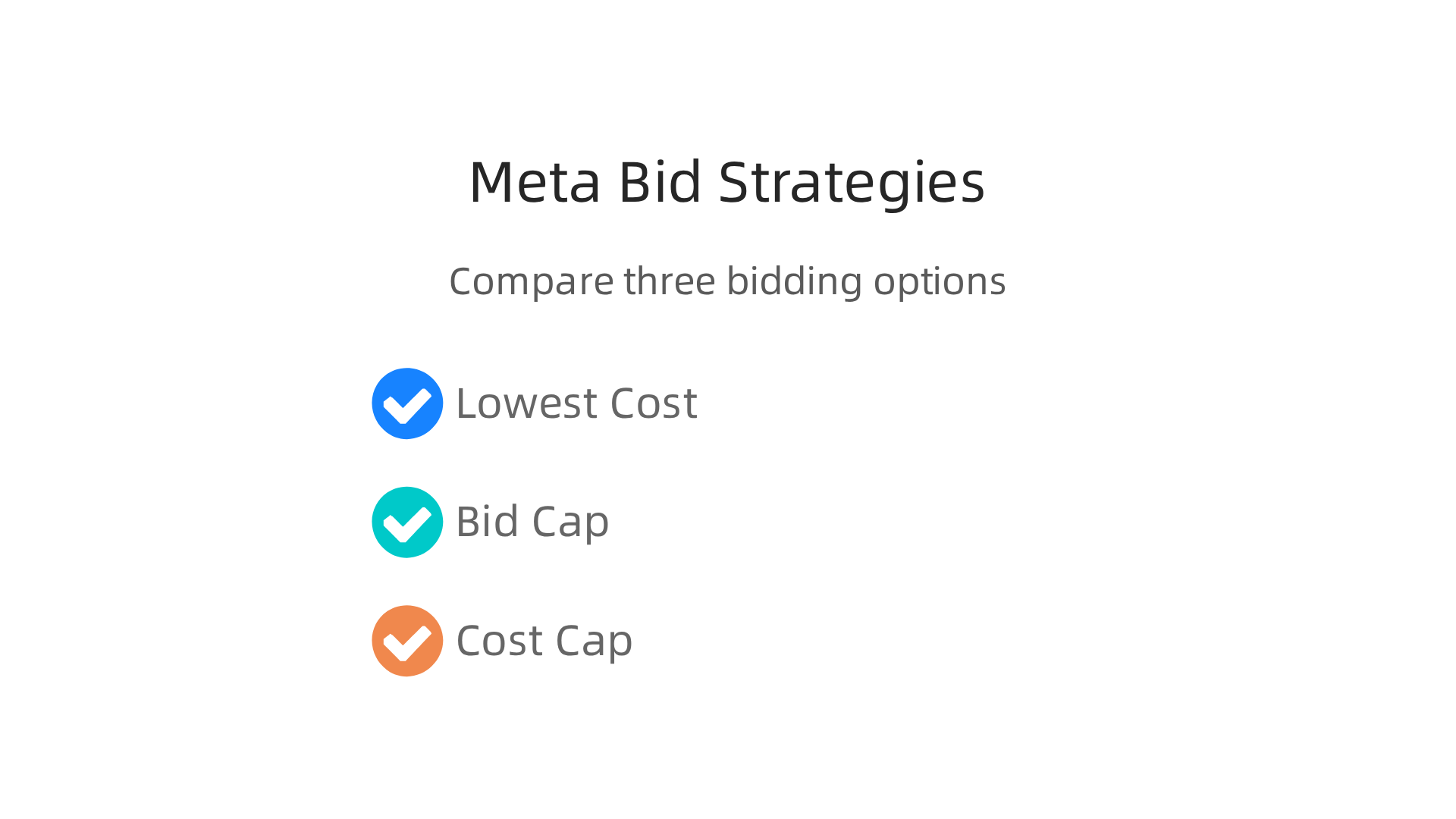
- Lowest Cost: This is usually the best place for small businesses to start. Meta’s system tries to get you as many results as possible for your budget without any extra rules. It’s like letting the system find the best deals for you. This is often called "Advantage+ bidding" and it’s recommended for most small advertisers in 2026 Master Facebook Advertising in 2026.
- Bid Cap / Cost Cap: These are more advanced. With a bid cap, you tell Meta the most you’re willing to pay for each action (like a click). With a cost cap, you set a target for how much you want each result to cost you. These can be helpful once you have more data and know what a "good" cost is for your business. For small businesses, you might want to start with a bid cap a little higher than what you think you can afford, then lower it once you gather data How to Reduce Facebook Ad Costs With Manual Bidding (2026).
For most small businesses, using Meta’s automatic bidding strategy (Lowest Cost) works best initially. It lets the system do the heavy lifting to find the best audience for your instagram marketing strategy and other campaigns.
How to Scale Your Ads
Once your ads are working well, you’ll want to grow them. This is called "scaling." But you can’t just dump a lot more money into them all at once.
- Go Slow: The most important rule for scaling is to increase your budget little by little. Many experts suggest not raising an ad set’s budget by more than 20% every 48 to 72 hours How to Scale Facebook & Instagram Ads in 2026. If you increase it too fast, Meta’s system might get confused, and your ad costs could jump up by a lot.
- Watch Your Results: As you scale, always keep an eye on how your ads are doing. Are you still getting good results for the money you’re spending? If not, you might need to slow down or make changes.
- Let the System Learn: Each time you change your budget, Meta’s system needs time to "learn" how to spend that new budget effectively. This is why small, slow changes are better.
Managing your budget and scaling correctly means you can keep getting good results from your [facebook marketing] without wasting money. If you’re looking for help to manage your online presence and get consistent leads, consider connecting your website with a service that grows your traffic on autopilot.
Connect your website with Weblish and grow your traffic on autopilot with AI. Grow Your Traffic on Autopilot
When you run ads, knowing if they’re actually working is super important. It’s not enough to just hope for the best. You need to carefully watch what happens after people see your ads. This is called measuring, tracking, and optimizing. For small businesses, this means setting up the right tools to see your results and then using that information to make your ads even better.
Essential Tracking Tools for SMBs
To understand how your [facebook marketing] and [instagram marketing strategy] are doing, you need to track user actions. Meta offers powerful tools for this.
The Meta Pixel
Think of the Meta Pixel as a tiny detective on your website. It’s a small piece of code that you add to your website. When someone visits your site after seeing your ad, the Pixel tracks what they do. Did they look at a product? Add something to their cart? Buy something? The Pixel tells Meta all of this. This information helps Meta understand who is likely to convert, so it can show your ads to more people like them.
The Conversions API (CAPI)
In 2026, relying only on the Pixel isn’t enough anymore. Privacy changes mean that sometimes the Pixel can’t track everything. That’s where the Conversions API (CAPI) comes in. CAPI sends data directly from your website’s server to Meta, making tracking more reliable.
Meta actually recommends using both the Pixel and CAPI together. This is called a "redundant event setup" because if one misses something, the other might catch it. This helps Meta get the most complete picture of what happens on your site, leading to better ad performance for your [digital marketing online] efforts Best Practices – Conversions API. This dual setup is now seen as the basic standard for accurate tracking in 2026 Meta Ads Reporting and Attribution.
Simple UTM Strategy
Beyond Meta’s tools, you can also use UTM parameters. These are small bits of text you add to your website links. They help tools like Google Analytics tell you where your website visitors came from (e.g., which ad, which platform, which campaign). It’s a simple way to get more insights, even if you’re not an expert.
Understanding Attribution in 2026
Attribution is how Meta decides which ad gets credit for a sale or lead. This has changed a lot recently. In January 2026, Meta removed some older ways of giving credit, like tracking people who only saw an ad but didn’t click on it for a long time Meta Ads Attribution Window Changes 2026.
Now, the main way Meta gives credit is through "7-day click and 1-day view." This means an ad gets credit if someone clicks on it and buys something within 7 days, or if they see it and buy something within 1 day without clicking. Also, since March 2026, only actual link clicks count as "click-through conversions." Other actions like likes or comments now fall under a new "engage-through attribution" category Meta Rewired Conversion Attribution in March 2026.
For you, this means it’s more important than ever to make sure your tracking (Pixel + CAPI) is set up correctly so Meta can accurately see when your ads lead to real results.
Practical Optimization Loops: What to Watch and How to Test
Once your tracking is in place, you can start making smart changes to your ads.
Which Metrics to Watch
Don’t get lost in too many numbers. For small businesses, focus on these key metrics:
- Cost Per Result: How much does it cost you to get one lead or one sale? This is super important.
- Return on Ad Spend (ROAS): For every dollar you spend on ads, how many dollars do you get back in sales? You want this number to be higher than 1.
- Click-Through Rate (CTR): How many people who see your ad actually click on it? A higher CTR often means your ad is interesting.
- Conversion Rate: Of the people who click your ad and go to your website, how many actually complete the action you want (like buying something or filling out a form)?
How to Run Tests (A/B Testing)
Testing is how you find out what works best. It’s like trying out two different flavors of ice cream to see which one people like more.
- Change One Thing: Test only one thing at a time. For example, run two ads that are exactly the same, but change only the picture in one. Or change only the headline.
- Run Them at the Same Time: Let both ads run for a few days to a week.
- Look at the Data: See which ad performed better based on your key metrics (like cost per result).
- Make a Decision: If one ad clearly wins, turn off the losing ad and use the winning one. Then, think about what you learned and try another test.
This constant process of testing, learning, and improving will help your [facebook marketing] campaigns get better over time without guessing. Building a website that effectively turns visitors into leads is also a key part of this process. If you want to dive deeper into how your website can contribute to your lead generation, learn about small business website conversion.
Now that you know how to make your ads work better, it’s super important to also know the rules. Running facebook marketing and instagram marketing strategy campaigns means following special privacy laws and ad rules. If you don’t, your ads might get rejected, or you could face bigger problems. For small businesses, understanding these rules in 2026 is a must.
Key Privacy Rules You Need to Follow
Privacy is a big deal in 2026. People want to know their information is safe. When you collect customer data for your digital marketing online efforts, you have to be very careful.
- Get Permission: You must get clear permission (consent) from people before you collect their data. This is especially true if you use their data to make special groups for your ads, like Custom Audiences. It’s important to keep good records of this permission, too, as this helps you stay on the right side of privacy laws for audience targeting and retargeting efforts in 2026 Custom Audiences vs. Lookalike Audiences: GDPR Impact.
- Be Clear About Data: Your website needs a privacy policy. This policy tells visitors what information you collect, how you use it, and if you share it with others (like Meta). If you use lead ads on Facebook, where people fill out a form, you absolutely need to link to your privacy policy Creating a Privacy Policy for Facebook Ads: Best Practices. Make sure your website openly says that you use Facebook Ads and how it might use collected data Privacy Policy for Facebook Ads: How To Create One – Termly.
- Handle Data Safely: Only collect the data you truly need. Keep it safe and make sure you respect people’s choices if they ask you not to use their data for ads. Meta has even given users more control over how their activity data from other businesses is used to personalize content and ads Better Personalization and Changes to Controls for Your ….
These steps help you build trust with your customers and keep your facebook marketing running smoothly. To have all these policies easily accessible, it’s a good idea to build a lead generating website that can host such important legal information.
Avoiding Common Facebook Ad Policy Problems
Meta has rules about what you can and can’t say or show in your ads. These are called Advertising Standards, and they apply to all ads on Facebook and Instagram Introduction to the Advertising Standards – Transparency Center. Breaking these rules can cause your ads to be rejected, which wastes time and effort.
Here are some common things to watch out for:
- No Personal Attacks or Guesses: You cannot make an ad that sounds like you know something personal about the viewer. For example, don’t say "Are you struggling with debt?" or "Do you have a health problem?" This is called "Personal Attributes" and it’s a very common reason for ads to get rejected. Meta does not allow ads that suggest you know someone’s race, religion, health, or money situation Meta Ad Policies 2026: Facebook & Instagram Rules + Fixes.
- Don’t Mislead People: Your ads must be truthful. Don’t promise things that aren’t real or use tricky words.
- Keep It Family-Friendly: Ads should not show adult content, bad language, or shocking images.
- Special Rules for Some Products: If you sell things like alcohol, gambling, or certain financial services, there are extra rules you need to follow. These often involve age limits and making sure your ads don’t target young people.
- No Targeting Children: In many places, it’s against the law to target ads to children based on their online activity. This is a very serious rule that applies to how you build your
digital marketing onlinecampaigns EDPB guidelines on the DSA–GDPR interplay – Lewis Silkin LLP.
To make sure your facebook marketing campaigns are successful and don’t get shut down, always review Meta’s ad policies before launching new ads. Staying up to date on your overall internet marketing for small business knowledge will also help you navigate these rules.
Managing all these moving parts, from ad optimization to privacy laws and content rules, can feel like a lot. That’s where smart tools and services come in handy.
Connect your website with Weblish and Grow Your Traffic on Autopilot with AI.
Summary
This article explains a simple, practical approach for small and mid-sized businesses to use Facebook and Instagram ads without expensive agencies or guesswork. It walks you through choosing a single campaign objective, finding and targeting the right audience, and picking ad formats and placements that match your goal. You’ll learn how to write short headlines and body copy, make low-cost creative (including short vertical videos), and run basic A/B tests to improve performance. The guide also covers budgeting, recommended bidding strategies, and a safe way to scale ads slowly so costs don’t spike. It stresses the technical essentials—installing the Meta Pixel plus the Conversions API and using UTMs—to measure real results, and it explains key 2026 privacy and ad policy rules you must follow. By the end, you’ll have actionable steps to run predictable, cost-effective campaigns and to turn ad visitors into leads using a properly built website or services like Weblish.