
Amazon Marketing Services for Small Businesses to Drive Sales Growth
This article explains how small and mid-sized businesses can use Amazon and other ecommerce channels as part of a practical growth strategy. It describes the tw…


Small and mid-sized businesses (SMBs) are always looking for new ways to find customers and grow. In 2026, two big areas offer huge chances for growth: Amazon and other online shopping sites, also known as ecommerce channels. Many people shop online, and Amazon is a giant in this space. For example, in 2025, third-party sellers on Amazon made up a huge 69% of all sales on the platform, bringing in an estimated $575 billion. This shows just how much opportunity there is for businesses to sell their products directly to customers there Amazon 2026: Sellers, Sales & Market Share [Data].
This means that having a good online presence on Amazon and other ecommerce platforms is not just a nice-to-have, it is a must-have. It can help businesses get steady new customers.
However, many small businesses face big challenges when trying to get their products seen online. They often do not have enough people in their team who know a lot about internet marketing for small business. It can also be hard to tell if the money spent on marketing is actually bringing in new sales. Plus, hiring traditional digital marketing services for small business can be very expensive, and the results might not be clear. This often leaves business owners feeling lost or worried about how to make their online efforts truly work.

This is where managed ecommerce marketing services come in. These services help businesses handle all the complex parts of selling online, especially on big platforms like Amazon. They offer a simpler, more affordable way to get great results without all the stress. Instead of trying to do everything yourself or dealing with high costs, these services provide expert help to manage your online sales and marketing.
Want to see your website bring in more customers easily?
Grow Your Traffic on Autopilot
How Amazon Fits into a Broader Ecommerce Strategy
When we talk about selling things online, Amazon is a big player, but it is just one part of a smart plan. Think of Amazon as a busy marketplace. Lots of people go there specifically to buy things. This makes Amazon a strong place to get many people to see your products. Businesses can sell their products directly to customers there, and Amazon handles things like payments and even shipping if you choose, which is called being a third-party seller on the Amazon Marketplace.
So, Amazon works in two main ways for small businesses:
- It brings people in: Many shoppers start their buying journey on Amazon. They are looking for something specific, and your product might show up. This means Amazon helps you find new customers who might not know about your business otherwise. It is a powerful way to get traffic to your products.
- It helps people buy: When people are on Amazon, they are often ready to make a purchase. They trust Amazon, so it is easier for them to click "buy." This makes Amazon a great place for turning visitors into buyers, or what we call a strong conversion channel.
But here is the thing: While Amazon is great, it is also important to have your own online home, like your business website. Your website is an "owned channel." On your own website, you have full control. You can decide how everything looks, how you talk to your customers, and you do not share your customer information with Amazon. You can also build a stronger brand and customer loyalty over time.
For a small business, a good strategy is to use both. Amazon can be like a big billboard that gets new people interested in your products. Then, your own website can be where you build deeper relationships with those customers. For example, if someone buys your product on Amazon, you might encourage them to visit your website for more items, special offers, or to learn more about your brand.
Deciding how much to put into Amazon versus your own website is a big choice. A good digital marketing strategy for businesses should look at both. You might invest in Amazon ads and a good marketing service Amazon offers to get your products seen by its huge audience. At the same time, you might also spend money on ecommerce SEO services for your own website. This helps your site show up when people search on Google, bringing traffic directly to you.
The key is to not put all your eggs in one basket. You want to make sure your products can be found where customers are shopping, whether that is on Amazon or through a direct search that leads them to your own site. Expert help from online marketing companies for small business can guide you on how to best balance these different ways of selling. This way, you can get the most out of Amazon’s reach while still building a strong, independent brand for your business.
Marketplace Options: Seller, Vendor, and Third-Party Models
As we just talked about, using Amazon is a smart move, but there is more than one way to sell on its huge platform. For small businesses, understanding these different ways is key to picking the best path. There are two main models you need to know about: being a Third-Party (3P) Seller or a First-Party (1P) Vendor.
Third-Party (3P) Seller Model
This is the most common path for small businesses. As a Third-Party Seller, you sell your products directly to customers on Amazon. Think of it like setting up your own shop inside a giant mall. You own your products, you choose your prices, and you create your product listings. You manage all this through a tool Amazon calls Seller Central.
A big chunk of what people buy on Amazon actually comes from these Third-Party Sellers. In fact, most of Amazon’s sales come from these independent sellers, showing how powerful this model is for businesses in 2026 Amazon 2026: Sellers, Sales & Market Share [Data]. This gives you a lot of control over your brand and how your products are shown to buyers.
For your operations, as a 3P seller, you get to choose how you handle shipping and customer service:
- Fulfillment by Amazon (FBA): You send your products to Amazon’s warehouses. Amazon then stores them, packs them when someone buys, and ships them out. This can be great because your products become eligible for Amazon Prime shipping, which many customers love. However, Amazon charges fees for storage and shipping Amazon FBA vs FBM in 2026: Which Fulfillment Model Wins.
- Fulfillment by Merchant (FBM): You handle everything yourself. When a customer buys your product, you pack and ship it from your own location or a warehouse you manage. This gives you more control over costs and packaging, but you miss out on the Prime badge unless you meet specific standards.
First-Party (1P) Vendor Model
The Vendor Model, also called 1P, is different. In this setup, you are not selling directly to customers. Instead, you sell your products wholesale to Amazon itself. Amazon then becomes the seller of your products, and they list them as "Sold by Amazon." Usually, businesses become 1P Vendors only if Amazon invites them.
With the 1P Vendor model, Amazon takes over many of the choices. They decide the retail price, manage the listings, and handle shipping and customer service. You send your products to Amazon, and they pay you for them. This means less work for you on the daily selling side, but you also have less control over your pricing and brand image on the platform Amazon 1P vs 3P: Key Differences for Sellers (2026).
What This Means for Your Business
Choosing between being a 3P Seller or a 1P Vendor changes how you run your business on Amazon.
- Control vs. Simplicity: As a 3P Seller, you have more control over your products, prices, and how you interact with customers. This means you need a strong marketing service Amazon strategy to make your products stand out. As a 1P Vendor, things can be simpler operationally, but you give up much of that control.
- Money You Make: 3P sellers generally have the potential for higher profit margins because they set their own prices and manage their costs more directly. 1P vendors often have lower per-unit profits due to wholesale pricing, but they might get larger, more consistent orders from Amazon.
- Marketing Choices: For 3P sellers, investing in strong digital marketing services for small business is crucial to get your products seen. This includes using Amazon’s advertising tools. For 1P vendors, Amazon handles more of the direct selling, so your marketing might focus more on brand building outside of Amazon.
Making the right choice depends on your business size, what kind of products you sell, and how much control you want to have. Many online marketing companies for small business can help you figure out which model fits best and how to make the most of it.
Ready to improve your online presence beyond Amazon?
Grow Your Traffic on Autopilot
After you decide how you want to sell on Amazon, the next big step is to make sure people actually see your products. This is where different Amazon marketing services come in. They help you get your items in front of shoppers, whether through ads or by making your product pages really good.
Paid Advertising on Amazon (PPC)
Paid ads on Amazon work like a fast track to getting noticed. You pay Amazon to show your products to shoppers who are looking for items like yours. This is often called Pay-Per-Click (PPC) because you typically pay each time someone clicks on your ad.
There are a few main types of paid ads:
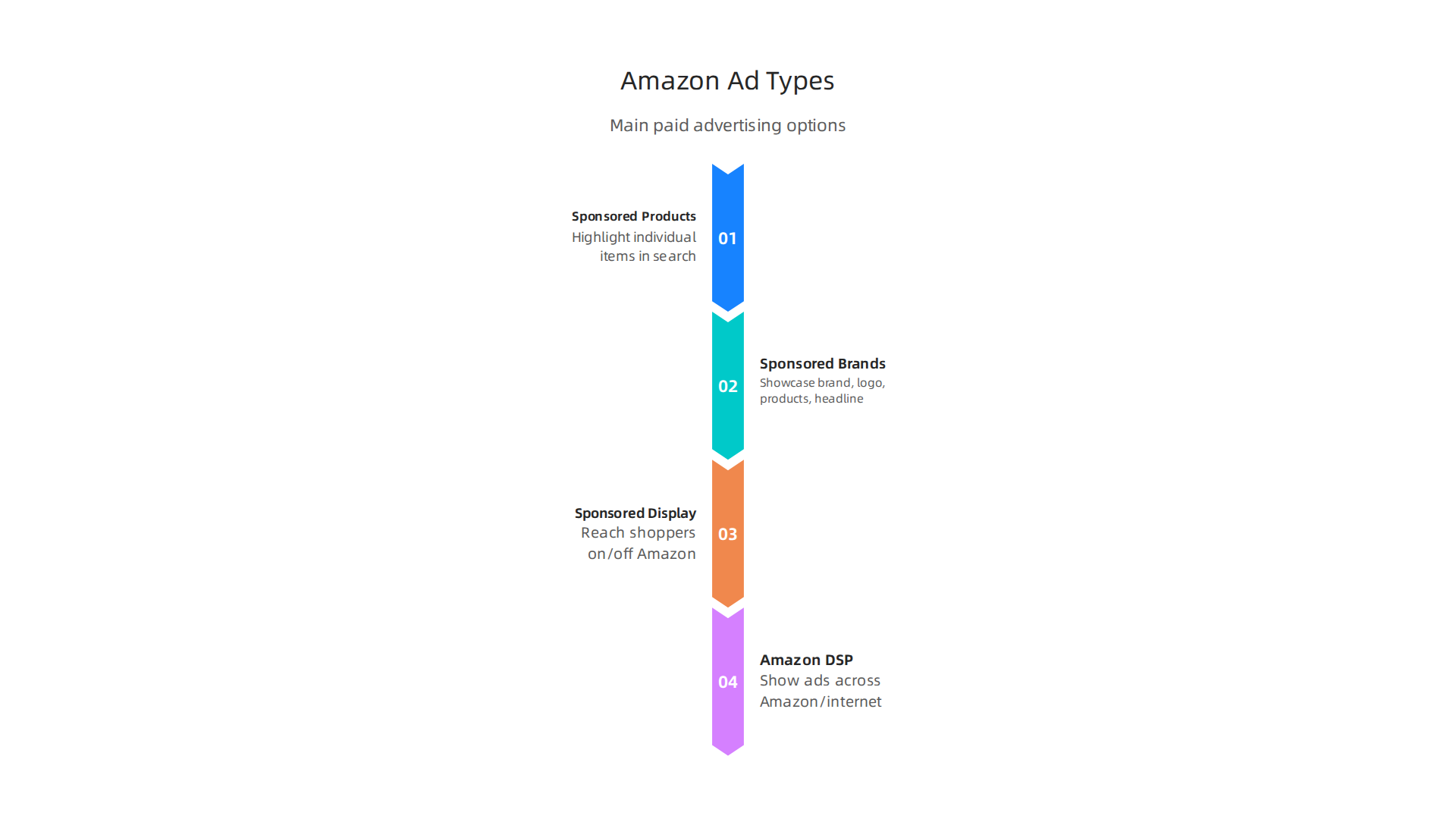
- Sponsored Products: These ads highlight individual items. They show up right in the search results or on product pages. If a shopper searches for "blue running shoes," your ad for blue running shoes can appear right there. These are great for quickly driving sales for a specific product Discover products and types of ad formats. Many businesses start here, and they make up a big part of Amazon’s ad spending in 2026 The Complete 2026 Strategy Guide for Profitable Amazon ….
- Sponsored Brands: These ads showcase your brand, not just one product. They usually include your company logo, a headline, and a few of your products. They appear in prominent spots in shopping results and are good for building brand awareness and getting people to check out your store on Amazon Understand Sponsored Brands. Video ads under Sponsored Brands are also very popular now Amazon Sponsored Brands Strategy 2026: SB Headline, ….
- Sponsored Display: These ads help you reach shoppers both on Amazon and on other websites or apps. They are smart ads that show your products to people who have already looked at them or similar items. Think of it as a friendly reminder to buy. This type of ad is useful for bringing shoppers back to your products Amazon Sponsored Display in 2026: The Underused Ad ….
- Amazon DSP (Demand-Side Platform): This is a more advanced way to advertise. It lets businesses show ads to specific groups of shoppers across Amazon’s own sites and many other places on the internet. It helps reach people even before they start searching on Amazon. Small businesses might work with an agency to use DSP for a wider reach Amazon Marketing Strategies That Actually Work in 2026.
When Should SMBs Prioritize Paid Ads?
Paid ads are best when you want quick results. They are great for launching new products, boosting sales during holidays, or staying visible in very competitive categories. If you need sales now, a good marketing service Amazon offers through PPC is often the fastest way.
Organic Listing Optimization (A+ Content, SEO)
Besides paying for ads, you can also make your product pages so good that Amazon naturally shows them to more people. This is like improving your shop window so more people stop to look. This part of your strategy is often called Amazon SEO, or Search Engine Optimization.
- Amazon SEO: This means making your product listings clear, complete, and full of the right words. When shoppers search, Amazon tries to match their words to your product. So, a good product title, clear bullet points about benefits, and a helpful description are key. You want to use important keywords that customers would type in, but keep it easy to read. Great images are also very important, especially a main image with a white background showing just your product Best Practices for Listing Quality. This helps Amazon’s system, often called Rufus, understand what your product is about. Good ecommerce seo services can help here.
- A+ Content: If you have registered your brand with Amazon, you can use A+ Content. This lets you create richer, more detailed product descriptions with bigger images, comparison charts, and even videos. It’s like having a mini-website on your product page. A+ Content helps tell your brand’s story and can make shoppers more confident about buying from you.
When Should SMBs Prioritize Content and SEO?
Focusing on good content and SEO is important for long-term success. It helps you build trust with customers, improves your conversion rate (how many people buy after looking), and can reduce how much you need to spend on ads over time. This is a core part of what what search engine marketing means for small business success means.
Balancing Paid and Organic Efforts
For most small businesses, the best approach is to use a mix of both paid ads and organic optimization.

Paid ads can give you a quick boost, especially for new products or when you need more visibility. Organic optimization builds a strong foundation, helping you get steady sales and brand recognition without always paying for every click. This combined strategy can make your digital marketing services for small business on Amazon much more effective.
Optimizing Product Listings & Content for Better Conversion
Making your Amazon product pages really good is a key part of any strong marketing service Amazon offers.

Great product listings work hand-in-hand with paid ads to get more people to buy. They help shoppers understand your product, build trust, and stand out from the crowd. Think of it as making your storefront as appealing as possible, so when ads bring people to your door, they want to come in and buy.
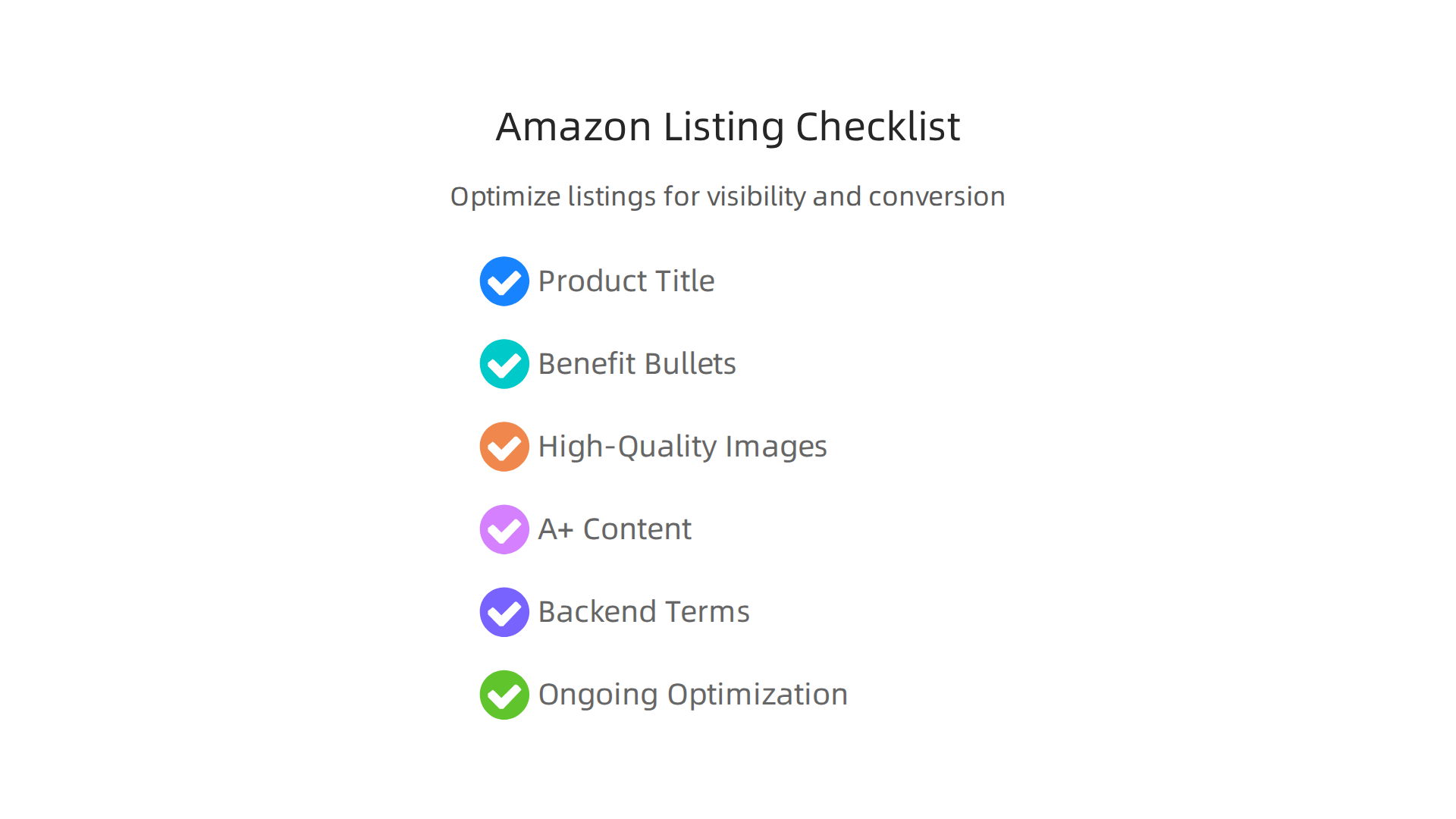
Here’s an easy checklist to make your Amazon listings shine, even if you’re a small business:
Crafting a Winning Product Title
Your product title is super important. It’s the first thing shoppers see.
- Start strong: Put your brand name and the most important keywords at the beginning. If someone is searching for "red yoga mat," make sure "red yoga mat" is right up front. Keep the most vital info within the first 80 characters so it shows up well on phones Amazon Listing Optimization Checklist: The A-to-Z Guide.
- Be clear: After the main part, add key features like size, color, or material. For example, "Brand Name Red Yoga Mat for Pilates, 6mm Thick, Non-Slip."
- No keyword stuffing: Don’t just list a bunch of words. Make it read like a normal sentence. Amazon’s systems are smart and like titles that are easy for people to understand.
Bullet Points that Sell Your Benefits
Right under your title, you’ll find bullet points. These are your chance to tell buyers why they need your product.
- Focus on benefits: Instead of just saying "Made of plastic," explain what that means for the customer. Like, "DURABLE PLASTIC: Easy to clean and lasts a long time, saving you money!"
- Use all five: Amazon gives you five spots for bullet points. Use them all! Put the most exciting benefits first Amazon Listing Optimization Guide (2026).
- Keep it short and sweet: Each bullet point should be easy to read and get straight to the point.
High-Quality Images and Videos
Pictures and videos are what really make people click.
- Main image is key: Your first picture should have a pure white background and show only your product, taking up at least 85% of the space.
- Show off all angles: Use at least five other images. Show your product from different sides, close-ups of important features, and even how it looks being used (a "lifestyle" image).
- High resolution: Make sure all your pictures are clear and sharp. Shoppers love to zoom in Optimize Amazon Product Listings: 2026 Complete Guide.
- Add a video: Videos help people imagine using your product, which can really boost sales.
Leveraging A+ Content
If your brand is registered with Amazon, you can use A+ Content. This lets you make your product description much more exciting with:
- Rich visuals: Larger images and graphics.
- Brand story: Tell customers about your company and what makes you special.
- Comparison charts: Show how your product stacks up against others.
- Videos: Even more video options to engage shoppers.
A+ Content is a great way to build trust and make shoppers feel more confident about buying from your small business.
Smart Use of Backend Search Terms
These are keywords you add to your listing that customers don’t see, but Amazon’s system does.
- Don’t repeat: Only use keywords here that you haven’t put in your title or bullet points.
- Think like a shopper: Include different ways people might search for your product, like synonyms or common misspellings Amazon Product Listing Checklist for 2026.
- Stay within limits: Amazon has a limit on how many characters you can use, so choose wisely.
Ongoing Optimization & Testing
The world of Amazon changes quickly. What works today might be different tomorrow.
- Keep an eye on things: Check your listing’s performance regularly. Are people clicking? Are they buying?
- Watch your rivals: See what other sellers are doing well and learn from them.
- Make small changes: If something isn’t working, try changing a bullet point, an image, or even a few words in your title. Amazon rewards listings that are helpful to customers and keep up with what people are searching for Amazon Listing Optimization: An Updated Guide for Brands …. Small, regular updates can keep your listings fresh and competitive without needing a huge team.
- Use Amazon’s tools: If you’re a registered brand, Amazon provides tools like Brand Analytics to help you understand how your listings are doing and what shoppers are searching for.
By putting effort into these details, your product listings will work harder for you. This means more sales and a stronger presence on Amazon. Making sure your website pages are always doing their best is a big part of why small business website conversion matters so much.
Want to improve your website’s performance beyond Amazon and get more eyes on your business?
Grow Your Traffic on Autopilot
Once your product listings are looking great, the next big step is making sure you can get your products to customers smoothly and at a good price. This is where pricing, fulfillment, and keeping track of your items come in. These parts are very important for any small business offering a strong marketing service Amazon sellers need to think about.
Choosing How to Ship: FBA vs. FBM
When you sell on Amazon, you have two main ways to get products to buyers: Fulfillment by Amazon (FBA) or Fulfillment by Merchant (FBM). Each has its own benefits and costs.
- Fulfillment by Amazon (FBA): With FBA, you send your products to Amazon’s warehouses. Amazon stores them, packs them when someone buys, and ships them out. They also handle customer service for these orders.
- Pros: Your products get the "Prime" badge, which usually means more sales because customers trust Amazon’s fast shipping. It also frees up your time, letting you focus on other parts of your business, like improving your overall digital marketing strategies for businesses.
- Cons: You pay Amazon fees for storage, picking, packing, and shipping. These fees can add up. For example, in 2026, a standard-size item selling for $25 might have a base fulfillment fee around $3.89, plus monthly storage fees and placement fees Amazon FBA vs. FBM in 2026. Amazon also increased fulfillment fees in 2026 for larger items Fulfillment Model Comparison 2026.
- Fulfillment by Merchant (FBM): With FBM, you handle everything yourself. You store the products, pack them, and ship them directly to the customer when they buy.
- Pros: You have more control over your inventory and shipping process. You avoid Amazon’s storage and fulfillment fees, which can be good for bigger, slower-selling, or custom items FBA vs FBM: Which Amazon Fulfillment Method Is Right for Your Business.
- Cons: You don’t get the Prime badge, which can make it harder to compete. You need your own storage space and staff to manage shipping. Many FBM sellers use other shipping companies and pay them around $2.50 to $4.50 per order, depending on the item FBA vs. FBM in 2026: Which Fulfillment Model Actually Wins?.
Choosing between FBA and FBM often depends on your product’s size, how fast it sells, and how much time and space you have. It’s really about finding the right balance for your small business to be profitable. Many sellers use a mix of both, called a hybrid model.
Smart Pricing Strategies
Setting the right price for your products is a tricky but important part of your overall marketing service Amazon strategy. You want to make enough money but also stay competitive.
- Know Your Costs: First, figure out all your costs for each product. This includes what you pay for the product, Amazon’s referral fees (usually a percentage of the sale), fulfillment fees (FBA or FBM), shipping, and any other business expenses. A good way to do this is by creating a cost tracking sheet to compare options FBA vs FBM: The 2026 EBITDA Playbook for Amazon Sellers.
- Check Competitors: See what similar products are selling for on Amazon. You don’t always have to be the cheapest, but you need to be in a reasonable range.
- Value Over Price: Sometimes, if your product offers special features or benefits, you can charge a bit more. Make sure your listing clearly shows why your product is worth it.
- Adjusting Prices: Amazon’s prices change all the time. Be ready to adjust your prices to stay competitive, especially during busy shopping times.
Keeping Track of Your Products (Inventory)
Managing your inventory well means you always have enough products to sell without having too many sitting around.
- Don’t Run Out: Nothing is worse than customers wanting to buy and you have no stock. This can lead to lost sales and bad reviews.
- Don’t Have Too Much: Having too much inventory costs money because you pay for storage, especially with FBA. It can also tie up your cash.
- Forecast Sales: Try to guess how many products you’ll sell in the coming weeks or months. Look at your past sales, any upcoming promotions, and seasonal changes.
- Regular Checks: Keep an eye on your inventory levels often. Amazon provides tools to help you do this. For small businesses, good inventory planning is key to smooth operations and better profits.
After figuring out how to get your products listed, priced right, and shipped well, the next big thing is knowing if all your hard work is actually paying off.

This means looking at your numbers to see what’s working and how you can grow. It’s a key part of any good marketing service Amazon businesses use.
Measuring Performance & Scaling: KPIs, Reporting, and Ongoing Management
To truly succeed on Amazon, you need to measure how well you are doing. This is where Key Performance Indicators (KPIs) come in handy. KPIs are like scorecards that show you if your strategies are helping your business grow. For a small business, understanding these numbers helps you make smart choices and grow, just like any good digital marketing services for small business.
Important Numbers to Watch (KPIs)
Here are some main KPIs you should always keep an eye on for your Amazon business:
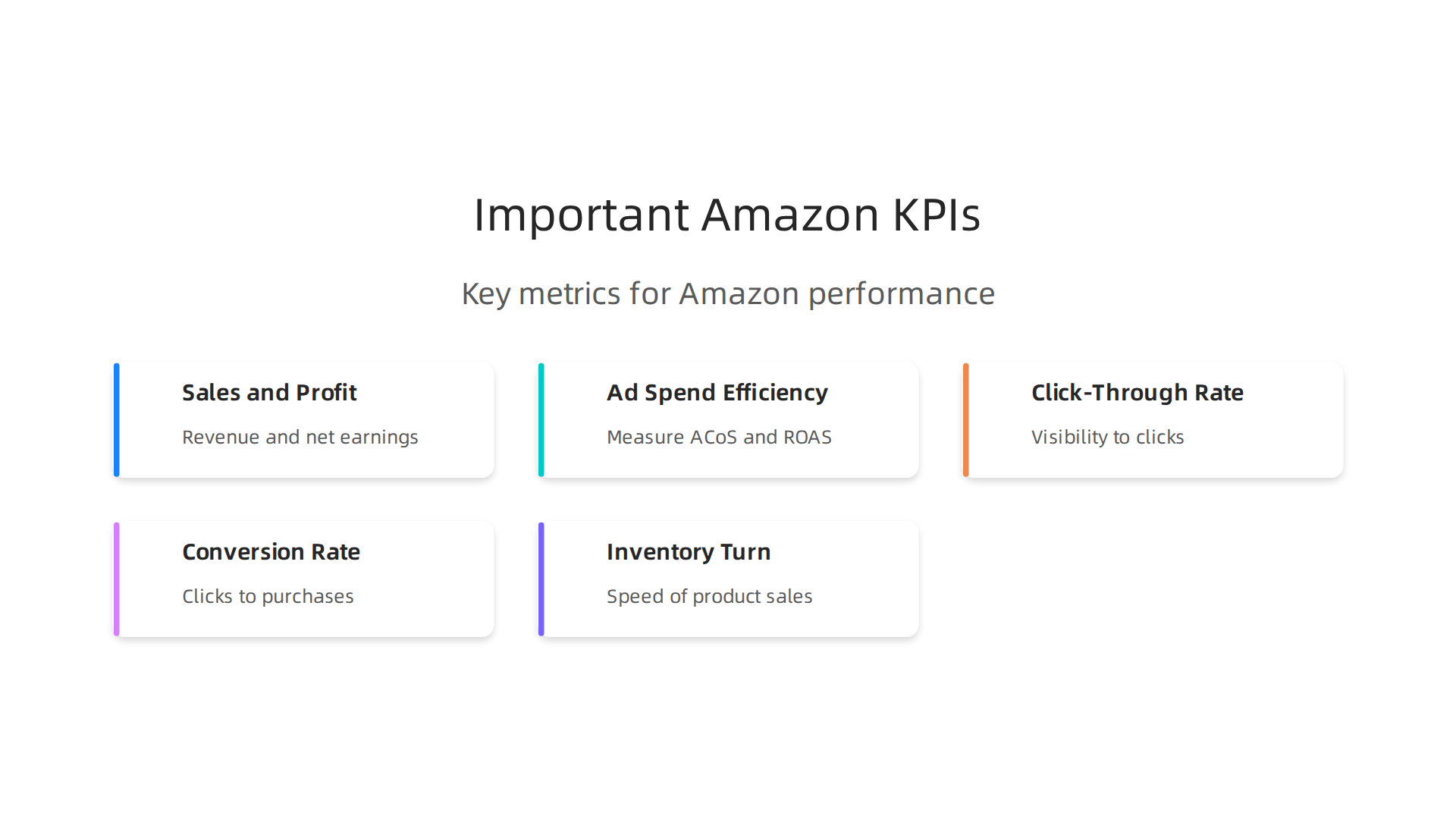
- Sales and Profit: This is the most basic one. How much money are you making, and how much profit is left after all costs?
- Ad Spending Efficiency: If you’re using Amazon ads (which most successful sellers do), you’ll want to watch:
- ACoS (Advertising Cost of Sales): This tells you how much you spend on ads to make $1 in sales. For example, if your ACoS is 25%, it means you spent $0.25 on ads to make $1 in sales. In 2026, a typical ACoS for Amazon ads is around 20-40% depending on the product and how new it is Amazon Ads ACOS Benchmarks 2026.
- ROAS (Return on Ad Spend): This is the opposite of ACoS and shows how much money you get back for every dollar spent on ads. A good ROAS might be 3.5x globally for Sponsored Products Amazon Ads Benchmarks 2026.
- Click-Through Rate (CTR): How many people see your ad or listing and actually click on it. A higher CTR means your listing title and main picture are attractive. Average CTR for Sponsored Products is around 0.3% to 0.8% Amazon Advertising Benchmarks 2026.
- Conversion Rate (CVR): This is how many people who click on your listing end up buying your product. A good conversion rate is usually 8% to 15% on Amazon Amazon Ads Benchmarks by Category and Ad Type (2026 …. If your CVR is low, you might need better product pictures or descriptions.
- Inventory Turn: How quickly you sell your products. This helps you avoid running out of stock or having too much sitting in Amazon’s warehouse.
Making Sense of Your Reports
Looking at these numbers regularly helps you see trends. Are sales going up or down? Are your ads costing too much for the sales they bring in? Amazon provides lots of reports to help you track these KPIs. As an online marketing companies for small business, you can use these reports to test new ideas in small steps. For instance, you might try a new ad type like Sponsored Brands Video, which became the default in early 2026 for many product types, to see if it brings in more sales Amazon Sponsored Brands Strategy 2026.
Growing Your Business Over Time
To truly scale your marketing service Amazon efforts, you need to keep testing, learning, and making changes.
- Phased Testing: Don’t change everything at once. Test one new idea, see how it performs based on your KPIs, and then decide if it’s a keeper. This could be a new product title, different ad keywords, or even trying a mix of FBA and FBM.
- Regular Reporting: Set a schedule to check your numbers. Weekly or monthly reviews help you catch problems early and double down on what’s working.
- Outsource vs. In-House: As your business grows, you might find you don’t have enough time to manage all your Amazon marketing. You can choose to learn more yourself, hire someone in-house, or look into external digital marketing services. Many small businesses find great value in partnering with experts who can help with ecommerce website design services turn visitors into buyers for smbs and ongoing marketing strategy. Deciding whether to hire an outside agency or manage things internally is a common challenge for growing businesses. If you’re looking for help to boost your website’s visibility and conversion, connecting with a service that understands how to choose a marketing firm that generates leads for your small business can be a smart move.
Keeping a close eye on your performance and making smart changes helps your Amazon business not just survive, but truly thrive.
Connecting your website with Weblish helps grow your traffic on autopilot with AI. Are you ready to Grow Your Traffic on Autopilot?
Summary
This article explains how small and mid-sized businesses can use Amazon and other ecommerce channels as part of a practical growth strategy. It describes the two main Amazon selling models (third‑party seller vs first‑party vendor), how Amazon fits with an owned website, and when to prioritize paid ads versus organic listing optimization. The guide also gives a hands‑on checklist for crafting high‑converting product pages—titles, bullets, images, A+ content and backend keywords—plus advice on fulfillment choices (FBA vs FBM), pricing and inventory management. Finally, it shows which KPIs to track (ACoS, ROAS, CTR, conversion rate, inventory turn) and how to scale via phased testing or outside marketing help, so readers can decide the right mix of channels and actions to drive steady, profitable online sales.