.png)
Build a Drip Marketing Campaign That Converts for Your Small Business
This article explains how SMBs can stop wasting budget on sporadic outreach and instead build automated drip marketing systems that nurture leads over time. It...
Introduction
You send a promotional email, post on social media, and then wait. A week passes with nothing. So you send a different email to the same list, hoping for a better result. Sound familiar?

This is the sporadic outreach cycle that so many small and medium businesses get stuck in. You hustle for a burst of attention, it fades, and then you start over from scratch. It is exhausting. And it is expensive.
Here is the real problem with that approach. When you market in short, disconnected bursts, you waste budget. You miss the chance to build real relationships with people who are interested but not ready to buy yet. The majority of your leads simply slip away.
In 2026, the drip marketing market is valued at USD 1.87 billion and growing fast. Why? Because businesses are realizing that consistent, automated follow-ups work better than random one-off campaigns. Drip marketing changes the game. Instead of shouting at everyone at once, you send the right message to the right person at the right time.

It turns a one-time visitor into a loyal customer through a series of small, helpful touches.
Think about the other popular marketing strategies you hear about. Account based marketing targets specific high-value accounts with personalized outreach. Guerilla marketing uses creative, low-cost tactics to grab attention. Sustainable marketing focuses on long-term value instead of quick wins. Drip marketing shares the same DNA. It is all about being smart with your resources and building trust over time.
The difference with drip marketing is that it runs on autopilot. Once you set up your sequences, they work in the background. You free up your time to focus on your core business. And the results speak for themselves. Over 83% of small businesses say customer referrals are their best source for new business according to the LocaliQ 2026 trends report. A well-run drip campaign feeds that referral engine by staying top of mind with your audience.
This article gives you a research-backed, step-by-step playbook to build and optimize drip campaigns for your SMB. You will learn exactly how to set up automated sequences that nurture leads, convert more customers, and grow your revenue without burning through your marketing budget.
No fluff. No guesswork. Just a clear path forward.
Ready to turn your sporadic outreach into a lead generation machine? Start your FREE Trial and see how Weblish can help you build a website and marketing system that works for you around the clock.
Why Drip Marketing Matters More Than Ever for SMBs
You already know that sending random emails now and then does not work. But in 2026, your customers expect more than just a one-time message. They want a relationship. And drip marketing is the best way to build that relationship without spending all your time on manual follow-ups.
Nurture leads without the busywork. A drip campaign sends a series of helpful messages automatically. You set the sequence once, and it runs in the background. This kind of consistent contact turns cold leads into warm buyers. In fact, drip marketing is growing fast. The driving force behind this growth is the need for personalized customer engagement and better return on investment. Businesses see real results.
Big returns without a big budget. Traditional advertising eats up cash fast. But a drip campaign costs very little to run after you build it. You can send targeted emails to hundreds of people for pennies. That is why more SMBs are turning to automation. It gives you the same kind of personalized engagement as big brands, but at a fraction of the cost.
Personalization builds trust. Small brands win when customers feel known. With drip marketing, you can send different messages to different people based on their actions. Someone who downloads your guide gets a different email than someone who signs up for a webinar. This personal touch matters. According to a 2026 study on marketing statistics, businesses that use AI for email personalization see a 41% increase in revenue. When you make your audience feel special, they trust you more. And trust leads to loyalty.
If you want to turn your website into a tool that nurtures leads every day, learn how to make your small business website convert visitors to customers. Then pair that with a drip campaign to keep them coming back.
Get started with Weblish for an affordable way to manage your email marketing and automation without the high agency costs.
Start your FREE Trial and let Weblish help you build campaigns that work around the clock.
How to Build a Drip Campaign That Converts (Step-by-Step)
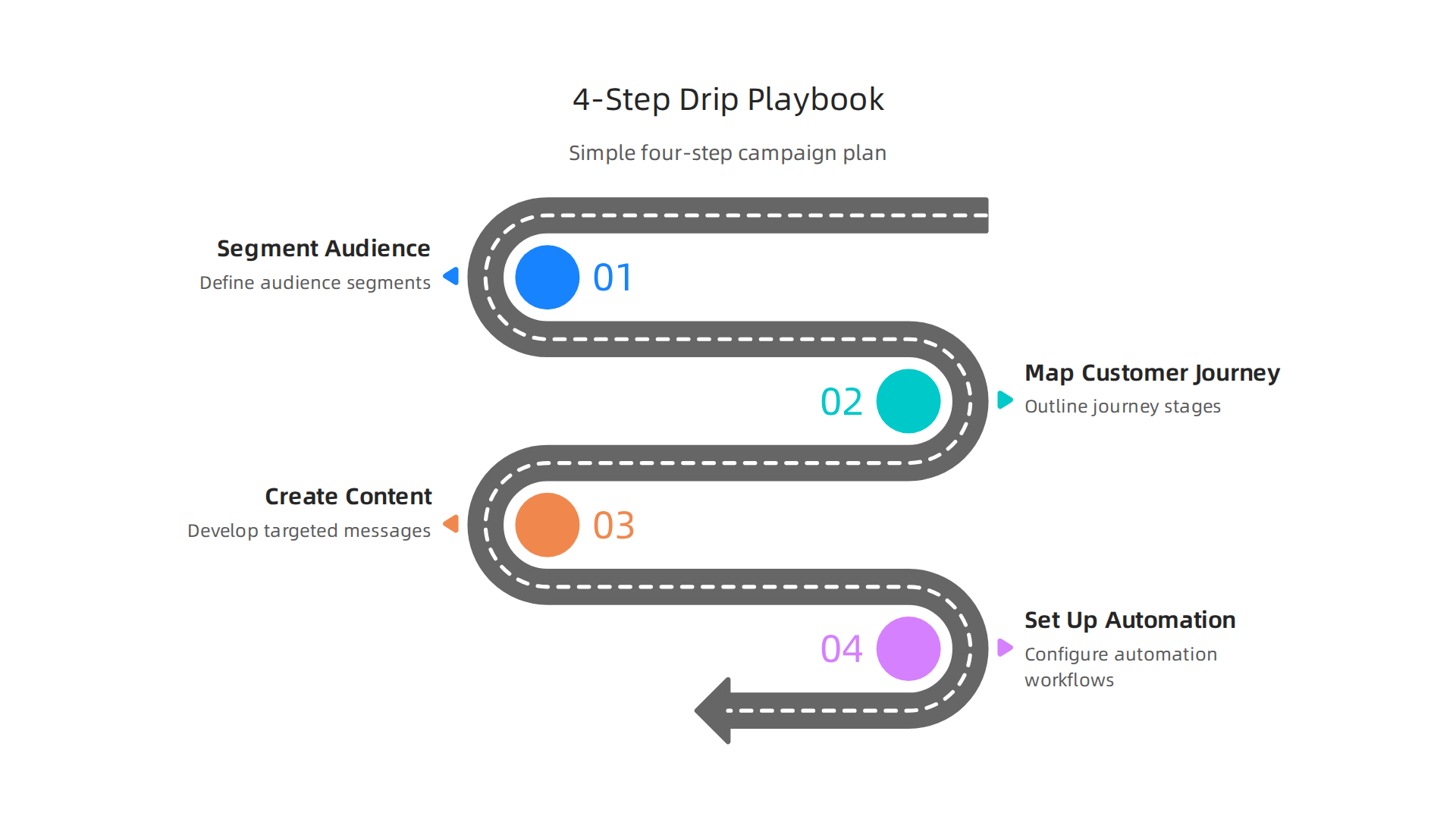
So how do you actually build a drip campaign that brings in customers? It is not about luck or guesswork. It is about following a clear system. Here is a simple four-step plan to get your first campaign up and running.
Step 1: Segment Your Audience
Do not send the same email to everyone on your list. That is a fast way to lose subscribers. Instead, split your list into smaller groups based on what people care about. For example, someone who downloads a pricing guide is different from someone who signs up for a free webinar. This is where account based marketing thinking helps. You focus your energy on the people who are most likely to buy. A common mistake small businesses make is trying to talk to everyone, which waters down their message (ChoiceLocal). Know your ICP and speak directly to them.
Step 2: Map the Customer Journey
Where is your lead right now? Are they just realizing they have a problem? Or are they comparing prices? Map out emails for each stage. At the awareness stage, they need education. At the decision stage, they need proof and a clear offer. Think about their pain points at each step. If you are not sure what they need, learn how to turn your website into a lead machine by understanding user intent. This kind of thoughtful planning is the heart of sustainable marketing. It builds trust that lasts.
Step 3: Create Content That Helps
This is where most people slip up. They write emails that sound too pushy. If you are overly salesy, people will unsubscribe fast (GetKexy). Instead, focus on solving one problem per email. Give away your best advice. Show them how you have helped others like them. When you provide real value first, people are much more likely to buy from you.
Step 4: Set Up Automation and Test
You do not need to be a tech wizard to make this work. You just need the right platform. Get started with Weblish and let them handle the technical setup and ongoing management. Once your campaign is running, check your open rates and click rates. Tweak your subject lines or content if something is not working. Avoid common issues like inconsistent scheduling or sending too few emails (Slixta).
A well-planned drip campaign saves you hours every week while bringing in steady leads. Are you ready to set one up that runs on autopilot?
Start your FREE Trial with Weblish today and launch your first high-converting campaign with expert support.
Step 1: Define Your Audience & Segment
Sending the same email to everyone on your list is one of the fastest ways to lose subscribers. It feels lazy and your readers notice. Instead, segmentation is the foundation of any effective drip marketing campaign. You group your leads based on things like behavior, what they are interested in, or how engaged they have been. This keeps your messages relevant.
According to best practices from LZC Marketing, you should start by “segmenting your audience to ensure message relevancy.” That makes sense. If someone downloads a pricing guide, they are ready to buy. If someone clicked a blog link, they are still learning. These are two very different people.
You can build segments using data from your CRM and from how people behave on your site. When a visitor looks at a service page, tag them. When they open three emails in a row, tag them. Over time, these little actions create rich profiles. The team at Monday.com explains that “email segmentation divides your audience into smaller groups based on shared characteristics.”
This is a simple idea that produces big results.
Well planned segments can lead to much better open rates and click rates. Just grouping people by where they are in their buying journey makes a huge difference. If you want to turn more visitors into customers, learn how to make your small business website convert visitors to customers by using visitor data the right way.
The hard part is setting up these dynamic segments and keeping them fresh. That is where a done-for-you service helps. Get started with Weblish to have experts build and manage your segments while you focus on your business.
Get Started for FREE and let Weblish connect your website data to your email system so your drip campaign always sends the right message to the right person.
Step 2: Craft Compelling Content for Each Stage
So you have your segments set. Now comes the fun part. What do you actually say to these people? The secret to great drip marketing is matching your content to where each lead is in their journey. Send the wrong message at the wrong time and you lose them.
Let’s break it down by stage.
Awareness stage. This is when a lead just found you. They have a problem but do not know your solution yet. Your job here is to educate, not sell. Send helpful blog posts, checklists, or short guides. Keep it light. Use subject lines that sound curious, not pushy. For example, "5 ways to save time on social media" works better than "Buy our service now." The experts at Thinkific remind us that good drip campaigns start by "building trust through valuable content."
Consideration stage. Now your lead knows who you are and is weighing options. This is where you show proof. Send case studies, video testimonials, or comparison charts. Use personalization tokens like their first name or company name to make each email feel custom. According to Prospeo, using personalization in your drip marketing can boost clicks by 3 to 13 times. That is a big difference from a generic blast.
Decision stage. This is the home stretch. Your lead is almost ready to buy. Send limited-time offers, free consultations, or a final nudge with a clear call to action. Keep the subject line direct, like "Your 20% discount expires Thursday."
If you want to build a campaign that moves leads from curiosity to checkout, you need a system that handles all these content types smoothly. Get started with Weblish to have experts craft your email sequences and manage the entire process.
Start your FREE Trial and let Weblish connect your website data to your email system so your drip campaign always sends the right message to the right person.
Step 3: Set Up Automation with the Right Triggers
You have your content ready for each stage. Now you need to make it send itself. That is where drip marketing automation comes in. Instead of clicking "send" every time, you let triggers decide when an email goes out.
Common triggers that start a drip campaign.
Most automation platforms handle these four triggers out of the box.
- Sign-up. Someone joins your mailing list. They get a welcome series.
- Download. A lead grabs a free guide or checklist. They get follow-up education content.
- Cart abandonment. A potential buyer leaves items in their cart. They get a reminder and maybe a small discount.
- Re-engagement. A subscriber stops opening your emails after 90 days. They get a "we miss you" sequence.
According to Zapier, a drip campaign "sends a series of automated emails based on a trigger" and delivers them on a set schedule.
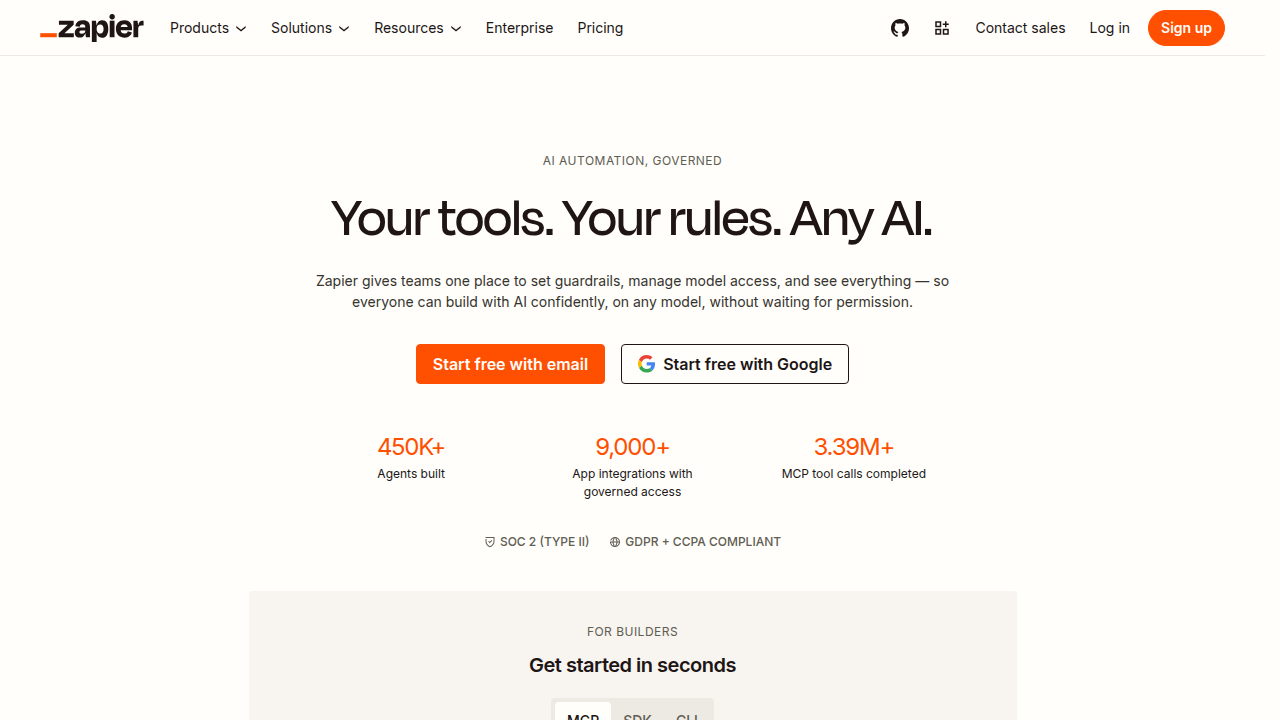
That means you only set it up once, and it runs forever.
Choose a platform that connects to your CRM and website.
Your automation tool needs to talk to your customer database and your site. When someone fills out a form or clicks a button, that action should fire the right email. The experts at the U.S. Chamber of Commerce recommend picking software that "integrates seamlessly with your existing tools" so you don’t have to manually move data around.
A great option is a done-for-you service like Weblish that handles the setup, integration, and content creation so you can focus on running your business.
Map out timing intervals based on behavior.
Timing matters. Send the first email right away. Then wait a day, then three days, then a week. The team at SharpSpring notes that timing should be "consistent but feel natural" and that "too many emails too soon can come off as aggressive." Let each lead’s actions decide the pace. If they open the second email immediately, send the third sooner. If they skip it, wait longer.
Bringing it all together.
Once your triggers, platform, and timing are set, your drip marketing campaign runs on autopilot. You just monitor and tweak. To see how automation can turn your website into a lead machine, check out our guide on making your small business website convert visitors to customers.
Ready to build a campaign that sends the right message at the perfect moment? Start your FREE Trial and let Weblish connect your website data to your email system so every trigger fires exactly when it should.
5 Common Drip Marketing Mistakes (and How to Avoid Them)
Even a well planned drip marketing campaign can fall flat if you step into these common traps. The good news is that each mistake has a simple fix. Here are the biggest ones I see, and how you can avoid them.
Mistake 1: Sending too many or too few emails without testing
You want to stay top of mind, but you do not want to annoy people. Sending too many emails too fast is a quick way to get unsubscribed. Sending too few lets your leads forget you exist.
The fix is testing. Start with a moderate schedule like email one on day one, email two on day three, email three on day seven. Then look at your open and click rates. Adjust from there. As GetKexy points out, "too few (or too many) emails" is a top mistake in drip campaigns. Let data guide your frequency, not a guess.
Mistake 2: Using generic content that doesn’t address specific pain points
If every email sounds like it could go to anyone, it will not connect with anyone. Generic content feels like spam, even if it is helpful.
Your audience has different problems at different stages. A new subscriber needs education. A returning visitor needs proof your solution works. Slixta calls this "irrelevant content" and says it leads to disengagement. Segment your list and write emails that speak directly to each group. That is how you practice sustainable marketing that builds trust over time.
Mistake 3: Ignoring list hygiene and not re-engaging inactive subscribers
A big list looks great, but if half those people never open your emails, your deliverability drops. Email providers notice low engagement and start sending your messages to spam folders.
Clean your list regularly. Remove contacts who have not opened anything in 90 days. Send a re-engagement sequence first. If they still do not respond, let them go. CMS Wire warns that "not following up" with inactive subscribers is a common mistake. A smaller, engaged list performs better than a giant dead one.
Mistake 4: Failing to track and optimize beyond open rates
Open rates are nice, but they do not tell you if people actually read your content or took action. You need to track clicks, conversions, and unsubscribes too.
The Content Marketing Institute says many businesses "fail to track" what matters. Set up goals in your email platform. See which emails drive traffic to your site or download your guides. Then double down on what works. This is where account based marketing thinking helps. Focus on actions that move the needle for your specific target accounts.
Mistake 5: Not integrating drip campaigns with website behavior and lead scoring
Your emails and your website should talk to each other. If someone clicks a link in your email but does not buy, that action should score points toward a lead score. When their score gets high enough, your sales team should get a notification.
Idomoo explains that believing drip campaigns are "a waste of time" is a myth often caused by poor integration. Connect your email platform to your CRM and your site analytics. That way every click feeds into a bigger picture of who is ready to buy. A lack of integration is one reason some businesses see guerilla marketing results while others see nothing.
For expert help setting up seamless integration that tracks real behavior, check out our guide on making your small business website convert visitors to customers.
If you want a system that connects everything for you, consider a done-for-you service like Weblish. We handle the integration, automation setup, and optimization so you can skip the mistakes and start getting real results.
Ready to build a drip campaign that actually works? Start your FREE Trial and let Weblish connect your website data to your email system today.
Measuring Success: Key Metrics and Continuous Optimization
Building a drip marketing campaign that works does not stop after you hit send. The real magic happens when you measure what matters and keep improving. Let’s look at the metrics that actually tell you if your campaign is making money, not just sending emails.
Focus on revenue tied metrics
Open rates and click rates are nice to know. But they do not pay the bills. You want to track numbers that connect directly to your bottom line.
Start with conversion rate. How many people who click your email actually take the action you want? For B2B SaaS businesses, the average visitor to lead conversion rate sits at 1.5% to 2.5%. The top performers hit 8% to 15%. That gap shows how much room you have to improve.
Next, track your cost per lead. Add up what you spend on your email platform, your time, and any tools. Divide that by the number of new leads you get. If your cost per lead is lower than your average customer value, you are in good shape.
Also watch lead to customer time. How long does it take someone to go from first email to paying customer? Shorter times mean your sequence is working. Longer times mean you need to adjust your messaging or offers.
Use A/B testing to keep improving
You never know what will work until you test it. A/B testing lets you compare two versions of the same email to see which one performs better.
Test your subject lines first. A small change like "Your free guide inside" versus "Get your free guide now" can change open rates by a lot. Then test your call to action buttons. Try different colors, wording, and placement.
Send time matters too. Some audiences open emails first thing in the morning. Others check at night. Test a few different send times and see which gets more engagement. According to marketing automation data, workflow ROI averages $5.44 for every dollar spent. That number goes up when you continuously test and optimize.
Set up dashboards that show the full picture
You need a dashboard that tracks both email performance and what happens after someone clicks. This is where attribution comes in. Only 41% of marketing organizations use attribution modeling to measure ROI. That means most businesses are flying blind.
Connect your email platform to your analytics and CRM. Set up a dashboard that shows:
- Email opens and clicks
- Traffic from email to your website
- Conversions and revenue from email
- Lead scoring updates based on email behavior
When you see the full picture, you can make smarter decisions. B2B conversion rate benchmarks show huge differences across industries. Your dashboard helps you find your specific numbers and compare against what is realistic for your market.
Building systems focused on revenue outcomes is essential for growth in 2026. A clear dashboard makes that easy. For help setting up your website to convert visitors once they arrive, read our guide on making your small business website convert visitors to customers.
If you want a system that brings everything together without the headache, Weblish handles the setup so you can focus on growing your business. We connect your email analytics, website data, and conversion tracking into one simple dashboard.
Ready to start measuring what matters? Start your FREE Trial and let Weblish build your drip marketing dashboard today.
Integrating Drip Marketing with Your Website and SEO
By now you know how to measure your drip marketing results. But here is something many business owners miss. Your emails can only do so much if your website is not set up to help. The two need to work together.
Think of your website as the engine and your drip emails as the fuel. Without the engine, the fuel goes nowhere. Without the fuel, the engine sits idle. When you connect them, you create a system that brings in leads on autopilot.
Turn your website into a lead capture machine
Your drip campaign starts long before anyone opens an email. It starts the moment someone visits your site. You need ways to capture their attention and get their email address.
Add popups that appear at the right time. Put forms on your most popular pages. Create gated content like guides or checklists that people download in exchange for their email. According to the U.S. Chamber of Commerce, successful drip campaigns rely on mapping content and timing to specific triggers. That first trigger is almost always a website action.
When someone signs up through a form, your drip sequence kicks in automatically. They get a welcome email right away. Then a series of helpful messages over the next few days or weeks. The key is to match your emails to what they showed interest in on your site. If they downloaded a pricing guide, send them case studies. If they read a blog post about SEO, send them more SEO tips.
For help getting this right, read our guide on making your small business website convert visitors to customers. It walks you through the exact steps.
Use email to retarget based on pages visited
Here is where things get powerful. Not everyone who visits your site signs up right away. That is normal. But you can still reach them through your drip campaign if you track what pages they visit.
Let us say someone reads three blog posts about sustainable marketing but never fills out a form. Your drip system can send them an email that says "Hey, I noticed you were checking out our content. Here is a free guide that goes deeper." This kind of personalized outreach works because it feels helpful, not pushy.
When people click through from your emails and spend time on your site, search engines notice. Google sees that people are engaging with your content. That positive engagement signal can boost your SEO rankings over time. It is a side benefit that makes your whole marketing system stronger.
Share your SEO content through drip sequences
Your drip campaigns can do double duty. They nurture leads and promote your best content at the same time.
When you publish a new blog post, add it to your drip sequence. Send it to subscribers who have shown interest in that topic. This gets more eyes on your content, which leads to more shares and backlinks. More backlinks mean better search rankings.
B2B email marketing best practices for 2026 show that integrating email with your broader marketing strategy improves overall results. That means your drip campaign should not live in a silo. It should connect with your SEO, your social media, and your website.
The whole system works better when it works together. And that is exactly what Weblish helps you do. We connect your drip marketing, website, and SEO into one smooth operation. No confusing setups. No juggling multiple tools. Just a system that brings you leads while you focus on running your business.
Ready to tie it all together? Get Started for FREE and let Weblish build your integrated drip marketing system today.
Summary
This article explains how SMBs can stop wasting budget on sporadic outreach and instead build automated drip marketing systems that nurture leads over time. It covers why drip campaigns outperform one-off blasts, offers a clear four-step playbook—segment your audience, map the customer journey, create helpful stage-based content, and set up automation—and shows how to test and optimize along the way. You’ll learn common mistakes to avoid (frequency, generic content, poor list hygiene, weak tracking, and lack of integration) and which triggers and timing patterns commonly work. The guide also explains the metrics that matter—conversion rate, cost per lead, lead-to-customer time—and how to build dashboards that connect email performance to revenue. Finally, it shows how to tie drip campaigns into your website and SEO so emails and site behavior feed each other for better results. The article closes with practical next steps and points to done-for-you options like Weblish to handle setup and integration for busy business owners.